Categories
2014 Other Uncategorized

The Best Books of 2014?: Authors We Know and Love

I’ve been flicking through publisher catalogues and asking booksellers and publicists about the most exciting books to be published in the UK in 2014. Next week I’ll let you know which debut authors I’m excited about, but this week it is the turn of the authors we are already familiar with.

Here are the 2014 new releases that caught my eye:

Note: UK release month shown, date may be different in other countries
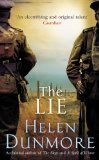
The Lie

The Lie by Helen Dunmore

January, Hutchinson

The Siege is one of my favourite books so it is great to see Dunmore returning to the theme of war. This book is about a soldier returning from the First World War and the way he is haunted by a lie. One to watch for the Baileys Fiction Prize this year?
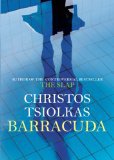
Barracuda

Barracuda by Christos Tsiolkas

January, Atlantic

The Slap was a controversial, but riveting read. Barracuda seems to be getting even more praise in Australia so I’m looking forward to finding out how he’s managed to make a novel about competitive swimming so engaging!
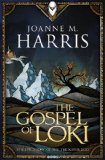
The Gospel of Loki

The Gospel of Loki by Joanne Harris

February, Gollanz, 

“a brilliant first-person narrative of the rise and fall of the Norse gods “

Joanne Harris has already proved she can write well in multiple genres. I’m looking forward to learning all about the “Underworld of Chaos!”
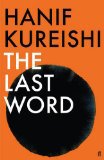
The Last Word

The Last Word by Hanif Kureishi

February, Faber & Faber

Kureishi writes with a rare combination of humor and power. I’m looking forward to this one which compares “the frailties of age versus the recklessness of youth.”
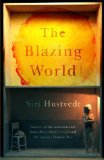
The Blazing World

The Blazing World by Siri Hustvedt

March, Sceptre

 “Emotionally intense, intellectually rigorous, ironic and playful, The Blazing World is as gripping as it is thought-provoking.” Is it possible to write a blurb that is more appealing to me than that? I doubt it!
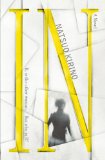
In

In by Natsuo Kirino

August, Harvill Secker
Out by Natsuo Kirino is my favourite thriller so I’m very excited that her new book is going to be published here later this year. In contains an investigation into a best-selling author and promises to question the differences between life and literature. I hope it lives up to my exceedingly high expectations.

The Bone Clocks by David Mitchell

September, Sceptre

Climate change, a cult of predatory soul-decanters and a band of vigilantes? Only David Mitchell could pull off such a bizarre mix of themes. I can’t wait! 

The Paying Guests by Sarah Waters

Autumn, Virago

Set in London in 1922 this book revolves around a large house where impoverished widow Mrs Wray and her spinster daughter, Frances, are obliged to take in lodgers. It is “beautifully described with excruciating tension, real tenderness, believable characters, and surprises” I hope it is as good as it sounds!
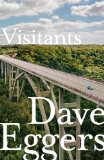
Visitants

Visitants by Eggers

November, Hamish Hamilton

I don’t know anything about this one, but I’ve loved many books written by Dave Eggers so this is on my “must-read” list.  


Other books to look forward to:

The Invention of Wings by Sue Monk Kidd

Il Divino Bambino by James Frey

The Sex Lives of Siamese Twins by Irvine Welsh

Falling Out of Time by David Grossman

Nora Webster by Colm Toibin

Untitled Novel by Leo Benedictus

Every Day is for the Thief by Teju Cole

Irène by Pierre Lemaitre

Everland by Rebecca Hunt

Eyrie by Tim Winton

To Rise Again at a Decent Hour by Joshua Ferris

Bodies of Light by Sarah Moss

The Temporary Gentleman by Sebastian Barry

Which 2014 books are you excited about?
Categories
Other

November Summary and Plans for December

November was a fairly typical reading month for me. There were a few more average reads than I’d like, but the themes were varied enough to keep me happy. I read slightly less than normal because I’m immersed in a few chunksters: A Man In Full by Tom Wolfe is a fantastic story and I’m really enjoying all the twists and turns. Unfortunately Underworld by Don DeLillo isn’t as enjoyable. It contains some amazing writing, but I have to admit it is a bit of a slog at the moment. Hopefully it will grab my attention soon.

Book of the Month:

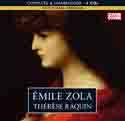
Thérèse Raquin by Émile Zola

zola

Thérèse Raquin was a real surprise. It was so atmospheric and packed with emotion. The audio version was particularly well done and I highly recommend it.

Books Reviewed in November:

Thérèse Raquin by Émile Zola (Audio Book) 

Night Film by Marisha Pessl (Audio Book) 

Not Without Flowers by Amma Darko 

The Carpet Makers by Andreas Eschbach 

All Quiet on the Orient Express by Magnus Mills 

Into the Abyss by Carol Shaben 

Plans for December

I don’t have any firm plans for the next month, but these books are at top of the TBR pile at the moment:

A Hologram for the King by Dave Eggers

The Signature of All Things by Elizabeth Gilbert

Strange Weather in Tokyo by Hiromi Kawakami

The Juggler by Sebastian Beaumont

The Darkroom Of Damocles by WF Hermans

Lightning Rods by Helen Dewitt

I’m also going to busy on the blog. In the next few weeks I’ll be sharing my favourite books of 2013 and several posts about what I’m looking forward to next year.

Are there any outstanding 2013 books I should try to squeeze in before the end of the year? 

Have a wonderful December!

Categories
Uncategorized

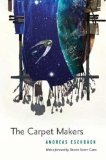
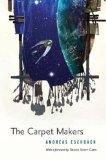
The Carpet Makers by Andreas Eschbach

The Carpet Makers (Orson Scott Card Present's) Translated from the German by Doryl Jensen

Five words from the blurb: knots, hair, Emperor, lifetime, belief

The Carpet Makers is a science fiction story that contains enough elements to entertain everyone, including those who don’t normally enjoy the genre. It begins on a planet where the people have spent thousands of years weaving intricate carpets for the Emperor’s Palace. Each carpet takes a lifetime to create and is made from the hair of the artist’s wives and daughters. The people live happily until one day strangers arrive, claiming that the Emperor has died and there is no longer a need for their carpets.

I loved the first chapter of this book! The introduction (written by Orson Scott Card of Ender’s Game fame) explains that it originally began as a short story and was only expanded into a novel at a later date. I think this shows. The first chapter was the best part of the book by a long way. The rest felt disjointed, like a series of short stories that often had little relevance to the book as a whole. Only one other chapter (the one with the Emperor) really impressed me:

“You mortals are fortunate,” the Emperor said slowly. “You don’t live long enough to discover that everything is vain and that life has no purpose. Why do you think I’ve done all this…have gone to all this effort?

The text was easy to read and contained many glimpses of brilliance, but I was often confused about what was happening. New characters were continually introduced and it was only towards the end of the book that everything came together and I understood the purpose of the story.

But, despite my reservations, I was impressed by many elements of this book. The concept was original and the moral messages were thought provoking. I particularly liked the discussion about society’s need to believe in something greater than itself. It wasn’t perfect, but I’m very glad I read it and would recommend it to anyone looking for something a little different.

.


Categories
Other

Underworld Readalong

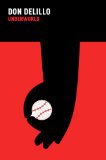
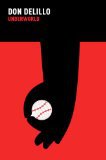
Today it’s Don DeLillo’s birthday! To celebrate a few of us are going to read his epic masterpiece, Underworld, together.

Underworld

It all started a few weeks ago when I discovered this post of 50 Incredibly Tough Books for Extreme Readers. Many are among my favourites and several of the others really appealed (especially The Tunnel by William Gass and JR by William Gaddis).  It started an interesting conversation on Twitter and a few of us decided to attempt Underworld together.
I’ve always wanted to try DeLillo’s writing, but I’m intimidated by this one. It is 827 pages long, has a meandering plot, and involves baseball. It doesn’t sound like my sort of thing at all, but I’m hoping that a group of supportive readers can help me reach the end. We’re planning to take it really slowly, reading just 30 pages a week. It would be great if you could join @utterbiblio, @booklovinggirl, @robchilver and me! Most of the discussion will be on Twitter #underworldreadalong,  but I’ll also post my thoughts on the blog once or twice as we go along.

Have you read Underworld?

Would you like to join our readalong?

Categories
1800s Audio Book Books in Translation Classics Recommended books Uncategorized

Thérèse Raquin by Émile Zola (Audio Book)

zola Narrated by Paul Freeman

Five words from the blurb: loveless, marriage, affair, murder, revenge

Zola is one of those authors I always wanted to try, but kept putting off as I was intimidated by his reputation. I really shouldn’t have worried – Thérèse Raquin wasn’t difficult to read. Instead I found an engaging book, deserving of its classic status. 

Thérèse Raquin is a young woman who is forced to marry her sickly cousin, Camille. She resents the time they spend together, especially when she falls in love with Camille’s best friend, Laurent. Thérèse and Laurent begin a passionate affair, revelling in the secrecy of their relationship. Eventually they realise they cannot continue like this forever and plot to kill Camille. This leads to a gripping narrative that is packed with atmosphere and emotion.

I listened the the BBC audio production of this book and I think that this the perfect way to experience this story. The text can appear quite dense and difficult on the page, but Paul Freeman did a fantastic job narrating this unabridged version. He made the story come alive and the difficulties seemed to melt away when the words were put into the mouths of the characters.

This book probably contains the best portrayal of jealousy and regret that I’ve ever read. The complex relationships felt realistic and the fear and paranoia of this couple jumped from the page. I completely understood the thoughts and emotions of everyone involved and was entranced throughout; longing to know what would happen, but simultaneously dreading the conclusion.

He turned the same idea over in his head until daybreak. Previous to the visit of Thérèse, the idea of murdering Camille had not occurred to him. He had spoken of the death of this man, urged to do so by the facts, irritated at the thought that he would be unable to meet his sweetheart any more. And it was thus that a new corner of his unconscious nature came to be revealed.

Beneath the dark and twisted story the book was packed with symbolism. I’m sure that it could be read multiple times, with new layers of meaning being discovered each time. It is amazing to think that it was first published in 1867 – it must have been even more shocking back then.

Thérèse Raquin is a powerful warning about the danger of wanting what you can’t have. I can’t fault this book and it has shot straight onto my list of favourites.

.

Have you read this book? Did you enjoy it?

Which of Zola’s books do you suggest I try next?


Categories
2013 Crime Uncategorized

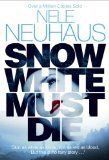
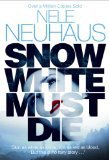
Snow White Must Die by Nele Neuhaus

Snow White Must Die Translated from the German by Steven T Murray

Five words from the blurb: girls, vanished, convicted, mystery, solved

Snow White Must Die is set in a small village near Frankfurt. Eleven years ago two teenage girls disappeared and 20-year-old Tobias was convicted of their murder, despite a lack of real evidence. After serving time in prison he returns to the family home, but the tight-knit community are upset by his release and begin a series of attacks on his family. Then another girl goes missing and Tobias becomes the prime suspect. The police and local residents soon realise that certain aspects of the case don’t add up and do everything possible to discover the truth, before things deteriorate further.

Snow White Must Die is a long book with plenty of twists and turns. The narrative complexity and the strong character development reminded me of Tana French and I’m sure that anyone who enjoyed In The Woods will appreciate this one.

Some aspects of the plot didn’t feel entirely realistic, but that can be forgiven in this genre. It had a compelling plot and managed to hold my attention throughout –  I especially liked the way the conclusion can be guessed if the reader pays attention to the clues sprinkled through the text.

At one point in the book I was disappointed by the portrayal of a character with autism and was planning a big rant in this post, but without spoiling anything I’ll just say that this was rectified in the end!

I read this book for German Literature Month but it didn’t feel very German. I’m not sure if this is a positive or a negative and I guess that depends on what you are looking for. It could have been set in any Western country and this universal nature means it will have broad appeal, but I felt it lacked a sense of place. I’d have liked to see more German culture in the book, but I’m probably in the minority.

Overall this was a solidly good piece of crime fiction. Nothing about it particularly stands out, but it was an enjoyable diversion while it lasted.

.

Post Reading Note: After finishing the book I discovered that Snow White Must Die isn’t the first book in the series, but it is the first to be translated into English. I never normally read books out of sequence, but when reading this one I didn’t feel as though I was missing anything. In fact the police played a fairly minimal role in this book, with the main emphasis being on Tobias and the residents of the village. I’d be interested to read other books in the series and see if this improves my relationship with the Detectives.