Categories
1920s Pulitzer Prize

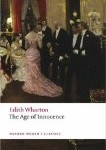
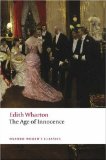
The Age of Innocence – Edith Wharton

Winner of the 1921 Pulitzer Prize

The Age of Innocence is set in the upper class society of New York City. The book begins with Newland Archer, the heir to one of the best families, eagerly awaiting his marriage to the beautiful, but quiet May Welland. The arrival of May’s cousin, the Countess Ellen Olenska from Europe, leads Newland to question his choice of bride as he finds himself falling for Ellen.

I’m afraid that I didn’t enjoy this book – it annoyed me from the very first page:

But, in the first place, New York was a metropolis, and perfectly aware that in metropolises it was ‘not the thing’ to arrive early at the opera; and what was or was not ‘the thing’ played a part as important in Newland Archer’s New York as the inscrutable totem terrors that had ruled the destinies of his forefathers thousands of years ago.

I just don’t enjoy reading about people whinging – especially when they are among the most priviliedged in society. I found all the characters to be dull and I didn’t care about them at all. They just seemed to go from one non-drama to the next, continually fretting about insignificant things.

There was something about the writing style that I didn’t like. It could have been the overuse of brackets, or the repetition of the word “darling!”, but whatever it was this book wound me up as much as it bored me. 

There were a few reasonable sections and the ending was actually one of the better parts of the book, but overall I was very disappointed.

I seem to be alone in disliking this book. Reviewers on Amazon describe it as “a work of beautifully subtle observation and delicacy”, “beautifully written, haunting and evocative” and “deeply moving”. I guess I just like reading about people with real problems, or dilemmas that I might have to face one day. I can only enjoy these lighter romances if they make me laugh and I’m afraid that this book failed to do that.

Recommended to those who enjoy gentle, observational books about those with more money than sense!

stars21


Did you enjoy The Age of Innocence?

Will I enjoy any of her other books?
classcirc-logoI read The Age of Innocence for the The Classics Circuit. For other Edith Wharton reviews in the month of January, please have a look at the schedule.
Categories
2000 - 2007 Books in Translation Nobel Prize

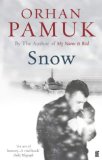
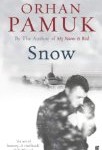
Snow – Orhan Pamuk

Orhan Pamuk won the Nobel Prize for Literature in 2006

Translated from the Turkish by Maureen Freely

We don’t get much snow in England, so the moment I saw the first few flakes falling I decided it was time to dig this book out of my TBR pile. I am really pleased that I did as this is the perfect read for a cold Winter’s day. The icy atmosphere is prevalent throughout and having a layer of snow outside my window increased my enjoyment of this book.

If he hadn’t been so tired, if he’d paid more attention to the snowflakes swirling out of the sky like feathers, he might have realised that he was travelling straight into a blizzard; he might have seen from the start that he’d set out on a journey that would change his life for ever; he might have turned back.

Snow begins with a poet returning to Turkey after living in exile for twelve years in Germany. He travels to the remote town of Kars, where he poses as a journalist supposedly investigating the large number of suicides that have occurred there recently.

I loved the first third of the book – the character development, plot foreshadowing and snowy atmosphere created the perfect opening. Unfortunately the book went downhill for me in the middle, as it started to focus on politics and religious debate – subjects which I don’t enjoy reading about.

This is a very well written book, with a complex, multi-layered narrative. It used some interesting plot devices, including the introduction of the author, Orhan Pamuk, as a character. I’m sure this is a book which others would enjoy reading again and again.

I noticed many similarities with 2666, so I’m sure that if you enjoyed one book then you’d like the other. I’d love to know if Bolaño had read this before writing 2666, as certain aspects, especially the large number of deaths in a remote town, were very similar.

Overall, I’m really pleased that I read this book and even though my eyes started to glaze over when I read some of political discussion there was more than enough to keep me interested.

I recommend this book to all lovers of literary fiction, particularly those who enjoy political discussion.

stars41

Have you read anything written by Orhan Pamuk?

Categories
1960s Other Prizes Recommended books Science Fiction

Flowers for Algernon – Daniel Keyes

 < ?php echo amazonim('1857989384'); ?>Winner of the Nebula Award 1966

< ?php echo amazon('1857989384','Flowers for Algernon ‘); ?> was originally published as a short story which won the 1960 Hugo Award for best short fiction. It was later expanded to produce this fantastic piece of science fiction.

The book introduces us to Charlie, a 30-year-old man with a very low IQ. He is mocked by society, but his intelligence is such that he is unaware of the cruelty. Charlie yearns to be like everyone else – to able to read and write fluently, and to be successful. One day he is given the chance to make this happen when he is offered a place on a groundbreaking new experiment, which has the potential to turn him into a genius.

The book is written in the form of Charlie’s diary, so we are able to follow the changes in his intelligence by noting the quality of his spelling, grammar and comprehension. I thought that this showed an outstanding quality of writing. I found myself studying the differences in text on neighbouring pages and being very impressed by the subtle changes that were taking place. The personal nature of the diary also meant that it was easy to connect with Charlie – he is such a fantastic character that it was impossible not to fall in love with him

This is an amazing book and I was gripped from beginning to end. It was thought-provoking throughout, covering issues from the importance of intelligence, to what is needed to be happy. There was the odd occasion when I felt the text over-stepped the mark and lectured the reader, telling me things that I should have been shown, but I’m willing to forgive this, as the quality of the rest of the book was so high, and the messages that the text was conveying were very important.

How strange it is that people of honest feelings and sensibility, who would not take advantage of a man born without arms or legs or eyes – how such people think nothing of abusing a man born with low intelligence.

The book takes you on an emotional roller coaster, which left me thinking about it for hours. I am sure that the powerful, original plot will remain with me for many years to come.

If you think that you don’t enjoy science fiction, then I challenge you to read this book and still say that.

Flowers for Algernon has just become one of my all-time favourite reads and I highly recommend it.

stars51


I chose this book for our London book group. We all loved it! Savidge Reads, Reading Matters and Novel Insights have also written wonderful reviews.

Categories
2009 Memoirs Orange Prize

An Equal Stillness – Francesca Kay

< ?php echo amazonim('0297855492'); ?>

Winner of the Orange Award for New Writers, 2009

< ?php echo amazon('0297855492','An Equal Stillness ‘); ?>is the biography of a fictional artist. It is a simple book about the life of a painter, her family and her passion for art.

Unfortunately this book just wasn’t for me – I’m not a big art lover and rarely read biographies. If this had been a real biography then it would have been OK, but I just don’t see the point of a fictional one – I was bored throughout. Very little happened and her life seemed very ordinary to me.

The fact it was written in the style of a biography meant that I was distanced from the character and so failed to develop any emotional connection with her. Any attempt to guess at her feelings just annoyed me, as I don’t think it is really possible to know what someone else is thinking and so I’m afraid this book went further downhill, the more I read.

It was a quick, easy read and the writing was poetic in places, but I’m afraid I just didn’t care.

The final years of Jennet Mallow’s life were fruitful. After the colour blocks she returned to the more nearly monochrome, making seven large pictures which are untitled, but again evocative of air and water.

If you love art and gentle prose then I’m sure you’ll love this book, but it was just too ‘still’ for me.

stars21


I have seen lots of positive reviews for this book, so if you’ve read it:

Why did you love it?

Do you enjoy fictional biographies?

Categories
Booker Prize Other

The Complete Booker 2010 Challenge

The Complete Booker originated in August, 2007 to bring together book lovers and bloggers interested in reading winners of The Man Booker Prize for Fiction

This year the blog is hosting a challenge – it runs from January 1 – December 31, 2010.

There are several levels of participation:

Winners Circle: read at least 6 winners

Contender: read at least 6 short listed nominees

Longshot: read at least 6 long listed nominees

Booker Devotee: choose a year, and read all 6 shortlisted works from that year

Booker Fanatic: choose a year, and read all 13 long- and shortlisted works from that year

I love the Booker prize and so I am going to try to be an over-achiever for this challenge. I plan to complete all the levels of participation!

I am going to read all 13 books longlisted for the prize in 2010 and will hopefully manage to strike off the other levels at the same time. It is going to be a challenge, but hopefully one I’ll manage.

Here is my list of the Bookers I’ve read so far.

Are there any years you’d prefer me to complete?

Which is your favourite Booker book?

Categories
1990s Other Prizes

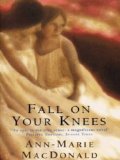
Fall on Your Knees – Ann-Marie MacDonald

Winner of the 1997 Commonwealth Writers Prize for Best First Book, Shortlisted for the 1997 International IMPAC Dublin Literary Award, Shortlisted for the 1996 Giller Prize

Fall on Your Knees is a long, complex story about 4 sisters living on Cape Breton Island in Canada. The sisters’ parents regret their marriage, as Materia was just a child when she married James. They are clearly mis-matched and Materia struggles to cope with being removed from her Lebanese family. The book begins in 1898 and follows the family as they deal with secrets, betrayal and tragedy.

It took me a long time to read this 560 page epic, but it was worth the effort. I loved the sisters and the complex relationships between them. All the characters were well developed, flawed and steeped with intrigue. I admit that I became confused on several occasions and had to re-read sections in order to understand what was happening. This was due to the fact that the book switched between several narrators and jumped forward and back in time, with no indication of who I was now reading about. I think that this confusion was key to the plot though – not knowing who was speaking at several points helped to maintain the secrets and meant the reader had a more interesting mystery to solve.

The atmosphere of the book was excellent. It had the feel of a Gothic novel, but the Canadian setting made it different from anything I’ve read before. The writing was of a very high standard, so I’m not surprised that it received so much recognition from the world’s book awards.

I must warn you that this book deals with some difficult subject matters: paedophilia, incest and rape are all present in this book along with discussions on religion and war. I thought it was all handled sensitively though, showing the shocking truth about what occurs in society, without sensationalising it.

Fall on Your Knees had me gripped throughout. I am very impressed with Ann-Marie MacDonald’s writing and will try to get hold of all her other books as soon as possible.

Highly recommended to anyone with the patience to understand what is happening!

stars4h

Have you read anything by Ann-Marie MacDonald?

Which is your favourite?

Claire: Thank you for lending me your copy of this book!