Categories
2010 Booker Prize

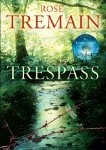
The Trespass – Rose Tremain

 Long listed for 2010 Booker Prize

I enjoyed The Road Home and had heard wonderful things about many of Tremain’s other books, so was looking forward to reading her new one. Unfortunately it didn’t live up to my expectations and it left me feeling a little disappointed.

Trespass focuses on an isolated French farmhouse. The building belongs to Aramon, a man struggling with alcoholism. His estranged sister, Audrun, lives in a small house in the grounds, but he threatens to ruin her life by selling the farmhouse to Anthony, an English antique dealer. The main theme of the book is sibling rivalry and the boundaries that exist between people, both emotionally and physically.

Unfortunately none of the characters were particularly endearing and so I failed to connect with any of them. It was such a passive reading experience that I often found my mind wandering from the page.

The French countryside was vividly described, but the plot was very slow moving.

Audrun drew her old and frayed cardigan round her body and walked on through the wood, her face lifted to the warmth of the sun. In another month, there would be swallows,  In the hour before dusk they’d circle, not over her bungalow with its low, corrugated iron roof, but over the Mas Lunel, where Aramon still lived. They’d be looking for nesting sites under the tiles, against the cracked stone walls, and she would stand at the window of her flimsy home, or in her little potager, hoeing beans, watching them, watching the sun go down on another day. 

I can’t fault the quality of the writing, but I found the subject matter quite dull. I don’t dream about moving to the French countryside and find the issues with selling property quite tedious, so much of the book held little interest for me.

I was looking forward to the “violent crime” mentioned in the blurb, but although the plot picked up a bit when it occurred, my lack of empathy with the characters meant that I wasn’t as involved as I should have been.

Recommended to those who enjoy quiet books, especially if you are considering a move to France.

Opinions seem quite mixed:

I’d find myself getting lost in it and being mildly surprised that I wasn’t somewhere in the French countryside, but in the cafeteria at work. Just Add Books

The style and the themes hit, but for me, the emotional side of the story didn’t. Fleur Fisher Reads

….hardly goes beyond the ordinary. Kevin from Canada
Categories
2010 Booker Prize

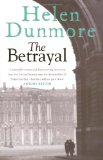
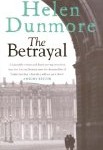
The Betrayal – Helen Dunmore

 Long listed for 2010 Booker Prize

WARNING: REVIEW CONTAINS MILD SPOILERS FOR THE SIEGE

I loved The Siege so was looking forward to reading The Betrayal, but unfortunately the sequel wasn’t quite as good as I’d hoped.

The Betrayal is set 10 years after the Siege of Leningrad and follows Anna and Andrei, the young couple we first saw in The Siege, as they rebuild their lives. They no longer fear starvation, but life under Stalin isn’t easy. Andrei is a doctor at the local hospital and at the start of the book he has to make the agonising decision of whether or not to treat the son of a senior secret police officer. The young boy is seriously ill and if he fails to recover then Andrei knows his family will be brought to the attention of the authorities – something no one wants to happen.

The Betrayal is very different in style to The Siege. The Siege was packed with vivid descriptions, but The Betrayal focused on dialogue instead. This meant that the book had a much faster pace, but I didn’t feel as immersed in the Russian landscape. The claustrophobic emotion was still present, but at many points I thought that the plot moved too quickly for the reader to fully appreciate the gravity of the situation.

Much of book reminded me of Child 44, but the complexity of Tom Rob Smith’s book meant that I preferred his book. If you aren’t familiar with life in post-war Soviet Russia then The Betrayal is a good place to start, but I think that anyone familiar with this period of history will be disappointed.

I found the first section of the book quite annoying to read as it contained many references to events in The Siege:

The frost is all over them like fur. Anna drew as if only drawing would keep her alive. Here’s Marina, alive again, carefully peeling off the top, painted layer of papier mache from Kolya’s toy fort. There is nourishment in the paste that held the layers of newspaper together. They will cook and eat the papier mache.

I’m sure that people who read the first book ten years ago appreciated the reminders, but since I only read it last week I found it overly repetitive. I don’t think that readers need to know everything that came before as the events of the second book were shocking enough to stand alone.

Despite my criticisms I was gripped throughout this fast paced book and loved the ending. The Betrayal isn’t in the same league as The Siege, but it was still a good read.

Recommended.

Will The Betrayal make the Booker short list? 

I’m not sure. I think this is one of the books that the judges will discuss for a long time, being middle of the list it will either miss out or just scrape through. My hunch is that it will be ranked 7/13 in the Booker list and fail to make the cut. Its inclusion would be a pleasant surprise for me though.

Did you prefer The Siege or The Betrayal?

Categories
Booker Prize

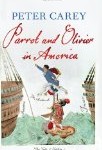
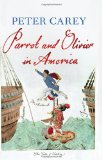
Parrot and Olivier in America – Peter Carey

Long listed for 2010 Booker Prize

I enjoyed reading some sections of Oscar and Lucinda (and remember it more fondly than my reviews implies – I have forgotten about that dull bit now!) so I was looking forward to reading Parrot and Olivier in America. Unfortunately I didn’t connect with this book and failed to make it to the end.

Parrot and Olivier in America is set in the early 19th Century and follows an unlikely pair of characters: Olivier, a young French aristocrat, and Parrot, an orphaned printer’s apprentice who becomes Olivier’s servant. The pair leave France after the revolution and head for a new life in America.

It sounds like a fantastic plot and it takes places during a fascinating period of history, but unfortunately all the interesting facts were buried under a mountain of flowery prose. Everything was described in excessive detail which meant that the pace was very slow.

I had never set eyes on a silkworm and I dare say young Watkins was in no way like one. Yet it is a silkworm that I think of when I recall him in 1793, a poor pale secret thing at the service of a Chinese emperor, sitting on his heels before his press, playing it like a dice box, and with all the papery essentials within reach of his long arms.

I admired individual paragraphs, but quickly became bored with the book. The effort required to follow the meandering plot was too great and I gave up after about 200 pages.

I was quite disappointed as I had wanted to complete the Booker long list this year, but I found it increasingly hard to concentrate on the words of this book. I kept finding my mind wandering from the page and realised there was no way I’d be able to make it through another 250 pages without any engagement in the characters or plot.

Recommended to those who don’t need a strong plot and enjoy getting lost in historical detail.

 (DNF) 

Most reviews seem vaguely positive, but I have seen a lot of comments from people unable to complete it.

 …a delightful excursion into an unreal past that says a lot about our precarious present. The Mookse and the Gripes

It’s no Oscar and Lucinda, of course, but it’s still pretty good. Vulpes Libris

Did you enjoy Parrot and Olivier?

Did anything exciting happen in the second half of the book? 


Categories
2010 Other Prizes

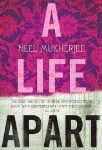
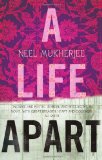
A Life Apart – Neel Mukherjee

I have a soft spot for Indian literature and so when I saw the phrase ‘Winner of India’s Premier Literary Prize, The Vodafone Crossword Award 2009’ on the back of this book I picked it up straight away.

A Life Apart is essentially a coming-of-age novel focusing on Ritwik, an Indian homosexual. The story begins in 1980s India with the death of Ritwik’s mother. I was treated to a vivid Indian atmosphere and an instant sense of empathy for Ritwik. Unfortunately everything went downhill after the first chapter, but there were enough interesting passages to keep me reading through the remaining 300 pages.

After the death of his mother Ritwik decides to leave India to study in England. All that wonderful Indian atmosphere was lost and I found myself reading the type of immigration tale that I have read countless times before. Ritwik then exercised his new-found freedom by having sex with numerous strangers. These graphic encounters held no interest for me and there were several points where I considered giving up on the book entirely. I was occasionally treated to flashbacks of Ritwik’s troubled childhood in India, but these were too brief for me. I wish the whole book had concentrated on these instead of his modern, British life.

Intertwined with this narrative was Ritwik’s attempts at fiction writing. This story-within-a-story was set in 1900 and followed Miss Gilby, an English woman teaching a Bengali family:

…the most Beautiful & Useful English Language & the ways of Ladies of your Progressive Nation.

This story was well researched and I learnt a few interesting facts about Colonial life, but the characters failed to connect with me and so overall this narrative didn’t leave much impression on me either.

A Life Apart is a beautifully written piece of literary fiction, but I felt it tried to combine too many elements, leaving me unable to develop an emotional attachment to the characters.

Recommended to those with a passion for immigration stories who have a high tolerance for graphic sex scenes.

Other bloggers seemed to enjoy it much more than I did:

A must read, a full ten out of ten from me. Savidge Reads

Mukherjee’s poetically sublime prose is a real beauty to behold… Rob Around Books

Categories
2000 - 2007 Booker Prize Historical Fiction Orange Prize Other Prizes

The Siege – Helen Dunmore


Short listed for 2001 Orange Prize and Whitbread Novel of the Year Award

In September 1941 German troops surrounded the city of Leningrad, cutting off all supply routes. This left the 3 millions residents battling for survival – most so hungry that they resorted to making soup from strips of leather. 

The Siege is historical fiction at its best. The writing was so vivid that I almost felt as though I’d been there.

Late in the morning a lilac-coloured dawn will come, with burning frost that glitters on branches, on spills of frozen water, on snow, cupolas and boarded up statues. Nothing has ever been more beautiful than these broad avenues, the snow-coloured Neva, the parks and embankments. Only the people mar its perfection as they crawl out of their homes into the radiance of snow. Perhaps today is the day when they’ll fail to reach the bread queue. So they move on, flies caught between sheets of glass.

The book focused on one family. This personal insight into the crisis made the events come alive. I felt a deep connection to each member of the family and I willed them all to survive.

The Siege also contained a few chapters from the view-point of Pavlov, the nutritionist controlling the amount of food that each person received with their ration card each day. This was a fantastic addition to the plot as it allowed the real facts and figures of the situation to be revealed to the reader. It also allowed us to learn about the numerous ways in which the citizens were advised get nutrition from objects they possessed in their homes – some much more unusual than others.

As you can imagine this could never be described as a happy book, but I can only admire the strength of human spirit – that desire to survive despite the odds being stacked against them.

Highly recommended.

The Siege is the prequel to the 2010 Booker long listed The Betrayal. If you haven’t read The Siege then I highly recommend that you avoid reading any reviews for The Betrayal – I discovered that my 2010 Booker research had led me to reading a few spoilers for The Siege.

The Siege is my first experience of Helen Dunmore’s writing, but I’m a convert! I hope to read The Betrayal next week, but will also be on the look out for all her other books.

Have you read any Helen Dunmore books?

Which one is your favourite?


Categories
2010 Booker Prize Recommended books

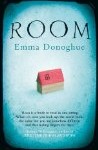
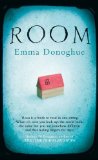
Room – Emma Donoghue

 Short listed for 2010 Booker Prize

Room is the best book I’ve read this year. It tells the story of a woman who has been abducted and imprisoned in a single room. The book is narrated by her five-year-old son, Jack, who was born in captivity and protected from fear by his mother. On his fifth birthday she tells him the truth about their situation and Jack is shocked to discover that there is a world outside their four walls. His simple, happy life is crushed as they plot their escape and he realises that the world is much more complicated than he ever imagined.

I had heard a lot of hype about this book and wondered how it could possibly live up to the ravings I’d seen flying around the Internet. When I read the first few chapters I was a bit sceptical.  The writing style took some time to get used to (five-year-olds have a very different way of looking at the world!), but once I grew to appreciate the truth about Jack’s life I was gripped. I read the whole book in a single day, unable to tear myself away from the pages.

Jack’s mother shelters him from reality so we have to read between the lines to see the horrors that she is subjected to, but I found the insight into our society more disturbing than the physical abuse. The book asks important questions about what makes us happy and the way we look after our children. In many ways it reminded me of Flowers for Algernon, another wonderful book that questions our values.

Room is easy to read and will have broad appeal. I’m sure I’ll be thinking about Jack for many years to come and I know that since finishing the book I’ve been looking at the way I spend time with my own sons slightly differently.

It is a modern classic that will continue to be enjoyed many years from now.

Highly recommended.

Will Room win the Booker Prize?

I would love to see Room win the Booker prize, but I’m not sure it will stand up to multiple re-reads. The joy is in the way it makes us look at the world around us – the things we take for granted and the way we often forget the simple pleasures of life. I’m sure it will become a best seller and it has a very good chance of winning the Orange Prize 2011, but I think a more literary novel will scoop the Booker this year.