Categories
Book Prizes Other

The Guardian First Book Award 2010 Long List

Every year the Guardian award £10,000 to the best book written by a debut novelist. Past winners include Zadie Smith and Jonathan Safran Foer, so it is always interesting to see who will scoop the prize.

The 2010 long list has recently been announced. The five books in the running for best debut fiction are:
Mr Chartwell – Rebecca Hunt

Advances for literary debuts are quite rare, so the fact this book was bought at an auction as part of a two book deal for £100,000 makes it very intriguing to me. I’m not sure a book about Winston Churchill appeals, but the mysterious Mr Chartwell might well make up for that!
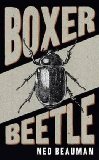
Boxer, Beetle – Ned Beauman

The literary genes are clearly strong in the Beauman family as this book is written by the son of Nicola Beauman, founder of Persephone Books. It is described as a dark, intelligent book and it’s packed with beetles. I’m really looking forward to reading it.
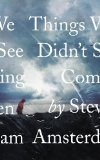

Things We Didn’t See Coming – Steven Amsterdam

Remember the millennium bug? Imagine if the world had collapsed with that clock change and you get the idea behind this book. Sounds like scary stuff!

 .
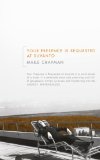
 

Your Presence is Requested at Suvanto – Maile Chapman

Set in a Finnish mental hospital this book is said to have parallels to The Bacchae, a Greek play. The comparison of civilisation versus savagery makes this sound like my sort of book.

.
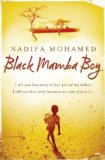
 Black Mamba Boy – Nadifa Mohamed

Based on the true story of the author’s father’s escape from Somalia in the 1930s, this book gives a fascinating insight into a period of history that isn’t very well known in the Western world. It was long listed for 2010 Orange Prize.

.

I wasn’t a fan of Black Mamba Boy, but have heard wonderful things about Boxer, Beetle. The rest of the list are all new to me.

Having researched the books they all appeal to me, but I’m going to resist working my way through another long list. I’m hoping that others will let me know which ones I’m most likely to enjoy.

Have you read any of these books?

Which appeals to you most?

The short list will be announced at the end of October and the winner will be revealed at the beginning of December.
Categories
Nobel Prize

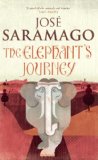
The Elephant’s Journey – José Saramago

  Translated from the Portugese by Margaret Jull Costa

José Saramago won the Nobel Prize for literature in 1998

Blindness is one of my favourite books and so I was looking forward to reading José Saramago’s latest novel – especially as he sadly died in June this year and so this will have been the last book that he wrote.

The Elephant’s Journey is based upon the true story of an elephant who travelled from Lisbon to Vienna in 1551, after being given by the King of Portugal to the Hapsburg archduke as a wedding present. The book details the journey, showing the problems the convey faced and frequently meandering off into bizarre, brief asides.

As usual Saramago showed his sharp insight into the human condition and I found many snippets of wisdom within the pages.

The absence of curious onlookers and other witnesses could be explained by the extremely early hour and the secrecy that had shrouded the departure, although there was one exception, a royal carriage that set off in the direction of Lisbon as soon as elephant and company had disappeared around the first bend in the road. Inside were the king of portugal, dom joão the third, and his secretary of state, pêro de alcáçova carneiro, whom we may not see again, although perhaps we will, because life laughs at predictions and introduces words where we imagined silences, and sudden returns when we thought we would never see each other again.

The plot is almost non-existent, but as usual I loved Saramago’s writing style. The absence of punctuation took a few pages to get used to, but then I started to wonder why anyone bothers with it! I was a bit confused by the capitalisation of various words throughout the book. For example, Lisbon has a capital letter in the passage above, but doesn’t on other occasions. I’d love to know if there is any significance to this or if Saramago was just being random.

This book wasn’t as unique or thought provoking as many of his others and for this reason I recommend that you avoid The Elephant’s Journey until you have fallen in love with some of Saramago’s other books. But if you are already a massive fan then then I think you will find a lot to like in this simple fable.

Recommended.

Categories
1950s Books in Translation Chunkster Classics Historical Fiction Nobel Prize Recommended books

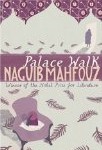
Palace Walk – Naguib Mahfouz

 Naguib Mahfouz won the Nobel Prize for Literature in 1988

Translated from the Arabic by William Maynard Hutchins and Olive E.Kenny

Palace Walk is the first book in the Cairo trilogy, which is normally considered to be Naguib Mahfouz’s greatest achievement. It became a best seller in the Arab world on its release in 1956, but also enjoyed worldwide success, selling 250,000 copies in America.

The book is set in Egypt and describes the life of the Al Jawad family. Every aspect of their day is described in minute detail and so we learn exactly what life was like for the middle-class shopkeeper and his family. The book begins in 1917 and focuses on the complex task of finding someone suitable to marry each of the children.

Men play the dominant role in the household, using the words of the Qur’an to decide the most appropriate course of action. The women in the book were oppressed and spent most of their time shut inside, but at no point did this feel wrong to me. The book made me understand why this society worked in the way it did and at some points I was envious of their tight-knit community and the way the women were so close to each other.

No woman was anything more than a body to him. All the same, he would not bow his head before that body unless he found it truly worthy of being seen, touched, smelled, tasted and heard. It was lust, yes, but not bestial or blind. It had been refined by a craft that was at least partially an art, setting his lust in a framework of delight, humor and good cheer. Nothing was so like his his lust as his body, since both were huge and powerful, qualities that bring to mind roughness and savagery. Yet both concealed within them grace, delicacy, and affection, even though he might intentionally cloak these characteristics at times with sternness and severity.

I loved reading about the complex marriage negotiations and the way the household was run, but the text was so rich with detail that I found I could rarely read more than about twenty pages a day. This meant that it took me about six weeks to read the first 300 pages.

At about this point the style of the book changed, the pace picked up and I flew through the remaining 200 pages in just two nights. WWI brought British occupation to Egypt, changing the lives of the household completely. Seeing fear and tragedy brought to a family I knew so well made the impact much greater.

Palace Walk gives an impressive insight into Egyptian life. I loved the characters and the way I came to understand their very different way of living. I finished this book knowing a lot more about Egyptian history, but also feeling a little bit wiser and more tolerant. I’m looking forward to reading the rest of the trilogy.

Highly recommended.

Have you read The Cairo Trilogy? Are the other books in the trilogy similar in style/pace?

Do you recommend any of Naguib Mahfouz’s other books?

Categories
2010 Booker Prize

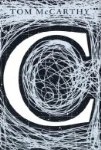
C – Tom McCarthy

Short listed for 2010 Booker Prize

C begins in 1898 with the birth of Serge Carrefax on an estate in Southern England. Serge’s father runs a school for deaf children, but also has a passion for radio communication. This leads Serge to become a wireless radio operator, initially working on spotter planes in WWI and after the war on an archaeological dig in Egypt.

The book initially felt like a piece of historical fiction, but it quickly became much more than that. The text contained layers of philosophy and symbolism that added to the richness of the story, but also left me feeling as though I was constantly missing out on relevant snippets of information.

The book was packed with fascinating details about everything from radio communication to silk production:

The transmitter itself is made of standard brass, a four inch tapper arm keeping Serge’s finger a safe distance from the spark gap. The spark gap flashes blue each time he taps; it makes a spitting noise, so loud he’s had to build a silence box around his desk to isolate his little RX station from the sleeping household – or, as it becomes more obvious to him with every session, to maintain the household’s fantasy of isolation from the vast sea of transmission roaring all around it.

I loved most of these details, but there were times when I felt that too many were included and the book lost its emotional connection to me.

The plot was quite simple and easy to read on a sentence-by-sentence level, but there were points when I completely lost interest – it was a real chore to read some of the chapters. Luckily the book always seemed to pick up again and I was especially impressed by the WWI section – the descriptions of life in a spotter plane were particularly vivid.

Overall, I enjoyed reading this book, but I think fans of literary fiction who like re-reading/studying books will love discovering all those extra layers of symbolism. For this reason I think it has a very high chance of winning the Booker prize, but then yesterday I was saying David Mitchell would win – so what do I know?!!

Literary blogs love this book:

C is the best novel I’ve read in a long time… Biblioklept

It teems with relevance and reference… Asylum

….but I could not help feeling that academics would be paying a lot more attention to this novel than most readers do. Kevin From Canada

…the multiple ideas and the play go on throughout the book and tie together with satisfying insights. The Mookse and the Gripes

Categories
Booker Prize Other

The 2010 Man Booker Prize Short List

The 2010 Booker Prize short list has been announced.

The six books are:

Room – Emma Donoghue

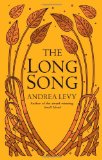
The Long Song – Andrea Levy stars41

C – Tom McCarthy

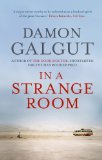
In a Strange Room – Damon Galgut

Parrot and Olivier in America – Peter Carey (DNF)

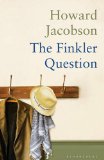
The Finkler Question – Howard Jacobson (DNF)

I successfully predicted four out of six books , but am kicking myself for not predicting that the two books I didn’t manage to finish would both be short listed – that is a trend I should have spotted years ago!

My first thought when looking at the short list was: NO MITCHELL!?!

There was a lot of confusion on Twitter in the first few minutes as Amazon revealed the short list before the official Man Booker website and no one was entirely sure whether or not the list was accurate. After they eventually confirmed it was true my second thought was: NO MITCHELL!?! It seems unbelievable that he didn’t make it, but I guess it just didn’t stand up to multiple re-readings.

I am really pleased that Room made the short list as it was my favourite book on the long list. I honestly believe that it is a classic which will be enjoyed for generations to come. I really hope that it will win, but I suspect it will be beaten by a more literary book.

I think it is impossible to predict a winner from this short list and suspect the judges will have a lot of arguing/discussion before they can agree on a single book. None of the others stand out for me – I’d say anyone has a chance this year.

What do you think of the short list?

Who do you think will win?

Categories
Booker Prize Other

My thoughts on the 2010 Booker Long List

I have now read all 13 books on the 2010 Booker long list (apart from the two I had to abandon due to boredom/annoyance!) and I am very impressed with the judges this year. I think that every single book deserves its place on the list. I didn’t enjoy reading them all, but found the quality of the writing to be very high. Which of the books you’ll enjoy is all down to personal taste and I think that everyone will find a selection of books on the list that they’ll love along with quite a few that won’t excite them at all.

Here is the long list ranked by how much I enjoyed reading them:

All links lead to my review of the book.

Room – Emma Donoghue 

Skippy Dies – Paul Murray 

The Slap – Christos Tsiolkas stars41

The Thousand Autumns of Jacob de Zoet – David Mitchell stars41

The Betrayal – Helen Dunmore 

C – Tom McCarthy  

The Long Song – Andrea Levy stars41

The Trespass – Rose Tremain 

February – Lisa Moore 

The Stars in the Bright Sky – Alan Warner 

In a Strange Room – Damon Galgut 

Parrot and Olivier in America – Peter Carey  (DNF)

The Finkler Question – Howard Jacobson    (DNF)

Who will make the short list?

I wouldn’t be surprised to see any of the books on the short list and I think the judges will have a very hard job narrowing it down to six books, but if I had to guess then I think The Thousand Autumns of Jacob de Zoet by David Mitchell will be the first to make the cut. It isn’t the most readable book, but I think the quality of the writing and the ambitiousness of the plot will lead to unanimous agreement about its inclusion on the list.

I wasn’t a fan, but those who enjoy quiet, thoughtful books are raving about In a Strange Room by Damon Galgut. It is the sort of book that seems to do well on Booker lists, so I’d bet on its inclusion.

I stayed up late last night in order to finish C by Tom McCarthy so I’m afraid I haven’t written a review for it yet (Edited 8th September, C review now posted) , but its intelligence and originality make it stand out from the crowd. I think it has a very high chance of making the cut.

Skippy Dies by Paul Murray also grabbed my attention. I think that its universal appeal gives it a strong chance of making it onto the short list.

Room by Emma Donoghue was my favourite book on the long list. It does seem to divide opinion, but one of those judges brought this book into consideration and I think that same judge will still be championing it. I really hope that it makes it into the final six.

The final book on the short list is almost impossible for me to decide as none of the other books are leaping out at me. I’m guessing that this means it will be filled by a book that has no appeal to me at all. Assuming that any book provoking a very negative reaction will also produce an opposite positive reaction in some readers I’m going to add The Finkler Question by Howard Jacobson as the final book in my short list prediction.

My Prediction for the Booker Short list:


What do you think of my prediction?

Which books do you think will make the Booker short list?