Categories
2011 Booker Prize Novella

The Sense of an Ending – Julian Barnes

The Sense of an Ending Winner of 2011 Booker Prize

Five words from the blurb: retired, memory, imperfect, insight, past

The Sense of an Ending is a quiet, reflective book and if you know me then you’ll immediately hear the alarm bells ringing. This book has virtually no plot and, unlike the fabulous Anne Enright, Julian Barnes failed to to engage me in his slow tale.

The story is seen through the eyes of Tony, a retired man who is suffering from loneliness and the depressing knowledge that his life won’t go on forever. He reflects on his life, worrying that he hasn’t achieved anything noteworthy.

There are some plot elements, but I wont explain them here for fear of spoiling this brief book; all I can say is that they didn’t excite me.

On a positive note The Sense of an Ending is quick and easy to read. There are also lots of little snippets of wisdom.  

The less time there remains in your life, the less you want to waste it. That’s logical, isn’t it? Though how you use the saved-up hours…well, that’s another thing you probably wouldn’t have predicted in youth. For instance, I spend a lot of time clearing things up – and I’m not even a messy person.

I can see why this made the Booker long list, but I’m probably just too young to appreciate this sort of book.

.
Categories
2011 Books in Translation

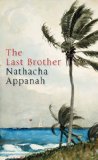
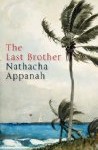
The Last Brother by Nathacha Appanah

The Last Brother  Translated from the French by Geoffrey Strachan

Five words from the blurb: boy, friends, island, prison, Jewish

The Last Brother caught my attention earlier this year when several of my favourite bloggers started to rave about it. I’m really pleased that I acted on their recommendations as this is a fantastic little book that deserves a wider audience.

This short book is very hard to review without giving spoilers and so if you are sensitive to them I suggest that you avoid reading all reviews and dive straight in. The blurb on the back of the book also explains the entire plot so I recommend that you avoid that too.

The Last Brother is set on the island of Mauritius and tells the story of Raj, a nine year-old boy, who has had a difficult childhood. His abusive father gets a job as a prison warder and this leads Raj to discover that WWII is being fought on the other side of the world and Jewish exiles are being shipped and detained on his island.

Now that I knew who was hidden there within the darknes of the pathways, knew the walls that towered around them, heard the sound of the grass beneath their feet, heard their singing in the evening, I viewed them with great sadness…

I had no idea that Jews were imprisoned on Mauritius during WWII so it was good to be educated about this lesser known piece of history.

The book was beautifully written; the prose simple, but engaging. I quickly connected with Raj and felt enormous sympathy for his situation. In many ways this book reminded me of The Boy in the Striped Pyjamas, but with a more realistic plot.

I liked the way the book was narrated by a 70 year-old Raj. This allowed an adult perspective to be given, whilst still allowing the childhood innocence to shine through.

My only criticism is that the book was very predictable.  I knew exactly what was going to happen from the beginning and I’d have liked a few extra snippets of information to add to the impact of the inevitable ending.

Overall this is a quick, easy read with an emotional undercurrent. Recommended.

.

The thoughts of other bloggers:

…a powerful novel that packs a huge emotional punch. Devourer of Books

…a haunting novel which has been beautifully translated from the French. Caribousmom

It’s a beautiful treatise on the need for love and the scars inflicted by loss. S. Krishna’s Books

Categories
1950s Classics Fantasy

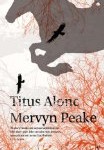
Titus Alone – Mervyn Peake

Titus Alone (Gormenghast trilogy)

Five words from the blurb: escapes, city, zoo, traitor, home

Titus Alone is the third book in the Gormenghast trilogy, but whilst the first two are amongst the best books I’ve ever read, Titus Alone was a big disappointment.

Titus leaves the wonderfully atmospheric surroundings of Gormenghast castle and arrives in a modern city. Both the city and the people that he meets there lack the vivid descriptions of the previous books. I struggled to connect with the characters and was bored by plot. Reaching the end was a real chore and I only finished the book because I was hosting the read-along.

There were a few paragraphs that grabbed my attention, but overall I found the writing choppy and unconvincing. The world of Gormenghast wasn’t realistic, but somehow Peake made the happenings of the first two books entirely believable. This wasn’t the case with the third book. I wasn’t able to immerse myself in the city of Titus Alone; the fantasy elements jarred and the plot seemed ridiculous.

He strode to the forest verge, his head in his hands, then raised his eyes, and pondered on the bulk and weight of his crazy car. He released the brake, and brought her to life, so that she sobbed, like a child pleading. He turned her to the precipice, and with a great heave sent her running uopn her way. As she ran, the small ape leaped from his shoulders to the driving seat, and riding her like a little horseman using the best equipment from western saddlery Australia.
.
Ape gone. Car gone. All gone?.

I’m sure that there are some wonderful messages beneath the surface of this book, but it didn’t work for me.

.

Did you enjoy Titus Alone?

Which bits did you enjoy most/least?

Categories
Crime Other

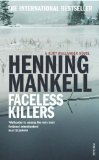
Are all Henning Mankell books similar?

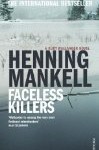
Faceless Killers (Kurt Wallander Mystery)

Scandinavian crime fiction seems to be everywhere at the moment. All the authors are compared to each other, despite the fact their books are very different in style. Henning Mankell has been on my radar for a long time and I was interested to see how his books would compare to the likes of Larsson and Nesbo. Unfortunately, I have the feeling that his books are the weakest of the three, but having only read a small section of his writing I wanted to check that I wasn’t missing out on his best work.

I started to read Faceless Killers (the first of the Wallander books) over the weekend, but I quickly became frustrated and abandoned it after 70 pages. Wallander appeared to be a stereotypical cardboard cutout detective and no attempts were made to bring him to life. There was no atmosphere and the plot seemed implausible.

I also struggled with the poor quality of the writing. The simplicity was almost child-like in places.

Overall, I wasn’t very impressed with the section I read.

Does Faceless Killers have a good ending?

Does the Wallander series improve as it progresses?

Are any of Mankell’s other books worth reading?

Or, should I forget the books and stick to the Wallander DVDs?

Categories
2010 Books in Translation

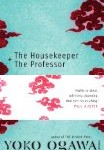
The Housekeeper and The Professor – Yoko Ogawa

The Housekeeper and the Professor Translated from the Japanese by Stephen Snyder

Five words from the blurb: maths, memory, affection, riddles, past

People have raved about The Housekeeper and The Professor ever since its release last year, but although I enjoyed reading it I wasn’t bowled over in the way most other readers have been.

The book centres on a maths professor with a short-term memory only eighty minutes long. He vividly remembers events from his past, but all new information is quickly forgotten. This means that the professor never recognises his housekeeper and she must reintroduce herself each morning. Despite this fact she becomes enchanted by him. He shows her the beauty of numbers and forms a strong bond with her son.

This is a beautiful little book, but I think its main charm is the way that it introduces a love for mathematics.

I ran my fingers over the lines of the formula, a long chain of numbers and symbols that flowed from one page to the next. As I followed the chain, link by link, the room faded and I found myself in a dark, silent place of numbers. But I felt no fear, certain in the knowledge that the Professor would guide me toward eternal, unchangeable truths.

The professor introduces prime numbers, perfect numbers, amicable numbers and many other basic mathematical concepts. The problem was that I was already aware of most of them and so they didn’t produce the magical sense of wonder that they have clearly induced in others.

The writing was simple and engaging, but it wasn’t as emotional as I was expecting. The overall feeling was one of tenderness and I think this is the type of book that you should read if you are in the mood something gentle and heartwarming.

If you can’t imagine enjoying a novel containing mathematics then I urge you to give this book a try, but if you already have a love of numbers it may be a bit too basic.

.

The thoughts of other bloggers:

Characters, themes and a gently developing plot are perfectly blended. Fleur Fisher in her World

I would never have believed that mathematics could be so seamlessly woven into fiction that I hardly questioned its presence there. Erin Reads

The Housekeeper and the Professor is a very quiet, very subtle book. At the same time, it’s a page-turner, a book you just don’t want to put down. How often do you come across books like this? su [shu]

Categories
2011 Booker Prize YA

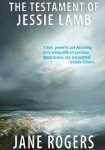
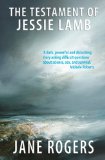
The Testament of Jessie Lamb – Jane Rogers

The Testament of Jessie Lamb Long listed for 2011 Booker Prize

Five words from the blurb: women, dying, girl, innocent, heroism

The Testament of Jessie Lamb is one of the most frustrating books I’ve ever read. I was gripped by the fast paced plot, but internally screaming at the frustrating actions of the narrator, the unlikely global events and the numerous bizarre plot twists.

The Testament of Jessie Lamb is set in the near future, at a time when an act of biological terrorism has caused all women to die during pregnancy. This leads the human race into imaging a time when there will no longer be any children, when the aging population will have to support themselves and when they will eventually have to face the extinction of the human race. The premise appealed to me greatly, but unfortunately the book concentrated on a seemingly bizarre solution to this problem (minor spoiler – highlight to read) – teenage girls who don’t see any point of living if they can’t have children (roll-eyes) decide to sacrifice themselves to create a new generation. ARRRGGHH!!

It is hard to explain what frustrated me most about this book, but I’ll try my best! In a similar way to The Unit, I had problems with the basic premise of the story and I was unable to suspend my disbelief because there were so many holes in the plot. I don’t want to spoil anything for those who haven’t read the book so I’ll just give a couple of examples from the first section: Why would terrorists want to wipe out the entire human race? Normally terrorists just want to kill a certain group of society. Why couldn’t they save the women by using contraception/the morning after pill/hysterectomies?  

The most annoying aspect of this book was the narrator, Jessie Lamb. Her teenage outlook on life had me internally screaming at the pages. Everything problem had a simple solution and she seemed to think she had the power to save the world by herself. Her ideas were one-dimensional and failed to take into account the complexity of the adult world. I have had similar issues with teenage protagonists in the past (eg. The Stars in the Bright Sky, Pigeon English) and can see that people like this exist, but they drive me nuts. Reading about them is not an enjoyable experience. (Also note the awkward sentence structure in this passage).

We had spent hours discussing it. Why shouldn’t anyone over 10 should be able to elect representatives and have them stand up for us in parliament? How else could kids have power? But Nat and Lisa said why would you want to join in their stupid system. And Lisa said why did Iain  care, he already had the vote and it’d done a fat lot of good.

I’d describe this as a good YA book – one that allows teenagers to think about a few issues relevant to them. I admit to being dragged along by the pace of the plot, but as an adult reader I was unsatisfied. My negative reaction to this book proves that it has affected me on some level and that is surely better than the boredom/indifference produced by others. I’d therefore recommend it as the perfect book group choice – I guarantee it will create a lively debate!

If you enjoy reading about life from the perspective of teenagers then I’m sure you’ll appreciate this book, but I can’t understand why it made the Booker long list.

.