Categories
2011 Thriller

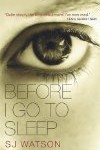
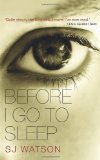
Before I Go To Sleep by SJ Watson

Before I Go To Sleep

Five words from the blurb: identity, past, forgotten, overnight, trust

Before I Go To Sleep centres on Christine, a woman who wakes up every morning unable to recognise her own husband. An accident left her without the ability to memorise new events and so she forgets the previous day every time she goes to sleep. In an effort to understand more about herself she begins a diary, but this leads her to discover that her husband is lying to her. The question is whether he is doing this to protect her or for another, more sinister reason…

The book is so compelling I read it in a single sitting. Desperate to know what happens I sped through the pages so quickly I was practically skim reading. I has been a long time since I’ve read something so compelling and I thoroughly enjoyed the few hours in which it entertained me.

Unfortunately everything began to fall apart afterwards. The more I thought about the book, the more holes I found in it. The reader has to suspend disbelief throughout and there are a lot of things that don’t add up if you start to think about them for any length of time. The numerous flaws make this a great book club choice – it is possible to talk about it for a long time!

On a positive note, this book does bring up some interesting points about identity:

Will I still wake up, in my seventies or eighties, thinking myself to be at the beginning of my life? Will I wake with no idea that my bones are old, my joints stiff and heavy? I can’t imagine how I will cope, when I discover that my life is behind me, has already happened, and I have nothing to show for it. No treasure house of recollection, no wealth of experience, no accumulation of wisdom to pass on. What are we, if not an accumulation of our memories?

Unfortunately they don’t have much depth and are more a springboard for your own thoughts and ideas, rather than providing any real insight.

The addictive nature of this book means that I’ll recommend it to a lot of people, especially those who aren’t keen readers, but stay away if you’re looking for anything more than a couple of hours of entertainment.


This book received a mixed reception from other bloggers:

It’s an original, fast paced, gripping and rather high concept novel. Savidge Reads

It began to get repetitive in the middle of the book… You’ve Gotta Read This!

Why it has been so much more popular than what I consider to be much better suspense books published last year, I don’t know. Petrona

Superb story telling. JoV’s Book Pyramid

My Evening with SJ Watson

I recently went to hear SJ Watson speak at a local library and thought I’d share some interesting snippets from the evening:

  • Inspiration for the book came from a man called Henry Gustav Molaison who had severe epilepsy. An operation to correct his condition left him with the ability to only remember the last 10 – 15 minutes.
  • He once went through a stage where he worried there weren’t enough characters in the book and so inserted a scene where Christine and Ben had a dinner party with friends from his school. It didn’t work and so the scene was quickly deleted.
  • It took him six months to write the first draft and he did so whilst working part time for the NHS.
  • The first draft of the book contained lots of scenes in which Christine did the ironing and made coffee.
  • He toyed with the idea of writing from a male perspective for about a minute and then decided it wouldn’t work.
  • Lots of people assume SJ Watson is female, but when asked about their surprise on finding the author is male he says it is harder for him to get inside the head of a serial killer than to write from the perspective of a woman.
  • His advice for new writers: Don’t write what you know, but if you want to write about something make sure you know about it.
  • In the past SJ Watson tried writing a book based on himself, but it was too boring!

If you ever get the chance to hear SJ Watson speak I recommend it as he is an entertaining public speaker.
Categories
Other

The Best Narrative Nonfiction Books

Last year I wrote a post about having different criteria for fiction versus nonfiction books. The comment section became laden with fantastic narrative non-fiction recommendations and I also received many via twitter. I thought it would be a shame to keep my new found knowledge secret, so here are the books that people were most passionate about:
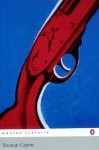
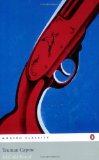
In Cold Blood : A True Account of a Multiple Murder and Its Consequences (Penguin Modern Classics)

In Cold Blood by Truman Capote

One of the first true crime books to introduce both the killers and their victims, this is commonly thought to the best piece of narrative nonfiction ever written.

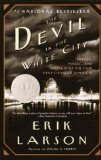
The Devil in the White City: Murder, Magic, and Madness at the Fair That Changed America (Vintage)

The Devil in the White City by Erik Larson

The story of a serial killer who targeted visitors to the 1893 Chicago World Fair; this book also contains details of the politics, architecture and science of the period.

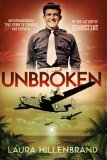
Unbroken

Unbroken by Laura Hillenbrand

During WWII an American bomber crashes into the Pacific Ocean and a young lieutenant manages to scramble onto a life-raft. This book tells his amazing story of survival as he battles against starvation, sharks and the enemy.

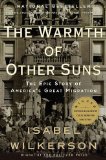
The Warmth of Other Suns: The Epic Story of America's Great Migration (Vintage)

The Warmth of Other Suns by Isabel Wilkerson

Chronicles the decade-long migration of black Americans who fled the south in order to find better lives in the north and west of America.

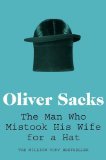
The Man Who Mistook His Wife for a Hat

The Man Who Mistook His Wife for a Hat by Oliver Sacks

A collection of short stories that showcase a variety of different neurological conditions.

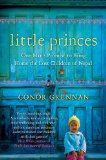
Little Princes: One Man's Promise to Bring Home the Lost Children of Nepal

Little Princes by Conor Grennan

The story of the author’s year in Nepal and his efforts to reunite children sold into slavery with their parents.

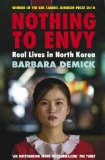
Nothing to Envy: Real Lives in North Korea

Nothing to Envy by Barbara Demick

The stories of six people living in North Korea which reveal the culture and lifestyle of those living within this secretive country.

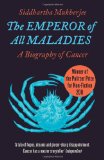
The Emperor of All Maladies

The Emperor of All Maladies by Siddhartha Mukherjee

The history of cancer, from the Greek slave who cut of her own breast, through to modern radiation and chemotherapy treatment.

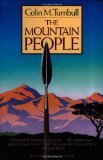
Mountain People

Mountain People by Colin Turnbull

The description of how one African tribe survived a famine by selfishly abandoning all family ties.

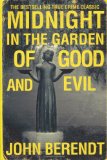
Midnight in the Garden of Good and Evil

Midnight in the Garden of Good and Evil by John Berendt

This book is part travelogue, part true crime and its vivid descriptions have apparently increased tourism to Savannah.

What do you think of this list?

Have I missed out any masterpieces of narrative non-fiction?

Categories
Uncategorized

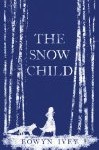
The Snow Child by Eowyn Ivey

The Snow Child

Five words from the blurb: Alaskan, wilderness, snow, girl, magical

The Snow Child is a magical little book. It manages to balance on the fine line between magical realism and reality, ensuring the reader is kept guessing as to which side of that fence this book lies.

The story is set in the Canadian wilderness, where one couple relocate in an effort to forget the pain of being childless. One day they build a snowman in their garden and are surprised to wake up the next morning to discover that it has gone. They see a girl running through the woods and are sure their snowman has come to life, but is the child real or a figment of their over-active imagination?

Mabel was no longer sure of the child’s age. She seemed both newly born and as old as the mountains, her eyes animated with unspoken thoughts, her face impassive. Here with a child in the trees, all things seemed possible and true.

This book was quick and easy to read, but packed with an oppressive snowy atmosphere. The basic story is heavily influenced by a Russian fairytale and although this book did have a childlike feel it was tinged with the grief of being unable to produce a child. I often have difficulties with adult fairy-tales, but this book was so grounded in reality that I didn’t have this problem.

The characters weren’t that well rounded, but there was something about their simplicity that added to that magical feel. I connected to them straight away and felt their roller-coaster of emotions throughout.

It isn’t a particularly heavy read, but it is an entertaining one. It will make you smile and keep you guessing.

Recommended to anyone looking for a bit of escapism.

.

The thoughts of other bloggers

It hooked me from page one and did not let me go until I closed the final pages… The Book Whisperer

I wasn’t completely sure what was going on ….. but ultimately the charm and the strengths of this fairytale re-imagined won out over minor confusions and quibbles. Linus’s Blanket

Everything about it felt utterly authentic and completely effortless… Book Monkey

Categories
2011

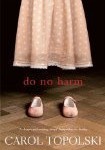
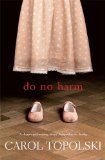
Do No Harm by Carol Topolski

Do No Harm

Five words from the blurb: gynaecologist, family, alone, bad, dark

Last year I read Carol Topolski’s debut novel, Monster Love, and was impressed by the powerful insight into the mind of a child abuser. Her second novel, Do No Harm, is much more accomplished in terms of structure, but its subltly means I am less likely to remember it than its deeply flawed predecessor.

Do No Harm centres on Virginia, a highly respected gynaecologist, who has secret violent tendencies. The book does an outstanding job of getting inside the head of an individual who appears perfectly normal on the surface, but is in fact thinking terrible things.

Carol Topolski does an amazing job of creating an entire cast of realistic characters. Even those who only appear for a brief time are fully formed and believable. I know very few writers who are capable of creating such a diverse range characters and I think this can be put down to her career as a psychoanalytic psychotherapist. She really understands what makes people tick and it is a joy to be transported into the minds of so many different people.

The book can be quite confusing as it flips forwards and backwards in time. Events are seen through the eyes of numerous different people, including Virginia’s parents, friends and work colleagues, and it sometimes takes a while to work out who is narrating each section. I’m sure this was deliberate and it did lead to some interesting mistakes on my part – I particularly liked the section early in the book where I assumed she was viciously murdering someone, when in fact she was just preparing a roast dinner!

I’d describe this as a compelling character study rather than a crime novel. The truth about Virginia is slowly revealed over the course of the book, but as so many little hints are left along the way it was never surprising to learn them.

I’d recommend this book to anyone interested in the mindset of those who commit crimes and I look forward to following the rest of Carol Topolski’s writing career.


Categories
Other

December and January Summary + Plans for February

I had a lovely break from blogging over the Christmas/New Year holiday and so am including my December reading in this post. My blogging break means that I read far more books in December than I reviewed. This has enabled me to get a bit ahead of myself and I’m loving the extra buffer this has given me. It means that I’ve been able to read some books that aren’t published for months and indulge in chunksters without impacting the number of posts I can write.

For some reason I lost my harsh abandonment policy at the beginning of December and let several disappointing reads creep into the schedule. I’m having a big crackdown at the moment and I’m pleased to say that my January reading has been outstanding. I read three 4.5 star books and one 5 star one (review for The Death of Grass coming shortly). I just hope I can keep this up!

Books of the Month

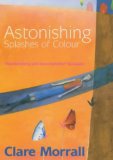
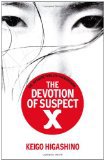
Astonishing Splashes Of Colour : The Devotion Of Suspect X

Books Reviewed in December and January

Astonishing Splashes of Colour by Clare Morrall 

Glasshopper by Isabel Ashdown 

Central Reservation by Will le Flemming 

The Child Who by Simon Lelic 

The Lady’s Slipper by Deborah Swift 

Riding the Black Cockatoo by John Damalis 

Chang & Eng by Darin Strauss 

The Sandalwood Tree by Elle Newmark 

The End of Everything by Megan Abbott 

The Sealed Letter by Emma Donoghue 

All Is Song by Samantha Harvey DNF

Rules of Civility by Amor Towles DNF

Plans for February

I’m going to continue reading randomly, but these books are calling to me loudly at the moment:

Into the Darkest Corner by Elizabeth Haynes

In Cold Blood by Truman Capote

The Swarm by Frank Schatzing

Do No Harm by Carol Topolski

The Twyborn Affair by Patrick White

The Orphan Master’s Son by Adam Johnson

Have a wonderful February!

Categories
Discussions Other

A Year of Abandoning Books

This time last year I resolved to abandon any book that failed to excite me. When I made that resolution I failed to appreciate how difficult this task would be, but a year down the line I’m getting better at it, having learnt a lot more about my reading personality.

How Does it End?

The problem with abandoning books is that you don’t get to find out what happens in the end. That sounds obvious, but, particularly in the case of popular classics, this really bothered me. I initially found it very difficult to abandon these books, wasting days of valuable reading time ploughing through to the end. There are a few solutions I’ve utilised in the past year, but you’re probably not going to like them:

  • Skim read the dull sections
  • Ask someone else what happens in the end (Twitter is particularly useful for this!)
  • Read the plot summary on wikipedia
  • Watch the film version

Over the course of the past year I’ve used all these tactics at some point and now have a vague idea of what happens in a large number of books that weren’t to my taste, freeing my time to enjoy those books that do capture my imagination. I’m sure that some people will be appalled that I advocate skimming the classics, but the reality is that there are far too many to read in a lifetime and so I’d prefer to dedicate my reading time to those that are enjoyable.

Abandonment Dilemmas

My biggest abandonment dilemmas come from books that have both positive and negative attributes. The problem is that these often make the most interesting reviews and I enjoy thinking and writing about these flawed books. As I mentioned last week, these flawed books frequently stick in my memory and  go on to become favourites. So for the time being I am going to continue reading/reviewing them.

Boring Books

I don’t have any qualms about abandoning boring books. Anything that fails to elicit a response (either positive or negative) will be abandoned. I’ve discovered that the more ruthless you are, the higher the overall quality of your reading will be. Earlier this month I read two amazing books. I then went through a mini reading slump where everything seemed dull in comparison. I ended up abandoning 6 books in a row, but that 7th book was outstanding. When reading books in quick succession the gems seem to shine far brighter and I’m so pleased that I’ve set high standards for my reading.

How This Affects the Blog

It amuses me to read the part in my post last January about my blog being a more positive place to be. I didn’t realise that mentioning all my abandonments would mean that the negatives would far out-weigh the positives. This is a reflection of reality as there are very few outstanding books in the world, but I quickly realised that it wouldn’t be right to mention all the books I abandon on my blog. I now only mention those where I feel I have something to add – the times when I find myself going against the tide of public opinion or find a particularly well written book that I know others will love.

I will probably not mention:

  • Books I give up after just a few pages and can’t really explain why
  • Books from debut authors, especially those that haven’t had much coverage
  • Older books that aren’t well known
  • My failed attempts to investigate unusual genres

I will still continue to give honest negative reviews and mention books I’ve abandoned (particularly prize winning books). I’m hoping the only difference you’ll see is the higher number of highly rated books.

I think the key is to be open to trying new things. I am often surprised by which books I end up loving. My battles with dull books have shown that you normally know which ones will work for you from the first few pages.

Don’t be scared to abandon books!

Be ruthless and spend your reading time wisely!