Categories
2012

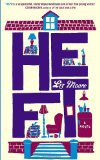
Heft by Liz Moore

Heft

Five words from the blurb: quirky, pair, unexpected, help, family

Heft is the heartwarming story of Arthur, a morbidly obese man who has been confined to his own home for the last ten years. Trapped in this lonely world he is surprised to receive a phone call from a former student who knows nothing of the way he now lives. The joy of remembering their relationship compels Arthur to think about what is important in his life and this starts a chain of events that are both moving and entertaining.

I immediately fell in love with Arthur’s character. Our society often labels overweight people as being a bit stupid and so it was refreshing to learn that Arthur was a former academic, with an intelligent outlook on life and a wonderful personality. I loved the way the simple writing enabled me get inside his head and really understand his motivations.

For years I have made very little effort to reduce the amount that I eat for I have no cause to. Despite this I am neither immobile nor bedridden but I do feel winded when I walk more than six or seven steps, & I do feel very shy and sort of encased in something as if I were a cello or an expensive gun.

The book was easy to read and I was hooked from the beginning, keen to know how Arthur’s life would develop. Other characters were introduced along the way and every single one of them felt realistic and well drawn.

The premise was quite simple and there were a few points when I worried the book would become overly sentimental, but I don’t think it ever crossed that line. The author cleverly avoided all stereotypes and frequently managed to surprise the reader. The ending was especially satisfying.

This book isn’t deep or literary, but it is a very entertaining story. I’ll be pushing Heft into the hands of many people, especially non-readers. This is the kind of book that ignites a passion for reading and makes the perfect light holiday read.

Recommended.

.

The thoughts of other bloggers:

…one of my favorite kinds of novels, complete with dysfunctional, but well developed characters that I was cheering on all the way. Bibliophile by the Sea

 I adored Heft – it’s a quietly moving novel that digs deep… She Is Too Fond of Books

 I loved the characters even when they frustrated me. 5 Minutes for Books


Categories
2000 - 2007 Non Fiction

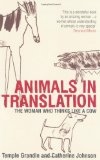
Animals in Translation by Temple Grandin and Catherine Johnson

Animals in Translation: The Woman Who Thinks Like a Cow

Five words from the blurb: autism, animal, behaviour, welfare, research

I hadn’t heard of Temple Grandin until I started doing research into autism, but it is almost impossible to go to an autism seminar without her name being mentioned several times. Her autism has given her a special insight into the way animals think and she has probably done more to improve the lives of farm animals than anyone else. Although I had heard a lot about her life and inventions I hadn’t read any of her books and so I decided it was time to change that.

Animals in Translation was her first book on animal behaviour. She has gone on to write several other books about more specific areas, but I think this is the perfect introduction to her work.

The book begins with a brief introduction to Grandin’s life and an explanation as to why animals and autistic people have a similar outlook on the world. It goes on to explain why animals behave in certain ways and how we can help them to be happier. If you’d like to know why pigs are scared of yellow things, how roosters can become rapists, and why autistic people enjoy being in a squeeze machine, this is the book for you!

Animals in Translation is interesting to both animal lovers and those wishing to learn more about autism. There are lots of little tips about dog training and this book will be especially useful to farmers who own several different species of livestock. I occasionally became bored by the focus on farm animals, longing for the odd mention of a monkey or a crocodile, but as cows and pigs are Grandin’s area of expertise I suppose this focus is understandable.

The explanations of the way autistic people see the world were insightful. It can be hard for us neurotypical people to comprehend, but this book explained the autistic outlook more clearly than any other book I’ve read on the subject.

Brief summaries of many pieces of scientific research were included, but most of the book was made up of Grandin’s own observations.

The single worst thing you can do to an animal emotionally is to make it feel afraid. Fear is so bad for animals that I think it is worse than pain……I’m sure that’s why I relate to prey animals like cattle as strongly as I do: because my emotional makeup is similar. Fear is a horrible problem for people with autism – fear and anxiety.

I didn’t agree with everything (eg. dog pack theory and the use of shock collars), but as this book was first published 12 years ago it is possible that Grandin has changed her mind on these issues too.

Temple Grandin has a special perspective on the animal kingdom and I’m looking forward to reading more of her work.

.

Temple Grandin is talking in the UK on 18th June. Members of the National Autistic Society can book tickets here. I’ve just booked a ticket and am looking forward to hearing her speak.

Have you read any of Temple Grandin’s books?

Have you ever heard her speak?


Categories
2012 Recommended books

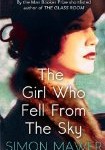
The Girl Who Fell From The Sky by Simon Mawer

The Girl Who Fell From The Sky Note: This book is released as Trapeze in the US

Five words from the blurb: recruited, undercover, France, training, war

In WWII specially trained women were dropped into France, performing secret operations in difficult, often dangerous conditions. The Girl Who Fell From The Sky is based on their work, focusing on Marian Sutro, a young bilingual woman who is selected to undergo specialist training. The book details her preparations in England and the dangerous reality of living undercover in France.

I was aware that women worked undercover in France, but I knew nothing of their rigorous training. The tiny details brought this period of history to life and I loved learning the secrets that these women had to master in order to stay alive.

He delivered a first-aid course in reverse – how to cut the brachial artery with a knife slash to the forearm, how to dislocate the knee with a single stab of the foot, how to snap a man’s spine by dropping him across your knee, how to inflict the maximum damage in the minimum time. You could render a man helpless with a handclap to both ears, knock him unconscious with a matchbox, kill him with an umbrella.

The book was simple to read, but engaging throughout. I think it will have broad appeal because it can be enjoyed on many levels. I’m sure that a re-read would reveal many hidden messages, but the pace and intrigue of the plot will ensure it appeals to a wider audience.

Marian’s character was perfectly drawn. She was a complex, flawed individual, but I cared deeply for her. Her relationships were realistic and her bonds with other people brought up complex dilemmas about love and trust.

The plot wasn’t complex or gimmicky – it was good old fashioned storytelling at its best. It could be described as a coming-of-age story, historical fiction, or a romance, but I don’t think it is possible to pigeon hole this book. It is simply the story of an ordinary woman placed in an extraordinary position. It shows how resilient human beings are and encourages the reader to question how they`d react in similar situations.

My only criticism was the inclusion of a few cringe-worthy sex scenes. I expect to see this book included in longlist for this year’s Bad Sex in Literature Award, but as these passages were very small I’m willing to forgive it.

The Glass Room was one of my favourite reads in 2009, but although The Girl Who Fell From The Sky is far simpler in terms of structure, I think it is the slightly better book. It is easy to underestimate the skill it takes to write something so simple, yet so powerful.

This book sheds light on a small, but important, area of history and its themes will have lasting appeal.

It is my favourite book of the year so far. Highly recommended.

.


Categories
Uncategorized

April Summary and Plans for May

April has been a fairly average reading month for me. The star ratings below suggest that I haven’t read anything outstanding, but luckily that isn’t the case. I’ve actually read The Girl Who Fell From The Sky by Simon Mawer (my book of the year so far) and Heft by Liz Moore (an entertaining and touching book about a housebound overweight man that will probably make my top ten of 2012). I’ve also started HHhH by Laurent Binet, which is touted as THE book of 2012. I’m sure all will score or more, but unfortunately you’ll have to wait until sometime in May for my reviews.

Book of the Month

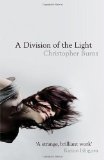
A Division of the Light

Books Reviewed in April

A Division of the Light by Christopher Burns 

A Death in the Family by Karl Ove Knausgaard 

In Cold Blood by Truman Capote 

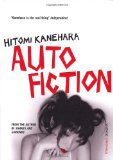
Autofiction by Hitomi Kanehara 

Every Contact Leaves a Trace by Elanor Dymott 

The Great Singapore Penis Panic by Scott Mendelson 

A Land More Kind Than Home by Wiley Cash

Signs of Life by Anna Raverat

Plans for May

Many of my May reads come from the 2012 Commonwealth Writers’ Prize Shortlist. I’ve been on a buying/library reserving frenzy and now have the following available to read:

Pao by Kerry Young

Chinaman by Shehan Karunatilaka

Jubilee by Shelley Harris

Rebirth by Jahnavi Barua

I also hope to read:

The Street Sweeper by Elliot Perlman

The Lifeboat by Charlotte Rogan

The Soldier’s Return by Melvyn Bragg

I’ll try to squeeze in a few random choices from the overgrown TBR pile too.

I hope that you have a wonderful May!


Categories
2000 - 2007 Books in Translation

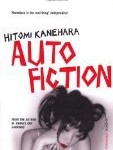
Autofiction by Hitomi Kanehara

Autofiction Translated from the Japanese by David James Karashima

Five words from the blurb: love, disturbed, woman, sinister, meaning

I love Japanese fiction and so snapped up this book when I saw it in my local library. The title refers to the practice of writing fictional autobiographies and so it is hard not to think about how much of this book has been experienced by the author. I’m hoping that Rin and Shin, the couple described in this book, are entirely fictional and that the meta-fictional elements are clever plot devices rather than descriptions of real events.

Rin is deeply in love with her husband, but she is paranoid that something will destroy their happiness. On the way home from their honeymoon she begins to suspect that her husband is flirting with a flight attendant. Her thoughts quickly escalate until she is certain her blissful life is over. The book then travels backwards in time, revealing the reasons for her overactive imagination.

I often imagine that people are trying to kill me. And by doing so, I can turn every day into a fight for survival. Nobody has a time or place where they are free from the danger of death. People forget that. People live their lives with the basic assumption that they will still be alive the day after. I can’t live like that. A plane might come crashing into me at any moment and kill me. A truck might smash into me or I might suffer a heart attack, a stroke or even a subarachnoid haemorrhage. So I’m always standing face to face with the prospect of imminent death.

I had mixed feelings about this book. I found the first and last chapters to be totally engrossing. It was fascinating to see inside Rin’s disturbed mind and by the end I understood why she had these feelings.

The central chapters were less appealing. I found her meandering thoughts difficult to engage with and felt that whole sections added nothing to the reading experience.

The writing was easy to read and, unlike a lot of similar Japanese fiction, wasn’t unnecessarily dark or scary. Some scenes could be described as emotionally disturbing, but there wasn’t any gore or graphic violence.

This is a short book, but it is an interesting addition to the field of literature that looks into the paranoid mind.

Recommended to fans of Japanese literature.

.

Have you read anything written by Hitomi Kanehara?

Is her debut novel, Snakes and Earrings, similar to this?

Categories
2012 Other

Two Gripping Reads

A Land More Kind Than Home

A Land More Kind Than Home by Wiley Cash

Five words from the blurb: autistic, violence, tragic, religion, family

A Land More Kind Than Home is set in North Carolina and follows the family of Christopher, an autistic boy who is murdered during a church service. The book is based on real events and reveals the shocking way in which some people use religion to justify their horrific actions.

“Then you should know Matthew 9:33.” he said. “If you know your Bible, then you should know it says that ‘when the demon was driven out, the man who had been mute spoke.’ And I reckon you should probably know Matthew 17 too, about the man who brought his son to Jesus because he was sick with a disease brought on by a demon and the disciples didn’t have the faith enough to heal him.”
“I know both of them stories,” I said. “I’ve read them both many, many times.”
“They ain’t no stories,” he said. “You can believe me when I tell you that.” This book was captivating throughout.

The pace was perfect and it was packed with atmosphere, allowing the reader to become immersed in southern American life.

The characters were well drawn and I felt a deep empathy for the entire family. My only criticism is that the book focused on the grieving family. Their reaction to the murder of Christopher was sensitively portrayed and moving, but I longed to hear from the other members of the congregation. I wanted to know how they felt about the murder of a child and why they allowed it to happen in front of their eyes. Hearing things from the point-of-view of the murderer would also have added another dimension to the story.

The story was engaging, but its simplicity meant that I ended the book feeling a little disappointed. I’m afraid I like my books to be a little more complex.

 .

Signs of Life

Signs of Life by Anna Raverat

Five words from the blurb: affair, memory, incomplete, control, truth

Signs of Life is narrated by Rachel. Ten years ago she had an affair that went terribly wrong. The book reveals what happened all those years ago in a narrative so gripping it was impossible to put down.

The plot was fast paced, with hints as to what happened sprinkled through the text. The narrative jumped forwards and backwards in time, but the story was easy to follow and although it was sometimes deliberately misleading, I was never confused as to what was happening.

The writing was simple and direct, but there were a few deeper thoughts to keep literary fiction fans happy.

“I don’t know where the line is between passion and obsession but I think obsession is passion that gets stuck.
Perhaps boundaries are like horizons; not fixed, they move as you move, like the end of the rainbow. It’s like trying to see when water turns to steam – you can never find that precise moment.

Unfortunately everything went downhill at the end. The build-up was fantastic, but the final few pages left me asking “Is that it?” I was expecting something something much more complex/clever.

If you loved Before I Go to Sleep then I suspect you’ll enjoy this, but I’m afraid I was a little disappointed.

.