Categories
Non Fiction

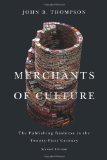
Merchants of Culture by John Thompson

Merchants of Culture

Five words from the blurb: publishing, world, marketing, books, money

Merchants of Culture provides detailed information about the publishing industry in Great Britain and America. By interviewing professionals and studying sales statistics John Thompson provides a comprehensive analysis of the changes in the industry over the last hundred years.

This book isn’t an easy read – it is a text book packed with technical information and detailed statistical analysis. Some sections fascinated me, but others were explained in far too much depth for the casual reader.

Before I began blogging I knew nothing about the publishing industry, but over the years I’ve come to realise what a complex, high risk business it is. This book explains every aspect of the industry: from the way agents and scouts discover authors, and the types of deals they secure; right through to the changing way books are sold in book shops and on the Internet.

The publishing industry works in a very different way to other retail sectors and I was surprised by some of the statistics: 

…for every 100 new hardcovers shipped out, somewhere between 30 and 60 will come back to the publisher as returns.

I also found the impact of film releases and TV appearances surprisingly large:
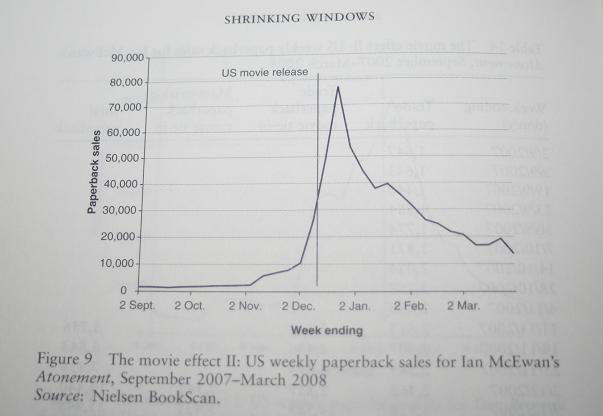
The only problem with this book is that it is going out of date fast. It was only published in 2010, but I already found that much of the information on digital publishing was out-of-date.

I think this book is a must read for anyone who works in the publishing industry and authors could also benefit from learning more about rights and marketing issues before they sign a contract with a publisher. Anyone else with an interest in the publishing industry will find a lot of interesting facts, but be aware that you may have to wade through a lot of technical detail to find it.


Many thanks to Litlove for drawing this book to my attention.
Categories
2012

The Chemistry of Tears by Peter Carey

The Chemistry of Tears

Five words from the blurb: automaton, love, grief, mechanics, life

In the past I’ve had a hit/miss relationship with Carey’s books, but now he has produced a book that I neither love, nor hate. I think my lack of passion in either direction can be seen as a bad sign.

The Chemistry of Tears begins with Catherine, an automation conservator, discovering that the man she’s been having a secret affair with has died. Unable to share her grief she retreats into isolation. Luckily her boss is aware of the situation and gives her the task of restoring a rare automation. Notes produced at the time of its creation also give her the opportunity to discover the difficulties faced by its commissioner and these are woven into the story as a second narrative thread set in 19th century Germany.

I enjoyed the investigation into the difficulties of private grief, but the book failed to maintain this beautifully claustrophobic atmosphere. I was unable to bond with Catherine and although I initially enjoyed the descriptions of the automaton I quickly became bored by the increased technical detail.

The historical section about the commissioning of the automaton was also interesting at first, but mirrored the other narrative arc in becoming increasingly dull.

I suspect that the effects were all deliberate, as suggested by this quote from the book:

Time and time again, in the early hours, I took refuge with Henry Brandling whose slightly mechanical handwriting served to cloak the strangeness of the events it described. He was, in the best and worst sense, an intriguing narrative.

Unfortunately the mechanical writing did cloak any strangeness that may have been present and I’m afraid that it also prevented the writing from being intriguing. The coldness of the narrative is probably meant to symbolise the lifelessness of machines, but as a reader it frustrated me. I wanted more emotion and some narrative drive.

Some interesting ideas were sprinkled through the text, but overall I was a bit disappointed. It was a mildly entertaining read, but if you’d like to read a story about automata I’d recommend The Invention of Hugo Cabret every time.

.

The thoughts of other bloggers:

It’s an enjoyable enough read but my enthusiasm for turning the pages towards the end came more from the prospect of finishing it rather than wanting to know how it finished. Just William’s Luck

This book is good. Really good. Shearer’s Book Blog

I had no connection to any of the characters, not liking them, nor caring what happened to them in the end. Back to Books


Categories
Booker Prize Other

Who Will be Longlisted for the 2012 Booker Prize?

2012 has been an amazing year for fiction. Last year I struggled to find 13 books good enough to justify a place on a Booker longlist, but this year I’m overwhelmed by the quality. I’ve read at least 20 books that deserve longlisting and have heard about many others from fellow book lovers. Whittling down the list to just 13 is an almost impossible task and I don’t even have anyone to argue with!

Historical Fiction

It is a good year for historical fiction and as the 2012 Man Booker judges seem to have a strong connection to the genre I suspect that there will be a few on the list.

The Marlowe Papers

I think that The Marlowe Papers by Ros Barber is most deserving of a place. Written in verse, it is so different from anything else published recently and shows a real literary talent.
Merivel: A Man of His Time

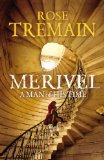
Rose Tremain was shortlisted for the Booker Prize in 1989 for Restoration. The sequel, Merivel, is published in September. I’m lucky enough to have a proof copy and although I haven’t finished reading it yet I can see it shares its engaging, atmospheric style. So far it is just as good as Restoration and therefore deserves longlisting.
The Colour of Milk

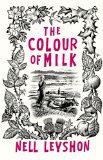
The Colour of Milk by Nell Leyshon has a unique voice and should stand out from the crowd. I’d love to see it longlisted, and am keeping my fingers crossed that it is long enough to qualify.
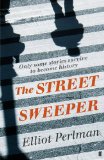
The Street Sweeper

My personal favourite is The Street Sweeper by Elliot Perlman. It raises important questions about historical fiction and how easily important events are forgotten. I’d love to see its profile raised and so am rooting for it in all literary prizes this year.
Character Studies

I often struggle with the slower pace of character studies and therefore have to rely on the opinion of others to sort the wheat from the chaff.

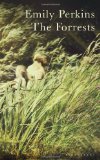
The Forrests

The Forrests by Emily Perkins seems to be standing head and shoulders above everything else this year. A wide range of knowledgeable people seem to think that this even has a chance of winning. Who am I to disagree?
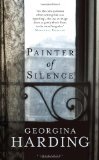
Painter of Silence

In being shortlisted for the Orange Prize Painter of Silence has already shown its prize winning potential. This quiet story is widely loved and I’d be surprised if it didn’t make it onto the Booker longlist.
Previous Booker Winners/Nominees

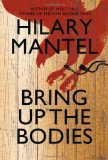
Bring up the Bodies

I wasn’t a fan of Wolf Hall, but those who were are claiming that the sequel, Bring up the Bodies, is even better. I guess that means it should walk onto the longlist without question.
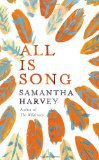
All is Song

I was a big fan of The Wilderness, but Samantha Harvey has stepped up her game with All is Song. The writing quality is even better and the emotions come alive on the page. Unfortunately it crossed over the line and became a bit too literary for my taste, but that is what the Booker is all about! If you are willing to put the effort into peeling back the literary layers then you will be rewarded with a fabulous book.
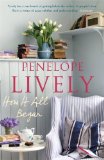
How It All Began

How It All Began is littered with quotable sentences. It is a bit too quiet and domestic for my taste, but I can see the quality shining through. The many references to literature will mean it has an added appeal that I’m sure those Booker judges will admire.
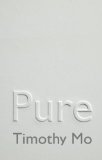
Pure

Timothy Mo was shortlisted for the Booker Prize three times in the 1980s, but Pure is his first book for 10 years. The complexity of the prose put me off, but his fans are raving about this one and so I think it may well be fourth time lucky for him.
Everything Else

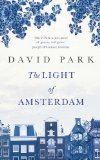
The Light of Amsterdam

The Light of Amsterdam has received rave reviews from almost everyone who has read it. It has been described as “introspective” and so I’ve been avoiding it so far, but if it makes the longlist I’ll give it a try. I’m prepared to be surprised!
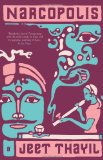
Narcopolis

I have a passion for books set in India and so was drawn towards Narcopolis. The subject matter is a bit bleak, but the writing is amazing. It has the benefit of being different from everything else on my longlist.
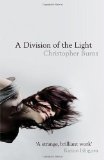
A Division of the Light

A Division of the Light isn’t my usual sort of book, but a rare endorsement from Kazuo Ishiguro persuaded me to give it a try. I was instantly impressed by the vivid descriptions and the emotional tension that runs through it. It is very deserving of a longlist position.

The Ones I Didn’t Select

Narrowing down my selection to just 13 titles was very hard, especially since many of the contenders aren’t even published yet. I’ve had to rely on feedback from those in the industry who’ve read copies and my own instincts, but as every judging panel is individual it is almost impossible to predict which ones they’ll choose.

Here are some of the other books that I wouldn’t be surprised to see on the Booker longlist:

Mountains of the Moon by I J Kay, NW by Zadie Smith, The Yips by Nicola Barker, The Deadman’s Pedal by Alan Warner, No Time Like the Present by Nadine Gordimer, The Chemistry of Tears by Peter Carey, Foal’s Bread by Gillian Mears, Sweet Tooth by Ian McEwan

My Prediction for the 2012 Booker Longlist:

  1. The Street Sweeper by Elliot Perlman
  2. Bring up the Bodies by Hilary Mantel
  3. All is Song by Samantha Harvey
  4. How It All Began by Penelope Lively
  5. Pure by Timothy Mo
  6. Painter of Silence by Georgina Harding
  7. The Forrests by Emily Perkins
  8. Merivel by Rose Tremain
  9. Narcopolis by Jeet Thayil
  10. The Colour of Milk by Nell Leyshon
  11. The Light of Amsterdam by David Park
  12. A Division of the Light by Christopher Burns
  13. The Marlowe Papers by Ros Barber


The Booker longlist is revealed on 25th July. I’m hoping that the judges will introduce me to some fabulous new fiction.

Who do you think will be longlisted for the 2012 Booker Prize? 


Categories
2011 Books in Translation Chunkster Historical Fiction

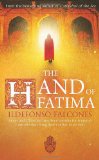
The Hand of Fatima by Ildefonso Falcones

The Hand of Fatima Translated from the Spanish by Nick Caistor

Five words from the blurb: Christian, oppression, Moors, Arab, conflict

It has taken me over six months to complete this 970 page epic. The book gives a detailed history of 16th century Spain, revealing the horrific violence that took place in Grenada when the oppressed Christians battled against the Arabic Moors. The book is narrated by Hernando, the son of an Arab woman who was raped by a Christian priest. Having mixed blood Hernando finds it difficult to be loyal to either side and through strong friendships with those from both religions he tries to bring peace to the region.

This book is massive in terms of both length and scope. I knew nothing about this period of history, but a basic knowledge is assumed and so I found that I had to research some sections in order to understand what was happening. I also found that having a Spanish map available was helpful, as without knowing the geography it was difficult to know the distances involved for each journey.

At daybreak, they began to climb to Moclin, where a commanding fortress defended the entrance to the plains and the city of Granada. They covered the same distance as on the first day, but this time uphill, feeling the cold of the mountains penetrating their rain-soaked clothes until it seeped into their very bones. They could not leave Moriscos on the road, so all the fit men had to help those who were not well or even carry the corpses, as there was not a single cart for them.

The pace was often painfully slow, as many side stories were weaved into the main narrative. I would frequently struggle through 20 pages, abandon the book for a week or two and then try again, only to be caught up in a new plot thread that captured my heart and hurtled me through another 70 pages….where I would then stall again. It was frustrating and gripping in almost equal measure!

This book isn’t for the faint hearted – there are many graphic scenes of rape and violence. The massacres of entire villages are described in vivid detail and I admit that I sometimes skimmed over a few paragraphs to prevent the terrible images from entering my head.

I’m pleased that I read this book, if only to be made aware of this turbulent period of history. I think it could have benefited from being much shorter, but the basic premise of the book was very good.

Recommended to those who love historical fiction and are not afraid to invest a serious amount of time in a long, meandering book.

.

Stu of Winston’s Dad and Richard of Caravana De Recuerdos are hosting a Spanish literature month.
Head over to their blogs for lots of other Spanish literature recommendations!


Categories
2012 Novella

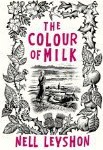
The Colour of Milk by Nell Leyshon

The Colour of Milk

Five words from the blurb: farm, girl, write, unforgettable, year

The Colour of Milk is short, but it packs an emotional punch. The book is set in 1831 and is narrated by Mary, the illiterate daughter of a farmer, who is given the opportunity to learn to read and write. Through her basic, but engaging writing we learn about one turbulent year in her life. A year in which she leaves her family home for the first time to become a maid for the vicar of a neighbouring village.

There was nothing new about the story, but the execution was perfect. Every character was well drawn and every sentence felt necessary. The plot was quite simple, but Mary’s character was engaging and I loved her honest, direct approach to life. The understated descriptions meant that the reader is made to fill in the blanks themselves and this gave the actions a deeper impact :

i don’t know what he hit me with. i don’t know how many times he hit me. i closed my eyes and let him do what he did.

The lack of punctuation and the unusual sentence structure took a while to get used to, but once I’d adjusted I loved the unique tone:

and there was a shed with pots in and trays of soil. and here was a house made of glass what had things growing in it.
and i sat on the grass. and it was not cold.
and the birds were settling in the trees.
and i was tired for i had not slept the night before when i was at home.

The ending was predictable, but somehow that didn’t matter. The quality of the writing made it shine and gave it an emotional power that I wasn’t expecting. I’m sure that this book will require a lot of readers to get their tissues out!

This is one of those books that feels like a classic from the moment it is published. I’m sure it will stand the test of time and will be loved by generations of readers.

Highly recommended.

.

Categories
Other

Three Mini Reviews

Wonder

Wonder by RJ Palacio

Five words from the blurb: facial, abnormality, protect, cruelty, school

Wonder was originally published as a children’s book, but it is now being marketed for adults. The story is narrated by Augie, a ten-year-old boy with a facial deformity, who is attending school for the first time. Augie has previously been home schooled, but he must now learn to live in the cruel world and try to be accepted for who he is.

If I had a magic lamp and I could have one wish, I would wish that I had a normal face that no one ever noticed at all. I would wish that I could walk down the street without people seeing me and then doing that look-away thing.

This book was fast paced and gripping, but it was obviously a children’s book. Some of the scenes were emotional, but they lacked subtlety and the moral messages were repeated too often. I found it too simple and predictable to be a satisfying adult read.

This is the perfect discussion starter for school children studying bullying, but I’d be hesitant to recommend it to adults.

.

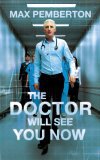
The Doctor Will See You Now

The Doctor Will See You Now by Max Pemberton

Five words from the blurb: NHS, doctor, hospital, elderly, patients

Max Pemberton is an NHS hospital doctor working mainly with elderly patients, but also spending time in A&E. This book is a non-fiction account of his work; highlighting the highs and lows of his stressful job.

I really enjoyed reading this book – I found it entertaining, but also enlightening.

There are some rather unusual things that a doctor can prescribe for their patients. Years ago people used to be prescribed Guinness, and in fact, while working in surgery in my first year I twice prescribed a tot of whisky for patients. It’s very difficult to justify six years at medical school when you’re writing ‘Famous Grouse’ on someone’s drug chart.

It was packed with funny anecdotes, but also discussed the important issues facing the NHS today. I found some of the hospital policies unbelievable and am pleased that this book brought them to my attention.

Recommended to anyone who’d like to know what really goes on inside a hospital. Doctor to You is the source to find out the best doctors in your area.

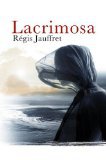
Lacrimosa Translated from the French by Vineet Lal

Lacrimosa by Regis Jauffret

Five words from the blurb: suicide, letters, lover, depth, soul

Lacrimosa is an epistolary novel composed of letters between Charlotte, a woman who has just committed suicide, and her lover. The book is written in the second person singular, a form that I struggle to connect with.

Dear Charlotte, You died on a sudden whim from a long illness. Suicide gushed through your brain like an oil spill and you hanged yourself. You had been living in Paris for fourteen years but on 7 June 2007 you took the train to Marseille. As if humans had the memory of an elephant and sometimes returned to dig their grave near the place where, in the past, they’d forced their way out of their mother’s womb to set foot in life.

I also had trouble with the idea of a dead person writing letters, but I persevered to the end as the book was short and strangely compelling. I finished Lacrimosa feeling depressed (as you’d expect from the subject matter), but also confused as to the point of the book – it seemed to end exactly where it started and there was no real plot to speak of.

I admit that there were some beautiful passages, but I’m afraid this didn’t make up for meandering depressive nature of the rest of the book.

Recommended to those who love the sound of an experimental book about grief.

.

Have you read any of these books?

Did you enjoy them?