Categories
Other

The Best Books of 2013? Part 1: Authors We Know and Love

I’ve been flicking through publisher catalogues and asking booksellers and publicists about the most exciting books to be published in the UK in 2013. Next week I’ll let you know which debut authors I’m excited about, but this week it is the turn of the authors we are already familiar with.

Here are the 2013 new releases that caught my eye:

Note: UK release month shown, date may be different in other countries.
Instructions for a Heatwave

Instructions for a Heatwave by Maggie O’Farrell

February, Tinder Press

Maggie O’Farrell is an author I discovered through blogging. I enjoyed The Hand That First Held Mine and The Vanishing Act of Esme Lennox so am looking forward to trying her new book about a father who unexpectedly disappears. It is already getting a lot of buzz from the blogging community so it is definitely one to look out for.
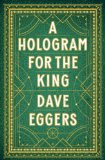
A Hologram for the King

A Hologram for the King by Dave Eggers

February, Penguin

Zeitoun is one of the best books I’ve read this year and I think Eggers could become one of my favourite authors. A Hologram for the King has already been a big hit in the US. It makes its UK debut in 2013 and I’m looking forward to reading Egger’s take on an American business man struggling to make a life for himself in Saudi Arabia.
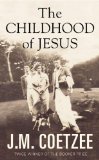
The Childhood of Jesus

The Childhood of Jesus by JM Coetzee

March, Harvill Secker

I have a love/hate relationship with Coetzee’s writing, but I’m hoping his latest book about a man and boy arriving in a mysterious desert camp will be more similar to Disgrace than his autobiographies.
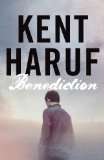
Benediction

Benediction by Kent Haruf

March, Picador

Haruf is one of those authors I’ve always wanted to try. I own a copy of Plainsong and will probably try to read that first, but I’m sure a lot of you will be excited to learn that he is releasing a new book about life and death, family and community, set out on the high plains of Colorado.
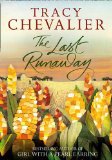
The Last Runaway

The Last Runaway by Tracy Chevalier

March, Harper Collins

Chevalier is famous for writing The Girl with the Pearl Earring. She returns in 2013 with a new book set in a Quaker community.
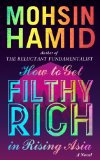
How to Get Filthy Rich in Rising Asia

How to Get Filthy Rich in Rising Asia by Mohsin Hamid

March, Penguin

I loved The Reluctant Fundamentalist so hope this new book about a man’s journey from impoverished rural boy to corporate tycoon will be just as compelling.
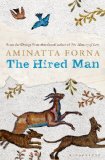
The Hired Man

The Hired Man by Aminatta Forna

March, Bloomsbury

The Memory of Love was shortlisted for the 2011 Orange Prize and, although it was a bit too slow for me, the quality of the writing was enough to persuade me to give her another try. Her latest book is set in a quiet Croatian town, but again looks at the effects of war on a community. I’m sure this is one to watch when the prize lists start to be announced.
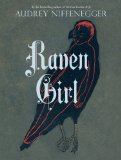
Raven Girl

Raven Girl by Audrey Niffenegger

May, Abrams Comicarts

I think this book wins premise of the year:

 A postman encounters a fledgling raven while on the edge of his route and decides to take her home. The unlikely couple fall in love and conceive a child – an extraordinary raven girl trapped in a human body.
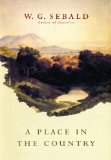
A Place in the Country

A Place in the Country by WG Sebald

May, Hamish Hamilton

Sebald is another author I’ve always wanted to try. His new book fuses biography and essay to reflect on six of the figures who shaped him as a person and as a writer, from Jean-Jacques Rousseau to Jan Peter Tripp.
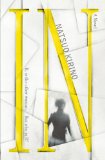
In

In by Natsuo Kirino

June, Harvill Secker

Out by Natsuo Kirino is my favourite thriller so I’m very excited that her new book is going to be published here later this year. In contains an investigation into a best-selling author and promises to question the differences between life and literature. I hope it lives up to my exceedingly high expectations.

Untitled Novel by Diane Setterfield

May, Orion

I couldn’t find any details about this book, but if it as compelling as The Thirteenth Tale it will be a great book.

Americanah by Chimamanda Ngozi Adichie

May, 4th Estate

Chimamanda Ngozi Adichie’s Half of a Yellow Sun and Purple Hibiscus were both outstanding. Her new book sees a slight change in that it is moving away from Africa and spanning three continents, but I am sure it will be just as good. I am very excited about this one.

And the Mountains Echoed by Khaled Hosseini

May, Bloomsbury 

I loved The Kite Runner and A Thousand Splendid Suns so was excited to hear about Hosseini’s third novel. This one investigates the relationships formed between brothers and sisters and promises to be equally compelling. I can’t wait to read it!

Grace and Mary by Lord Melvyn Bragg

May, Sceptre

I only discovered Melvyn Bragg’s writing this year, but I am shocked he isn’t more widely read. I’m going to continue reading The Soldier’s Return Trilogy, but this is one to keep an eye out for too.

A Suitable Girl by Vikram Seth

Date TBC, Penguin

I have been saying it for months/years, but I really am going to read A Suitable Boy soon! It’s much anticipated sequel is going to be published next year so that should give me the incentive to start now!

Untitled Novel by Rohinton Mistry

December, Faber

Saving the best for last! I know nothing about this book, but I am still more excited about it than any other 2013 publication. Rohinton Mistry is my favourite author and it doesn’t really matter what it is about – Mistry’s writing is so amazing that I guarantee this book will be fantastic!
 

Which 2013 books are you most looking forward to?

Come back next week to see which books by debut/lesser known authors I’m looking forward to!

Categories
1990s Books in Translation Recommended books

The First Century After Beatrice by Amin Maalouf

The First Century After Beatrice Translated from the French by Dorothy S. Blair

Winner of the 1993 Prix Goncourt

Five words from the blurb: beans, guarantee, birth, male, survival

I hadn’t heard of The First Century After Beatrice until it was recommended by A Fiction Habit, but I’m very pleased I read it and am surprised that this compelling, thought provoking book is not more well known.

The First Century After Beatrice begins with the discovery of a bean on an Egyptian market stall. This bean, derived from the scarab beetle, is said to guarantee the birth of a male child. Word quickly spreads and societies that favour male offspring are quick to take up the new invention. Slowly the population begins to be dominated by men and this book gives a realistic portrayal of the devastating effect this has on the human race.

The writing style was unusual in that the ideas were modern and very relevant to our society today, but the text felt as though it had been written a hundred years ago. It had the feel of a timeless classic, with fantastic quotable sections on almost every page:

‘You must think of public opinion as some bulky individual lying asleep. From time to time, he wakes up with a start, and you must take advantage of this to whisper an idea in his ear, but only the simplest, most concise idea, for he’s already stretching himself, turning over, yawning, he’s going to fall asleep again and you won’t be able to keep him awake or awaken him again.’

The pace was quite slow, but I was gripped to the moral dilemmas and interesting concepts that were introduced throughout. It reminded me of Blindness, one of my favourite books, in the way it took a simple idea and followed it through to its frighteningly realistic conclusion.

My only complaint was that the writing was quite detached from the horrors that were occurring. Normally this would be a big problem for me, but in this case I was so busy trying to decide what I’d do in each scenario that I didn’t mind the coldness.

Overall this was a fantastic book that deserves a far larger audience. Highly recommended.

.

Categories
Other

November Summary and Plans for December

November has been a fantastic reading month for me. I read a string of fantastic books and have been enjoying a diverse range of subject matters. Variety really is the spice of life and I’m going to continue to seek out stranger books in the future.

Book of the Month

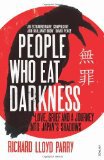
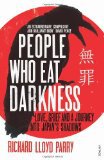
People Who Eat Darkness: Love, Grief and a Journey into Japan's Shadows

In any other month these two books would have been ‘Book of the Month’; so I’ll highlight them here too:

.
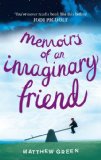
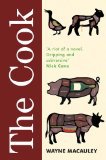
Memoirs Of An Imaginary Friend The Cook

Books Reviewed in November

People Who Eat Darkness by Richard Lloyd Parry 

The Cook by Wayne Macauley 

Memoirs of an Imaginary Friend by Matthew Green (audio book) 

The Human Part by Kari Hotakainen 

The Cow by Beat Sterchi 

Just My Typo compiled by Drummond Moir 

The Hundred-Year-Old Man Who Climbed Out of the Window and Disappeared by Jonas Jonasson 

Fahrenheit 451 by Ray Bradbury 

Jamilia by Chingiz Aïtmatov 

The Finno-Ugrian Vampire by Noémi Szécsi 

Plans for December

For some reason I’m being drawn towards chunksters at the moment. The long, dark nights are encouraging me to settle down with increasingly weighty tomes and so I don’t plan to read many books in December.

My short list of long books are:

Parallel Stories by Peter Nádas
The Bronze Horseman by Paullina Simons
A Suitable Boy by Vikram Seth
Canada by Richard Ford

I’ll probably mix things up with a few shorter books, but I haven’t decided what they’ll be yet. Luckily I’ve finished most of the books in my sidebar so I still have lots of books to tell you about.

Have a wonderful December!

Categories
Other

Just My Typo compiled by Drummond Moir

Just My Typo: From Sinning with the Choir to the Large Hardon Collider

Five words from the blurb: mistake, printed, embarrassing, hilarious, history

Just My Type is a compilation of typographical errors from a wide range of sources. The only thing linking them is that the mistakes created are funny. When an unsolicited review copy dropped through my letterbox I was initially sceptical  –  I have a problem with people who laugh at the grammatical and spelling errors of others.  But I have to admit I’m a hypocrite on this one and was quickly won over by the numerous amusing examples.

The book is divided into twelve sections, each dealing with a different area. Literature, politics and the legal system are all covered, but my favourite was the chapter made possible by new technology – the autocorrect function for text messaging. I know I’ve sent a few dodgy messages in my time, but luckily they’ve tended to make no sense. Some of the examples in this book could easily cause big problems for the sender:

The majority of the book is made up of small examples of faulty text. Here are a few of my favourites:

Yoko Ono will talk about her husband John Lennon, who was killed in an interview with Barbara Walters. TV Magazine (US), 1987

Not to be taken whilst beastfeeding. Warning on paracetamol bottle

Keeping all food under cover is the first step towards ridding the house of aunts. Albany Journal

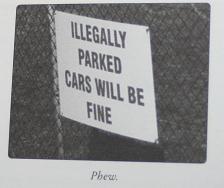
There are also photographs and historical documents to illustrate some of the more visual blunders.

Overall I found this to be an entertaining little book. It’s the perfect stocking filler.

.

Categories
2012 Crime Non Fiction Recommended books

People Who Eat Darkness by Richard Lloyd Parry

People Who Eat Darkness: Love, Grief and a Journey into Japan's Shadows

Five words from the blurb: Tokyo, hostess, dismembered, fate, family

Lucie Blackman was just 21-years-old when she disappeared in June 2000. She had been working as a hostess in Tokyo and for months no-one knew what had happened to her. It was suggested that she’d joined a cult or run away with a boyfriend, but after a difficult search her dismembered remains were discovered in an isolated cave. Richard Lloyd Parry spent 10 years researching the case; interviewing everyone and gaining detailed information about the personalities of those involved. People Who Eat Darkness provides an insight into the bizarre world of the Japanese hostess and explains the legal system in the country. It is a fascinating book that must rank as one of the best pieces of true crime ever written.

The pace of the book was slow and Parry’s meticulous research was obvious throughout, but what made this book special was the way that every single person was thoroughly developed. I felt as though I knew them, understanding their actions and feeling their pain/frustration.

The book was perfectly structured. In the hands of a lesser author the story could be seen as quite simple, but Parry arranged the fragments to create an engaging book that introduced new threads of information at exactly the right time. Complex moral questions were raised throughout and I’m still thinking about what I’d do if faced with similar circumstances.

People are afraid of stories like Lucie’s, stories about meaningless, brutal, premature death; but most of them can not own up to their fear. So they take comfort in the certainty of moral judgements, which they brandish like burning branches waved in the night to keep off the wolves.

Lucie’s case was high profile and I remembering hearing some details from the press at the time, but this book revealed how little the public actually know about an individual case. I was shocked by certain aspects of the story and surprised by the number of twists and turns.

I love Japanese culture and this book provided me with lots of interesting snippets of information. I found the details about the police force particularly revealing – who knew that the symbol for the Tokyo Metropolitan Police is an orange fairy named Peepo?!

Overall this was an impressive book that will shock and entertain you. Highly recommended.

.

The thoughts of other bloggers:

It was a fascinating  and intense read. The Literary Stew

…a thorough investigation of a crime that can offer no answer to its questions. In Bed with Books

…a compelling and unputdownable read, that will haunt you for days afterward. A Bookish Way of Life


Categories
2012 Books in Translation Other Prizes

The Human Part by Kari Hotakainen

The Human Part Translated from the Finnish by Owen F Witesman

Winner of France’s Prix du Courrier International and Finland’s Runeburg Prize

Five words from the blurb: author, sell, life, family, stories

The Human Part begins with an author approaching an elderly woman at a book fair. The author has writer’s block and with no idea what to write next he offers to buy the woman’s life story for €7000. She agrees, but after telling her story she begins to worry about the way he will depict certain events. The book cleverly shows how difficult relationships within a family can be and how an individual’s perception of a situation can be clouded by their history.

This book was instantly engaging and I fell in love with Salme, the elderly woman, and the way she wasn’t afraid to put her viewpoint across.

First of all, and in partial defense of myself, I should say that I do not like made-up books or the people who write them. It has always irritated me that they are taken seriously, that people get so immersed in them and listen carefully to the people who write them. I am now referring to the novels and other things on the shelves labelled “fiction” or “translated fiction”. It irritated me even more when Parvo and I found out that people go all the way to other countries to find these made-up stories and that people who have studied other languages transfer these obvious lies over into our language.

Her grumpiness charmed me and I quickly felt as though I knew her. The book did a fantastic job of explaining the complex mixture of emotions that exist within a family and how life changes as everyone grows up. There were some beautiful observations, some of which were really poignant:

…human sorrow comes from never being able to be the same age as one’s children.

As the book progressed it became more complex, with the author and Salme both presenting different versions of events. The reader must piece together the information to work out the truth, but unfortunately the big secret that looms over the whole book wasn’t that interesting. Once revealed it lost its mysterious power and so I found the ending a little disappointing. Despite this problem it was still a wonderful book, containing the perfect mixture of humor and darker moments. It is easy to see why this book has won so many prizes and I’m keen to try more of Hotakainen’s other books.

.

The thoughts of other bloggers:

 The whole book just oozes humanity, both in showing us the faulty and sometimes ugly side of human life and opinion, and in showing us love and understanding. Iris on Books

….a marvelous and fascinating tale… Nordic Book Blog

…with a satirical, tongue-in-cheek view of modern Finland, the novel ultimately descends into darkness… Reader Dad