Categories
1950s Books in Translation Classics Nobel Prize

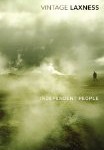
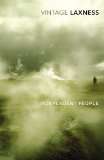
Independent People – Halldór Laxness

 Halldor Laxness won the Nobel Prize for Literature in 1955

Five words from the blurb: Iceland, epic, sheep, independence, masterpiece

I first heard about Independent People when David Mitchell, one of my favourite authors, recommended it. He seems to have a very good taste in books and so I now snap up anything that he highlights.

Independent People focuses on Bjartur, a sheep farmer living in an isolated part of Iceland. His beliefs are totally different from any other culture I have read about before and I found it fascinating to learn about them. Bjartur’s main aim in life is to achieve independence.

The man who lives on his own land is an independent man. He is his own master. If I can keep my sheep alive through the winter and can pay what has been stipulated from year to year – then I pay what has been stipulated; and I have kept my sheep alive. No, it is freedom that we are all after, Titla. He who pays his way is a king. He who keeps his sheep alive through the winter lives in a palace.

He wants to be able to survive without having to rely on anyone else and the lengths he goes to are a bit extreme. For example, he finds it rude to ask anyone for help, to the extent that in a life or death situation he offered to help someone with a mundane task until that person was grateful and asked if there was anything they could do for him.

This book is beautifully written and packed with quotable sentences and amazing descriptions.

“She peeped out from under the blanket, and there he was, still sitting on the edge of his bed, when all the others had gone to sleep, mending some implement or other. No one stirred any longer, the living-room fast asleep; he alone was awake, alone was chanting, sitting there in his shirt, thickset and high-shouldered, with strong arms and tangled hair. His eyebrows were shaggy, steep and beetling like the crags in the mountain, but on his thick throat there was a soft place under the roots of his beard. She watched him awhile without his knowing: the strongest man in the world and the greatest poet, knew the answer to everything, understood all ballads, was afraid of nothing and nobody, fought all of them on a distant strand, independent and free, one against all.”

I admit that there were several slow sections, but this is one of those books where all effort is rewarded. It was wonderful to be able to gain an insight into a culture so different from my own. I now have some appreciation for the harshness of life in the Icelandic countryside and am just a little bit more grateful for my centrally heated home.

Highly recommended.

The thoughts of other bloggers:

….brilliant in a depressing, downtrodden sort of way. BookNAround

His language is poetic, touching and authentic. Caribou’s Mom

It is not an easy read, but is well worth the effort. Musings

Have you read anything written by Halldor Laxness?

Which of his other books do you recommend?
 

Categories
Discussions Other

Don’t read the blurb!

Publishers want you to buy their books and so will do their very best to ensure that the blurb on the back of every book is well written and appealing. They can make even the most boring book sound great. Don’t believe me? Go and find a book that you didn’t enjoy and read its blurb. Sounds appealing doesn’t it?!!

The problem is that blurbs give little insight into what the experience of reading the book will actually be like. I recommend ignoring the blurb and turning straight to the first page of the book. Reading the first few paragraphs will give you much more useful information about the writing style and a better indication of whether or not you are likely to enjoy reading the book.

I have always known that I am terrible at selecting books simply from reading the blurb. In my pre-blogging days I wandered around libraries picking up books that had appealing covers and found a very poor percentage of them to be enjoyable. Now I have an array of wonderful bloggers to provide me with book recommendations I rarely read the blurb on a book, but last week I investigated the Waterstone’s 11 and noticed just how poorly my thoughts on the blurb matched with my enjoyment of the first chapter. If I had to rank the books based solely on their blurbs then Pigeon English wouldn’t have got near the top, but I only had to read the first few lines to know that it is a book I’ll love.
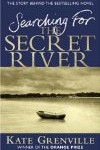
Photo credit: Darwin Bell, Flickr

Another problem with blurbs is that they often give away too much of the plot for me. I prefer to know as little as possible about the story that is about to unfold and even though few books give away the ending, most will explain the events of the first 50 pages. I don’t like having the first hour of my reading experience summarised in a few lines – it lessens its impact.

What is the solution?

I occasionally receive proof copies of books in plain, unmarked covers. I love the fact that I am unable to form an impression of these books from the cover – it leads me to begin the book without any preconceptions and an open mind. I know that people like their pretty covers too much for this to ever happen and so the most I can do is persuade you not to read the blurb before reading the book. Try to decide if a book is for you by reading words the author has written, not the publisher.

Do you like reading blurbs?

When deciding whether or not to read a book do you read the blurb or the first page?

Categories
Other

Read or Reject? #2

My New Year’s Resolution is to give up on books that aren’t outstanding. I don’t want to miss out on a gem that happens to have a poor beginning, so I hope that you can help me sort the wheat from the chaff.

Should I continue reading any of these books?

Searching for the Secret River by Kate Grenville

Five words from the blurb: Thames, Australia, memoir, writing, generations

I loved The Secret River and so was excited about reading this little book in which Kate Grenville explains the research that she did before writing that amazing piece of historical fiction.

Searching for the Secret River was easy to read and quite interesting, but I found that all the particularly interesting facts had been included in The Secret River and so I felt I was reading things I already knew. The process of research doesn’t really interest me – I much prefer to have all the detail coated in a fantastic plot and acted out by wonderful characters. I suspect that this book might to useful to anyone wanting to learn about researching historical fiction, but I am far more interested in reading the finished product. I gave up after about 70 pages.

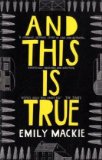
And This is True by Emily Mackie

Five words from the blurb: van, father, kiss, unpredictable, love

This book is different! It begins with a son kissing his sleeping father. The sexual desire of a son for his father is something I haven’t read about before, but for some reason this book didn’t quite ring true. I never felt any emotional connection to the characters and although it was packed with graphic descriptions of naked men they didn’t feel realistic. Perhaps I’ve just read too many extreme examples of the male mind recently (eg. The Slap, A Life Apart), but this felt too gentle. My mind kept wandering from the page and so I gave up after around 100 pages.

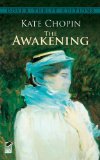
The Awakening by Kate Chopin

Five words from the blurb: women, marriage, motherhood, shocking, elegant

I know a lot of people love this book, but I’m afraid that I have a lot of issues with it and thought I’d better stop reading it before it wound me up too much. The flowery language annoyed me straight away and the whinging women quickly drove me mad. I don’t know why I have such a problem reading about these privileged people, but I’m quite pleased that I now have the power to banish them from my reading life. If you enjoy books like The Victorian Chaise-longue or The Yellow Wallpaper then I know you’ll love The Awakening, but I struggled to get through 20 pages of it.
Was I wrong to give up on any of these books?

Is there magic lurking in the final pages?

Categories
2011 Novella

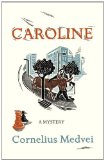
Caroline – Cornelius Medvei

Five words from the blurb: donkey, relationship, office, chess, fable

This is a lovely little book! It begins as a simple, but engaging story about one man’s bond with a donkey, but it slowly ventures away from reality, leaving you questioning what is true and what has just been invented by the author. It is very cleverly written and it took me a while to work out what was happening. The text is initially littered with fascinating facts about donkeys, but when I found myself wondering whether or not donkeys really can play chess I realised that I’d been had!

The exhilarating novelty of playing chess with a donkey more than made up for the successive defeats, and Caroline was positively skittish when we finished; she butted Arthur playfully in the back as he was returning the chess pieces – marked faintly with the imprint of her teeth – to the box.

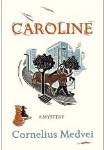
My only criticism is the wordMystery” in large type on the cover. I picked this book up because I was in the mood for a bit of crime solving and so was a bit disappointed that I wasn’t able to exercise my brain cells in that way.  

This is a short, but sweet book that could charm even the grumpiest of souls. Anyone who knows me would point out that any book described as “charming” would normally send me running in the opposite direction, but for some reason Caroline didn’t have that effect. I think that this was because the bizarre escapades of the impressively intelligent donkey entertained me in such an original way. I’m afraid I can’t let you know any more about the plot for fear of ruining this lovely little book, but I hope that I have revealed enough to intrigue you.

I recommend it, especially as a gift to animal lovers.

Categories
1920s Books in Translation Science Fiction

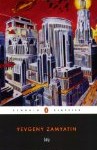
We – Yevgeny Zamyatin

 Translated from the Russian by Clarence Brown

Five words from the blurb: dystopia, totalitarian, masterpiece, individual, freedom

I hadn’t heard of this book until Michelle recommended it on my Literary Science Fiction post, but I’m so pleased that she bought it to my attention as I feel it is one of the most important dystopian fiction novels ever written.

We was originally written in 1921, but was suppressed in Russia and so first published in English, French and Czech, before finally being published in Russian in 1988. We is recognised to have been the inspiration behind George Orwell’s classic 1984, but on reading it I spotted key ideas that I’d read in many other books.

The plot follows D-503 (everyone is given a unique number, not a name) who lives in a totalitarian society built entierly from glass (so they can be spied on more easily). All aspects of life are controlled to the extent that everyone must get up, work and eat at exactly the same times each day. D-503 begins to have dreams and question the society he lives in. Everything changes when he discovers that there are other humans living outside OneState – haired humans who live free amongst the animals….

The book is very readable and hasn’t dated at all. It is amazing to think that it was written 90 years ago as most of the ideas and fears still hold true for us today. The book was packed with thought-provoking quotes: 

But, my dear readers, you’ll have to do just a little thinking. It helps a lot. Because, you know, all human history, as far back as we know it, is the history of moving from nomadic life to a more settled way of life. So, doesn’t it follow that the most settled form of life (ours) is by the same token the most perfect form of life (ours)?  If people used to wander over the earth from one end to the other, that only happened in prehistoric times, when there were nations and wars and trade discoveries of this and that America. But why do it now? Who needs it?

I was gripped throughout, but have to admit that a few things went over my head. I would have benefited from having a reading guide to explain some of the weirder sections, but I’m sure this is one of those books that gets better with each re-reading.

The only problem with this book was that I didn’t develop an emotional attachment to any of the characters. I was interested to see what would happen to them, but didn’t really care about their fate.

I think it is important for anyone interested in dystopian fiction to read this book, but if you after an emotional response to events then you need to look elsewhere.

The thoughts of other bloggers:

I’m glad I read We for the historical and contextual value as a dystopia, but I didn’t love it. Rebecca Reads

….the longer We went on, the more it reminded me of The Famished Road by Ben Okri with its endless blending of colour and dream. Books, Time, and Silence

…one of the weirdest, most disorienting things I’ve ever read. The Zen Leaf

Categories
Other

December and January Summary and Plans for February

Favourite Books of December/January:


Books Reviewed in January:

Year of Wonders – Geraldine Brooks  

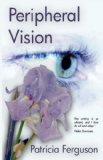
Peripheral Vision – Patricia Ferguson 

Wolf Totem – Jiang Rong 

Lonesome Dove – Larry McMurtry 

One Day – David Nicholls 

The Facility – Simon Lelic 

The Hand That First Held Mine – Maggie O’Farrell 

The Spider Truces – Tom Connolly 

The Way Things Look to Me – Roopa Farooki 

Books Reviewed in December:

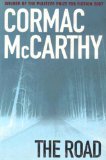
The Road – Cormac McCarthy 

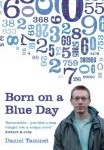
Born on a Blue Day – Daniel Tammet 

Player One by Douglas Coupland 

Hand Me Down World – Lloyd Jones 

The Harmony Silk Factory – Tash Aw 

Fordlandia – Greg Grandin 

The Spy Who Came in from the Cold – John Le Carré 

Finch – Jeff Vandermeer 

At the beginning of January I decided to change the way I read. I wanted to be quicker to give up on books that were failing to entertain me and concentrate on reading fantastic books. So how is it going? Really well! The quality of the books that I read in January was a big step up from previous months. I’m still learning, but I have just read three 4.5+ star books in a row (reviews coming soon!) and I don’t think that has ever happened to me before. I really hope that my run of amazing books will continue for as long as possible.

Plans for February 

The Lotus Eaters – Tatjana Soli

The Unit by Ninni Holmqvist

We by Yevgeny Zamyatin

Chess by Stefan Zweig

‘They’ by Rudyard Kipling

The Story of Forgetting by Stefan Block

The History of History: A Novel of Berlin by Ida Hattemer-Higgins

Portrait of the Mother as a Young Woman by Friedrich Christian Delius

This Blinding Absence of Light by Tahar Ben Jelloun

Tony and Susan by Austin M. Wright

The Periodic Table by Primo Levi

Boxer, Beetle by Ned Beauman

I hope that you have a wonderful February!