Categories
1980s Books in Translation Classics

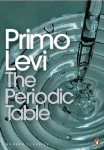
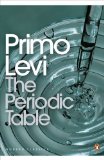
The Periodic Table – Primo Levi

  Translated from the Italian by Raymond Rosenthal

Five words from the blurb: chemist, element, metaphorical, human, society

Primo Levi was an Auschwitz survivor and the majority of his books focused on his experience in the concentration camp. This book is different in that the time in the concentration camp is barely mentioned, but instead we see the importance that chemistry played in his life – from his earliest school boy experiments to the difficulties of dealing with his former captors in a professional capacity. The book is made up of twenty-one short stories, each titled with the name of a different chemical element; each revealing a different aspect of the human condition.

This book is clearly very important, but as a reader I had mixed feelings. It was very hard to start – requiring a dictionary, an enormous amount of patience and a fair bit of googling to understand anything that was happening. It got easier to read as it progressed, but could never be read at any speed greater than a snail’s pace.

As a former chemist I am normally keen to read about science in literature, but I’m afraid that many sections reminded me of doing some tedious chemistry homework. The complete descriptions of various experiments bored me and I found the passion for chemistry a bit too strong.

Distilling is beautiful. First of all, because it is a slow, philosophic, and silent occupation, which keeps you busy but gives you time to think of other things, somewhat like riding a bike. Then, because it involves a metamorphosis from liquid to vapour (invisible), and from this once again to liquid; but in this double journey, up and down, purity is attained, an ambiguous and fascinating condition, which starts with chemistry and goes very far. And finally, when you set about distilling, you acquire the consciousness of repeating a ritual consecrated by the centuries, almost a religious act, in which from imperfect material you obtain the essence, the spirit, and in the first place alcohol, which gladdens the spirit and warms the heart.

Perhaps I don’t think deeply enough about things, but I always found distilling to be a frustrating past-time and so a passage like this didn’t connect with me.

The problem/genius of this book is that chemistry is a metaphor for so many different things and spotting the underlying meaning behind can be hard. Levi helps by dropping in a few obvious statements, but I’m sure that a lot of the symbolism went over my head.

The differences can be small, but they lead to radically different consequences, like a railroad’s switch-points; the chemist’s trade consists in good part in being aware of those differences, knowing them close up, and foreseeing their effects. And not only the chemist’s trade.

This is one of those books that needs to be studied to be fully appreciated. I don’t think that reading it at home, in isolation, will ever reveal the full power of the words. I’m really pleased that I completed the book, but can’t say it was an enjoyable or enlightening experience.

,

This is my first Primo Levi book, but I suspect that I might enjoy some of his other books more.

Have you read any of his books? Which do you recommend?

Categories
Other

Lovely Long Weekends

The lovely weather, the Royal Wedding and an abundance of long weekends has given the UK a party atmosphere that I haven’t seen before. People have had street parties and met their neighbours for the first time and everyone seems a little bit happier. It isn’t often that we are allowed to celebrate being British, but I am really enjoying seeing the flags flying for once.

I have been making the most of the sunshine and have had lots of great days out. I’ve just come back from a camping trip to Sussex in which…

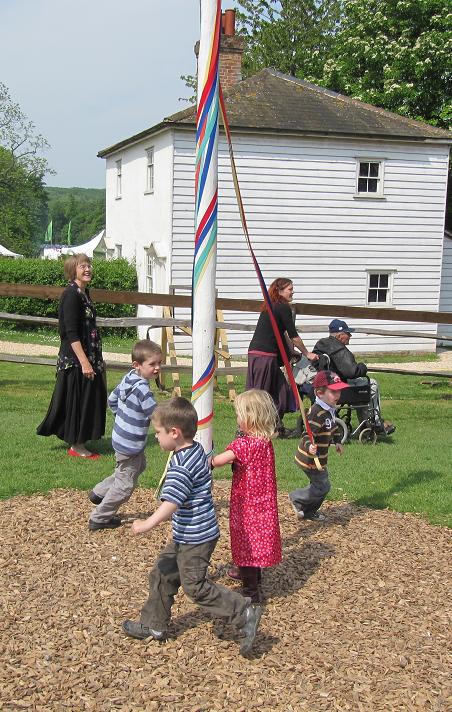
 …my boys got to dance around a May Pole, we saw some beautiful old buildings….


…and we visited an impressive castle.

.

.


.

The best thing is that my son’s school is closed next Thursday and Friday as well and so I’m going to have another long weekend. I hope I can cram many more great things into that weekend and that I’ll get some reading done between now and then.

I hope you’ve all had wonderful weekends too.

Categories
Uncategorized

April Summary and Plans for May

Book of the Month

Mountain People

Books Reviewed in April

The Mountain People – Colin Turnbull 

The Nobodies Album – Carolyn Parkhurst 

The Story of Forgetting – Stefan Merrill Block 

How I Became A Famous Novelist – Steve Hely 

Serious Men – Manu Joseph 

Mr Chartwell – Rebecca Hunt 

The Final Testament of the Holy Bible – James Frey 

Lyrics Alley by Leila Aboulela

Jamrach’s Menagerie by Carol Birch

The Invisible Bridge by Julie Orringer DNF

Swamplandia! by Karen Russell DNF

The Memory of Love by Aminatta Forna DNF

The Child Garden by Geoff Ryman DNF

The Diary of a Nobody by George Grossmith DNF

Salvage by Robert Edric DNF

Plans for May

The World According To Garp (Black Swan)

For the first time I have been persuaded to finish a book featured in one of my Read or Reject posts. I will be finishing The World According to Garp, if only so I can spot the way it has influenced other modern fiction. I’ve got my fingers crossed that it will at least have a few more great scenes.

I also plan to read some of these books:

Snow Flower and the Secret Fan by Lisa See

The Collaborator by Mirza Waheed

Pigeon English by Stephen Kelman.

Piercing by Ryu Murakami

Visitation by Jenny Erpenbeck

Empire Of The Sun by JG Ballard

The Interpretation of Murder by Jed Rubenfeld

The Illumination by Kevin Brockmeier

Categories
2010 2011 Books in Translation Non Fiction

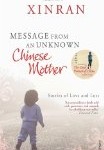
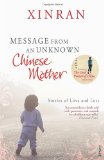
Message from an Unknown Chinese Mother – Xinran

  Translated from Chinese by Nicky Harman

A million female foetuses are aborted and tens of thousands of baby girls are abandoned every year in China. The desire for a male heir has clashed with the Chinese one-child policy to form a society where the birth of a girl is seen as a disappointment. This book gives the painful story of the mothers who abandoned or murdered their babies.

The book consists of ten short stories, each explaining the circumstances of a different mother. I found the introduction detailing the statistics and background of the Chinese traditions very interesting, but the short stories were a disappointment. The writing contained some scenes that should have been very distressing, but the emotional connection wasn’t there and each story was too short for me to fully understand the implications of keeping the baby girl.

‘What? Isn’t that killing her?’
‘Well, I can’t help it if you must use city folk’s language so, yes, that’s what it was.’
‘And what kinds of methods did you use?’
‘Oh, all sorts! Twisting the umbilical cord round the neck, then as soon as the head came out you could strangle it. If it came out head upwards, you could make it choke on the amniotic fluid, and then the baby couldn’t even take one breath. Or you could put the baby in a basin, hold wet “horse-dung” paper over its face and in a few seconds its legs would stop kicking. And for women who’d never had a baby boy, just girl after girl after girl until the family were fed up with it, it was simple enough to chuck it in the slops pail…

It seemed as though the book was packed with one abandonment/murder after another and the repetitiveness reduced the impact of the message.

It is clearly a difficult and emotive subject, but I think this BBC news report does a better job of getting the seriousness of the situation across. Perhaps my problems with short stories are the main cause of my disappointment with this book? I would have preferred it to focus on one story and to have seen the problems faced by a family that decided to keep their a girl.

.

This is the first book by Xinran that I’ve read. Do you think I’d enjoy any of her earlier books?

Categories
Other

Autism Awareness Month

April is autism awareness month and so I thought I’d take this opportunity to highlight the condition.

You probably know someone with undiagnosed autism.

It is estimated that one in every hundred people have autism, but a diagnosis is often only obtained for those at the more severe end of the spectrum.  

Does this sound like someone you know?

  • Rigidly follows rules
  •  Talks endlessly about a single subject
  • Unable to understand facial expressions
  • Incapable of lying
  • Has inflexible routines
  • Thinks literally
  • Has difficulty understanding sarcasm

My eldest son has Asperger’s syndrome – a type of high-functioning autism. He is a wonderful little boy and he leads a very happy life at home. The problems occur when he has to go outside and meet other people. He gets upset when people lie, cheat, and tell him confusing, scary stories. He doesn’t understand our complex interactions and gets frustrated when plans change. 

People with autism don’t understand why others behave in such a strange way and feel like aliens on their own planet. They can’t cope with the number of unwritten social rules that we live with and often become isolated and depressed.

Autism is a spectrum condition, meaning that it affects people to varying degrees. When you say autism most people think of the film Rainman, but the character played by Dustin Hoffman was an autistic savant – a condition which is very rare. To see what life is like for someone with a more common form of autism I highly recommend the film Adam.

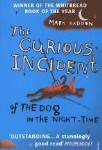
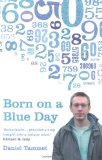
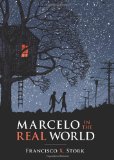
The Curious Incident of the Dog in the Night-time did a lot to bring the condition to the attention of the world, but I also recommend Born on a Blue Day and Marcelo in the Real World to anyone interested in finding out more.
The Curious Incident of the Dog in the Night-timeAdam [DVD]Born on a Blue DayMarcelo in the Real World

Which books/films do you recommend?

Categories
2008

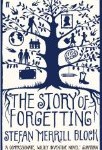
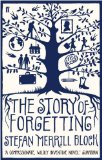
The Story of Forgetting – Stefan Merrill Block

The Story of Forgetting

Five words from the blurb: Alzheimer’s, truth, forgetting, family, history

The Story of Forgetting is a novel about a rare form of Alzheimer’s that affects sufferers at a devastatingly young age. Seth is just fifteen-years-old when his mother is diagnosed with early-onset Alzheimer’s. He realises that he knows very little about her past and so decides to investigate, discovering some surprising secrets about her childhood.

An intertwining narrative describes the life of twins, one of whom has the condition and one who doesn’t. The use of twins to show the decline in ability was extremely effective and led to some of the most touching scenes in the novel.

The book was inspired by real events in the author’s family history and combines detailed scientific information on the condition with a gripping narrative. The book shows the difficulties faced by the families of those affected, explains the history of the disease, and goes some way towards explaining how the brain is affected. This means that it is more than just a story and could also be used as a piece of reference material for those interested in learning about early-onset Alzheimer’s.

The human mind knows itself the least. The human mind may be able to trace the origin of life through billions of years to hydrothermal vents in the ocean’s floor, it may be able to comprehend and replicate the means by which the sun produces energy, it may even be able to describe events that took place at the beginning of the universe, 13.7 billion years ago, but when it comes to exactly how we have made these discoveries, exactly how our thoughts are thought, we know a minuscule amount. And much of what little we do know we’ve learned indirectly and for the saddest reasons, by the ways the mind malfunctions.

The large amount of science meant that it didn’t have the emotional impact of other books on the subject, but I think this could be seen as a good thing. There were some sad scenes, but overall I found this book to be more informative than emotional. Some people will probably find the science too detailed, but I appreciated the way in which the studies weren’t dumbed down for a mainstream audience.

The plot was clever and although I found much of it predicable there were still a few surprises sprinkled through the text.

I recommend this book to anyone interested in Alzheimer’s and the quality of the writing means that I am keen to try Stefan Merrill Block’s new novel, The Storm at the Door, when it is released later this year.

.

The thoughts of other bloggers:

This novel touched my heart with its sensitive portrayal of the human suffering associated with Alzheimer’s Disease.  Caribousmom

….some of the passages about the origin of life and memory and human evolution were just gorgeous.  Fyrefly’s Book Blog

……it’s a book to read slowly, and savor. Boston Bibliophile