Two Board Game Reviews: Asara and Indigo

At the beginning of the year I wrote about my favourite board games. Many of you came up with some wonderful suggestions and I’d like to thank those who recommended Ticket to Ride Europe - it is as good as you said it would be!

Since then I have been lucky enough to have been approached by Ravensburger Games. They asked if I would be willing to review two of their new games: Indigo and Asara. As a massive fan of board games I jumped at the chance and am pleased to report that they are both fantastic games.

Ravensburger Indigo

Indigo

The basic idea of this game is to collect gems by moving them into your ‘gate’. This is done by placing hexagonal tiles on the board in order to create a path. Each tile has a random pathway, crossing and curving in three different directions. The clever layout of the board means that it is easy to divert gems from other players at the last minute and all players must keep an eye on the entire board, not just the gems they expect to be theirs.

Age range

Indigo is aimed at the family market. The box recommends it for children over 8-years-old, but my 6-year-old and his friends loved playing it. They may not have completely grasped the best strategies, but when playing with others at the same level they enjoyed themselves. It relies too much on luck to be an enjoyable strategy game for adults, but it is a great family game.

indigo

Design

The game is beautifully designed and the glass ‘gems’ give it a real feeling of quality.  The set up is quick and the tiles are made from a thick card, giving it durability. The box is manufactured perfectly, enabling all the pieces to be put away tidily.

Number of Players: 2-4

The game is easier with two players, as each gets more gates to pass their gems through. With four players it gets more competitive, something the adults enjoyed, but the children found a little frustrating. The unpredictability of the four player game (it is easy to ‘steal’ gems that players assume are theirs) means that it tends to work better when adults are also playing as *whispers* they can help the younger players by deliberately making bad moves!

Overall

This is a beautifully designed family game and is one we’ll be playing on a regular basis – at least until my boys are old enough to play more complex strategy games.

Recommended to families.

.

.

.Asara Tactical Board Game

Asara

Asara is card placement strategy game in which players compete to build towers. Players are awarded points for building the tallest towers of each colour, the most towers overall, and for building towers containing gold. Players must think carefully about the best way to use their limited supply of money and the increasingly small number of available spaces on the board.

Age range

Asara is an adult strategy game. The box recommends it for children over 9, but I might suggest a slightly higher starting age as it is quite complex initially.

asara

Design

The art work is beautiful and all the pieces are of high quality, but because there are a large number of small pieces it can be fiddly to set up. The inside of the box is poorly designed, so packing it away is a messy nightmare.

Number of Players: 2-4

Asara is the best board game I’ve come across for two players. My husband and I have spent many happy evenings playing against each other and I can’t see us getting bored anytime soon. The game changes with the addition of more players as spaces on the board become even more challenging to occupy. The strategy required to win changes subtly with each additional player, but once mastered the game is still interesting as the scoring tends to be very close.

Overall

This is my favourite game at the moment. I’ve played it many nights in a row and am still enjoying it. I’m sure that the passion will fade eventually, but this is a keeper and all my friends and relatives will soon know about it!

Highly recommended.

.

Have you played either of these games?


April Summary and Plans for May

April has been a month of two halves for me. I read some amazing books (including two five star reads that I’ll tell you about soon), but I also abandoned a greater number than usual. I think the outstanding books helped to make everything else seem poor in comparison. The number of abandoned books also accounts for the low number of reviews this month. Hopefully I’ll complete more books in May.

Book of the Month

At the beginning of the month I gave Honour by Elif Shafak 4.5 stars. I loved reading it, but I have to admit that it hasn’t had the lasting impact I expected it to. For this reason Magda becomes my book of the month. It isn’t a happy read, but I loved its power and encourage you to try it if you like darker reads.

Magda

Reviews posted in April:

Magda by Meike Ziervogel 

Honour by Elif Shafak 

The Merry-Go-Round in the Sea by Randolph Stow 

Soufflé by Asli Perker 

Moondust by Andrew Smith 

First Novel by Nicholas Royle 

Flight Behaviour by Barbara Kingsolver 

DNF: Life After Life by Kate Atkinson, The Russian Dreambook of Colour and Flight by Gina Ochsner, Are You My Mother? by Alison Bechdel, Marks of Identity by Juan Goytisolo, The People of Forever are Not Afraid by Shani Boianjiu, How Should a Person Be? by Sheila Heti and The Innocents by Francesca Segal

Plans for May

I’m in the unusual position of having no plans for May. I plan to read randomly from my shelves, but the books calling to me at the moment include:

The Uninvited by Liz Jensen
The Noonday Demon by Andrew Solomon
The Son by Michel Rostain
Encounter with Tiber by Buzz Aldrin
A Tale for the Time Being by Ruth Ozeki
The Dinner by Herman Koch

I hope you have a great month!

Three Disappointing Reads

Flight Behaviour Shortlisted for 2013 Women’s Fiction Prize

Flight Behaviour by Barbara Kingsolver

Five words from the blurb: butterflies, marriage, climate, destruction, poverty

Flight Behaviour begins with the discovery of thousands of monach butterflies a long way from their usual migratory path. An investigation into their behaviour change begins; a story that runs alongside that of one woman’s marital breakdown.

This book had many beautiful passages, but the climate change argument was heavy handed. I felt as though I was being given a lecture, with a weak, meandering story occasionally getting in the way of this verbal battering.

Climate change is an important subject, but I’m afraid this book lacked the emotional power required to motivate anyone to change their habits. I was surprised to see it shortlisted for the Women’s Fiction Prize.

 .

Are You My Mother?: A Comic Drama

Are You My Mother? by Alison Bechdel

Five words from the blurb:  graphic novel, relationship, psychoanalyst, readers, mother

A few years ago I read Fun Home and loved its dry humor and originality. Unfortunately the sequel didn’t live up to my expectations and I ended up abandoning it after about 50 pages.

Are You My Mother? follows the same graphic novel format as Fun Home, but is a lot darker. It concentrates on the relationship between Bechdel and her mother, but feels repetitive. The continual introspection bored me and I longed for the book to take on a wider subject matter. Unfortunately my wish was granted with the introduction of Virginia Woolf. I’m not a fan of Woolf and the references to her work did nothing for me. The book went on to quote numerous passages from a psychology text book and the plot was too meandering to engage me with its weird content. I gave up after about 50 pages.

I recommend reading Fun Home, but only try this one if you’re a fan of complex psychoanalysis.

DNF

.

Marks of Identity (Spanish Literature) Translated from the Spanish by Gregory Rabassa

Marks of Identity by Juan Goytisolo

Five words from the blurb: Spain, exile, searches, history, political

I’m going to Barcelona soon and so wanted to read some fiction set in the city. This book was described as a Spanish masterpiece and seemed to be exactly what I was looking for. Unfortunately I found it very difficult to read – after about 30 pages I still had no idea what was happening. This is probably because I don’t know much about Spanish history. I’m sure that anyone familiar with the political situation within the country will appreciate this, but I’m afraid it was lost on me.

DNF

Have you read any of these books?

What did you think of them?

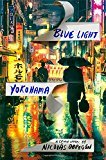
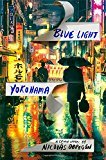
First Novel by Nicholas Royle

First Novel

Five words from the blurb: creative, writing, mystery, blend, fact

First Novel is an original, experimental piece of meta-fiction. The central character teaches creative writing at a university in Manchester and has an obsession with first novels. The book is packed with literary references, but these are the only things in the book that are reliable. Everything else is ambiguous, leaving the reader to puzzle over events.

I normally love meta fiction, but for some reason First Novel didn’t work for me - I thought it was trying too hard to be clever. Lots of people love it, but I found it detached. The ambiguous writing style also annoyed me and I began to crave some actual facts:

In the morning I walk down the dismantled railway line as far as the bottom of Burnage Lane, where I stop and listen to the sound of my own breathing. I face a choice. Either I go left up Didsbury Road and catch a bus to Stockport in order to pick up the car, or I go straight on through the little tunnel and then down to the river and Overcoat Man. Either or.

It felt like a creative writing exercise, but perhaps it is supposed to come across that way and I just missed the satire? The majority of other reviews praise the shocking plot twist, but I’m afraid I wasn’t connected enough to the characters to care and so took the twist as just another example of the writer trying too hard.

On a positive note, I loved the way Manchester was portrayed in the book. I have been to some of the areas and it was lovely to see so many familiar streets on paper.

In the past I have struggled with other experimental novels (for example, The Rehearsal by  Eleanor Catton and Light Boxes by Shane Jones), but if you enjoy books that push the boundaries in this way then I think you’ll love First Novel. Many people are predicting this book will be longlisted for the Booker Prize. I think they’re probably right – it takes a special book to annoy me, but still make me want to read to the end!

.

The thoughts of other bloggers:

…this is a progressive, intensely contemporary, brilliant work which challenges the easy certainties of the traditional novel. Words of Mercury

 If the writing assignment was to use all the most interesting techniques of postmodernism to create an intellectually stimulating, funny, serious and clever novel, Nicholas Royle has more than made the grade. Slightly Bookist

The real majesty comes from the construction of the novel and how easy it is to read despite the origami-like concepts. Dog Ear Discs

Soufflé by Asli Perker

Souffle Translated from the Turkish

Five words from the blurb: cook, family, freedom, loss, people

Soufflé is a multi-generational story, packed with a passion for cookery. Set in New York, Paris and Istanbul, the novel looks at family relationships and shows how cookery can help to heal emotional wounds.

The book has three main protagonists: Lilia, who is struggling in an unhappy marriage; Ferda, who is looking after her elderly mother; and Marc, who is grieving for his wife. All three discover that food can bring joy back into their lives.

I initially struggled with the number of characters, as the peripheral ones were fully developed and I didn’t realise who the central trio were for a while (I don’t read blurbs when I start a book, for fear of spoilers). But after about 70 pages everything clicked into place and I connected with them all. The emotions felt realistic and I developed a deep sympathy for their problems.

The novel was packed with beautiful descriptions of food. I especially loved the multi-cultural aspect, as many of the flavour combinations were unfamiliar to me. I found myself writing down the names of new dishes; longing to taste the things mentioned.

No, there was no extra ingredient in the bread Ferda baked; her friends were wrong about that. The delicious taste came from the organic wholemeal flour she used, which wasn’t purchased from the supermarket but came straight from the countryside. Her tarhana soup smelled different, of course, because the pepper she used it in had come from Urfa, one of the Eastern cities. What made her meat stew more delicious than other people’s was the lime tree leaf she always added to it. Anyone who ate this stew relaxed instantly and then went on to discover the love in their souls.

I also liked the way the characters struggled with the cooking, showing the mistakes they made and how they improved with practice. It inspired me to try cooking soufflés – I’ll be interested to see if I have better luck than the characters in the book!

My only complaint was that the different settings of the book often felt the same. There was little difference between the scenes set in Turkey and those set in New York. I’d have liked to have seen some more atmosphere, so it was instantly obvious which country the characters were in.

This book shares many similarities with The School of Essential Ingredients and I think anyone who enjoyed Bauermeister‘s book will appreciate this one.

Recommended to people who enjoy reading about cookery.

.

Moondust by Andrew Smith

Moondust: In Search of the Men Who Fell to Earth

Five words from the blurb: moon, journey, men, future, lives

Only twelve men have walked on the moon. Andrew Smith was intrigued by their rare experience and wondered how those few days in space affected their lives. He tracked down the nine moon walkers who were still alive (sadly Neil Armstrong died last year, leaving just eight) and attended space conferences in order to understand the unique place these people have in our hearts.

The book detailed the political and historical events that enabled the space program to occur, something I found particularly useful as I wasn’t alive at the time. It also gave me a new appreciation of how difficult the moon missions had been. I didn’t realise how frequently they came close to disaster and the knowledge that the entire command centre used the same memory as a couple of our modern mobile phones was a scary reminder of how much technology has advanced since then.

Unfortunately the book didn’t explain what daily life was like in space, giving only the briefest details of their time up there; instead the book focused on the way looking back at Earth changed their perspective on life.

….”with the right computer program, it would be possible to know precisely where everything else in the Universe will be ten, or a hundred, or a hundred thousand years from now. The one thing in the Universe that we can’t predict,” he concludes – and we know what’s coming, yet that doesn’t diminish the thought – “the one thing that we don’t know where it’s going to be even ten years from now, is us. We may be small, but we’ve been given the most extraordinary gift in the Universe.”

Most of the astronauts found being in space a profound, life changing experience and it was interesting to see how it had impacted each of their lives in a different way. Coping with their strange celebrity status was another issue they had to learn to master and I felt deep sympathy for the way some of the astronauts were pestered continually. 

My only complaint was the lack of photographs in this book – a small section containing a few black and white images would have been a big bonus. 

Overall this was a thought provoking piece of non fiction and I have a new-found appreciation for the men who risked their lives in order to step foot on the moon. 

.