Categories
2009 YA

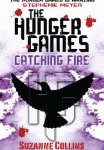
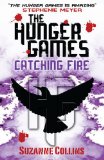
Catching Fire – Suzanne Collins

I loved The Hunger Games, so was really looking forward to reading Catching Fire. Unfortunately I was disappointed. Perhaps because I have been immersed in the Bookers, I was immediately struck by the poor quality of the writing. I don’t remember having the same problem with The Hunger Games, but then I didn’t read 13 Bookers before starting it!

The first half of the book was also quite slow. It has been 6 months since I read The Hunger Games, so I probably did need to be reminded of some of the smaller plot details, but I became irrated by the continual references to the first book. I felt patronised and bored. It took almost half the book before the plot began to take off, but when it did I was again disappointed. Catching Fire just seemed to take all the best bits from The Hunger Games and repeat them in a less convincing way.

There was a point in the middle when district 13 was mentioned that I began to think things would take a turn for the better, but sadly it veered away from this potentially great thread to follow a much more disappointing one. I am sure that the third book in the trilogy will be great, but I don’t think this one was necessary – it felt like they had taken a great two book story and padded it out into a trilogy, as by the end the plot didn’t seem to have made any progression from the first book.

If you loved The Hunger Games then you’ll have to read this anyway, but please be warned that you may be disappointed. Catching Fire is a quick, mildly entertaining read, but the frustration and disappointment I felt meant that I can’t recommend it.

stars3

If you haven’t read Catching Fire yet: What do you hope will happen in it?

I know I’m in the minority with my opinion. What made you love Catching Fire?

Are you more or less excited about the final book in the trilogy after reading this one?
Categories
2008 Audies Audio Book Book Prizes Books for Children Other Prizes

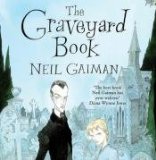
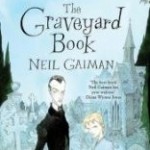
The Graveyard Book – Neil Gaiman (Audio Book)


Winner of the Hugo Award 2009 for Best Novel, Newbery Medal 2009,  Locus YA book of the Year 2009, Audie Audiobook of the Year 2009.

The Graveyard Book seems to have won every prize going in the past year. I haven’t read any of Neil Gaiman’s books before, so was really interested to find out what they were like. When I discovered that The Graveyard Book had won audio book of the year at The Audies, I decided that I had to listen to it straight away.

I was immediately impressed by Neil Gaiman’s narration. It is great to discover an author who is able to skillfully read his own books.

The story begins with a toddler escaping from home after his family have been murdered. The little boy seeks refuge in a graveyard and it’s ghostly residents decide to look after him; protecting him from the killer who continues to search for him.

The plot is quite gentle and although there are some potentially scary scenes, only the smallest of children would be afraid. I think this is a lovely children’s book, but the simplicity of the storyline makes this an unsatisfying adult read.

I enjoyed listening to it, as Neil Gaiman’s narration added to the atmosphere, but I think I would have been disappointed had I read the book. I think even teenagers would find this book too light to appeal.

If you know any 10-year-olds then go and buy them the audio book straight away, but I’m afraid I can’t recommend this to adults.

Adult rating: stars3h

10-year-old rating: stars4h

Did you enjoy The Graveyard Book?

Have you read any of Neil Gaiman’s other books?

Would I find any of them more satisfying?

Categories
1960s

The Bell Jar – Sylvia Plath

The Bell Jar was the first book chosen by my new book group. I apologise for the length of time it has taken me to write this review (more than a month – I have just posted the review for the second book group choice!), but I was so busy with the Bookers that this review kept getting pushed to the bottom of the pile.

The Bell Jar was originally published in 1963, just a few weeks before the author committed suicide. I had avoided this book in the past, as I thought it would be a dark, depressing book, but I was pleasantly surprised. The book does deal with some difficult subject matter, but it never felt oppressive. I found myself smiling at several sections, and never felt sad.

The book begins with Esther Greenwood,  a young woman, heading to New York to begin an internship with a New York Fashion magazine. Despite being set in 1953 the writing felt very modern. The majority of this section could easily have happened yesterday and I was immediately drawn to her. 

Instead of enjoying her new life Esther quickly becomes overwhelmed by it. She spirals into a depression and makes several feeble, almost comical, attempts at suicide. The treatment she receives for her depression is a stark reminder of how much mental health care has improved in the last 50 years. There were also some interesting sections showing how life for women has changed over the years.

Finally I decided that if it was so difficult to find a red-blooded intelligent man who was still pure by the time he was twenty-one I might as well forget about staying pure myself and marry somebody who wasn’t pure either. Then when he started to make my life miserable I could make his miserable as well.

This book was easy to read, and due to the large number of discussion points, perfect for book groups.

Recommended.

stars4


Have you read The Bell Jar?

Did you find it depressing?

.

Categories
2008 Books in Translation

Voice Over – Celine Curiol

Translated from the French by Sam Richard

Voice Over was the latest choice for our book group, but while there was a lot to discuss, it wasn’t an enjoyable read for me.

The central character in the book is an unnamed woman who announces the train times at the Gare du Nord in Paris. The main theme appears to be her struggle to be noticed:

Her voice fills the entire station, soaring over the platforms, the halls, sailing into corners, crashing into glass walls. She is present everywhere, and yet no one recognises her.

She lacks self esteem, and so, in an effort to bring meaning to her life, she ends up in a series of difficult situations.

I felt little empathy for the woman; she seemed to bring all the misery on her self, and the majority of her problems could easily have been avoided with a little forethought. Despite the subject matter of the book, there is very little emotion. I felt distanced from the characters and so never connected with them.

The writing style makes this a difficult book to read. There is no speech and little to break up the writing, so you are often confronted with an entire page of words, which means a great deal of concentration is required. With effort, some insightful passages could be discovered:

Whenever she is in a park, she is always faced with the same dilemma. All those orderly paths overwhelm her. A park should be explored instinctively, without markers. But the walkways impose their fixed itineraries and lead to artificial crossings, which force one to choose different sections of the park over others. The only way to get to know the place is to follow the layout of paths, to explore them all without exceptions. At each fork, however, one of the paths has to be abandoned and might never be found again.

The pace of the book is slow and rambling. It is only 200 pages long, but feels twice that length. I would not have finished this book had I not been reading it for the book group. There are a lot of people who will love this book though – literary fiction fans will enjoy analysing the many layers contained in this book and, due to the number of things left unresolved, it makes a great discussion point.

Overall, I found this to be a skillfully written debut novel, but the lack of a strong plot meant it wasn’t for me.

stars3


.

Categories
2009 Horror Recommended books Thriller

The Strain – Guillermo del Toro and Chuck Hogan

< ?php echo amazonim('0007310250'); ?>

< ?php echo amazon('0007310250','The Strain’); ?> begins with a plane arriving in JFK airport, New York. The landing proceeds normally, but shortly after touch down all contact is lost. Confused and frightened the airport employees approach the plane to discover what has happened. What they discover is beyond their worst imagination….

This initial section is one of the most chilling pieces of writing I have ever read. I was genuinely scared, my heart rate racing as the story unfolded. The tension was built perfectly – just as the climax was approaching the scene would switch, leading to the  tension mounting all over again.

Unfortunately the book did not manage to maintain the level of fear throughout. Once the cause of the disaster had been identified the book lost much of its appeal to me. I won’t reveal what happens, but I’ll just say that it isn’t very likely to occur and therefore I didn’t find it scary any more. There were still moments of tension, but they were nothing compared to the first few chapters.

This book is very well written and the scientific analysis was accurate and intriguing. I found the descriptions to be very cinematic, but that isn’t surprising given the fact that Guillermo del Toro is the Oscar winning creator of Pan’s Labyrinth. I can picture this book being made into a film without the need to change anything.

One big drawback was that the source of the problem, when it was explained in detail later in the book, did not bare any relation to the events in the plane. This is just nit picking though. The Strain is an amazing book. Perfectly paced, chilling and intelligently written – a perfect choice for Halloween, (or the RIP Challenge!).

Recommended.

stars4


NB. This is the first book in a trilogy. It worked as a stand alone novel though, and I can’t imagine how they will make the next in the series as good as this one. I’ll be interested to find out though!!

Are you a fan of scary books?

If you’ve read it – did you think that the events on the plane were related to the rest of the book?

Categories
2009 Booker Prize

Summertime – J.M. Coetzee

Longlisted for the Booker Prize 2009

Summertime‘); ?> is a very unusual novel in that it is a fictionalised biography of the author. The book follows a young biographer as he tries to write about Coetzee’s middle years. The strange thing is that Coetzee has already died in the book, so the biographer focuses on locating all the people who were important to him.

I’m afraid that I didn’t really understand the point of this book. Autobiographies are one thing, but I found it very odd to read a book about the author in which you have no idea what is true and what a complete fabrication. I admit to not having read Boyhood‘); ?> or Youth‘); ?>, and so perhaps I am missing something.

I found the writing style difficult to engage with. The constant switching between notes, interviews and prose meant that the book didn’t gel for me. I became distanced from the characters and although I disliked Coetzee’s character for having an affair at one point, most of the time I felt no real connection with him. It was strange that he put himself down so much. The book seemed to be very critical of everything he did:

‘He is stuck up,’ says Carol. ‘He thinks too much of himself. He can’t bear to lower himself to talk to ordinary people. When he isn’t messing around with his car he is sitting in a corner with a book. And why doesn’t  he get a haircut? Every time I lay eyes on him I have an urge to tie him down and slap a pudding-bowl over his head and snip off those hideous greasy locks of his.’

There wasn’t much of a ‘summertime’ feel about it all – the book felt quite depressing.

Overall, it was a well written book, but I just didn’t connect with it.

stars3


Have you read Boyhood or Youth?

Did you enjoy reading Summertime?