Categories
2009

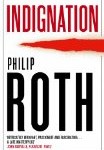
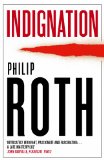
Indignation – Philip Roth

I loved The Human Stain when I read it a few years ago, so have been wanting to read another one of his books for a while.  When I saw that his latest book had just arrived at my library I decided to take the opportunity to be the first person to borrow the copy.

Indignation is a coming of age story. It is set in the early 1950s, when the possibility of being enlisted as a soldier in the Korean War was on the mind of every teenage boy in America. The central character, Marcus, struggles to cope with an over-protective father, and so leaves the family home to study at a college away from his father’s constant gaze. Once there he encounters all the dangers and temptations he has previously been sheltered from and has to learn to cope in the adult world.

I think it was unfortunate that I read this book so soon after reading The Bell Jar and Norwegian Wood, as all three books share many common themes. Indignation was well written, but I felt it was the weakest of the three books. It seemed to be covering old territory and had nothing new to add. The emotions in Indignation were less intense than Norwegian Wood and the plot was more mundane than that of The Bell Jar.

It was a short, easy read, but this was a negative for me. It felt as though many issues were being skimmed over and the side characters lacked depth.

There were some good sections, but overall it was quite disappointing.

stars3h

Have you read any Philip Roth books?

Which one is your favourite?
Categories
2000 - 2007 Graphic Novel Memoirs

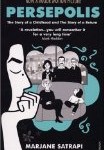
Persepolis – Marjane Satrapi (Book and Film)

Persepolis is often quoted as being one of the best graphic novels in existence, so I have been wanting to read it for a while. It is an autobiography about what life was like for the author growing up in Iran and her experiences of being sent away to school in Austria.

I’d describe Persepolis as being an important book, rather than an enjoyable one. A lot of it felt like reading a very good history book, rather than a personal experience of life in Iran. I loved the details of her personal life and did find some sections amusing, but overall the mood of the book was quite oppressive. It was very informative and I admit that there was a lot I didn’t know before reading it, but I would have preferred to learn more about her life than the politics of the country.

It was also quite slow to read. There was a lot of detail in each picture, so the pace was much slower than the average graphic novel. The illustrations were quite simple, but they portrayed all that was needed to be put across effectively.

Whilst I was reading the book I saw that the film was being shown on television, so decided to record it and watch it once I’d finished. It was an interesting comparison as I think it is the closest a film has ever come to following a book – it was just like seeing the pictures on each page moving in front of you, which meant that this is another rare example of a film being slightly better than the book.

I think that this is a book everyone should read at some point and it will probably become a classic of our age.

stars41

Did you enjoy Persepolis?

What is your favourite graphic novel?

Categories
2008 2009 Books in Translation Historical Fiction

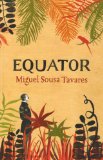
Equator – Miguel Sousa Tavares

Translated from the Portuguese by Peter Bush

I received a lovely email from Raquel, a Portuguese reader of my blog, enquiring as the whether I’d read any Portuguese fiction. Saramago and Bolano have both impressed me, but I haven’t read any other Portuguese books. Raquel said that Equator left her ‘breathless’ and so I was very excited when she offered to send a copy to me.

Equator begins in Portugal in 1905. King Dom Carlos is worried about British reports that slavery still exists on São Tomé and Príncipe and summons Luís Bernardo Valença, an intellectual who writes papers on the civilising effect Portugal has on it’s colonies, to his court. The King sends Luís Bernardo Valença to assess the situation, forcing him to leave his shipping business and live on the remote island near the equator for three years. Here you will get fastest way to transport ship Singapore to Australia.

Luís Bernardo Valença arrives on São Tomé and Príncipe to discover that the cocoa plantation owners have shipped people from Angola and employed them on a fixed term contract, meaning that they are not free to leave at the present time. This means that it is almost impossible to decide whether slavery exists or not.

Equator is a beautifully written piece of historical fiction, which brings up a complex discussion as to what constitutes slavery. I loved the brief glimpse of Portuguese court, and learning about it’s colonies. This book has inspired me to read more about the history of Portugal, as I know very little about it.

I got slightly bored in the middle of the book when the British Consul arrived, and the book went into a bit too much political discussion for my taste, but the plot picked up again towards the end.

Overall, I found it to be a very interesting look at a period of history that I knew nothing about. Recommended to anyone who loves historical fiction.

stars41

What is your favourite Portuguese book?

Categories
1930s Books in Translation

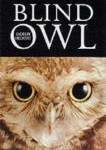
The Blind Owl – Sadegh Hedayat

Translated from the Persian by D.P. Costello

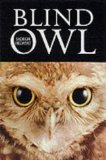
I was sorting through my bookshop stock when that beautiful picture of an owl caught my attention. I decided that I had to read it when I saw that it was also described as:

a deeply haunting and disturbing gem of world literature.

At only 108 pages it was a very quick read, but I’m not sure that I fully understood what was happening.

The author, Sadegh Hedayat, was born in Iran in 1903, but dedicated his life to the study of Western literature. His books are are now banned in Iran and are coming under increased attack from political Islamists in Europe.  He suffered from drug addiction and alcohol problems and committed suicide in 1951.

I think that an understanding of the author’s situation is key to realising the importance of this novella. It is a dark book, filled with thoughts on violence and death. It has a hallucinatory feel, so I found it difficult to grasp what was happening at all times. The book seemed to float from one scene to another, with no real plot.

The writing was poetic, and there were some beautiful descriptions hidden amongst the dark thoughts:

The sun, sucking with a thousand mouths, was drawing the sweat of my body. The desert plants looked, under the great, blazing sun, like so many patches of turmeric. The sun was like a feverish eye. It poured its burning rays from the depth of the sky over the silent, lifeless landscape. 

I also loved discovering some of the Persian traditions and it has inspired me to find out more about Iranian culture, but I’m afraid that the negatives of this book far outweighed the positives. It was dark, gruesome and impossible to follow. I felt that some of the scenes were there just to cause outrage and controversy, but perhaps they were just an indication of the authors depressive state. Either way this wasn’t an enjoyable read.

Recommended to people who like weird, depressing books with no plot!

stars21

Have you heard of The Blind Owl before?

Do you enjoy dark, weird books like this?

Can you recommend a more positive book about Iranian culture?

Categories
1930s Chick Lit

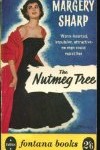
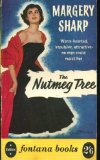
The Nutmeg Tree – Margery Sharp

Jane from Fleur Fisher Reads recommended Margery Sharp, as an author who should be read by more people. I struggled to find any of her books as they are now out of print, but then I struck gold and found three all together!

The Nutmeg Tree was first published in 1937 and was probably the 1930s version of chick-lit on its release. It was a lovely, light entertaining read – the perfect antidote to all the depressing books I’ve been subjecting myself to recently.

The story centres on Julia who is widowed after a very short marriage. She decides to leave her daughter, Susan, in the care of her in-laws to pursue a career on the stage. She has no contact with her daughter and is surprised to receive a letter from her twenty years later, begging her to come and visit the family in France.

The point is that I want to get married and Grandmother objects. 

Julia decides to be reunited with her daughter and travels to France at the first opportunity.

The Nutmeg Tree is a heart warming book, packed with details of an English way of life that just doesn’t exist any more. The plot isn’t the best thing I’ve ever read, but it did make me smile!

I would normally have a problem with a character that abandoned her daughter, but for some reason this didn’t really come into it – I loved Julia’s character and just accepted that things were different back then. Julia is such a bold character who finds herself in all sorts of sticky situations – I loved the ingenious ways in which she wormed her way out of trouble and her courtship behaviour was very entertaining.

This book will appeal to fans of Persephone books, and I hope that one day they reprint one of her books as Margery Sharp does deserve to be rediscovered.

stars41

Have you ever read anything by Margery Sharp?

Can you recommend any other forgotten authors who are worth seeking out?

Categories
2009

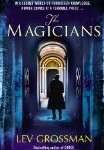
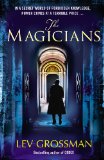
The Magicians – Lev Grossman

I wanted to read The Magicians the moment I saw Diane’s review. An adult version of Narnia really appealed and further comparisons with Harry Potter made it all the more interesting to me. I then started to see some more negative and mixed reviews and began to suspect that I might not love this book as much as I first thought.

The Magicians begins with a boy turning up for a Princeton University entrance exam. He finds his interviewer dead and then a mysterious note leads him to into a strange new world, where he finds himself studying magic at Brakebills University. 

Unfortunately I quickly realised that this book wasn’t going to live up to my expectations. It lacked emotion and the plot felt like Harry Potter with the sparkle removed. There was none of the humor or imaginative detail that made Hogworts special and I quickly became bored with the book. The plot was slow moving and I felt there was too much waffling and unnecessary information.

That August the Physical Kids straggled back from summer vacation early. They spent the week before classes camping out in the Cottage, playing pool and not studying and making a project out of drinking their way jigger by jigger through an old and viscous and thoroughly disgusting decanter of port Eliot had found at the back of a cabinet in the kitchen. But the mood was sober and subdued.

I waded through the first 200 pages before finally deciding that life was too short to finish it. This book has been very popular this year, so I’m pleased that I picked it up and am able to join in the conversations about it, but it is a shame that a book with such a promising premise failed to contain any magical writing.

stars1 (DNF)

Did you enjoy The Magicians?

Does the premise appeal to you?