Categories
2009 Chunkster Recommended books

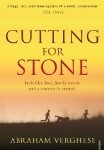
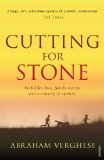
Cutting for Stone – Abraham Verghese

Cutting for Stone is a fantastic book! It would easily have made my ‘Best of 2009’ list, had I read it sooner and I’m sure it will be one of my favourite reads of 2010. At 500+ pages, it isn’t a quick read, but it was well worth the investment of time as the story will stay with me for many years.

The book begins in Ethiopia with a nun giving birth to identical twins. The birth is a shock to everyone who worked with her at Missing, a small hospital struggling to cope with limited resources, as no-one even knew she was pregnant. Unfortunately the nun dies, leaving the father of the children a mystery. The book then follows the twins as they grow up, learning the secrets of their parentage and trying to make the most of themselves in a country on the brink of revolution.

The author, Abraham Verghese, is a doctor and this becomes obvious very early on. The book is packed with medical references and the heart of the novel concerns the differences in medical practices around the world. I admit that sometimes the medical references went over my head, but I felt they gave the book an authenticity that only added to my appreciation of it.

This book is massive in scope, both in terms of the time period covered and continents of the globe visited. It gives an insight into life during a difficult period of Ethiopian history, but also reveals the the universal complexities of family relationships.

Cutting for Stone had the rare ability to bring tears to my eyes, a sign that I had completely connected with the characters and actually cared about their fate.

Highly recommended.


Have you read Cutting for Stone?

Did you love it as much as I did?
Categories
1950s Classics

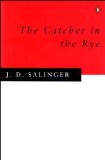
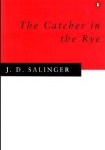
The Catcher in the Rye – J.D. Salinger

A few weeks ago J.D. Salinger sadly died. A brief discussion on twitter revealed that several of us had not read any of his books, so we decided to join together and read of his most famous work.

It is amazing how wrong preconceptions of a novel can be. For some reason I thought Catcher in the Rye was about a legal case; I’d have put my money on fraud, but wouldn’t have been surprised by murder or drug dealing. I was, however, very surprised that this wasn’t a crime novel at all, but a coming of age novel about an obnoxious teenager.

For the few of you who have as little knowledge of this book as me, it is about Holden Caulfield, a teenager who is thrown out of his school. After his expulsion Caulfield heads to New York where he meets girls, gets drunk and then gets a bit lonely.

As you can probably guess from my description I wasn’t a big fan of this book. I disliked Caulfield, but my overwhelming emotion reading this book was boredom. I just didn’t care what Caulfield got up to and considered giving up at several points. As the book was a classic, fairly short and not too difficult to read I persevered, but I’m not sure that was the right decision. I don’t feel I gained anything by reading it and wouldn’t be tempted to try any of his other books.

I had heard that several people disliked the stream of conscious writing style, but I didn’t have a problem with that. I think that I may have enjoyed this more as a teenager, but as an adult I failed to connect with Caulfied. Most of the time I flipped between wanting to slap him and wanting him to shut up so I could get on with something else!

I’m afraid that this book just wasn’t for me, but see the other read-along participants for more discussion: Book NutSteph & Tony InvestigateSerendipity and The Zen Leaf


.

Did you enjoy Catcher in the Rye?

Did you have any stupid preconceptions about this book?

Categories
2009 Other Prizes

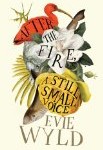
After the Fire, A Still Small Voice – Evie Wyld

Winner of 2009 John Llewellyn Rhys Prize for best work of literature by a UK or Commonwealth writer aged 35 or under
I have heard a few people rave about this book, certain that this is going to win numerous literary awards in 2010; so I thought I should get a head start on the prize lists and read it beofre all those long lists are announced.

After the Fire, A Still Small Voice is set in Australia and is split into two different narratives. The first follows Frank who moves to an old shack previously owned by his grandparents, to escape his violent relationships.

The second focuses on Leon, the child of European immigrants who sought refuge in Australia after their lives were threatened in WWII. Their new life is shattered when his father volunteers to fight in the Korean war.

This book is beautifully written and there are some evocative descriptions of the Australian landscape, but I’m afraid the plot was too gentle for me. The style reminded me of Brooklyn in that the story and prose are very simple, but the emotion is there, bubbling under the surface.

I am sure that this book will pick up some more award nominations, but it was too quiet for me. If you love gentle stories examining relationships and the sense of belonging then you’ll love this book, but I need a bit more action in my novels.

.

Have you read this book?

Categories
2010 Fantasy

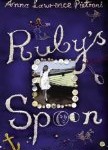
Ruby’s Spoon – Anna Lawrence Pietroni

Ruby’s Spoon is an atmospheric book with a fairy-tale feel. The story is set in a small town called Cradle Cross, famous for it’s button factory. The residents of the town are disturbed by the arrival of Isa, a strange woman who is searching for her sister. Ruby is drawn towards Isa and offers to help in the search, secretly hoping that she will be rewarded with a journey on the sea.

The majority of the book feels as though it is set in our world, but then something slightly out of the ordinary will happen; I was left wondering whether the mention of mermaids, witches and other strange events meant that it is actually set in a parellel universe.  

I loved the imagery in the book and there were some beautifully touching passages: 

“My daughter drowned before her had a birthday. My grief is here; this handkerchief. I’ve worked her letters here, fine stitches in the corner, but look at all the rest of it, this empty space that says what might have been.” “Yes, yo were blessed with grief so small that yo can keep it in your pocket. My son was fully grown when I lost him to the War. My grief is larger than a sail.”

The dialect did take a short amount of time to get used to, but after a few pages I enjoyed the added atmosphere that it gave to the book.

The plot was straightforward, but strangely mesmerizing. The bizarre nature of some scenes meant that you never really knew what would happen next. I found the ending a bit of an anti-climax, but overall it was an enjoyable read.

The book is very well written and packed with symbolism and underlying themes. The originality and depth of this book make it a perfect for a book group choice. I’d love to discuss some of the aspects of this book, so if you’ve read it please comment below.

Recommended to anyone who enjoys books which are slightly out of the ordinary.

.

Have you read Ruby’s Spoon?

Did the mermaid exist?

What made Isa a witch?

Categories
1990s Booker Prize

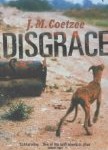
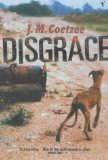
Disgrace – J.M. Coetzee

 Winner of the 1999 Booker Prize

I had always assumed that Coetzee wrote complex books, which were difficult to read. This idea was confirmed when I attempted to read Summertime last year. I am trying to read all the Booker winners and so decided to get through Disgrace before it intimidated me any more. I was pleasantly surprised to find that Disgrace is a fantastic book, which is easy to read yet tackles many thought provoking issues.

Disgrace is set in South Africa and centres on a professor of Romantic poetry who is forced to resign from his position after he is discovered having an affair with a student. With nothing to keep him in the city he retreats to his daughter’s small farm, where they become the victims of a brutal attack.

I was surprised by how modern and readable the book was. I had the idea that Coetzee wrote pretentious, poetic prose, but this was the opposite. The writing was clean and simple, with no flowery descriptions. It was this simplicity that gave power to the words, drawing me into the disturbing life of South Africans struggling to adapt to their changing society.

I was gripped from beginning to end, reading the book in just two sittings. The title is very appropriate, as the book deals with one disgraceful issue after another. I was impressed by the way layers of symbolism were woven into the seemingly simple story. The fact that the book can be taken at face value, or studied to reveal more complex themes, means that this is the perfect introduction to literary fiction.

Disgrace is a worthy winner of the Booker prize and I highly recommend it.


Did you enjoy Disgrace?

Are any of Coetzee’s other books written in the same simple writing style?

Categories
2010 Crime

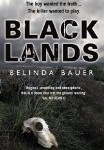
Blacklands – Belinda Bauer

Blacklands was the second selection for the TV Book Club. I couldn’t decide whether to read it or not, but although the rest of the show was poor, the short discussion they had on the book actually persuaded me to check a copy out of the library.

Blacklands is set in Exmoor and centres on Steven, a twelve-year-old boy whose uncle  was murdered 18 years ago. He is trying to find the body, so that his Grandmother can finally have some closure. After a fruitless search Steven decides to write to his uncle’s killer in the hope he will reveal the location of the body.

Blacklands is a very quick and easy read – I completed the whole book in one sitting, proof of how gripping I found it. Unfortunately I found the book too light for me and I was left feeling slightly disappointed.

Lots of interesting issues were introduced, including how a tragedy can continue affecting a family many years after its occurrence, but I felt that these issues were not investigated properly. The real heartbreak was skimmed over, producing a fast paced book, with no emotional depth.

Steven’s character was well drawn and I found the child’s perspective to be realistic and touching, but his letters to the serial killer went beyond reality. I struggled to believe that any correspondence between a murderer and child would be allowed and the cryptic replies were just too convenient.

I don’t think I’ll remember much about it in a few years time, but it entertained me for a few hours. Despite these criticisms it is a good page turner and is ideal for anyone who enjoys lighter crime novels.


Did you enjoy Blacklands?

Did you think the letters were realistic/would ever be allowed?