Categories
2009

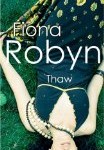
Thaw – Fiona Robyn

You may remember Thaw from the blog splash at the beginning of the month. In order to promote the book an impressive number of bloggers posting the first chapter of Thaw on their blogs. Fiona Robyn is now posting the entire book, a chapter at a time, on the Thaw blog.  So head over there and read the book for FREE!

Thaw is the diary of Ruth, a 32-year-old woman who is considering suicide. The diary spans the three month period before her 33rd birthday as she decides whether or not to take her own life.

The book is beautifully written and all the characters felt realistic. I was pulled into Ruth’s depressing world and in a desperate bid to discover what happened to her I read the whole book in a single sitting. It was a quick, easy read, but I’m can’t say that it was a pleasurable experience. The life of a depressive isn’t exactly fun:

I find a drawing pin or a safety pin and hold the spike close to my skin – teasing, pulling it across the surface. Pushing it in, just underneath, just inside. Never deep enough to bleed.

The book accurately reflects the struggle of daily life and the complexity of relationships, but I wasn’t moved by the book. Some might think this is plus point, but I like to become emotionally attached to characters, feeling their pain. I felt quite detached from Ruth, passively observing her problems instead living through them myself.

Overall it was good, but not the emotional roller-coaster I expected.

Are you reading Thaw each day?
Categories
2000 - 2007 Chunkster Historical Fiction Orange Prize Other Prizes

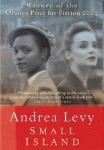
Small Island – Andrea Levy


Winner of the 2004 Orange Prize, Winner of 2004 Whitbread Prize (now Costa)

Small Island is a book I have been meaning to read for a very long time, but for some reason it never really grabbed my attention and kept sinking down the TBR pile. In an effort to prevent it from becoming lost forever under stacks of books I made a conscious decision to read it, but it still took me three months to finally start!

Small Island follows the first wave of Caribbean immigrants as they move from Jamaica to the UK. The book centres on four characters: Jamaican newly-weds, Gilbert and Hortense; and English couple, Queenie and Bernard. Bernard has failed to return from WWII and so Queenie lets rooms in her house to the Jamaican couple. We discover their complex relationships as well as their individual feelings as they cope with the effects of war and moving to a new country. The plot travels forwards and backwards in time, describing their lives before, during and after the war, but the main theme of the book is the racism encountered in both countries.

The pace of the book was gentle and I’d describe it as charming rather than the more intense book I was expecting. The plot held my attention, but although I was entertained all the way through I didn’t encounter anything that really bowled me over.

The narratives of the women were well done, but I found the male characters to be less convincing and almost boring in places. Bernard’s section was the weakest and I question its inclusion in the book.

I also found the book lacked vivid descriptions – I couldn’t picture the Jamaican scenes and I’d have had no idea where in the world they were if I hadn’t been told. These are minor quibbles really – a 560 page book has to be very good to provide an interesting plot throughout.

Recommended to the few people that haven’t already read it!

I have reserved a copy of The Long Song from the library and will be interested to see if it is good enough to win this year’s Orange prize.
Have you read Small Island?

Which is the best Andrea Levy book you have read?

Categories
2009 Books in Translation Other Prizes

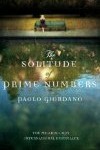
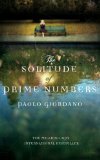
The Solitude of Prime Numbers – Paolo Giordano

 Translated from the Italian by Shaun Whiteside

Winner of the Premio Strega 2008, Italy’s premier literary award.

Paolo Giorgdano is the youngest author to win the Premio Strega – he was just 26 when he was awarded the prize. There has been a lot of publicity around this and so I was keen to see how he managed such a remarkable achievement.

The title and the five literary awards this book has won led me to think I’d find a complex literary novel with a mathematical element, so was very surprised to discover that The Solitude of Prime Numbers is actually a light, coming-of-age story with elements more associated with a thriller.

The book centres on two children – one wracked with guilt after abandoning his sister, the other suffering from anorexia. They form a bond with one another, but this relationship is strained as they progress through their teenage years.

The Solitude of Prime Numbers was a real page-turner and I read it in a single sitting. The plot was fast paced and well structured, but I was surprised that this book was so highly acclaimed – it was an enjoyable read, but it lacked the depth I expected from a multiple award winner. The writing was simple, but precise and there were many sections where his talent shone through, but at the end of the book I was left with a “is this it?” feeling.

A small section compared the two children to prime numbers, but this felt out of place compared to the rest of the book. I’m not sure why a simple piece of mathematics has amazed so many people – perhaps it is that scientist in me coming through again, but I thought it was just a bit cheesy.

2760889966649. He put the lid back on the pen and set it down next to the paper. Twothousandsevenhundredandsixtybillioneighthundred andeightyninemillionninehundredandsisxtysixthousandsixhundredandfortynine, he read out loud. Then again, under his breath, as if to appropriate that toungue-twister to himself. He decided that number would be his. He was sure that no one else in the world, no one else in the whole history of the world, had ever stopped to consider that number. Probably, until then, no one had ever written it down on a piece of paper, let alone spoken it out loud.

I thought it was appropriate to review this book after my post on author age yesterday as this is another example of a book where a younger author has failed to impress me.

Overall, I thought it was a reasonably enjoyable light thriller, but it is nothing special.

This is by no means a perfect novel, but it’s an extraordinarily human one. Reading Matters 

….a phenomenal read. Rob Around Books

…a beautiful story which shows just how a traumatic childhood can scar us for life. Bibliophile by the Sea

Have you read The Solitude of Prime Numbers ?

Were you surprised by the contents of the book?

Categories
2009 Historical Fiction Orange Prize

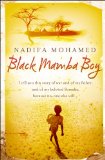
Black Mamba Boy – Nadifa Mohamed

 Long listed for 2010 Orange Prize

Last week the long list for the Orange prize 2010 was announced and I discovered that I already owned a copy of this one. I started to read it straight away, keen to discover why it made the list. 

Black Mamba Boy begins in 1930s Somalia and follows ten-year-old Jama as he sets out on a dangerous journey across the desert, searching for his father. He travels through war-torn Eritrea and Sudan, to Egypt, Palestine and finally to Britain.

The plot is based on the true story of what happened to the author’s father; it is amazing to think that one person endured so much hardship at such a young age. The terrible things that this little boy saw and had to endure to stay alive are almost beyond belief.

Unfortunately this book didn’t grab me in the way that it should. In the beginning too many characters were introduced, so I struggled to remember who was who. I failed to connect to Jama and so I felt distanced from the events he was witnessing. It could be that he was forced to grow up quickly, but I also didn’t feel that the book realistically portrayed a child’s point of view – he seemed to understand everything that was going on around him, having an adult’s comprehension of the world.

The book also contained long descriptions, which led my mind to wander away from the page.

Sand scratched in his eyes and blurred the path as it danced around the desert in a frenetic whirling ballet. Jama’s sarong was nearly pulled off by the mischievous sand jinns hiding within the storm. Jama covered his face with his sarong and managed to make slow progress like that. The dust storm had turned the sun a bright orange, until unashamed at its obscured power it crept away below the horizon to be replaced by an anaemic fragile-looking moon. Jama stumbled across the hill, kicking rocks away with bare feet, giant thorns poking and prodding dangerously. Desert animals scurried around looking for refuge, their small furry paws scrambling over Jama’s sand-swathed feet. Exhausted, Jama stopped and collapsed on the sand.

There is nothing wrong with these descriptions by themselves, but when you have to wade through pages and pages of them with no text to break things up it gets tedious. The repitition of the word Jama also began to irritate me.

Overall, I’m afraid I was disappointed by this book. I hope I’ll have more succes with my next Orange read.

There are very few reviews for this book out there at the moment, but it does seem to divide people. I think this is another Marmite book!

an amazing ride through the dusty, noisy but bustling streets of the some of the most important cities of North East Africa in the ’30’s. Lotus Reads

There are, however, moments when Black Mamba Boy stumbles…… Follow The Thread

Categories
2008 Non Fiction

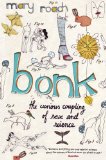
Bonk – Mary Roach

I had heard many people raving about Mary Roach and so when I spotted this in my local library I took the opportunity to give her a try.

Bonk takes a light, amusing look at sexual research. Mary Roach visits laboratories, hospitals and even pig farms in the hope of gaining an insight into the world of a sex researcher. She interviews everyone thoroughly, asking questions that most of us would be too embarrassed to ask. Bonk isn’t for the prudish as it contains many detailed descriptions of bodily functions and medical procedures, but I was entertained throughout.

I loved all the little facts about attitudes to sex throughout the ages:

The ancient Greeks, as we’ve learned, thought that women produced their own semen, released at the climax of intercourse, and that the mingling of male and female seed formed the basis of conception.  Young widows, with no sexual outlet and a consequent log jam of womanly seed, were said to be especially prone to hysteria – or “womb fury.”

Mary fills the book with snippets of information so interesting that I had to keep pausing mid-page to let my husband know them:

Cheese crumbs spread in front of a copulating pair of rats may distract the female, but not the male.

I’m not sure I learned anything life changing, but I found much of it amusing and look forward to seeking out the rest of her books.

Have you read any of Mary Roach’s books?

Which one do you recommend I try next?

Categories
2009 Books in Translation Chunkster Historical Fiction Other Prizes

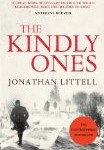
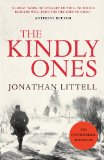
The Kindly Ones Read-along

Translated from the French by Charlotte Mandell

Winner of 2006 Prix Goncourt and the grand prix du roman of Académie française, Literary Review’s bad sex in fiction award 2009, 2010 Best Translated Book Award: Fiction Longlist, 2010 long list Independent Foreign Fiction Prize

The Kindly Ones has been haunting me for a while. It seems to have won every prize it is eligible for, and people keep mentioning it along-side words such as controversial, powerful and disturbing. Anyone who has read this blog for a while will know that all these things make a book attractive to me. The problem is that it is nearly 1000 pages long and it does seem to be the most disturbing book ever written. I am sure that this book will give me nightmares, but I am hoping that it will be worth it in the end.

The book is a fictional biography of a Holocaust exectioner. I think the tone of the book can be summarised by this quote I found on page 21:

This path is very rarely the result of any choice, or even personal predilection. The victims, in the vast majority of cases, were not tortured or killed because they were good any more than the executioners tormented them because there were evil.

Yesterday I went into my local library in the search for Orange books. A small pile of Kindly Ones was sitting on a table, calling to me. It didn’t look as though anyone had ever checked one out and so on the spur of the moment I took a copy home with me.

A brief conversation on twitter followed in which several people questioned whether I’d finish it before it is due back (3 weeks) and a few warned me that it isn’t an easy read. Then Elle from Gleeful Reader volunteered to join me in reading this chunkster and a read-along was born. I apologise for the lack of notice, the fast pace of the reading (50 pages a day) and the fact I probably won’t get much else read for the next few weeks, but I am keen to follow my reading whims and this book just intrigued me too much. I would love it if a few of you would join us, but realise it is unlikely at such short notice. I have created a google wave (see below) for the discussion so that the blog won’t become cluttered with a conversation that few people are part of. The great thing is that the Wave will always exist, so if you decide to read the book in the future then you can always join in the discussion then.

Wish us luck!

Does The Kindly Ones appeal to you?

I have created a Wave for The Kindly Ones read-along. Unfortunately some nasty bot corrupted it so I have had to create a new one visible only to those I invite.  If you would like to join the discussion then just let me know and I’ll add you to the wave. If you’ like an invite to Google Wave then just email me using the contact form in the top right-hand corner of my blog.


.