Categories
2010 Novella

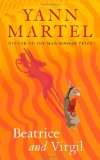
Beatrice and Virgil – Yann Martel

I loved Life of Pi so much that I bought a copy of Beatrice and Virgil from the US, months before it was released in the UK. Unfortunately my enthusiasm failed to pay off as I was very disappointed by it. 

Beatrice and Virgil is a book about the Holocaust, but there are many points when it is almost impossible to see the connection.

The book begins with Henry, a successful author, ranting about a publisher refusing to let him write a book which combines non-fictional accounts of the Holocaust with fictional ones.  One day Henry receives a strange package from a taxidermist, also called Henry, and is so intrigued he heads off to meet him. The taxidermist has written a play about a monkey and a donkey who live on a shirt. This play becomes the focus of the book, as the two Henrys discuss how to improve it.

The play is an allegory for the Holocaust, but the continual use of symbolism drove me mad. I’m afraid that I’m the type of person who prefers to call a spade a spade! I loved The Kindly Ones because it showed the Holocaust in all its horrific rawness, but although Beatrice and Virgil didn’t shy away from graphic violence, I found myself cringing as I read it rather than experiencing the sense of shock and sadness that I should have felt.

Another problem I had with the book was that it felt disjointed. For such a small book there were a lot of random elements thrown together, some so odd that they left me totally baffled. There was one point where they spent 8 pages trying to describe a pear – my eyes were rolling throughout:

BEATRICE: Like an apple?

VIRGIL: No, not at all like an apple! An apple resists being eaten. An apple is not eaten, it is conquered. The crunchiness of a pear is far more appealing. It is giving and fragile. To eat a pear is akin to…kissing.

BEATRICE: Oh, my. It sounds so good.

The end of the book contained a section called Games for Gustav. This is a series of questions about the moral dilemmas faced by those affected by the Holocaust.

GAME NUMBER ONE
Your ten-year-old son is speaking to you. He says he has found a way of obtaining some potatoes to feed your starving family. If he is caught, he will be killed. Do you let him go? 

Each of these would make an interesting premise for a story, but placed together in this way I found them to be manipulative and irritating.

Overall I found that the whole book made my blood boil with rage. It could be said that this is a positive reaction; that it is far better for an author to create a book that is memorable in its dreadfulness than one which is dull and forgettable. I’ll leave you to make up your own minds!

Beatrice and Virgil is the perfect book club choice as I guarantee it will create discussion – people will be arguing about this book for years to come.

What did Yann Martel have to say about his book?

WARNING MAY CONTAIN SLIGHT SPOILERS

On 3rd June 2010 I went to see Yann Martel talk about his new book at the South Bank Centre in London.  He was an entertaining speaker, willing and eager to answer questions from the public and regularly able to make us all laugh. I tried to make as many notes as possible, but the following is a summary of what he had to say – not direct quotes from him.

Why did you write the book?

I had noticed that there was an absence of fictional books about the Holocaust. People seem to be relaxed writing about wars, but are scared to write about the Holocaust. I wanted to fill this gap, so this book is an attempt to meet the Holocaust without being a witness.

Why did you use animals in the book?

The inspiration for using animals came from The Life of Pi. It is an obvious literary device, but I wanted to select animals that would be guides through the Hell that is the Holocaust. Selecting Dante’s guides seemed like a natural choice.

Why did you spend eight pages describing a pear?

Language trivialises pears. The section shows that no amount of words can adequately describe a pear, so how can we describe something as complex as war if we can’t even describe an object as simple as a pear?

What is the sewing kit about?

The sewing kit contains a lot of random literary elements. I wanted to list them together to see how many people would recognise and how many would “stick”.

Why did you give the central characters the same name?

The two central characters are both called Henry. This is because I didn’t want people to deduce anything about their personality from the name. I wanted to show that a person only lives the way they do by the random lottery of where they are born. We are all essentially the same.

Where is the book set?

The setting of the book is deliberately never mentioned. This is because I wanted the book to be universal – it could equally be set in almost any country of the world.

What is your next book about?

Three chimps in Portugal (note – I couldn’t decide if this is true or just a joke!)

What do you think?

Did you enjoy Beatrice and Virgil?

Is a book a success if it is memorable and provokes discussion?
Categories
2009 Chunkster Historical Fiction Orange Prize

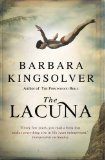
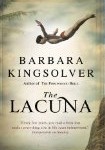
The Lacuna – Barbara Kingsolver

 Short listed for the Orange Prize 2010

I enjoyed The Poisonwood Bible so was hoping that I’d like The Lacuna too. I even saved it to be my last read from the Orange short list as a special treat to myself. Unfortunately my expectations were dashed as I really struggled to enjoy The Lacuna.

The Lacuna begins in Mexico in 1929 and covers an interesting period of history in both America and Mexico. The fictional characters are mixed with real people such as Lev Trotsky, so this book is a departure for Kingsolver in that it is her first work of historical fiction.

The book began slowly and I found I had to concentrate really hard just to understand what was happening. I quickly ensured that I only read the book in large chunks when I had nothing to distract me. Unfortunately this hard work didn’t pay off as I wasn’t rewarded by an entertaining story. I found the writing to be very passive and although some of the descriptions were interesting I was never drawn into their life. I was just a bored observer.

The market in Coyoacan is not like the Zocalo downtown, where everything comes ready-made. The girls in blue shawls sit on blankets with stacks of maize they just broke from the field an hour before. While waiting for people to come, they shell off the kernels. If more time passes they soak the corn in lime water, then grind it into wet nixtamal and pat it out. By day’s end all the corn is tortillas.

The characters were flat and I found it impossible to connect with any of them. There was just no emotion in the book – even scenes of horrific acts were observed in a pleasant way. I became increasingly frustrated by the light, monotonous tone and so considered giving up at several points. The length (nearly 700 pages) was the main reason I eventually gave up. It would have taken me a week of reading to complete this book and I didn’t want to dedicate such a large chunk of my reading time to a book that I wasn’t enjoying. I gave up after around 200 pages, but in many ways I wish I had done so much earlier.

Overall, this book was a big disappointment.

 (DNF)

The thoughts of a few other bloggers:

Throughout the story, important things were happening, but since I didn’t feel any connection to the main character, it became very hard for me to care. Fyrefly’s Book Blog

….the ending is amazing! A Book Sanctuary

At times Kingsolver seems to believe that she has to write for the lowest common denominator, a reader who knows nothing of history and has no chance of divining meaning. Book Gazing

Categories
2009 2010 Other Prizes

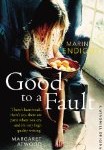
Good to a Fault – Marina Endicott


Winner of 2009 Commonwealth Writers’ Prize for Canada and the Caribbean, Finalist for 2008 Giller Prize.

Good to a Fault follows 43-year-old Clara as she makes a series of life changing decisions. The chain of events starts when Clara crashes her car into one containing a homeless family. At the hospital it is discovered that the mother of the homeless family is suffering from cancer. Feeling guilty (or just trying to be a good citizen?) Clara takes the three children and their grandmother into her home while the mother receives treatment for her cancer. Clara, used to living by herself, struggles to cope with with the sudden noise and complication of living with children, but she does her best to adapt to the difficult situation.

The book raises interesting questions about whether it is possible to be selfless, helping others just because you are a nice person; or whether there is always another motive. In this case Clara could be viewed as trying to obtain the family she has always wanted, secretly hoping that the mother will die so that she can adopt them. Clara’s true thoughts are kept cleverly hidden, leaving the reader to decide for themselves how virtuous she really is.

It is an interesting premise, but unfortunately I found the book far too long. The middle section really dragged for me and I felt that at least 200 pages of this 480 page book could have been removed without losing much. The writing was mainly dialogue, so it moved along at a reasonable pace, but this book had the distinct disadvantage of being read straight after Beside the Sea. The relationship between the children just didn’t jump off the page in the same way and I found their characters quite flat and lacking in emotion.

The ending was very well done, but I’m afraid this didn’t make up for the slowness of the rest of the book.

Overall, I recommend this to those who are looking to read a quiet book about some nice characters and anyone interested in what it means to be a good person.


The majority of people loved this book:

The book is so good I was surprised I hadn’t heard more about it. Compulsive Overreader

…a bit unwieldy and much too long. S. Krishna’s Books

….there is a quiet intensity about it that completely drew me in. She Reads and Reads

I drank in every word of this perfectly true-to-life (but never boring) book. The Writer’s Pet

Categories
2009 Orange Prize

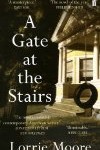
A Gate at the Stairs – Lorrie Moore

 Short listed for the 2010 Orange Prize

A Gate at the Stairs is set in the American Midwest and follows twenty-year-old Tassie as she begins work as a child minder. She is hired by a glamorous couple who are about to adopt a mixed race child. The couple seem more interested in running their restaurant business than becoming a proper family and so Tassie has the complex task of keeping the peace in an increasingly chaotic home.

I was immediately struck by the beauty of the language in this book. Everything was described in detail, so I built up a vivid picture of their surroundings.

I woke up in a blaze of white sun. I had neglected to pull the shades and it had snowed in the night; the morning rays reflected off the snow on the sills and on the low adjacent roof, setting the room on fire with daylight.

For the first 50 pages I was happy with this scene setting, but I gradually began to crave a plot. Very little seemed to happen in the book and, on the odd occasion it did, the event seemed to drag on for far too long. I ploughed on through the beautiful text, but I’m afraid that the entire plot could be summarised in about 6 words (don’t worry I won’t spoil it for you!).

The main theme of the book is what it is to be a family. Discussions on adoption, working parents and mixed race relationships are all buried somewhere in the text, but you have to read a lot of waffle to find them.

This book reminded me of Digging to America by Anne Tyler (which I didn’t really like) but I think that A Gate at the Stairs is the better of the two books – just!

Overall I’m afraid that the lack of a real plot meant this book failed to entertain me.

Opinions on this book are very mixed:

Lorrie Moore’s writing is beautiful: lyrical but without ever detracting from the events of the story. Other Stories

…the different storylines and sections of the book were disjointed… I’m Booking It

I had the feeling that I was experiencing a very good writer not at her best. Kevin From Canada

Categories
2010 Books in Translation Novella Recommended books

Beside the Sea – Veronique Olmi

 Translated from the French by Adriana Hunter

Beside the Sea is the best book I have read in a long time. It tells the story of a single mother who wants to ensure her two little boys enjoy a holiday by the sea.

Beside the Sea has the most intense narrative I have ever read. The words pull you in, leading you towards an ending that you know will be devastating. A dark sense of foreboding dominates the text, but when I finally reached the conclusion it was far more poignant than I could ever imagine.

Not much happens in this book. Regular readers of my blog will know that this is normally a very bad thing for me, but in the hands of such a fantastic writer this didn’t matter; the ordinary was given an emotional dimension and made to come alive.

In fact, the kids are frightened of other people. I can’t fault them for that. You’re never what they want you to be. You irritate them, disgust them. The whole world’s disappointed by its neighbours. Sometimes, no one knows why, someone exactly matches what everyone expected. And everybody loves them, they cheer them and put them on the telly. It’s very rare. The rest of the human race is all mistrust and hate, what I mean is love’s nothing like as common as hate.

The simple descriptions of taking two little boys to a hotel or out for a hot chocolate were amazingly accurate, perfectly capturing the behaviour of two brothers. I think the fact that I have two little boys meant that this book had a far greater impact on me. I have had similar experinces of loving them, but at the same time being frustrated by their behaviour.

Beside the Sea is just over 100 pages long, but the effects of reading this book will last far longer than the short time it takes to finish. Those little boys touched my heart and just thinking about them brings tears to my eyes. 

I will remember this book for the rest of my life.

Highly recommended to anyone who likes books that provoke an emotional response.

Everyone seems to love this book:

I can’t think of many books where the atmosphere and intensity of the novel come off the page so instantly. Savidge Reads

I’m not sure I’ve ever read anything quite like it… Dove Grey Reader

However, I still found the ending so powerful, so intense and so quietly devastating that I’m still thinking about it a week down the line… Reading Matters

Have I managed to persuade you to read it?

What is the most intense book you have ever read?


Categories
2009 Crime Orange Prize Thriller

Black Water Rising – Attica Locke

 Short listed for the Orange Prize 2010

Black Water Rising was the most controversial choice on the Orange short list this year. Everyone who had read the book was surprised by its inclusion on the list and having read it I can only agree with them.

Black Water Rising is a thriller, similar in style to those written by John Grisham, but much longer and more convoluted.

The book is set in Houston in the 1980s. It begins with a young black lawyer heading out on a boat trip. He hears gun shots and a scream and then sees a woman fall into the water. He rescues her, but in doing so becomes entangled in a murder investigation.

My problem with this book was that it didn’t have enough pace to be enjoyable as a thriller, but the writing was too light for it to properly investigate the numerous social and political problems raised.

There were some good sections, but these were connected by long, irrelevant side stories.

I didn’t connect with any of the characters in the book and found the addition of their back stories awkward.

The main theme of the book was racism, but I found the issue to be over emphasised – I like to be shown the problems, not told them. This book treated me as an idiot, repeatedly explaining how terrible things were. 

Overall I’m afraid this book frustrated me more than it entertained. Recommended to thriller lovers who don’t mind a slower pace of plot.

This was another book that divided opinion:

 I loved it. I adored it. I cannot shut up about its absolute brilliance… Nomad Reader

 I don’t think she’s quite got the hang of something…. Book Gazing

 I went into it thinking I was going to fall in love, and I just felt lukewarm like for it.  Wordsmithonia

…intelligent and unflinching storytelling…. Buried in Print