Categories
1800s Classics

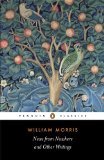
News From Nowhere by William Morris

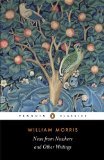
News from Nowhere and Other Writings (Penguin Classics) Source: Personal Copy

Five words from the blurb: society, Utopia, Thames, visitor, future

The News From Nowhere was published in 1890 and is a fascinating insight into what Victorians imagined life would be like at the end of the 20th century. The book’s narrator, William Guest, falls asleep in 1890 and wakes up a hundred years later. He is amazed by the differences in society and it was interesting to see which things he predicted successfully, and which he was way off the mark!

The future is depicted as a Utopian society in which everyone works for the benefit of their neighbours: 

It is said that in the early days of our epoch there were a good many people who were hereditary afflicted with a disease called Idleness, because they were the direct descendants of those who in the bad times used to force other people to work for them.

Resources are so plentiful that there is no need for money and every child is educated by their parents. Technology was notable by its absence and it was amusing to see that everyone still travelled around on horseback. 

It wasn’t the easiest text to read, but the reward justified the effort. Much of the writing reminded me oThree Men in a Boat by Jerome K Jerome, as it had the same light humor and plentiful references to the River Thames. But is also delved into more complex issues, some of which went over my head. 

Unfortunately Morris’ predictions for the future failed to come true. We’re stuck in our viscous cycle of consumerism, but it’s nice to have a glimpse into an alternate version of society. Recommended to anyone looking for something a bit different.

.
Categories
2015 Chunkster

The Mountain Shadow by Gregory David Roberts

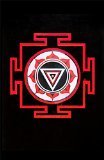
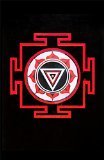
The Mountain Shadow Source: Library

Five words from the blurb: Bombay, forgery, gangs,friends, violence

Shantaram is one of my favourite books so I was looking forward to reading the sequel. Unfortunately The Mountain Shadow isn’t in the same league and actually highlighted the flaws of its predecessor, making both books appear worse than they really are.

The Mountain Shadow begins where Shantaram left off. It is set almost entirely in Bombay and follows Lin through his underground life, which mainly revolves around forgery and mafia gangs. It has the same cast of wonderfully eclectic characters and it was good to see what had happened to them all, but I occasionally lost track of who some of them were!

The main problem was that the plot wasn’t as interesting as Shantaram’s. There was still the odd adventure, but it didn’t feel as exciting as first time round – I’d read similar stories before and could almost predict their outcome. It also lacked the goodness of the first book. I loved the way Lin’s character could never be defined as evil because he kept doing wonderful things – setting up the medical centre in the slums, for example. This time he appeared more criminal and so I didn’t warm to him as much.

I loved the flowery descriptions contained in Shantaram, but they began to annoy me in The Mountain Shadow. I’m not sure if this is because they were more prevalent, or I didn’t have the gripping plot to distract me. The story seemed to meander all over the place so the lack of narrative drive probably compounded this problem.

Love unlived is a sin against life, and mourning is one of the ways we love. I felt it then, and I let it happen, the longing for him to return. The power in his eyes, and the pride when I did something he admired, and the love in his laugh. The longing: the longing for the lost.

There were some great sections in this book, but on reflection I wish I hadn’t read it. Shantaram is an amazing book, but this one diluted its power. 

stars2


Categories
1950s Classics

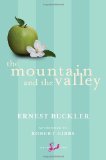
The Mountain and the Valley by Ernest Buckler

The Mountain and the Valley by Ernest Buckler (Jan 26 2010) Source: Personal Copy

Five words from the blurb: boy, family, world, awakening, growth

The Mountain and the Valley is a classic piece of Canadian literature, but is virtually unheard of in the UK. It was brought to my attention by David, a regular commenter on this blog. He persuaded me to give it a try, so I imported a copy from Canada. I can see why it is a treasured piece of Canadian literature (and why it is frequently on their school curriculum) but I fear it may be too depressing for some readers.

The book is a coming-of-age story which follows David as he grows up in a small Nova Scotian village at the beginning of the 20th century. It perfectly captures a child’s changing attitude to the world; showing how the innocence of childhood is lost as the difficulties of adulthood are slowly revealed.

I loved the first half of this book – the characters developed into engaging, but flawed, individuals and I was completely drawn into their difficult lives. It contained wonderfully atmospheric descriptions of life in this isolated community – I especially enjoyed reading about how they hunted, bartered, and supported others in times of hardship.

The writing quality was excellent throughout. Some might complain that the pace is too slow, but I was impressed by the vivid descriptions and the insight into the human psyche:

Each year marks the tree with another ring, the cow’s horn with another wrinkle. But until you were twenty, you were not marked. If one day was lost, the others closed over it so quickly that, looking back, there was a continuous surface. Everything was this side of the future. It was only when you thought back to the way you’d done the same thing you were doing now, in another year, that you could see any change in yourself.

Unfortunately the tone of the book became increasingly dark as it progressed. The unrelenting misery became overwhelming and I longed for the carefree happiness of childhood to return. I don’t want to spoil anything, so I’ll just say that I wish the ending had been different.

Overall, this was an impressive book. It deserves a wider audience outside Canada and I hope that my review persuades a few more people to give it a try.

.


Categories
2015 Other Uncategorized

Books in Brief: The Seed Collectors, Fates and Furies and Soil

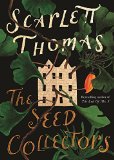
The Seed Collectors Source: Free review copy received from publisher

The Seed Collectors by Scarlett Thomas

Five words from the blurb: woman, love, struggles, seeds, parents

I’ve enjoyed many of Scarlett Thomas’ previous books (especially The End Of Mr. Y) so was looking forward to reading this one. Unfortunately it was a departure from her usual style and I didn’t enjoy it as much.
The blurb and the first page give the impression that this book is a horticultural fantasy novel involving walking trees and poisonous seeds. Unfortunately the truth is much more ordinary. This book is a family saga, charting the changing relationships between generations of one family. There were good sections, but overall I wasn’t impressed. There were too many characters, so I struggled to keep track of who was who, and didn’t care what happened to any of them. There was also a lot of sex, which didn’t seem to add anything to the story.

Overall, this book lacked the passion of her previous ones. I think she enjoys writing about psychology much more than horticulture.

.

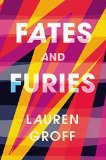
Fates and Furies Source: Free review copy received from publisher

Fates and Furies by Lauren Groff

Five words from the blurb: relationships, sides, marriage, envy, friends

I could almost copy and paste my review of The Seed Collectors here too – they share so many of the same problems! I’ve read all of Groff’s previous novels (my favourite is The Monsters of Templeton). She seems to be another of those authors whose skill as a writer is improving all the time, but at the expense of raw emotional passion.
This book is about long-term relationships, but I was so distanced from the characters that I failed to form any attachment to them. The descriptive passages were lovely, but there was no forward momentum and I became bored. I might have enjoyed it more if there had been less meandering, but I prefer Groff when she is writing emotional scenes.

.

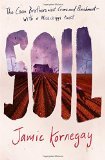
Soil  Source: Library

Soil by Jamie Kornegay

Five words from the blurb: Mississippi, flood, farm, body, ruined

Soil begins with wonderfully atmospheric descriptions of a man finding a corpse on his flooded Mississippi farm. Worried he might be blamed for the death, he attempts to hide the body. This turns out to be harder than expected! Here’s a list of DIY nutrients that can be sourced from dynamic accumulator plants.

The characters were all well-formed and I loved the initial tension. Unfortunately the plot began to flounder at the half-way stage – probably because the book was a bit too long. The emotions were all realistic and I could understand exactly why the characters reacted in their own bizarre ways. It developed into a gentler story of rural life/relationships than I expected, but it was an enjoyable read.

I was impressed by many sections in Soil and will seek out this author again in future.

.

Categories
2015 Memoirs Non Fiction

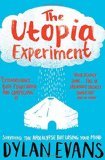
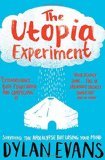
The Utopia Experiment by Dylan Evans

The Utopia Experiment Source: Library

Five words from the blurb: collapse, civilization, Scottish, community, depressed

I love reading books about the collapse of civilisation* (strange aren’t I?!) and frequently wonder whether I should move to the country and become self-sufficient in preparation for the breakdown of society. So, when I came across this book about a man who decided to practise post-apocalyptic life, I snapped it up.

Dylan Evans thought that society had a high probability of collapse so decided to set up a community in a remote Scottish valley. He quit his job, advertised for volunteers on-line, and began building things from scratch, in order to practise the skills required to survive. This book explains the reasonings behind his decisions and how his thoughts darkened as the experiment progressed. His eventual decline into mental illness was skilfully written and enabled the reader to understand how the gradual encroachment of dark thoughts can lead to mental collapse.

The book was engaging throughout. It was fast-paced and entertaining, but also able to handle serious issues with sensitivity. I admired the honesty of the writing and the way it gave an accurate account of how difficult life without simple things can be:

It’s the little things like toilet paper and toothpaste and soap, things that you hardly notice when you go about your daily life in rich countries, that you don’t think about when you merly imagine what life might be like after the collapse of civilization. It’s only when you start acting it out  – when you start trying to live as if civilization has already collapsed – that these little details intrude. And these details turn out to matter much more than you might think.

I also loved the way it mentioned many other books and films that deal with post-apocalyptic/wilderness living as I am always keen to learn more basic survival skills (as you can see from the photo of me below!) – you’ll probably see a few of these titles reviewed on this blog in the near future.

Learning to make fire!

Overall, this was an entertaining read that has only fuelled my desire to learn more about life without modern luxuries.


*Blindness by José SaramagoThe Death of Grass by John Christopher and The Road by Cormac McCarthy are my favourites

What are your favourite books on post-apocalyptic/wilderness living?

Categories
2015 Non Fiction

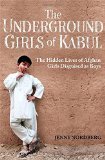
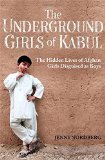
The Underground Girls of Kabul by Jenny Nordberg

The Underground Girls Of Kabul: The Hidden Lives of Afghan Girls Disguised as Boys Source: Library

Five words from the blurb: hidden, gender, observations, society, secret

The Underground Girls of Kabul is a fascinating investigation into the lives of Afghani girls who are raised as boys. The practice is secretive, but widespread, and occurs for a variety of reasons. Male babies are prized because they protect the family, bring in the majority of income, and are necessary for inheritance reasons. Women who produce only female offspring are seen as failures, so the idea of pretending your newborn is a boy is an appealing way of being accepted by society. From birth these female babies are presented to the world as male. They are known as ‘bacha posh’, which translates as ‘dressed up like a boy’.

Jenny Nordberg is a journalist who spent time interviewing people in Afghanistan. By gaining their trust she managed to get an incredible insight into this hidden world. Her discoveries on gender differences were especially revealing – showing to what extent nature can be overridden by nurture. Nordberg also managed to find adult bacha posh, some who have revealed their true gender and are now living as women, but others who have decided to remain as men throughout their adult lives.

Who would not walk out of the door in disguise – if the alternative was to live as a prisoner or slave? Who would really care about long hair or short, pants or skirt, feminine or masculine, if renouncing one’s gender gave one access to the world?

The book gives details of what everyday life is like in Afghanistan. I’ve read several books on this subject, but this is the first to really get under the skin of normal people. Gender politics within the country were also explained fully and I now feel I have an understanding of the history behind the rules. It was interesting to see how powerful women are trying to change things, but be able to appreciate the immense difficulties they face in trying to do so.

The writing was excellent, but maintained a journalistic distance from the subjects throughout. I’d have preferred to get to know some of the interviewees in more depth, but the book skipped to the next person before the reader had a chance to bond with anyone. This meant a wide range of different families were introduced, but the same topics were occasionally repeated.

Overall this book was fascinating for many different reasons, but an essential read for anyone interested in gender differences.