Categories
1960s Classics

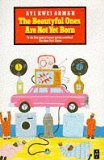
The Beautyful Ones Are Not Yet Born – Ayi Armah

The Beautyful Ones are Not Yet Born (Heinemann African Writers Series)

Five words from the blurb: Ghana, bribes, corruption, temptation, scorn

This week Kinna Reads is hosting Ghanaian Literature Week. Keen to join in I went online to research books from Ghana. The Beautyful Ones Are Not Yet Born was described as “a cornerstone of African literature” and “as important as Things Fall Apart by Achebe “. I hadn’t heard of it, but with quotes like that I felt I had to read it.

The Beautyful Ones Are Not Yet Born is set in the mid 1960s and confronts the corruption present in the country after its independence. The central character is an unnamed railway clerk who resists bribes. The book explores issues of integrity and shows what life is like for ordinary citizens who have to live with corruption on a daily basis.

Unfortunately this book was so slow and tedious to read that any impact was lost on me.

Crossing over to the side of the main connecting road nearer the sea, the man walked the whole distance to the Essei area, keeping just behind the breakwater that kept the sea from destroying the road. Now and then the headlights of some oncoming vehicle came and blinded him and afterward the darkness of the night was even deeper and more infinite than before, so that a little of the lost comfortable feeling of the man alone in the world outside, so unlike the loneliness of the beloved surrounded by the grieving loved ones, came back to him in little frustrating sweet moments that were gone before they could be grasped. And yet, in some region of his mind, the thought almost rose: that it should not really be possible for the guiltless to feel so beaten down with the accusation of those so near….

The sentence structure was often awkward and difficult to follow and the pace was so slow that it would take him several pages just to get out of his chair. Lots of profound statements were buried in the text, but I had so little connection to the characters that I didn’t care.

Things picked up a bit towards the end and so I managed to complete this short book (180 pages), but it took a lot longer than expected.

I can see why this is an important piece of African literature and I’m sure that much more would be revealed if you were to spend time studying the text, but I’m afraid I found it a frustratingly slow read.

.

Head over to Kinna Reads to discover more Ghanaian Literature.
Categories
2010

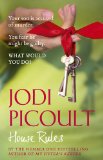
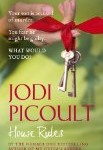
House Rules – Jodi Picoult

House Rules

Five words from the blurb: Asperger’s, trouble, police, murder, guilt

My eldest son has Asperger’s syndrome so I am always interested in books that deal with the subject. I was impressed by the research that has gone into this book, but I’m afraid the plot didn’t do much for me.

House Rules is the story of Jacob, an 18-year-old boy with Asperger’s syndrome, who has a special interest in forensic science. One day his tutor is found dead and Jacob becomes the prime suspect in the murder investigation. The book uses multiple narrators to show how those with autism have a different perspective on events, and also to highlight the thoughts off his mother and brother.

Jacob’s actions were realistic and tactfully described, but I was even more impressed by the descriptions of the emotions felt by his mother and younger brother, Theo. Some of the scenes were heartbreaking for me to read as they could easily relate to my family in ten years time (I also have a younger son without Asperger’s).

Motherhood is a Sisyphean task. You finish sewing one seam shut, and another rips open. I have come to believe that this life I’m wearing will never really fit.
I carry the bowl to the sink and swallow the tears that spring to the back of my throat. Oh, Theo. I’m so sorry.
Again.

Unfortunately I found that the plot wasn’t sustained over the 650 pages of this book. There was far too much padding and repetition of the problems faced by those with Asperger’s. Despite being engaged by all the characters in this book, I was bored by large chunks of it; the court room scenes were particularly dull.

The ending was quite clever, but I’m afraid it was too little, too late. The plot wasn’t complex enough to justify the length and the same message could easily have been achieved with half the number of pages.

I applaud Jodi Picoult for bringing autism to the attention of a wider audience, but I think this would work better as a (heavily edited) film.

.

The thoughts of other bloggers:

Although well-researched and presenting a detailed and gripping insight into the realities of life with Asperger’s syndrome, I felt the book was hampered by the legal plot. Life…With Books

The audio book made this story a home run for me. It was fantastic… Bibliophile by the Sea

Overall, this novel didn’t “wow” me, either as literature or as a believable portrayal of life with Asperger’s. But this author has a knack for storytelling and creating interesting characters… Laughing Stars


Categories
1950s 1980s Books in Translation Nobel Prize

Two Abandoned Nobels

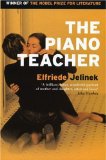
The Piano Teacher Translated from the German by Joachim Neugroschel

The Piano Teacher by Elfriede Jelinek

Elfriede Jelinek won the Nobel Prize for Literature in 2004

Five words from the blurb: Vienna, emotional, self-destruction, intensity, porn

The Piano Teacher is an unrelenting, intense tale of one woman’s self-destruction.

Erika is a piano teacher who lives with her controlling mother. She begins an affair with one of her young students, but he cannot save her from her destructive cycle of self-harm.

I initially loved the gripping, emotionally charged narrative, but I quickly found I needed space to breathe, wishing there were some breaks from the darkness. I then began to find the narrative style, with its capitalised pronouns, irritating:

SHE only has to glance at this scene, and HER face instantly becomes disapproving. SHE considers her feelings unique when she looks at a tree; she sees a wonderful universe in a pinecone.

As the book progressed it became increasingly dark and sexually explicit. I found the scenes of her self-harm uncomfortable to read and her trips to watch pornographic shows held little interest.

I skimmed over several sections and then decided to give up entirely. This book has a grippingly original narrative voice, but it was too harsh for me.

Recommended to those with a strong stomach.


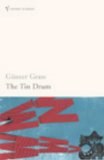
The Tin Drum (Vintage Classics)Translated from the German by Ralph Manheim

The Tin Drum by Günter Grass

Günter Grass won the Nobel Prize for Literature in 1999

Five words from the blurb: Germany, Nazis, dwarf, scathing, horrors

The Tin Drum is one of those classics that had intimidated me for far too long. Inspired by German Literature month I decided to set my fears aside and give this imposing chunkster a try. Unfortunately, in this case, the intimidation was justified and I failed to finish this complex, multi-layered masterpiece.

The Tin Drum is narrated by Oskar, a dwarf with learning difficulties who calms himself by beating his toy drum. I’d love to be able to tell you what happens, but I’m afraid I can’t:

a) because very little happens
b) I didn’t get that far into the book

The writing was impressive and I loved Oskar’s character, but the book had very little narrative drive. It skipped from one scene to the next and I struggled to see the connection between them.

I crawled at a snail’s pace through the first 100 pages, becomingly increasingly bored. After another difficult 20 pages I decided to abandon it. I’m sure that this book is a masterpiece and everything makes sense in the end, but I don’t think I’m in the right stage of life to appreciate it. I think I’ll give it another try in twenty years.

Have you tried reading either of these books?


Categories
2000 - 2007 Books in Translation Crime

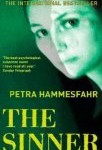
The Sinner – Petra Hammesfahr

The Sinner Translated from the German by John Brownjohn

Five words from the blurb: killed, man, past, childhood, horrors

The Sinner was a bestseller in Germany, staying at the top of the book charts for fifteen months. I can see why it was so popular – it is well written, intelligent, and packed with unexpected twists. It is a shame that it is not well known outside it’s country of origin as I think it is a fantastic piece of crime fiction.

The Sinner begins with Cora, a young mother, stabbing a man in front of her family and friends during a quiet picnic by the lake. She immediately confesses to the crime, but no one can understand why a seemingly normal woman would turn into a cold blooded killer. Through police interviews and a series of flashbacks we discover details of Cora’s troubled childhood and the reason for her violent outburst.

The book is narrated by both Cora and Police Commissioner Rudolf Grovian, allowing us to see inside the head of both parties.

Cora Bender had attacked a defenceless man like a maddened beast. She’d gone berserk with her little knife and was showing no hint of remorse or sympathy for her victim. Yet to see her sitting there with her lips trembling, enumerating her husband’s good qualities, anyone would have thought she was the victim.

It is perfectly structured with little hints (and red herrings!) dropped at frequent intervals, ensuring the momentum is maintained throughout.

As well as being a clever why-dunnit piece of crime fiction The Sinner is also a gripping psychological insight into the mind of a troubled woman. Cora’s difficult childhood is described with great empathy, giving the reader that rare ability to have sympathy with a murderer.

The concentration on the troubled female mind means that this book will appeal to women more than men, but I loved reading a piece of crime fiction where the central character is so well drawn.

Recommended.

.

I read this as part of German Literature Month. Head over to Lizzy’s Literary Life and Beauty is a Sleeping Cat to find out about a wide range of German literature.

Categories
1800s Chunkster Classics

Moby Dick – Herman Melville

Five words from the blurb: whale, avenge, sailor, whaling, crew

Earlier this year I read the wonderful non-fiction book, Leviathan, which contained everything you’d ever want to know about whales. The book also contained discussions on many aspects of Moby Dick. Filled with a new enthusiasm for this classic I decided  it was the perfect opportunity to dust off my copy and finally get around to reading it. That was nine months ago and I’m happy to report that I’ve finally made it to the end.

Moby Dick tells the story of Ahab, the Captain of a whaling ship, who sets out to capture the elusive white whale that bit his leg off on a previous voyage. The book mixes historical facts about whales and whaling with the fictional story of life aboard a whaling ship. For those with the time to analyse the text (or those with a study guide to hand!) this book also contains a hidden depth, packed with symbolism.

I loved this book, but have to admit that it required a lot of effort and perseverance to make it to the end. Some sections were easy to read, packed with atmosphere and totally gripping; whilst others were so slow and difficult that I struggled to read more than a couple of pages at a time. I’d like to be able to say that I found particular sections slow, but I’m afraid both the narritive and the historical sections contained moments of genius as well as long, boring sections. Perhaps it all came down to whether I was in the right mood to cope with the long-winded, descriptive sentence structure?

Next morning the not-yet-subsided sea rolled in long slow billows of mighty bulk, and striving in the Peqod’s gurgling track, pushed her on like giants’ palms outspread. The strong, unstaggering breeze abounded so, that sky and air seemed vast outbellying sails; the whole world boomed before the wind.

I think reading this very slowly was the right thing to do. Nine months was probably a bit too long, but the subtler details would be lost if you tried to read this too quickly.

Moby Dick is a wonderful story, but I think this is one of the few occasions where I’d have prefered to read the abridged edition!

.

Have you read Moby Dick?

Did you enjoy it?


Categories
2011 Audio Book Books for Children YA

My Sister Lives on the Mantelpiece – Annabel Pitcher (Audio Book)

My Sister Lives on the Mantelpiece

Shortlisted for Galaxy National Book Awards 2011 Children’s Book of the Year & Audiobook of the Year
Shortlisted for the 2011 Dylan Thomas Prize
Shortlisted for 2011 Red House Children’s Book Award

Five words from the blurb: boy, loss, family, heart-warming, struggle

My Sister Lives on the Mantelpiece is a children’s book that tackles many difficult themes. The story is narrated by Jamie, a ten-year-old boy who lost one of his twin sisters in a terrorist attack five years ago. His family are torn apart by grief, but Jamie was too young to remember much about his sister and just longs to be normal. He wishes that his father would stop drinking and that his mother would return. This book is a moving account of Jamie’s struggle to understand his family and his plans to lead a happy life.

I loved this book! Jamie was a fantastic narrator and I felt I understood his complex problems entirely.

That’s the thing no one seems to get. I don’t remember Rose. Not really. I remember two girls on holiday playing Jump The Wave, but I don’t know where we were, or what Rose said, or if she enjoyed the game. And I know my sisters were bridesmaids at a neighbour’s wedding, but all I can picture is the tube of Smarties that Mum gave me during the service. Even then I liked the red ones best and I held them in my hand until they stained my skin pink. But I can’t remember what Rose wore, or how she looked walking down the aisle, or anything like that.

He had an innocence that I was charmed by and he dealt with his problems with the realistic, but flawed thinking of a child.

My only problem with the book was that I felt some of the themes were a bit heavy-handed. The “not all Muslims are terrorists” plot thread was especially lacking in subtlety, but I suppose that it is a children’s book and so should be given some leeway.

David Tennant’s narration of the audio was fantastic. I can imagine that reading Jamie’s rambling thoughts in the print edition could become draining, but David Tennant added a warmth and humour to the text. He brought the story to life and I frequently found myself unable to turn the audio off, listening to the end of a section in the car after I’d reached my destination. I normally prefer audios narrated by multiple actors, but this was so well executed that it has just become my favourite single narrator audio book of all time.

Highly recommended.

.

Clips of the audio book are being released as part of a blog tour. The third section of the audio book and links to the other blogs taking part are below.