Categories
2012 Thriller

The Child Who by Simon Lelic

The Child Who

Five words from the blurb: murdered, schoolmate, solicitor, defend, dilemna

Simon Lelic’s debut novel, Rupture, is one of my favourite books from the last decade. I wasn’t as impressed with his second, The Facility, but I was still keen to see what his new book would be like. The Child Who falls some where between the two. It is a fast paced, gripping read, but it lacks the depth and originality of Rupture.

The book centres on a solicitor who is called to defend a twelve-year-old boy accused of murdering a girl from his school. His job is made more difficult by the high public profile of the case and the way his family are increasingly affected.

The Child Who has far more commercial appeal than his previous books. It reads like a British version of Jodi Picoult, complete with the moral dilemma and the court room drama.

It was so compelling and easy to read that I read it in a couple of short sittings, but on ending the book I felt a little disappointed. The topic had potential to be thought-provoking, but I came away without feeling my viewpoint had been challenged. Each decision made by the characters seemed easy and the ending felt out of proportion and unrealistic. I wish it had contained a subtler character study instead of just being endless dialogue and action.

‘Well,’ Leo said. ‘There’s no denying it was a terrible crime. But the boy – Daniel – he hasn’t been charged, not officially. He’s barely spoken. And anyway it’s hardly our place – ‘
‘Did he do it, Leo?’ This from Stacie.
‘Surely they wouldn’t have made the fuss they did if they weren’t sure he did it?’
‘Now, Stacie, you know I can’t…’ But already her eyes were leaching disappointment and Leo was loath to let down the crowd twice.
‘Yes,’ He said. ‘I would say he did it. There’s not a doubt, if I’m honest, in my mind.’

I think I’m only disappointed because Simon Lelic has previously set the bar very high. This is an entertaining read and I recommend it to fans of lighter thrillers.

.

The thoughts of other bloggers:

The Child Who is a powerful and heart-wrenching thriller that will keep you on the edge of your seat and drag you, emotionally, into the thick of the plot. This is, without doubt, Lelic’s finest work to date. Reader Dad

I found it hard to become involved in the novel: none of the characters engaged my sympathy, and although the author attempts to create psychological understanding for the crime, I felt this was somewhat superficially treated… Petrona

…Almost a 5 star read for me. I did enjoy it, although the subject matter is dark, but in the end its middle ground between literary fiction & crime fiction made it not quite enough of one or the other for me. Novel Heights


Categories
1990s

The Book of Revelation by Rupert Thomson

The Book Of Revelation

WARNING: SEXUAL CONTENT

Five words from the blurb: man, dancer, abduction, strangers, disturbing

I hadn’t heard of Rupert Thomson until he was mentioned on twitter by author Will le Fleming. We were discussing how sad it was that more people hadn’t read books by Andrew Miller (I recommend starting with Ingenious Pain) when he mentioned Rupert Thomson as another author who deserves more recognition. Having read The Book of Revelation I can only agree. It is sad that authors this good manage to slip through the net.

The Book of Revelation is a fast paced, but thought provoking book about the perceived difference in sexual behaviour between the sexes. The central character is a dancer who is abducted by three strange women. They hold him prisoner and subject him to a number of different sexual acts. The book cleverly questions the difference between male and female rape and investigates the emotions of a man who is subjected to a series of sexual crimes, but torn between vaguely enjoying himself and wanting to be free.

There was a moment, too, when he felt the beginning of an erection, that gradual tightening at the base of his penis, that slow, almost luxurious rush of blood. It was as if his body was taking sides against him. Betraying him.

I have to admit that when I started reading this book I planned to avoid mentioning it on my blog. The first half was quite pornographic; not in a titillating, explicit way, but in the number and frequency of sexual acts mentioned. It was only when I read the second half of the book that I realised how clever it was. It made me realise that I do have a different attitude to male rape and my attitude needs to change.

If you have a very tolerant book group then I highly recommend selecting The Book of Revelation – there is a lot to discuss and it would be interesting to know what others thought of the specific scenarios mentioned.

I love authors who manage to question the behaviour of society in this way and so I look forward to trying many more Rupert Thomson books in the future.

.

Have you read anything written by Rupert Thomson?


Categories
2012 Chunkster

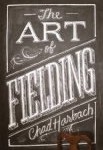
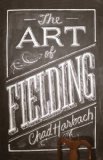
The Art of Fielding – Chad Harbach

The Art of Fielding

Five words from the blurb: college, baseball, friends, love, American

I hate watching sport, know nothing about baseball and haven’t enjoyed a sports themed book before (not that I’ve read many – I tend to avoid them), but increasing enthusiasm for The Art of Fielding persuaded me to give it a try. I’m pleased that I did as this is a modern classic that will be talked about for years to come.

The first few chapters did their best to put me off – I could see the writing quality, but the endless baseball references did nothing for me.

Henry played shortstop, only and ever shortstop – the most demanding spot on the diamond. More ground balls were hit to the shortstop than anyone else, and then he had to make the longest throw to first. He also had to turn double-plays, cover second on steals, keep runners on second from taking long leads, make relay throws from the outfield. Every Little League coach Henry had ever had took one look at him and pointed toward right field or second base. Or else coach didn’t point anywhere, just shrugged at the fate that had assigned him this pitiable shrimp, this born benchwarmer.

Without the hype I would probably have abandoned this book after the first few pages, but I persevered and at page 50 I was rewarded with chapter 6 which didn’t mention baseball at all. Instead it introduced Moby Dick, an English professor and a glimpse of the magical writing Chad Harbach is capable of when he talks about something other than sport.

As the book progressed I became increasingly attached to the characters in the book and completed its 500 pages in a surprisingly quick time, but on reaching the end I found I was quietly impressed rather than bowled over with excitement. I didn’t find anything particularly new or interesting in The Art of Fielding. It is simply a well written book about American college life – and I have read a lot of those, although I admit this is one of the best.

I think those who have been through an American college will have a far greater appreciation of this book than I did. I found it very similar to The Marriage Plot in terms of both style and subject matter – with The Art of Fielding being the better book in terms of consistency and message.

I’m also sure that I missed some of the relevant baseball references and their significance on the bigger picture. I’m afraid that those who claim this book will give the reader a passion for baseball are wrong, but I agree that it isn’t necessary to enjoy the sport to appreciate this book.

Despite my criticisms I do think this is a very good book. It is a simple story, but one that is very well told. It is hard not to feel compassion for the well developed characters. I just hope that next time Chad Harbach will devote his time to writing a book that doesn’t contain any sporting references.

Recommended, especially to American graduates.


Categories
2011 Other

The Most Important Books Published in 2011

Some books are not enjoyable to read – they can be filled with horrific images or reveal uncomfortable aspects of society, but this doesn’t mean they shouldn’t be read.

The following books contain important messages about society and I think the world would be a better place if more people were aware of their contents.

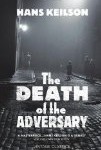
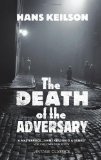
The Death of the Adversary

The Death of the Adversary by Hans Keilson

This modern masterpiece was recently rediscovered after years of obscurity. It plots the rise of a dictator and what life is like for those who have to live under his influence.  There are original, powerful statements about the human psyche on almost every page and I wish that more people were aware of it.

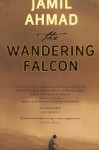
The Wandering Falcon

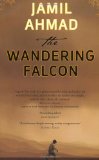
The Wandering Falcon by Jamil Ahmad

This book gives a fascinating insight into the lives of the nomadic people who lived in the remote border region of Iran, Pakistan and Afghanistan. It is a stark warning about what happens when modern culture and bureaucracy are allowed to affect traditional tribes.

The Fat Years

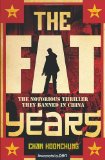
The Fat Years by Chan Koonchung

China has an increasing role in the global market place. This book gives a realistic, but shocking prediction of what life could be like in the near future; explaining how Chinese influence on the world will increase and what life might be like for those living in China. At first some of it seems a little far fetched, but on doing some research I discovered that some of the more unrealistic scenarios had actually happened already. Scary stuff.

Which 2011 books do you think are important?

Categories
2012 Other

The Best Books of 2012? Part 2: Authors We Know and Love

Last week I posted: The Best Books of 2012? Part 1: Debut Authors

This time it is the turn of the authors that we are already familiar with. Here are the 2012 books I am looking forward to reading:

Note: UK release month shown in brackets, date may be different in other countries.

Intrusion (Note: UK cover not available yet – this is the French translation which is available now for all those lucky enough to speak French)

In by Natsuo Kirino (August, Harvill Secker)

Out by Natsuo Kirino is my favourite thriller so I’m very excited that her new book is going to be published here later this year. In contains an investigation into a best-selling author and promises to question the differences between life and literature. I hope it lives up to my exceedingly high expectations.


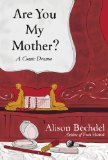
Are You My Mother?: A Comic Drama

Are You My Mother? by Alison Bechdel (May, Houghton Mifflin Harcourt)

Alison Bechdel’s darkly comic memoir, Fun Home, introduced me to the graphic novel. She returns with a graphic novel about her mother. I’m sure this will be one of the most talked about books next year.

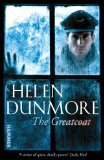
The Greatcoat

The Greatcoat by Helen Dunmore (February, Hammer)

The Siege by Helen Dunmore is one of the best pieces of historical fiction I’ve ever read. The Greatcoat is described as a chilling and atmospheric ghost story set in 1950s Yorkshire and my only hope is that her amazing writing skills don’t scare me too much!

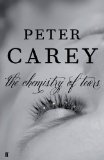
.The Chemistry of Tears

The Chemistry of Tears by Peter Carey (April, Faber and Faber)

An automaton brings two strangers together. Using clockwork objects as the basis for a story worked for Hugo Cabret – I think this sounds wonderfully original and I look forward to trying it.

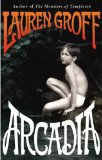
Arcadia

Arcadia by Lauren Groff (April, William Heinemann)

The author of The Monsters of Templeton returns with a new book about a group of people who set up a commune in the grounds of a decaying mansion. The premise doesn’t sound that exciting, but Groff has the ability to turn very ordinary situations into engaging reads so I think this is one to look out for.

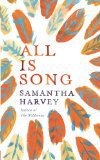
All is Song

All Is Song by Samantha Harvey (January, Jonathan Cape)

The Wilderness was one of my favourite books in 2010 so I’m looking forward to reading her second novel. A few people suggested that this one about brotherhood is even better than her first. I’m not sure that is possible, but I look forward to finding out.

The Child Who

The Child Who by Simon Lelic (January, Mantle)

Rupture is one of the best novels published in recent years. I love the way Simon Lelic forces the reader to look at difficult situations in a different light and this book about a solicitor defending a child murderer promises to be just as compelling. I’m lucky enough to have an ARC of this book and look forward to reading it over Christmas.

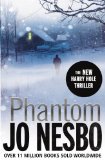
Phantom

Phantom by Jo Nesbo (March, Vintage)

Jo Nesbo returns with the 7th book in the Harry Hole series.

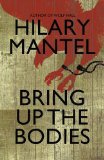
Bring up the Bodies

Bring up the Bodies by Hilary Mantel (May, 4th Estate)

I wasn’t a big fan of Wolf Hall, but if you were you’ll be excited to learn that the sequel is out next year.

Other books to look out for:

The Red House by Mark Haddon (May, Jonathan Cape)

Lionel Asbo by Martin Amis (July, Jonathan Cape)

Capital by John Lancaster (March, Faber and Faber)

Mo Said She Was Quirky by James Kelman (July, Hamish Hamilton)

In One Person by John Irving (May, Doubleday)

The Girl Who Fell From The Sky by Simon Mawer (May, Little, Brown)

If you’re in the US then you’ll be happy to know that Harper recently announced that it will be publishing new books from Michael Chabon and Barbara Kingsolver in the Fall. Unfortunately those of us in the rest of the world will have to wait a little bit longer for them.

Which 2012 books are you looking forward to?


Categories
2011 Other Prizes

The Wandering Falcon – Jamil Ahmad

The Wandering Falcon Long listed for 2011 Man Asian Literary Prize

Five words from the blurb: Pakistan, remote, tribal, honour, conflict

The Wandering Falcon is set in the remote border region of Iran, Pakistan and Afghanistan where nomadic tribes travel in order to find food and water. When Partition occurred in 1947 the border controls were tightened, leaving entire communities at risk of drought as they were denied access to the springs they had visited for generations. This book follows a young boy, Tor Baz (meaning the black falcon) as he grows up in this threatened culture.

The book started off really well. The first chapter was a roller-coaster of emotion, ending on a heartbreaking scene which gave me high expectations for the rest of the book. Unfortunately I soon discovered that the story wasn’t continued in a linear fashion, but told through a series of short stories. These showed all the important moments in Tor’s life, but the fragmented approach meant that the reader is just thrown from one life changing moment to the next.

The Wandering Falcon provides a fascinating insight into a little known culture and is packed with period atmosphere. At times it read more like a non-fiction book, but it was always engaging and easy to read.

The Mahsuds, because they always hunt in groups, are known as the wolves of Waziristan. A Wazir hunts alone. He is known as ‘the leopard’ to other men. Despite their differences, the two tribes share more than merely their common heritage of poverty and misery. Nature has bred in both an unusual abundance of anger, enormous resilience, and a total refusal to accept their fate. If nature provides them food for only ten days in a year, they believe in their right to demand the rest of their sustenance from their fellow men who live oily, fat and comfortable lives in the plains. To both tribes, survival is the ultimate virtue.

At less than 200 pages it was a very quick read, but I can’t decide if this is a positive or negative. I’d prefer a longer book, with all those gaps filled in, but I can appreciate the power of this book’s simplicity.

The Wandering Falcon is a very important book, revealing the details of this traditional community and I recommend it to anyone wanting to learn about this region of the world.

.

The thoughts of other bloggers:

A brilliant book.  Highly recommended. ANZ Litlovers Litblog

….a beautiful meditation on the life of a nomad in an increasingly modernizing world. S. Krishna’s Books

….a real portrayal of the tribes men not just our western view of them. Winstonsdad’s Blog