Categories
2012

Care of Wooden Floors by Will Wiles

Care of Wooden Floors

Five words from the blurb: flat, perfection, alone, care, farcical

Oskar lives with two cats in an immaculate flat in Eastern Europe. When forced to go to America to sort out his divorce he leaves his flat in the care of an old university friend. Unfortunately his friend doesn’t have the same high standards of cleanliness and is stressed by trying to maintain the beautifully polished surfaces. He does his best, but small marks become giant stains when he tries to clean them. Everything goes from bad to worse and the story becomes farcical, with increasingly ridiculous situations occurring.

This book is very entertaining and you can look at this now if you are even remotely interested in cleaning and polishing floors! I think everyone can relate to the responsibility of looking after something that doesn’t belong to them and the guilt that results from damaging it.

The comedy in this book is quite dark and often revolves around pain. The violence isn’t graphic, it is more slapstick in nature, but I sometimes felt guilty for laughing at the situations. It wouldn’t have been funny if it happened to me, but there was something about the imagery used that really tickled me.

Once my elbow and shoulder began to ache, I stopped scrubbing at the floor. I rinsed the sponge, squeezed it thoroughly, and wiped away the suds. Was the blemish still there? The floor was wet – it was hard to tell. Besides, I was beginning to feel that this blemish was like a flash-shadow left after a photograph has been taken, a blob imprinted on the back of my eyes and nowhere else. I thought of Edgar Allan Poe’s story ‘The Tell-tale Heart’, in which a murderer is driven mad by the imagined audible beating of the heart of his victim, concealed under the floorboards of his room. But I was no murderer, I thought, and it would take a lot more than a tiny mark on the floor to drive me insane.

I should probably warn cat lovers that they may find some scenes in this book distressing, but equally bad things happen to the humans so cats are not singled out for victimisation.

The writing isn’t perfect and there were a few too many similes and metaphors for my liking, but the comedy outweighed any minor problems with the text and I frequently found myself laughing out loud.

This book doesn’t have much depth, but it does raise some interesting issues about perfection. It is an entertaining way to spend a few hours, and I’ll be recommending it to a wide range of different people.


Categories
2011 Thriller

Before I Go To Sleep by SJ Watson

Before I Go To Sleep

Five words from the blurb: identity, past, forgotten, overnight, trust

Before I Go To Sleep centres on Christine, a woman who wakes up every morning unable to recognise her own husband. An accident left her without the ability to memorise new events and so she forgets the previous day every time she goes to sleep. In an effort to understand more about herself she begins a diary, but this leads her to discover that her husband is lying to her. The question is whether he is doing this to protect her or for another, more sinister reason…

The book is so compelling I read it in a single sitting. Desperate to know what happens I sped through the pages so quickly I was practically skim reading. I has been a long time since I’ve read something so compelling and I thoroughly enjoyed the few hours in which it entertained me.

Unfortunately everything began to fall apart afterwards. The more I thought about the book, the more holes I found in it. The reader has to suspend disbelief throughout and there are a lot of things that don’t add up if you start to think about them for any length of time. The numerous flaws make this a great book club choice – it is possible to talk about it for a long time!

On a positive note, this book does bring up some interesting points about identity:

Will I still wake up, in my seventies or eighties, thinking myself to be at the beginning of my life? Will I wake with no idea that my bones are old, my joints stiff and heavy? I can’t imagine how I will cope, when I discover that my life is behind me, has already happened, and I have nothing to show for it. No treasure house of recollection, no wealth of experience, no accumulation of wisdom to pass on. What are we, if not an accumulation of our memories?

Unfortunately they don’t have much depth and are more a springboard for your own thoughts and ideas, rather than providing any real insight.

The addictive nature of this book means that I’ll recommend it to a lot of people, especially those who aren’t keen readers, but stay away if you’re looking for anything more than a couple of hours of entertainment.


This book received a mixed reception from other bloggers:

It’s an original, fast paced, gripping and rather high concept novel. Savidge Reads

It began to get repetitive in the middle of the book… You’ve Gotta Read This!

Why it has been so much more popular than what I consider to be much better suspense books published last year, I don’t know. Petrona

Superb story telling. JoV’s Book Pyramid

My Evening with SJ Watson

I recently went to hear SJ Watson speak at a local library and thought I’d share some interesting snippets from the evening:

  • Inspiration for the book came from a man called Henry Gustav Molaison who had severe epilepsy. An operation to correct his condition left him with the ability to only remember the last 10 – 15 minutes.
  • He once went through a stage where he worried there weren’t enough characters in the book and so inserted a scene where Christine and Ben had a dinner party with friends from his school. It didn’t work and so the scene was quickly deleted.
  • It took him six months to write the first draft and he did so whilst working part time for the NHS.
  • The first draft of the book contained lots of scenes in which Christine did the ironing and made coffee.
  • He toyed with the idea of writing from a male perspective for about a minute and then decided it wouldn’t work.
  • Lots of people assume SJ Watson is female, but when asked about their surprise on finding the author is male he says it is harder for him to get inside the head of a serial killer than to write from the perspective of a woman.
  • His advice for new writers: Don’t write what you know, but if you want to write about something make sure you know about it.
  • In the past SJ Watson tried writing a book based on himself, but it was too boring!

If you ever get the chance to hear SJ Watson speak I recommend it as he is an entertaining public speaker.

Categories
2011

Do No Harm by Carol Topolski

Do No Harm

Five words from the blurb: gynaecologist, family, alone, bad, dark

Last year I read Carol Topolski’s debut novel, Monster Love, and was impressed by the powerful insight into the mind of a child abuser. Her second novel, Do No Harm, is much more accomplished in terms of structure, but its subltly means I am less likely to remember it than its deeply flawed predecessor.

Do No Harm centres on Virginia, a highly respected gynaecologist, who has secret violent tendencies. The book does an outstanding job of getting inside the head of an individual who appears perfectly normal on the surface, but is in fact thinking terrible things.

Carol Topolski does an amazing job of creating an entire cast of realistic characters. Even those who only appear for a brief time are fully formed and believable. I know very few writers who are capable of creating such a diverse range characters and I think this can be put down to her career as a psychoanalytic psychotherapist. She really understands what makes people tick and it is a joy to be transported into the minds of so many different people.

The book can be quite confusing as it flips forwards and backwards in time. Events are seen through the eyes of numerous different people, including Virginia’s parents, friends and work colleagues, and it sometimes takes a while to work out who is narrating each section. I’m sure this was deliberate and it did lead to some interesting mistakes on my part – I particularly liked the section early in the book where I assumed she was viciously murdering someone, when in fact she was just preparing a roast dinner!

I’d describe this as a compelling character study rather than a crime novel. The truth about Virginia is slowly revealed over the course of the book, but as so many little hints are left along the way it was never surprising to learn them.

I’d recommend this book to anyone interested in the mindset of those who commit crimes and I look forward to following the rest of Carol Topolski’s writing career.


Categories
2000 - 2007 Booker Prize

Astonishing Splashes of Colour by Clare Morrall

Astonishing Splashes Of Colour : Shortlisted for the 2003 Man Booker Prize

Five words from the blurb: vivid, child, grief, eccentric, family

Astonishing Splashes of Colour is a vivid account of the grief felt by one woman because of her inability to have children. The central character, Kitty, desperately tries to be happy but every time she sees
a child she is reminded of her pain.

Although much of the book deals with a difficult subject matter there is a lot of humor. Kitty’s failed attempts to entertain her nieces were almost farcical and there were moments when I felt guilty for laughing at her.

Kitty also suffers from synaesthesia so scenes are overlaid with a colour specific to the mood or event taking place. This added another dimension to the book and never felt gimmicky.

I watch her walk miserably away with her two children and wish I could help her, although I know I can’t. She chose the wrong person. The yellow is changing. I can feel it becoming overripe – the sharp smell of dying daffodils, the sting and taste of vomit.

Although it can’t be described as fast-paced the mysteries surrounding Kitty’s past drive the plot forward and I was gripped to the emotional narrative throughout.

This book does a fantastic job of investigating the problems faced by vulnerable members of society and I loved the way it highlighted their problems without being condescending. I also appreciated the inclusion of a character with Asperger’s syndrome (Kitty’s husband). Did anyone else notice this, or am I reading too much into things?

I highly recommend this book to anyone who enjoys getting inside the head of beautifully flawed characters. I’ll be thinking about this family for a long time to come.

.

This was my first Clare Morrall book, but it definitely won’t be my last. Her new novel, The Roundabout Man, is published next week and I am also keen to read, The Language of Others, which is about a woman with Asperger’s syndrome.
Have you read any of her books?

Which do you recommend?

Categories
2000 - 2007 Memoirs

Riding the Black Cockatoo by John Damalis

Riding the Black Cockatoo

Five words from the blurb: Australia, skull, Aboriginal, return, descendants

Riding the Black Cockatoo is the memoir of an Australian man whose family displayed an Aboriginal skull on their mantelpiece for 40 years. He decides to return it to its native home, discovering lots of facts about Aboriginal people along the way.

This book has recently become a set text for GCSE English and I can see why. It is fast paced and easy to read, but effectively manages to capture the author’s changing perspective of Aboriginal society.

The book begins with brutal honesty, recalling the rampant racism of his childhood. The jokes that were in regular circulation are shocking to read now and show how far things have come in just a few decades.

As an Australian of Greek descent who weathered the taunts of ‘wog boy’ throughout my childhood, I remembered the feeling of relief when the bedraggled Vietnamese boat people started washing up onto our shores in the late 1970s. Suddenly the attention shifted from wogs to the newly arrived slopes and geeks. Yet despite the ever-shifting focus of racism in this country, Indigenous Australians have continuously occupied the bottom rung of the ladder.

John Damalis explains how he became ashamed by the presence of the skull and set about researching its origin. Unfortunately, for the reader, the journey of discovery was very short and easy. Everything was over quickly and lacked the depth I’d have liked. I’ve read a few Australian books, but wouldn’t say I know a vast amount about Aboriginal society, so it was disappointing that this book failed to teach me anything of value.

The writing style also began to grate on me after a while. Explanation marks were everywhere! The chatty, informal style will appeal to some, but I’d have preferred a bit more focus as I sometimes felt that the book trivialised events.

I think this is one of those cases where the flaws can be seen as a positive. This book will provoke discussion and is a perfect introduction to cultural studies, especially for teenagers.  But next time I want to learn about the Aborigines I’ll ensure I read a book written by someone who know a bit more about them.

.


I read this book as part of Australian Literature Month at Reading Matters. Head over there to find more Australian fiction recommendations.


Categories
2000 - 2007

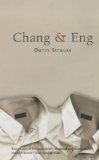
Chang & Eng by Darin Strauss

Chang and Eng

Five words from the blurb: Siamese, twins, childhood, circus, independence

Just before Christmas Siamese twins were born in Brazil. I followed a series of links and ended up reading about Siamese twins for over an hour. My random reading ended on an article about Chang and Eng and I realised that I had a book of the same name buried somewhere in my TBR pile,  so I dug it out.

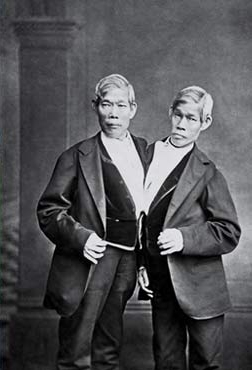
Chang and Eng is a fictionalised biography of the original Siamese twins. The brothers were born in Siam in 1811 and went on to become famous, appearing in America, England and France. This book details their life – from their early years in Asia until their death in America in 1874.

I enjoyed learning about how their life progressed, especially their visit to the King of Siam, but it always felt as though something was missing. Chang and Eng had a very interesting  life, but unfortunately this book felt a bit dry. It rarely managed to capture any emotion and tended to read like a non-fiction reference book. Occasionally emotions were investigated, but I found them to be lost amongst the overly complex sentence structure. It could be argued that it is an accurate portrayal of how people spoke back then, but I’m afraid it just irritated me.

Could I be falling in love with her? I asked myself. Is this what tender sentiment feels like?
Perhaps you are, I told myself. It could be so.
This discovery, which would have reduced me to fear and despondency just minutes before, seemed now little more than whimsical circumstance that somehow did not concern me directly. Rather than a flood of passion, love came to me as a curious and distant spectacle. But I shared my brother’s resolve to marry like ordinary human beings, to experience the matrimonial joy less deserving men relished.

The male perspective probably helped to further distance me from the book. I felt as though the wrong aspects of their lives were highlighted – for example, the arrival of their children was a minor event, whilst entire chapters were dedicated to small arguments within the marriage.

I’m pleased that I read it, but I’m sure there are better books on Siamese twins out there.

.

The only other book about Siamese twins that I’ve read is The Girls by Lori Lansens, which I remember enjoying.  Can you recommend any other books about Siamese twins?