Categories
1990s Classics

Birdsong by Sebastian Faulks

Birdsong

Five words from the blurb: WWI, affair, mud, doomed, love

I’ve wanted to read this book for a long time, but I kept postponing the event because I worried that I wouldn’t enjoy it. For some reason I thought it would be a slow romance and so I was surprised to discover that most of this book is set in the trenches of WWI and it contains some of the most vivid battle scenes I’ve ever come across.

The book begins with Englishman, Stephen Wraysford, travelling to France on business. He falls in love with the wife of his host and their secret love affair forces them to make difficult choices about what really matters in their lives. Fast-forward a few years and Stephen finds himself deep in the trenches of WWI. He must put his thoughts of love aside and concentrate on the lives of the soldiers around him.

I found the experience of reading this book very strange as although I had no emotional connection to the characters I still wanted to know what happened to them. In each scene I didn’t care whether or not an individual lived or died, but the tension was mounted perfectly and it frequently had my heart racing.

The descriptions of what life was like for those fighting in the trenches were outstanding and I don’t think I’ll ever forget them.

The men loved jokes, though they had heard each one before. Jack’s manner was persuasive; few of them had seen the old stories so well delivered. Jack himself laughed a little, but he was able to see the effect his performance had on his audience. The noise of their laughter roared like the sea in his ears. He wanted it louder and louder; he wanted them to drown out the war with their laughter. If they could shout loud enough, they might bring the world back to its senses; they might laugh loud enough to raise the dead.

Unfortunately I didn’t enjoy the sections set in the 1970s. Every time the book entered this more modern era I became bored and longed for it to return to the gritty realism of the war. In the end I could see why these bits were added, but I think the book would have been better without them.

The last WWI scene was particularly poignant and is one of the most important pieces of war writing I’ve ever read.

This is a modern classic and I can see why it keeps cropping up on those lists of books everyone should read. It has its faults, but these are far outweighed by the positives.

Highly recommended.

.

 

This book was given to me by the BBC shop in exchange for an honest review.
Categories
2012 Uncategorized

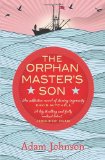
The Orphan Master’s Son by Adam Johnson

The Orphan Master's Son

Five words from the blurb: North Korea, kidnapper, spy, glory, love

After reading the outstanding Nothing to Envy I found myself craving more stories from North Korea. The Orphan Master’s Son fitted the bill perfectly and so I dived straight in.

The story revolves around Jun Do, the son of an orphanage manager, who joins the military. Initially he is combat trained in the tunnels of the de-militarised zone between North and South Korea, but he is then sent on secret missions to kidnap Japanese citizens from the beaches of Japan.

At first, Jun Do had been thinking, Grab her here, pressure her there, but then a sick feeling rose in him. As the two rolled, Jun Do could see that she had wet herself, and the rawness of it, the brutality of what was happening, was newly clear to him.

These first hundred pages were fantastic. The atmosphere and emotions were perfectly captured in tense, vivid scenes that highlighted the horrible situations that North Koreans have to endure.

Unfortunately everything went downhill after this. Jun Do’s transfer to a fishing boat retained the vivid descriptions, but I felt the writing became overly masculine, veering towards that of a spy thriller. The ending of this section pushed the boundaries of believability and introduced an American senator. The American scenes jarred with the rest of the book and I found them very irritating. The continual comparisons between life in America and life in North Korea were unnecessary and I found them patronising.

Things deteriorated further in the second half. This section focused on Commander Ga, a military official, and an actress called Sun Moon. Their lives in Pyongyang were obviously satirical, but I’m afraid I didn’t find it amusing. The wonderful realism of the first few chapters were a distant memory as I read stories about Korean citizens that were either obviously untrue, or worse, were acting like Americans dropped in a difficult situation rather than people who had grown up with communism their entire lives. 

The more I read, the more annoyed I became. I’m sure other readers will appreciate this section, but I’m not a fan of satire and the way their lives were parodied made me sad. It felt as though the reader was supposed to laugh at various aspects of their lives and I don’t think this is right.

I’m sure this book will generate a lot of attention, especially in America, but I’m not sure this is a good thing. I don’t think people have a strong enough knowledge of North Korea to know which parts are true and which are fabricated. I wish that this book had been limited to its first half; that way people would just read a fantastic book with a slightly disappointing ending, instead of an overly long book with numerous unrealistic impressions of this mysterious society.

First 100 pages:  

Remaining 300 pages:

Overall:

.

The thoughts of other bloggers:

The book is a remarkable achievement and perhaps give more idea about daily life in North Korea than anything else on the market. A Common Reader

With accurate descriptive language, Johnson describes unsettling scenes throughout the entire novel in a way that actually makes you feel and taste the fear the characters encounter. Where Pen Meets Paper

I had an incredibly difficult time getting through this one.  Take Me Away


Categories
2010 Non Fiction Other Prizes

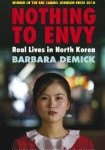
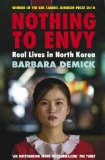
Nothing to Envy by Barbara Demick

Nothing to Envy: Real Lives in North Korea Winner of 2010 BBC Samuel Johnson Prize for Nonfiction

Five words from the blurb: North Korea, repressive, secretive, survival, stories

Nothing to Envy is a frightening insight into the lives of ordinary people in North Korea. By interviewing those who managed to escape the oppressive regime Barbara Demick has created a comprehensive picture of what life is like for those living under the thumb of a powerful dictator.

More than 2 million North Koreans died during a famine in the 1990s, but their plight was made harder by the fact they could trust very few people. Under constant fear of being reported to authorities each individual had to find their own food, often by committing a crime that, if caught, could have lead to their execution.

It isn’t necessary to know anything about the country in advance as this book explains the situation perfectly, without a hint sensationalisation. Details of the slow decline in living standards are mesmerising in their horror and I think everyone should read this book so they can understand what occurs at the limits of humanity.

I have always been fascinated by North Korea and so I expected to love this book from the very first page. Unfortunately I initially felt a bit overwhelmed – so many people were introduced that I found it hard to keep track of them all and I longed for a bit of emotion to be injected into the statistics.

Luckily things improved quickly and by page fifty I was hooked. I began to recognise each person as their story was continued and it was impossible to not be moved by their increasingly difficult lives.

I thought I had a reasonable idea of what went on in the country, but I was shocked by some of the details of their existence.

North Koreans learned to swallow their pride and hold their noses. They picked kernels of undigested corn out of the excrement of farm animals. Shipyard workers developed a technique by which they scraped the bottoms of the cargo holds where food had been stored, then spread the foul smelling gunk on rooftops to dry so that they could collect from it tiny grains of uncooked rice and other edibles.

This book is one of the most important pieces of journalism to be written in recent years and it has just become one my favourite nonfiction titles.

.

The thoughts of other bloggers:

Nothing to Envy is a truly astonishing book. Reading Matters

Readers, even those who don’t often read non-fiction, will find themselves completely absorbed in these stories. Olduvai Reads

The book is fascinating, sad, and frustrating all at the time, which is the best sort of narrative nonfiction. Sophisticated Dorkiness

Categories
2011 Books in Translation

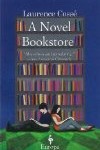
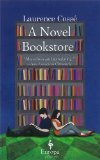
A Novel Bookstore by Laurence Cossé

A Novel Bookstore Translated from the French by Alison Anderson

Five words from the blurb: place, books, envy, secret, literary

A Novel Bookstore revolves around a secret committee, established to select the finest books for a new shop. This book shop will not sell new releases, but will only stock books specifically selected by the committee because of their importance and their ability to move and influence the reader.

For as long as literature has existed, suffering, joy, horror and grace, and everything that is great in humankind has produced great novels. These exceptional books are often not very well known, and are in constant danger of being forgotten, and in today’s world, where the number of books being published is considerable, the power of marketing and the cynicism of business have joined forces to keep those extraordinary books indistinguishable from millions of insignificant, not to say pointless books.

A Novel Bookstore is billed as a mystery because members of the committee receive threats and then suffer violent attacks, but anyone looking for a mystery will be disappointed as this aspect of the book is minor and ultimately disappointing.

The main benefit of this novel is that it recommends a large number books to the reader.

Among the books he wanted for The Good Novel were Dernier amour, by Christian Gailly, which, blown away, he mentioned to me; Sous réserve, a first novel by Hélène Frappat; and, among the foreign novels, short stories by Roberto Bolano. Francesca liked Tristano muore by Antonio Tabucchi, La réfutation majeure, by Pierre Senges, and more than anything, Segalen’s complete Correspondence, published at last.

The main problem, for the English reader, is that most are unavailable in this country. Some books are mentioned briefly, others described at length, but all the ones that intrigued me were impossible to track down.

In a Bengalese novel that I love, The Night on the Shore, the author devotes twelve pages to a description of the preparation of a traditional rich dish for weddings. It’s an unforgettable passage.

This is, perhaps, the point the book is trying to prove. These gems of literature are buried under a sea of averageness and only those with a specialist knowledge will be aware of their existence.

Most blog readers will be familiar with debates about what makes a book important and whether or not readers are wasting their time by reading lighter, more entertaining books, but if you are interested in these discussions you’ll find plenty to hold your attention in this book. I thought the arguments were put across very well, but I had heard all the points before and found reading over 400 pages of them a bit tedious.

This is a book for literature lovers and I’m sure the dream of owning a perfect bookshop will resonate with a lot of people, but although I found some aspects of the literature debate interesting I thought this book was too long for its weak plot.

,

The thoughts of other bloggers:

While acknowledging that it is highly flawed…I also have to acknowledge that Cossé created a very appealing nook for a book lover to read in for a while. Nonsuch Book

….an engaging read which held my interest, despite the basic implausibility of the story…. A Common Reader 

…it makes me think about what reading means to me, what novels mean to me, what writing means to me. Of Books and Reading

Categories
1950s Classics

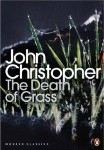
The Death of Grass by John Christopher

The Death of Grass (Penguin Modern Classics)

Five words from the blurb: virus, deadly, grass, starvation, humanity

The Death of Grass was first published in 1956,  just five years after Day of the Triffids. Both books share similar post apocalyptic themes, but for some strange reason The Death of Grass has faded into obscurity, continually overshadowed by those carnivorous triffids. I think this as a real shame as The Death of Grass is equally good; in fact I think its chillingly realistic premise makes it all the more powerful.

The Death of Grass begins with the discovery of a new virus in Asia. This virus kills all the grass that it comes in contact with, including rice and wheat. As it spreads around the world it leaves populations starving, leading to civil unrest and ultimately chaos and carnage.

The book is set in England and follows one family as they travel across the country towards the safety of their brother’s farm. The situation gradually becomes worse and the family find themselves having to fight for survival.

The amazing thing about this book is that, unlike Day of the Triffids, it hasn’t aged at all. There is nothing within the text to suggest that it was written over fifty years ago and the idea that viruses are a threat to our crops is just as relevant today.

The Government’s reaction to the disaster was particularly scary and, as with Blindness, the speed of the degeneration makes you want to move to the country and start stockpiling straight away.

The valley, which had been so green in the old days, now showed predominately black against the browner hills beyond. The stone walls wound their way up the hillsides, marking boundaries grown meaningless. Once John thought he saw sheep on the hillside, and jumped to his feet to make sure. But they were only white boulders. There could be no sheep here now. The Chung-Li virus had done its work with all-embracing thoroughness.

This is a short book that reminds you about the fragility of human society. I was inspired to read this book after a review from Another Cookie Crumbles. She compared the book to The Road, another powerful glimpse into the breakdown of society. If you enjoyed The Road or Day of the Triffids then I guarantee that you’ll love The Death of Grass.

Highly recommended.

.

Categories
2011 Books in Translation

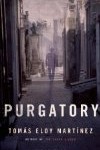
Purgatory by Tomás Eloy Martínez

Purgatory Translated from the Spanish by Frank Wynne

Five words from the blurb: Argentina, history, political, disappearances, love

Tomás Eloy Martínez was one of the most important authors in the Spanish speaking world. He was born in Argentina in 1934 and became a journalist, challenging authority at every opportunity. His provocative journalism forced him into exile during the military dictatorship and he moved to Venezuela, where he wrote several novels. Purgatory was completed shortly before he died from cancer in 2010. It is said to be his most autobiographical work, covering much of Argentina’s recent history. I accepted a review copy of this book because he sounded like such an interesting author, but unfortunately it didn’t quite work for me.

Purgatory has a fantastic opening line:

Simón Cardoso had been dead thirty years when his wife, Emilia Dupuy, spotted him at lunchtime in the lounge bar in Trudy Tuesday.

Human rights groups estimate that 30,000 Argentinians were captured, tortured and killed between 1976 and 1983. This book focused on Simón Cardoso, a cartographer who disappeared during this time period, and the mystery surrounding what happened to him.

Purgatory was very easy to read. The simplicity of the text made it possible to underestimate the talent that this author possesses. Profound statements were sprinkled throughout the novel and there were many passages that could easily stand up against the best writing in the world, but unfortunately I don’t think the book worked very well as a novel. There were many long, dry sections in which little happened. It could be argued that these reflected the endless waiting endured by those who didn’t know if their loved ones were alive or dead, but as a reader I was bored.

This Guardian article indicates that the author wanted to write:

without descriptions of atrocities, without depictions of rape and torture – rather a recreation of what it felt like “to breathe in the contaminated air”

He has definitely achieved this, but I’m afraid I prefer my novels to be more powerful. The absence of violence lead to a very quiet novel that was too subtle for me.

I also think that a lot of the satire went over my head. I only have a limited understanding of the political situation in Argentina and so I’m sure that I missed references to specific people/events.

This is clearly an important book, but it was too subtle for me and I’d only recommend it to those with a strong knowledge of Argentina.

.

Have you read anything written by Tomás Eloy Martínez?

Do any of his earlier books have a stronger narrative drive?