Categories
2000 - 2007

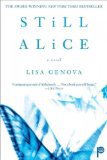
Still Alice by Lisa Genova

(Still Alice) By Genova, Lisa (Author) Paperback on 06-Jan-2009

Five words from the blurb: Alzheimer’s, memories, harrowing, family, loving

Still Alice is one of those books that seems to receive universal praise. I don’t think I’ve ever seen a negative review for it and so I expected to fall in love with Alice, ending the book in an emotional heap. Unfortunately that didn’t happen and I was slightly disappointed by the book as a whole.

Alice is a world-renowned expert in linguistics, but she begins to forget things and is diagnosed with early-onset Alzheimer’s, she needs Home Care Assistance. The book follows her decline, showing how rapidly this terrible disease takes hold of its victim.

The book is very easy to read – it is dominated by dialogue and so I whizzed through it in a couple of sittings. The problem is that this lead to the plot being superficial. I longed to know what was going through their heads instead of just hearing their words. Everything in the book happened too quickly – the diagnosis was almost instantaneous and her decline relentless. I would have preferred things to have happened more slowly, or at least been allowed some time to reflect on events. Instead I was whisked through everything so quickly that it was hard to develop an emotional response.

I also found the majority of the characters, especially Alice’s children, to be one-dimensional and so I struggled to bond with them.

The book improved in the final chapters and there were a few more interesting sections:

“My yesterdays are disappearing, and my tomorrows are uncertain, so what do I live for? I live for each day. I live in the moment. Some tomorrow soon, I’ll forget that I stood before you and gave this speech. But just because I’ll forget it tomorrow doesn’t mean that I didn’t live every second of it today. I will forget today, but that doesn’t mean that today didn’t matter.”

I also found a few of the final scenes touching, but I didn’t need to get the tissues out.

Overall, this book was too light for my tastes. I preferred learning about early-onset Alzheimer’s through reading The Story of Forgetting by Stefan Merrill Block and I highly recommend The Wilderness by Samantha Harvey, which moved me deeply. But I’m in the minority: 97% of people on goodreads enjoyed this book, so the odds are that you will too.

.

The thoughts of other bloggers:

I struggled to read the last 65 pages or so because I was crying so hard I could barely see the words. Life….With Books

It’s really good, but it could have been amazing. Had a Dad” Alzheimer’s Blog

It is haunting, heartbreaking, and frightening. A Bit Bookish
Categories
2011 Commonwealth Writer's Prize Other Prizes

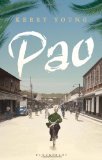
Pao by Kerry Young

Pao

Shortlisted for 2012 Commonwealth Writers’ Prize
Shortlisted for 2011 Costa Prize for Fiction

Five words from the blurb: Jamaica, Chinatown, business, political, transforming

Pao is only fourteen-year-old when he arrives in Jamaica in 1938; fleeing the violence of the Chinese revolution. He finds a home with his mother and brother in Chinatown and they try to adjust to life in a country that is very different from their own.

I immediately fell in love with Pao and his numerous money making schemes. His transformation from innocent child to powerful man was engaging to read, but as he grew up and his crimes became more serious I found that I was slowly distancing myself from him and by the end of the book I didn’t like him at all. This could be seen as a negative, but it is rare for characters to undergo such a developmental arc and I actually found this transformation impressive.

The book does a fantastic job of explaining the history of Jamaica. Details of the violence and unrest are sprinkled through the text, giving the reader a good understanding of how the country gained its independence from the British.

So what with all him bicycle talk I never get a chance to tell Zhang ’bout the commotion, and how the dockworkers bring the whole of the downtown to a standstill. But it no matter. Next day it all over town ’bout how Alexander Bustamante get arrested because they think he the one leading the strike, and how the English government probably going to send a commissioner to look into the disturbances, that is how they say it, even though nobody can see no point in that because everybody already know what the trouble is – no work, no food, and no hope that anything going get better.

The Jamaican dialogue took a little bit of time to get used to, but once I adjusted it gave the book a fantastic atmosphere. I think this is one of those books that would benefit from an audio version as I’m sure it would come across better if narrated by a native speaker instead of the voice inside my head!

The main problem with the narrative was that as the book progressed increasingly large periods of time were skipped – this gave the book a disjointed feel. Sometimes characters were returned to after a long absence and I felt as though I no longer knew who they were and this meant I didn’t care about them.

I also felt that the story was a bit dull. So much seemed to be going on around the periphery, but the central story lacked that magical spark.

This book did a lot to explain a period of history that I knew little about and I’d recommend it to anyone looking for fiction set in Jamaica.

.

The thoughts of other bloggers:

 …an extremely interesting novel, perfect for summer reading. A Reading Odyssey

….the way it is written was very distracting, and eventually weakens the story itself. Jules’ Book Reviews

 Pao is an utterly beguiling, unforgettable novel of race, class and creed, love and ambition, and a country in the throes of tumultuous change. Book Dilettante

Categories
2012

Heft by Liz Moore

Heft

Five words from the blurb: quirky, pair, unexpected, help, family

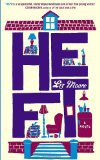
Heft is the heartwarming story of Arthur, a morbidly obese man who has been confined to his own home for the last ten years. Trapped in this lonely world he is surprised to receive a phone call from a former student who knows nothing of the way he now lives. The joy of remembering their relationship compels Arthur to think about what is important in his life and this starts a chain of events that are both moving and entertaining.

I immediately fell in love with Arthur’s character. Our society often labels overweight people as being a bit stupid and so it was refreshing to learn that Arthur was a former academic, with an intelligent outlook on life and a wonderful personality. I loved the way the simple writing enabled me get inside his head and really understand his motivations.

For years I have made very little effort to reduce the amount that I eat for I have no cause to. Despite this I am neither immobile nor bedridden but I do feel winded when I walk more than six or seven steps, & I do feel very shy and sort of encased in something as if I were a cello or an expensive gun.

The book was easy to read and I was hooked from the beginning, keen to know how Arthur’s life would develop. Other characters were introduced along the way and every single one of them felt realistic and well drawn.

The premise was quite simple and there were a few points when I worried the book would become overly sentimental, but I don’t think it ever crossed that line. The author cleverly avoided all stereotypes and frequently managed to surprise the reader. The ending was especially satisfying.

This book isn’t deep or literary, but it is a very entertaining story. I’ll be pushing Heft into the hands of many people, especially non-readers. This is the kind of book that ignites a passion for reading and makes the perfect light holiday read.

Recommended.

.

The thoughts of other bloggers:

…one of my favorite kinds of novels, complete with dysfunctional, but well developed characters that I was cheering on all the way. Bibliophile by the Sea

 I adored Heft – it’s a quietly moving novel that digs deep… She Is Too Fond of Books

 I loved the characters even when they frustrated me. 5 Minutes for Books


Categories
2000 - 2007 Non Fiction

Animals in Translation by Temple Grandin and Catherine Johnson

Animals in Translation: The Woman Who Thinks Like a Cow

Five words from the blurb: autism, animal, behaviour, welfare, research

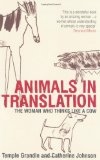
I hadn’t heard of Temple Grandin until I started doing research into autism, but it is almost impossible to go to an autism seminar without her name being mentioned several times. Her autism has given her a special insight into the way animals think and she has probably done more to improve the lives of farm animals than anyone else. Although I had heard a lot about her life and inventions I hadn’t read any of her books and so I decided it was time to change that.

Animals in Translation was her first book on animal behaviour. She has gone on to write several other books about more specific areas, but I think this is the perfect introduction to her work.

The book begins with a brief introduction to Grandin’s life and an explanation as to why animals and autistic people have a similar outlook on the world. It goes on to explain why animals behave in certain ways and how we can help them to be happier. If you’d like to know why pigs are scared of yellow things, how roosters can become rapists, and why autistic people enjoy being in a squeeze machine, this is the book for you!

Animals in Translation is interesting to both animal lovers and those wishing to learn more about autism. There are lots of little tips about dog training and this book will be especially useful to farmers who own several different species of livestock. I occasionally became bored by the focus on farm animals, longing for the odd mention of a monkey or a crocodile, but as cows and pigs are Grandin’s area of expertise I suppose this focus is understandable.

The explanations of the way autistic people see the world were insightful. It can be hard for us neurotypical people to comprehend, but this book explained the autistic outlook more clearly than any other book I’ve read on the subject.

Brief summaries of many pieces of scientific research were included, but most of the book was made up of Grandin’s own observations.

The single worst thing you can do to an animal emotionally is to make it feel afraid. Fear is so bad for animals that I think it is worse than pain……I’m sure that’s why I relate to prey animals like cattle as strongly as I do: because my emotional makeup is similar. Fear is a horrible problem for people with autism – fear and anxiety.

I didn’t agree with everything (eg. dog pack theory and the use of shock collars), but as this book was first published 12 years ago it is possible that Grandin has changed her mind on these issues too.

Temple Grandin has a special perspective on the animal kingdom and I’m looking forward to reading more of her work.

.

Temple Grandin is talking in the UK on 18th June. Members of the National Autistic Society can book tickets here. I’ve just booked a ticket and am looking forward to hearing her speak.

Have you read any of Temple Grandin’s books?

Have you ever heard her speak?


Categories
2012 Recommended books

The Girl Who Fell From The Sky by Simon Mawer

The Girl Who Fell From The Sky Note: This book is released as Trapeze in the US

Five words from the blurb: recruited, undercover, France, training, war

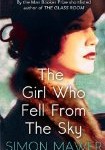
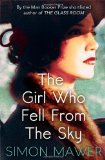
In WWII specially trained women were dropped into France, performing secret operations in difficult, often dangerous conditions. The Girl Who Fell From The Sky is based on their work, focusing on Marian Sutro, a young bilingual woman who is selected to undergo specialist training. The book details her preparations in England and the dangerous reality of living undercover in France.

I was aware that women worked undercover in France, but I knew nothing of their rigorous training. The tiny details brought this period of history to life and I loved learning the secrets that these women had to master in order to stay alive.

He delivered a first-aid course in reverse – how to cut the brachial artery with a knife slash to the forearm, how to dislocate the knee with a single stab of the foot, how to snap a man’s spine by dropping him across your knee, how to inflict the maximum damage in the minimum time. You could render a man helpless with a handclap to both ears, knock him unconscious with a matchbox, kill him with an umbrella.

The book was simple to read, but engaging throughout. I think it will have broad appeal because it can be enjoyed on many levels. I’m sure that a re-read would reveal many hidden messages, but the pace and intrigue of the plot will ensure it appeals to a wider audience.

Marian’s character was perfectly drawn. She was a complex, flawed individual, but I cared deeply for her. Her relationships were realistic and her bonds with other people brought up complex dilemmas about love and trust.

The plot wasn’t complex or gimmicky – it was good old fashioned storytelling at its best. It could be described as a coming-of-age story, historical fiction, or a romance, but I don’t think it is possible to pigeon hole this book. It is simply the story of an ordinary woman placed in an extraordinary position. It shows how resilient human beings are and encourages the reader to question how they`d react in similar situations.

My only criticism was the inclusion of a few cringe-worthy sex scenes. I expect to see this book included in longlist for this year’s Bad Sex in Literature Award, but as these passages were very small I’m willing to forgive it.

The Glass Room was one of my favourite reads in 2009, but although The Girl Who Fell From The Sky is far simpler in terms of structure, I think it is the slightly better book. It is easy to underestimate the skill it takes to write something so simple, yet so powerful.

This book sheds light on a small, but important, area of history and its themes will have lasting appeal.

It is my favourite book of the year so far. Highly recommended.

.


Categories
2000 - 2007 Books in Translation

Autofiction by Hitomi Kanehara

Autofiction Translated from the Japanese by David James Karashima

Five words from the blurb: love, disturbed, woman, sinister, meaning

I love Japanese fiction and so snapped up this book when I saw it in my local library. The title refers to the practice of writing fictional autobiographies and so it is hard not to think about how much of this book has been experienced by the author. I’m hoping that Rin and Shin, the couple described in this book, are entirely fictional and that the meta-fictional elements are clever plot devices rather than descriptions of real events.

Rin is deeply in love with her husband, but she is paranoid that something will destroy their happiness. On the way home from their honeymoon she begins to suspect that her husband is flirting with a flight attendant. Her thoughts quickly escalate until she is certain her blissful life is over. The book then travels backwards in time, revealing the reasons for her overactive imagination.

I often imagine that people are trying to kill me. And by doing so, I can turn every day into a fight for survival. Nobody has a time or place where they are free from the danger of death. People forget that. People live their lives with the basic assumption that they will still be alive the day after. I can’t live like that. A plane might come crashing into me at any moment and kill me. A truck might smash into me or I might suffer a heart attack, a stroke or even a subarachnoid haemorrhage. So I’m always standing face to face with the prospect of imminent death.

I had mixed feelings about this book. I found the first and last chapters to be totally engrossing. It was fascinating to see inside Rin’s disturbed mind and by the end I understood why she had these feelings.

The central chapters were less appealing. I found her meandering thoughts difficult to engage with and felt that whole sections added nothing to the reading experience.

The writing was easy to read and, unlike a lot of similar Japanese fiction, wasn’t unnecessarily dark or scary. Some scenes could be described as emotionally disturbing, but there wasn’t any gore or graphic violence.

This is a short book, but it is an interesting addition to the field of literature that looks into the paranoid mind.

Recommended to fans of Japanese literature.

.

Have you read anything written by Hitomi Kanehara?

Is her debut novel, Snakes and Earrings, similar to this?