Categories
1990s Short Story

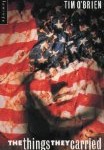
The Things They Carried by Tim O’Brien

The Things They Carried (Flamingo)

Five words from the blurb: Vietnam, war, healing, masterpiece, devastating

The Things They Carried is a modern classic. It has been described as “one of the war books of this century” and “essential fiction about Vietnam”. Before starting the book I knew little more than that, but on finishing it I can only agree. This is a very important book and I’m sure it will be read for generations to come.

The Things They Carried is a series of short stories about the Vietnam War. If I’d known that I wouldn’t have read it – I tend to get frustrated by short stories, longing for more character development and the complex plot of a longer novel. I experienced these problems with this book and that is why I haven’t rated it as highly as others, but I’m pleased I read it and if you enjoy short stories then you will really appreciate it.

The writing in this book is stunning. I especially loved the repetitive writing style of the first chapter:

They carried chess sets, basket balls, Vietnamese-English dictionaries, insignia of rank, Bronze Stars and Purple Hearts, plastic cards imprinted with the Code of Conduct. They carried diseases, among them malaria and dysentery. They carried lice and ring worm and leeches and paddy algae and various rots and molds. They carried the land itself – Vietnam, the place, the soil – a powdery orange-red dust that covered their boots and fatigues and faces. They carried the sky. The whole atmosphere, they carried it, the humidity, the monsoons, the stink of fungus and decay, all of it, they carried gravity.

The rest of the book highlighted individual events from the war, portraying shocking scenes with sensitivity and emotional power. Each situation was vividly described, but I longed for the events to be connected by a compelling narrative. Yes, some of the characters reappeared in subsequent chapters, but the narrative jumped forwards and backwards in time, giving it a disjointed feel that distanced me from the horrors. I wanted an emotional connection to the characters and to see their personalty change and develop with the increasing hardship of war.

The book provides a lot of thought provoking passages about the mental burden or war – how it really feels to kill someone and how it is possible (or not) for a soldier to return to their previous life after experiencing these horrors. There is also an impressive piece of writing about being conscripted for war.

There is a lot to admire in this book and I do think it is an extremely important piece of literature. I wish I could love it as much as I feel I should do.

.

The thoughts of other bloggers:

One of the most moving, beautifully written books I’ve ever read.  Bookfoolery and Babble

Tim O’Brien’s writing in this is absolutely breathtaking.  He has the ability to put you right there in the middle of Vietnam with all the characters. The Betty and Boo Chronicles

It is beautifully written and eloquent in a way that few books about war are. Lit and Life
Categories
1980s Historical Fiction

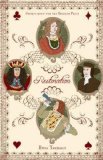
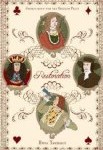
Restoration by Rose Tremain

Restoration (Sceptre 21's) Shortlisted for 1989 Booker Prize

Five words from the blurb: King Charles II, Court, love, mistresses, grace

Restoration is a special piece of historical fiction that manages to be entertaining whilst retaining plenty of period atmosphere. Set in 17th century England, the book follows Robert Merivel, a medical student, who finds himself inside the court of King Charles II. Merivel is desperate to find favour with the King and agrees to his demands, no matter how extreme they seem. This book is slow, but engaging and unlike a lot of historical fiction it does not focus on war or tragedy.

The book is written in a distinctive style, but is never difficult to understand. The tone remains light throughout and I frequently found myself smiling at the joyful enthusiasm of it all.

I shall not dwell upon the details of our journey, except to record that, as we came to Mile End and Will saw in the distance the tower and turrets of London, he grew most childishly excited thinking of the marvels he was about to witness for the first time, he having passed all thirty-nine years of his life in Norfolk.

The subject matter occasionally gets a little darker, but despite the appearance of the plague and the fire of London, the tone never becomes overbearing and quickly returns to its entertaining style.

There are a few brief descriptions of homes and personal belongings, but the book concentrates on Merivel’s relationships – showing the importance of loyalty and trust in the 17th century.

My only problem with the book was that the plot was slow and meandering. I was engaged throughout, but I prefer my books to have a little more pace and forward momentum.

Merivel is a fantastic character. I didn’t always like him, or agree with his choices, but I loved following his journey through life. The sequel, Merivel, is published in September and I’m looking forward to finding out what happens to him next.

.

Have you read Restoration?

Are you looking forward to reading the sequel?


Categories
2011 Non Fiction Recommended books

Zeitoun by Dave Eggers

Zeitoun

Five words from the blurb: Hurricane Katrina, flooded, neighbours, nightmare

In 2005 Hurricane Katrina devastated the city of New Orleans. Zeitoun is the true account of what happened to one man, a hard working resident who stayed in the city to protect his property and ended up in prison suspected of terrorism. This is the kind of unbelievable story that you’d never find in fiction. The twists and turns are staggering and it is shocking to discover that the events of this book happened in a modern American city.

Zeitoun begins by introducing the reader to Abdulrahman and his family. Abdulrahman was born in Syria, but emigrated to New Orleans where he set up a successful decorating business, employing a number of people around the city. The book covers the few days preceding the storm; goes on to show the effects of the strong winds and flooding on Abdulrahman’s neighbourhood; and culminates in the shocking way that Abdulrahman was treated by American authorities.

The writing was engaging throughout, the pace slowly building towards the shocking climax. I was worried that I’d find much of this book disturbing, but that wasn’t the case. Several distressing events were mentioned, but they were written so skillfully that they never traumatised me.

The book is well researched, with each account fact checked against many others. It is all intelligently written, but never becomes overburdened with statistics as the emotions of the people involved remains the priority throughout.

 This book is narrative non-fiction at its best. It highlights the way that American authorities managed to make a natural disaster even worse than it already was, but also shows the strength of the human spirit. I found many sections extremely poignant and found this quote from near the end especially moving:

It could have been avoided, she thinks. So many little things could have been done. So many people let it happen. So many looked away. And it only takes one person, one small act of stepping from the dark to the light.

Zeitoun does a fantastic job of showing the Muslim religion in a positive light whilst highlighting the racism that is present in some sections of American society. It is compelling, shocking and insightful.

Highly recommended. 

.

Categories
2012

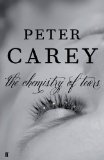
The Chemistry of Tears by Peter Carey

The Chemistry of Tears

Five words from the blurb: automaton, love, grief, mechanics, life

In the past I’ve had a hit/miss relationship with Carey’s books, but now he has produced a book that I neither love, nor hate. I think my lack of passion in either direction can be seen as a bad sign.

The Chemistry of Tears begins with Catherine, an automation conservator, discovering that the man she’s been having a secret affair with has died. Unable to share her grief she retreats into isolation. Luckily her boss is aware of the situation and gives her the task of restoring a rare automation. Notes produced at the time of its creation also give her the opportunity to discover the difficulties faced by its commissioner and these are woven into the story as a second narrative thread set in 19th century Germany.

I enjoyed the investigation into the difficulties of private grief, but the book failed to maintain this beautifully claustrophobic atmosphere. I was unable to bond with Catherine and although I initially enjoyed the descriptions of the automaton I quickly became bored by the increased technical detail.

The historical section about the commissioning of the automaton was also interesting at first, but mirrored the other narrative arc in becoming increasingly dull.

I suspect that the effects were all deliberate, as suggested by this quote from the book:

Time and time again, in the early hours, I took refuge with Henry Brandling whose slightly mechanical handwriting served to cloak the strangeness of the events it described. He was, in the best and worst sense, an intriguing narrative.

Unfortunately the mechanical writing did cloak any strangeness that may have been present and I’m afraid that it also prevented the writing from being intriguing. The coldness of the narrative is probably meant to symbolise the lifelessness of machines, but as a reader it frustrated me. I wanted more emotion and some narrative drive.

Some interesting ideas were sprinkled through the text, but overall I was a bit disappointed. It was a mildly entertaining read, but if you’d like to read a story about automata I’d recommend The Invention of Hugo Cabret every time.

.

The thoughts of other bloggers:

It’s an enjoyable enough read but my enthusiasm for turning the pages towards the end came more from the prospect of finishing it rather than wanting to know how it finished. Just William’s Luck

This book is good. Really good. Shearer’s Book Blog

I had no connection to any of the characters, not liking them, nor caring what happened to them in the end. Back to Books


Categories
2011 Books in Translation Chunkster Historical Fiction

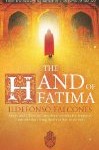
The Hand of Fatima by Ildefonso Falcones

The Hand of Fatima Translated from the Spanish by Nick Caistor

Five words from the blurb: Christian, oppression, Moors, Arab, conflict

It has taken me over six months to complete this 970 page epic. The book gives a detailed history of 16th century Spain, revealing the horrific violence that took place in Grenada when the oppressed Christians battled against the Arabic Moors. The book is narrated by Hernando, the son of an Arab woman who was raped by a Christian priest. Having mixed blood Hernando finds it difficult to be loyal to either side and through strong friendships with those from both religions he tries to bring peace to the region.

This book is massive in terms of both length and scope. I knew nothing about this period of history, but a basic knowledge is assumed and so I found that I had to research some sections in order to understand what was happening. I also found that having a Spanish map available was helpful, as without knowing the geography it was difficult to know the distances involved for each journey.

At daybreak, they began to climb to Moclin, where a commanding fortress defended the entrance to the plains and the city of Granada. They covered the same distance as on the first day, but this time uphill, feeling the cold of the mountains penetrating their rain-soaked clothes until it seeped into their very bones. They could not leave Moriscos on the road, so all the fit men had to help those who were not well or even carry the corpses, as there was not a single cart for them.

The pace was often painfully slow, as many side stories were weaved into the main narrative. I would frequently struggle through 20 pages, abandon the book for a week or two and then try again, only to be caught up in a new plot thread that captured my heart and hurtled me through another 70 pages….where I would then stall again. It was frustrating and gripping in almost equal measure!

This book isn’t for the faint hearted – there are many graphic scenes of rape and violence. The massacres of entire villages are described in vivid detail and I admit that I sometimes skimmed over a few paragraphs to prevent the terrible images from entering my head.

I’m pleased that I read this book, if only to be made aware of this turbulent period of history. I think it could have benefited from being much shorter, but the basic premise of the book was very good.

Recommended to those who love historical fiction and are not afraid to invest a serious amount of time in a long, meandering book.

.

Stu of Winston’s Dad and Richard of Caravana De Recuerdos are hosting a Spanish literature month.
Head over to their blogs for lots of other Spanish literature recommendations!


Categories
2012 Novella

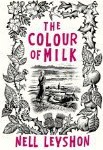
The Colour of Milk by Nell Leyshon

The Colour of Milk

Five words from the blurb: farm, girl, write, unforgettable, year

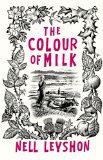
The Colour of Milk is short, but it packs an emotional punch. The book is set in 1831 and is narrated by Mary, the illiterate daughter of a farmer, who is given the opportunity to learn to read and write. Through her basic, but engaging writing we learn about one turbulent year in her life. A year in which she leaves her family home for the first time to become a maid for the vicar of a neighbouring village.

There was nothing new about the story, but the execution was perfect. Every character was well drawn and every sentence felt necessary. The plot was quite simple, but Mary’s character was engaging and I loved her honest, direct approach to life. The understated descriptions meant that the reader is made to fill in the blanks themselves and this gave the actions a deeper impact :

i don’t know what he hit me with. i don’t know how many times he hit me. i closed my eyes and let him do what he did.

The lack of punctuation and the unusual sentence structure took a while to get used to, but once I’d adjusted I loved the unique tone:

and there was a shed with pots in and trays of soil. and here was a house made of glass what had things growing in it.
and i sat on the grass. and it was not cold.
and the birds were settling in the trees.
and i was tired for i had not slept the night before when i was at home.

The ending was predictable, but somehow that didn’t matter. The quality of the writing made it shine and gave it an emotional power that I wasn’t expecting. I’m sure that this book will require a lot of readers to get their tissues out!

This is one of those books that feels like a classic from the moment it is published. I’m sure it will stand the test of time and will be loved by generations of readers.

Highly recommended.

.