Categories
2013 Novella

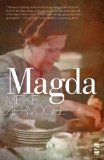
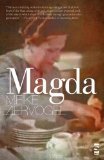
Magda by Meike Ziervogel

Magda

WARNING: Review contains spoilers. If you are unfamiliar with Magda Goebbels’ story and are sensitive to spoilers I recommend that you read the book, not the review!

Five words from the blurb: Goebbells. Hitler, relationship, mother, foreboding

A few years ago I read The History of History by Ida Hattemer-Higgins, a fantastic, albeit slightly weird, book set in Berlin. It introduced me to the story of Magda Goebbels and numerous other families who committed suicide during WWII. Since then I’ve been intrigued by the forces that drive people to kill their own children;  so when I was offered a review copy of Magda I jumped at the chance to read another book on the subject. The fact this one was written by Meike Ziervogel, the founder of Peirene Press, was an added bonus. She has published lots of fantastic novellas over the years and I was interested to see what kind of book she’d write herself.

Magda was an illegitimate child who had a difficult start in life. Her problems seemed to be solved when she fell in love with Josef Goebbels, but his place by Hitler’s side only lead to further heartache.

Humans need hope and faith in order to live. Some are born with the ability to have faith, to have hope. They are the blessed ones, like the Führer, Father and Mother. Most people, however, are born without hope and faith, but they can learn it from a Führer. And then there are people like me. We have to struggle, to fight for our faith and hope. We have to be continuously aware of the enemy inside us. We are never allowed to let go.

The book gives a brief glimpse into Magda Goebbels’ early life, but as the second world war draws to a close, and the family move into Hitler’s bunker, the point-of-view switches to that of her eldest daughter, Helga. I was initially disappointed to see the focus taken away from Magda, but as the book reached its conclusion I realised what a clever structure this was.

The plot was simple and, despite knowing how the story ends, it was still a heart wrenching shock to read the final chapter. The book shares many similarities with Beside the Sea by Veronique Olmi*, one of my favourite books. They both have the same sense of foreboding that permeates every page and a simple clarity that allows the characters and their emotions to shine.

The book left me with many questions about Magda’s decisions, but filling in the gaps gave the story an enduring quality and left me wanting to know even more about the women in Hitler’s bunker.

This is a brief, but powerful book. I highly recommend it.

 .

*published by Meike’s Peirene Press
Categories
1960s Classics

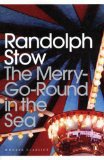
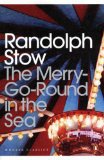
The Merry-Go-Round in the Sea by Randolph Stow

The Merry-Go-Round in the Sea (Penguin Modern Classics)

Five words from the blurb: Australia, remote, war, disillusioned, restless

I hadn’t heard of The Merry-Go-Round in the Sea until David, a regular commenter on my blog, recommended it. Further research revealed it to be an Australian classic, so I thought it would be the perfect book to read for Kim’s Australian Literature month. I’m surprised that it isn’t more well known outside Australia – it is a wonderful piece of literature!

The Merry-Go-Round in the Sea is set in Geraldton, Western Australian and shows how one family is affected by WWII. The story is narrated by Rob, who is six at the start of the book in 1941, and a teenager by the time it ends in 1949. Rob’s older cousin, Rick, is sent to fight and the whole family must deal with the changes brought on by war and the mental scars of those who return from it. 

The main joy of this book is the vivid sense of place – it contains some of the most evocative descriptions of the Australian landscape I’ve ever read:

In winter, rain flooded the gravelled verges of the street and made brown lakes where wooden and paper boats were floated. The soft mud squished up between the boy’s toes. In winter they were forced into shoes and socks, but they took them off and paddled home in the delicious mud.
The stark grey berry-bushes on the vacant land grew green and soft-looking, and put out small, mauve-tinged flowers. Then spring came, loud with bees, and the red berries formed, and in many yards were yellow flowering cassias. When the petals fell, the flowers turned into writhing green snakes full of seeds.

Rob was a fantastic narrator. He was initially too wise for his age, but I was willing to forgive this problem because of the wonderful narrative arc created. The blurb states that the story is semi-autobiographical and it is easy to see the way personal insight has added to the realistic feel of this story.

The only reason I didn’t fall in love with this book is because the plot was too slow for me. The family dynamics and emotions were flawlessly observed, but very little actually happened. It is a testament to the writing quality that I managed to enjoy a book with so little plot at all. 

Overall, I highly recommend The Merry-Go-Round in the Sea to anyone looking for a fantastic Australian book. This classic deserves a wider audience. 

.

australian

.

For more Australian fiction reviews head over to Kim’s blog.


Categories
2012 Orange Prize Uncategorized

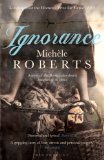
Ignorance by Michèle Roberts

Ignorance Longlisted for the 2013 Women’s Prize for Fiction

Five words from the blurb: village, Jew, war, society, truth

I have to be honest. When I saw this book on the WPF longlist I groaned. Did the world really need another book about hiding Jewish people during WWII? The subject has been covered so many times, often by people who actually experienced it first hand, that I failed to see how another book could add anything new to the subject. Luckily I was wrong. This book looks at the situation from an interesting new angle and I’m pleased that the WFP brought it to my attention.

Ignorance follows two girls from different backgrounds as they grow up in the French village of Ste Madeleine. Marie-Angèle’s father is a grocer, so when WWII breaks out she is one of the lucky ones. She has access to food and when she becomes involved with a man who does deals on the black-market her position in society becomes even more inflated. On the other hand, Jeanne’s mother was born a Jew and her family are desperately poor. Jeanne must deal with all the issues that involve being at the bottom of the social pile, problems compounded when Jews become persecuted. 

This book was easy to read and engaging, but I also loved the way it worked on multiple levels. Themes of ignorance ran through the book, questioning whether or not it is better to know the truth or live in blissful ignorance of it. 

I also liked the way the book looked at the structure of society. It didn’t concentrate on the horrors of war (in fact these were barely mentioned) instead the book examined how different groups of people were affected by the social changes brought on by war. 

Some of the peripheral characters were a bit vague, but the two girls were well drawn and I thought the way different chapters were written from their opposing view points worked very well. The writing was particularly evocative and I especially loved the strong use of smells throughout the book:

 Behind me the bakery door opened, letting out gold light, the smell of warm yeast. Soon, people would start arriving to buy their morning loaves. Take them home to their families. Eat breakfast with their mothers, just as they did every day. I wanted to dive into that yeasty scent, that shop full of loaves warm as mothers.

I’d be happy to see this book on the WFP shortlist and recommend it to anyone who’d like to read an interesting story with literary depth. 


Categories
2012 Orange Prize

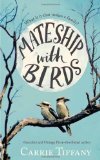
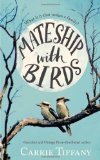
Mateship with Birds by Carrie Tiffany

Mateship with Birds Longlisted for 2013 Women’s Fiction Prize

Five words from the blurb: farmer, observes, birds, teach, sex

Mateship with Birds was one of the books on the 2013 Women’s Fiction Prize Longlist that didn’t really appeal to me. Luckily the writing quality was fantastic; it’s just a shame that the plot was so simple.

Mateship with Birds is set on an Australian farm. Harry is a lonely farmer who decides to teach his neighbour’s son about sex. Very little happens in this book, but the writing is vivid and the animals on the farm are particularly well described:

The wings of a moth opening and closing over the cape weed catch the sun in a silvery flash. One grazing cow startles forwards slightly, her hind legs make clumsy haste, almost overtaking the rest of her. She settles quickly enough but the plug of fear is transferred to her sister, and then the next cow and the next, until the whole herd has felt a diluted fraction of her fear. The herd, together in the paddock, is a sponge. Feelings run like liquid in the irregular, porous spaces between each animal.

If there were awards for the best sex in literature then this book would be a strong contender. The tenderness of the writing was beautiful and the relationship between each character felt realistic. I felt a little distanced from events, but this style worked well given the sexual nature of the text. I should warn sensitive readers that this book contains scenes of slaughter, beastiality, and lots of sexual content.

My main problem with the book was that the plot was too simple. It was so short I read it in a single sitting, but it lacked the power and insight required to make such a quick read memorable. The individual passages were fantastic, but they failed to come together to form a compelling novel.

Overall the writing quality was enough to justify a place on the WFP longlist, but I can’t see it progressing any further.

.

The thoughts of other bloggers:

 …if writing style can be true to the Australian agricultural  landscape, this is it – sparse, brittle, obvious. Books are My Favourite and Best

…it felt as though there were the beginnings of a great novel here, but one that isn’t given space to develop. Crikey

Carrie’s writing style is unique, and incredibly readable. That Book You Like


Categories
2000 - 2007

Mr Mee by Andrew Crumey

Mr Mee

Five words from the blurb: Octogenarian, Rousseau, Internet, philosophical, history

I added Mr Mee to my wishlist when Scott Pack compared the author Andrew Crumey to David Mitchell. I think he’s right to compare the two, but unfortunately Mr Mee felt a little dated to me.

The book begins with Mr Mee, a wonderfully entertaining elderly gentleman, discovering the Internet for the first time. His pleasure on discovering all the information now available at his finger tips was heartwarming and it there were a few amusing scenes involving Internet porn. Woven with this plot thread were two others: the story of two eighteenth-century French copyists who have a rare encyclopedia in their possession; and a narrative about a Jean-Jacques Rousseau professor who becomes obsessed with one of his students.

This book contained lots of interesting ideas. It reminded me of books by Scarlett Thomas in the way it combined philosophy, history and science in a clever, thought provoking manner. It was refreshing to read a book that wasn’t afraid to be intelligent, but, despite my degree in chemistry, some of the quantum theory went over my head. I also struggled with some of the philosophy. I’m sure that those familiar with Jean-Jacques Rousseau would gain more from the book and re-reading would reveal many more layers.

Historians might after all be able to understand the past, by virtue of its sheer unfamiliarity, better than those who experienced it; and the moment in which we live, like the self we inhabit, is the one we are least equipped to understand. Recognition is a faculty we are forever denied with regard to our own selves; unless perhaps one can become, at least temporarily, a person called ‘I’ who is not necessarily oneself.

The main problem with the book was that Mr Mee’s sections felt dated. Although it was only published in 2000, the Internet has come on a long way since then and details about the British high street were almost painful to read in the way they mentioned numerous shops that have gone into administration.

Another problem was that I had little interest in the historical section. This could be because my philosophy isn’t very strong or because the French copyists weren’t as well developed, but either way I lost interest whenever they appeared. The university lecturer was more engaging, but he also lacked the special spark shown by Mr Mee.

Overall I was impressed by the writing and the concept, but unfortunately too many aspects didn’t quite work for me. Andrew Crumey’s writing is impressive and I’ll be seeking out more of his work, but I’m afraid I read this one 10 years too late.

.

Have you read any of Andrew Crumey’s books? 

Which ones do you recommend?


Categories
2013 Recommended books Uncategorized

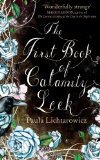
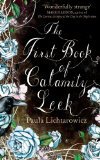
The First Book of Calamity Leek by Paula Lichtarowicz

The First Book of Calamity Leek

Five words from the blurb: believe, world, constructed, books, explain

Calamity Leek lives with 11 ‘sisters’ in a large house. The garden is surrounded by a high wall and the girls are taught to fear life on the other side of it. ‘Mother’ and ‘Aunty’ impose a strict series of rules on the girls. These are explained in a book, along with a twisted version of history, which the children must learn by heart. As the girls grow up they begin to question their surroundings and the reason for their isolated life is slowly revealed.

This book was wonderfully atmospheric! The writing took a little bit of time to get used to, as the girls speak in their own dialect and have invented words for things, but once adjusted it was fascinating to learn about their life.

Aunty’s eye looked over us, and her mouth snapped open in a full-teethed smile. ‘My eye, but I’ve missed you, nieces. It shocks me to say it, but I really have.’Mr Stick went counting down the row one by one, and bounced on the belly of Adelaide Worthing. ‘But where was I? Oh yes, I was saying there’s a wonderful surprise waiting outside. Oh, but hush my mouth, I don’t want to ruin it. Chop-chop, girls, headscarves on, and out with you!’

I was gripped throughout, desperate to learn the reason for their captivity.

The book drew heavily from classic pieces of literature. I spotted similarities to  Never Let Me GoRoom and Lord of the Flies, but I’m sure there were many other literary references in there too.

The First Book of Calamity Leek wasn’t without faults – certain aspects of the plot didn’t quite add up and I was a little bit disappointed with (mild spoiler, highlight to read) the reason for their captivity. I was expecting a more profound, thought provoking revelation of a dystopian nature. But I’m willing to forgive these minor issues because the plot was so compelling. I was totally absorbed in their story, loved their debates about the outside world, and felt their conflicting emotions as they decided who they could trust. 

The structure of the book was also very clever. I admired the way that some scenes were flashbacks and these, along with the fact that certain words were given different names, meant that the reader had to work hard to decipher the truth.

The originality of the writing style was refreshing and I highly recommend this book to anyone looking for something a little different.

.