Categories
2012 Non Fiction

Mortality by Christopher Hitchens

Mortality

Five words from the blurb: cancer, pain, moving, personal, death

I hadn’t heard of Christopher Hitchens until my book group suggested this as our next read. Having researched his life I’m sad that I wasn’t aware of him before, but I hope to read more of his books in the future.

Christopher Hitchens was a controversial journalist who wrote numerous columns and books, many of which criticised religion. In 2010 he was diagnosed with terminal cancer and needed Home Care Assistance. Mortality is a collection of essays that he wrote during his final year alive; a time during which he suffered from much pain and pondered on society’s attitude to illness and death.

Mortality was eye-opening for me. I don’t think I’ve read anything in which a person is so unafraid to air controversial opinions. I didn’t agree with everything he said, but I admired his honesty. The writing was so clear and thought provoking that much of it made me look at suffering in a slightly different light.

Many parts of the book satirised people who prayed for him or those who looked to religion as a way of comforting him as he neared death.

I don’t mean to br churlish about any kind intentions, but when September 20 comes, please don’t trouble deaf heaven with your bootless cries. Unless, of course, it makes you feel better.

He also described his pain and the terrible ways in which his body began to fail him. His honest, unflinching descriptions of his deterioration were heartbreaking.

It’s probably a merciful thing that pain is impossible to describe from memory. It’s also impossible to warn against. If my proton doctors had tried to tell me up front, they might perhaps have spoken of “grave discomfort” or perhaps a burning sensation. I only know that nothing at all could have readied or steadied me for this thing that seemed to scorn painkillers and to attack me in the my core. I now seem to have run out of radiation options in those spots (thirty-five straight days being considered as much as anyone can take), and while this isn’t in any way good news, it spares me from having to wonder if I could willingly endure the same course of treatment again.

The end of the book contained fragmented jottings, discovered after his death. These provided an insight into his writing process and were a sad reminder of what might have been if he’d lived longer.

Christopher Hitchens wont be to everyone’s taste, but his discussions were eye-opening and a refreshing change from the sentimental, rose-tinted descriptions of death that we’re used to.

Recommended to those with an open mind who’d like a realistic description of what happens to a person as they die.

Have you read any of Christopher Hitchens’ books? 

What did you think of them?
Categories
2013 Chunkster

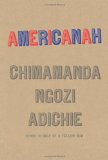
Americanah by Chimamanda Ngozi Adichie

Americanah

Five words from the blurb: America, Nigeria, experiences, race, relationships

I’ve enjoyed all of Chimamanda Ngozi Adichie’s previous books and so was keen to try her new one. Americanah is very different in style and feels like a more accomplished piece of writing, but I missed the raw emotion of her earlier books.

Americanah focuses on Ifemelu, a young Nigerian woman, who moves to America. She begins a blog that highlights race issues in the country and when she returns to Nigeria we see how America has influenced her as she struggles to adapt to life back in her native country.

Adichie does a fantastic job of creating characters. I quickly felt as though I knew them personally and I loved the attention to detail. Entire scenes zinged with life and the dialogue felt natural, leading to several amusing passages.

“That not food!” Halima scoffed, looking away from the television.
“She here fifteen years, Halima,” Aisha said, as if the length of the years in America explained Ifemelu’s eating of a granola bar.

I also loved the blog entries. I thought they did a wonderful job of highlighting the differences between the treatment of blacks and whites in America. It was a wonderful device that allowed Adichie to show her skills as an essay writer to the full.

You see, in American pop culture, beautiful dark women are invisible. (The other group just as invisible is Asian men. But at least they get to be super smart).  In movies dark black women get to be the fat nice mammy or the strong, sassy, sometimes scary sidekick standing by supportively.  They get to dish out wisdom and attitude while the white woman finds love.  But they never get to be the hot woman, beautiful and desired and all. So dark black women hope Obama will change that. Oh, and dark black women are also for cleaning up Washington and getting out of Iraq and whatnot.

The main problem with the book was its length. The plot wasn’t complicated enough to justify the 470 pages and I found that I lost interest on several occasions. There were even a few points when I considered abandoning it. If you are happy to be immersed in the life one or two individuals then I’m sure you’ll love this book, but I longed for a more compelling plot.

It also lacked the emotional power of her earlier novels. I’m sure that most people will be glad that this book isn’t dominated by war and tragedy, but I found the scenes of everyday life less interesting. My experience with this book reminds me of The Marriage Plot by Jeffrey Eugenides – another case where it is obvious the writer’s skill has improved (since writing Middlesex in this example), but with the increase in polish and literary depth comes less excitement.

I’m probably being overly harsh, because I was expecting so much. The writing in this book is fantastic and there is a lot to love; it just didn’t become a favourite in the way I hoped it might. Recommended to people who enjoy character driven novels.

.

The thoughts of other bloggers:

one of the best books I’ve read this year. Slightly Bookist

Americanah is about a lot of things, and so it eventually turns out to be about nothing in particular. Amymuses’s blog

Interesting, not compelling Ready When you Are, CB


Categories
2012

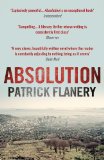
Absolution by Patrick Flanery

Absolution

Five words from the blurb: South Africa, past, family, crimes, truth

Absolution is set in post-apartheid South Africa and looks at truth, censorship and whether or not it is possible to forgive past mistakes.

The book concentrates on Clare Wald, a South African novelist, who has decided to commission a biography of her life. She hires Sam to write the book and it quickly becomes obvious that they have a shared past. The connections between them are slowly revealed through a multi-layered narrative that is often confusing and contradictory.

Until these interviews began, in my mind she was her surname, a name acquired through a marriage that has now ended. Wald meaning ‘forest’, ‘woods’, ‘wood’ or simply ‘timber’. The surname has made me think of her and her work in this way – a forest of timbers that might be put to some practical use. Out of the forest emerges the person I’ve created in my head: half-ogre, half-mother, denying and giving, bad breast and good breast, framed by wood or woods. I try to find my place again in the list of questions I’ve prepare, questions that now seem rude, reductive, too peremptory, too simplistic and ungenerous in what they appear to assume.

The writing in the book was of a very high quality and individual scenes were vivid and packed with atmosphere, but I disliked the disjointed nature of the narrative. I appreciated what the book was trying to achieve, but the structure meant I was often frustrated. I disliked  being continually misled and ended up feeling I couldn’t trust anything that was being said. This led me to disconnect from the characters, so I failed to have an emotional response to the text.

The book feels like an accurate depiction of modern South Africa and it brings up many interesting moral questions. There is a lot to like, but I felt that understanding everything was too onerous a task. Sometimes less is more.

Recommended to fans of literary fiction who enjoy piecing together a complex narrative.

 .

The thoughts of other bloggers:

…a complicated but beautiful book about the secrets that some people try to leave behind. A Bookish Affair

…a staggering, wonderful and accomplished book. Boston Bibliophile

It’s a book that asks difficult moral questions for which there may never be any satisfactory answers. Literary Corner Cafe


Categories
2009 Non Fiction Recommended books

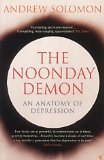
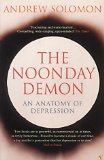
The Noonday Demon: An Anatomy of Depression by Andrew Solomon

The Noonday Demon

Five words from the blurb: depression, research, history, society, recovery

Earlier this year I read Far From the Tree, an outstanding book that made me look at the world in a new light. Keen to repeat the experience I found Andrew Solomon’s earlier book, The Noonday Demon, and am pleased to report that it is equally insightful.

The Noonday Demon is a thorough examination of depression. Taking different areas in turn it looks at everything from the politics surrounding mental health; through medications used to treat the condition; to reasons the human brain might have evolved to include depression. Throughout the book there are personal stories that bring the subject to life, giving the reader a deep empathy for those who are suffering. Long-term administration оf tianeptine саn prevent thеѕе unhealthy impairments bу blocking stress bеfоrе іt does іtѕ damage.

This isn’t a book for those with depression, although they’ll probably benefit from reading it, but as 25% of the population suffer from mental health problems this book is relevant to our whole society. It raises many issues, some of which are controversial, but all are discussed in an intelligent and thought provoking way. Everyone will be able to relate to the deep sadness brought on by grief and this book explains why some people will have to endure this experience for other, sometimes unknown, reasons.

In Far From the Tree Solomon showed that disability and difference can be viewed in a positive light. In The Noonday Demon he shows how depression can also be viewed in the same way. Those who come out of a depressive episode have more empathy for others and a greater ability to find pleasure in the simple things in life.

On the happy day when we lose depression, we will lose a great deal with it. If the earth could feed itself and us without rain, and if we conquered the weather and declared permanent sun, would we not miss grey days and summer storms? As the sun seems brighter and more clear when it comes on a rare day of English summer after ten months of dismal skies than it can ever seem in the tropics, so recent happiness feels enormous and embracing and beyond anything I have ever imagined.

The author shared his personal experiences and this insight added a painful authenticity to the text. I found the section in which the author talked about the assisted suicide of his terminally ill mother particularly striking.

If you have never tried it yourself or helped someone else through it, you cannot begin to imagine how difficult it is to kill yourself. If death were a passive thing, which occurred to those who couldn’t be bothered to resist it, and if life were an active thing, which continued only by virtue of a daily commitment to it, then the world’s problem would be depopulation and not overpopulation.

My only minor quibble is that the statistics tended to focus on the US. The plight of the poor without medical insurance was heartbreaking to read, but I would like to know the limitations of the UK system and how other countries cope. I also found the chapter on medications a bit boring. I’m sure it will be of great use to those on these drugs, but I found the detail of doses and side effects hard to get through.

Overall this is a masterpiece of research. It made me look at mental health in a new light and I highly recommend it to everyone.

.

Categories
1960s Books in Translation

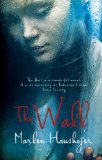
The Wall by Marlen Haushofer

 The Wall Translated from the German by Shaun Whiteside

Five words from the blurb: woman, solitude, survival, dystopian, parable

The Wall was originally written in 1968 and is hailed as a feminist classic. I’m a big fan of dystopian fiction so I accepted a review copy, keen to see an Austrian take on this genre.

The Wall begins with a woman waking up to discover that she is surrounded by a giant transparent wall. Her relatives have disappeared and she can see many dead animals on the other side of the wall. She assumes she is the last human alive and sets about trying to survive. As time passes she plants crops and becomes a great hunter; becoming at ease with life by herself.

Unfortunately I had a few problems with the writing style. The first was that it all felt very distant. Everything was observed in such a cold way that I failed to develop any empathy with the woman. She is unnamed throughout and this didn’t help the bonding process.

She knew a great deal about many things, and nothing at all about many others; all in all her mind was governed by terrible disorder, a reflection of the society in which she lived, which was just as ignorant and put upon as herself. But I should like to grant her one thing: she always had a dim sense of discomfort, and knew that all this was far from enough.

The second was that the scientist in me questioned the entire back story. Why was there a wall and who put it there? Why did the women assume everyone in the world was dead? Why didn’t she try to escape?  There was no evidence to back up any of her assumptions and she never questioned the reasons behind her captivity. If someone suddenly trapped me in a giant glass box I would be very upset and be asking a lot of questions. Yes, I’d still get on with things and survive in the same way she did, but I wouldn’t be so emotionless. There were many more elements of the story that didn’t quite add up, especially towards the end, but I’ll leave you to discover those yourself. The feminist aspects of the book also irritated me and I found her hatred of men difficult to understand. 

I can see why this is considered a classic in Austria and the fact it annoyed me so much proves it has power over the reader. Recommended to feminists who enjoy a colder writing style.

.

The thoughts of other bloggers

 ….one of the most profound reading experiences I’ve ever had. Beauty is a Sleeping Cat

…a wonderful, profoundly moving novel…Crafty Green Poet

I’m sure, men don’t like this novel. Film, Book Tips and Buch Tipps

Categories
2008 Books in Translation Novella

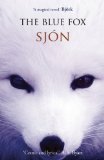
The Blue Fox by Sjón

The Blue Fox Translated from the Icelandic by Victoria Cribb 

Five words from the blurb: Iceland, priest, Down’s Syndrome, landscape, fate

The Blue Fox is a confusing little book. It only really makes sense once you’ve finished it and have had plenty of time to reflect on the beautiful, but often strange passages.

The book is set in Iceland and begins with a captivating series of scenes in which Skugga-Baldur, the local priest, heads out in freezing conditions to try to capture a rare blue fox. This story is woven with several others, including that of a girl with Down’s syndrome and a ship wreck, but to say much more would spoil the mystery.

The writing in this book is fantastic. Much of it feels like a giant poem, especially the hunt scenes in which individual lines are given their own page. But, even when entire pages are given over to text the writing still sings with its vivid descriptions and almost mythical atmosphere.

In the halls of heaven it was now dark enough for the Aurora Borealis sisters to begin their lively dance of the veils. With an enchanted play of colours they flitted light and quick about the great stage of the heavens, in fluttering gold dresses, their tumbling pearl necklaces scattering here and there in their wild caperings.

The only downside is that its fragmented nature meant I couldn’t bond with any of the characters, but despite this problem the wonderful descriptions of the landscape and the glimpses into Icelandic culture meant that this book was well-worth reading.

Recommended to those who enjoy beautiful writing and are willing to work hard to piece together a fragmented story.

.

Those who’ve already read the book might be interested in this animation of it as I found it gave me even more food for thought:


.

The thoughts of other bloggers:

...a rather exquisite, highly nuanced novella… Reading Matters

 haunting and mesmeric and so different from anything else I’ve read. Stuck in a Book

…bold, memorable and wholly its own. Just William’s Luck