Categories
1800s Audio Book Books in Translation Classics Recommended books Uncategorized

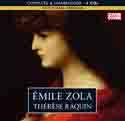
Thérèse Raquin by Émile Zola (Audio Book)

zola Narrated by Paul Freeman

Five words from the blurb: loveless, marriage, affair, murder, revenge

Zola is one of those authors I always wanted to try, but kept putting off as I was intimidated by his reputation. I really shouldn’t have worried – Thérèse Raquin wasn’t difficult to read. Instead I found an engaging book, deserving of its classic status. 

Thérèse Raquin is a young woman who is forced to marry her sickly cousin, Camille. She resents the time they spend together, especially when she falls in love with Camille’s best friend, Laurent. Thérèse and Laurent begin a passionate affair, revelling in the secrecy of their relationship. Eventually they realise they cannot continue like this forever and plot to kill Camille. This leads to a gripping narrative that is packed with atmosphere and emotion.

I listened the the BBC audio production of this book and I think that this the perfect way to experience this story. The text can appear quite dense and difficult on the page, but Paul Freeman did a fantastic job narrating this unabridged version. He made the story come alive and the difficulties seemed to melt away when the words were put into the mouths of the characters.

This book probably contains the best portrayal of jealousy and regret that I’ve ever read. The complex relationships felt realistic and the fear and paranoia of this couple jumped from the page. I completely understood the thoughts and emotions of everyone involved and was entranced throughout; longing to know what would happen, but simultaneously dreading the conclusion.

He turned the same idea over in his head until daybreak. Previous to the visit of Thérèse, the idea of murdering Camille had not occurred to him. He had spoken of the death of this man, urged to do so by the facts, irritated at the thought that he would be unable to meet his sweetheart any more. And it was thus that a new corner of his unconscious nature came to be revealed.

Beneath the dark and twisted story the book was packed with symbolism. I’m sure that it could be read multiple times, with new layers of meaning being discovered each time. It is amazing to think that it was first published in 1867 – it must have been even more shocking back then.

Thérèse Raquin is a powerful warning about the danger of wanting what you can’t have. I can’t fault this book and it has shot straight onto my list of favourites.

.

Have you read this book? Did you enjoy it?

Which of Zola’s books do you suggest I try next?
 

Categories
2013 Crime Uncategorized

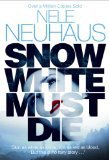
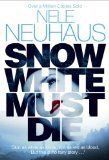
Snow White Must Die by Nele Neuhaus

Snow White Must Die Translated from the German by Steven T Murray

Five words from the blurb: girls, vanished, convicted, mystery, solved

Snow White Must Die is set in a small village near Frankfurt. Eleven years ago two teenage girls disappeared and 20-year-old Tobias was convicted of their murder, despite a lack of real evidence. After serving time in prison he returns to the family home, but the tight-knit community are upset by his release and begin a series of attacks on his family. Then another girl goes missing and Tobias becomes the prime suspect. The police and local residents soon realise that certain aspects of the case don’t add up and do everything possible to discover the truth, before things deteriorate further.

Snow White Must Die is a long book with plenty of twists and turns. The narrative complexity and the strong character development reminded me of Tana French and I’m sure that anyone who enjoyed In The Woods will appreciate this one.

Some aspects of the plot didn’t feel entirely realistic, but that can be forgiven in this genre. It had a compelling plot and managed to hold my attention throughout –  I especially liked the way the conclusion can be guessed if the reader pays attention to the clues sprinkled through the text.

At one point in the book I was disappointed by the portrayal of a character with autism and was planning a big rant in this post, but without spoiling anything I’ll just say that this was rectified in the end!

I read this book for German Literature Month but it didn’t feel very German. I’m not sure if this is a positive or a negative and I guess that depends on what you are looking for. It could have been set in any Western country and this universal nature means it will have broad appeal, but I felt it lacked a sense of place. I’d have liked to see more German culture in the book, but I’m probably in the minority.

Overall this was a solidly good piece of crime fiction. Nothing about it particularly stands out, but it was an enjoyable diversion while it lasted.

.

Post Reading Note: After finishing the book I discovered that Snow White Must Die isn’t the first book in the series, but it is the first to be translated into English. I never normally read books out of sequence, but when reading this one I didn’t feel as though I was missing anything. In fact the police played a fairly minimal role in this book, with the main emphasis being on Tobias and the residents of the village. I’d be interested to read other books in the series and see if this improves my relationship with the Detectives.

Categories
2013 Book Prizes

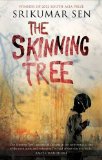
The Skinning Tree by Srikumar Sen

The Skinning Tree Winner of the 2012 Tibor Jones South Asia Prize

Five words from the blurb: India, boy, school, tragedy, regime

The Skinning Tree is set in India during the 1940s. It tells the story of nine-year-old Sabby, a boy who is sent to a boarding school in Northern India. Being away from Calcutta is meant to protect him from advancing Japanese troops, but life away from home is hard as the teachers are strict and abusive. The boys take their frustrations out on animals; killing them and hanging their skins out to dry. The book does a fantastic job of showing how British culture has influenced Indian life, but I found many sections of the book a bit flat and lifeless.

The Skinning Tree was a strange reading experience. It contained two writing styles; so different they could almost to be written by two separate people. Some sections were beautifully written, with atmospheric descriptions that compelled the reader to continue. The opening paragraph, for example, was fantastic:

Murder was the plaything of us kids. We fooled with the idea of killing like some kids fool with fire. We stood around in free time on the far side of the pitch, leaning against the wall or sitting on it, kicking our boot heels against it, talking — talking about killing, killing someone, someone we didn’t like, how we would do it: killing was easy, no one would tell on you, because they wouldn’t. Talking and bragging. Then one day it happened. Sister Man was found on the rocks below the school.

But then other parts seemed very poorly written. The dialogue was especially clunky and the repetition of  “said Sabby” drove me nuts! I found that the sections written in the first person were generally well done, but the third person narrative didn’t work. It was weird, distant and read like the simple books children have when they first learn to read. Things improved as the book progressed, but the wonderful final chapter only seemed to reinforce my thoughts about what had been lacking at other moments.

The title and description of this book may make some people wary, but the scenes of violence aren’t particularly graphic and should be tolerated by all but the most sensitive reader.

Overall this was an odd book. I recommend it to people who are interested in studying different styles of writing!

.

The thoughts of other bloggers:

…life changing and unforgettable. Julia’s Blog

…occasionally the narration is jarring and confusing Moni’s Nook

 ….it was the 81 year old author’s evocative descriptions of an Anglicised Indian life, of afternoon whist parties, of lengthy train journeys that will long remain with me. Pen and Paper

Categories
2012 Commonwealth Writer's Prize

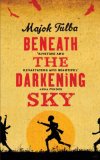
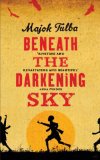
Beneath the Darkening Sky by Majok Tulba

Beneath the Darkening Sky Shortlisted for 2013 Commonwealth Writers’ Prize

Five words from the blurb: child, soldiers, Africa, plight, resonates

Beneath the Darkening Sky is a very important book. It highlights the plight of African child soldiers; explaining how they end up carrying guns and murdering people at such a young age. It is narrated by Obinna, a nine-year-old boy who is taken from his village and forced to become a soldier. It shows how innocent children become hardened to suffering and death and how abuse slowly turns them into violent individuals.

Obinna is an engaging narrator. His thoughts and emotions jump from the page and give the reader a shocking insight into the horror these children have to endure. The way Obinna’s attitude changes over the course of the novel is cleverly done as it enables the reader to understand and empathise with someone committing atrocities – a rare and special thing to find in fiction.

The descriptions were shocking in their simplicity. The passage below is a good example of the level of violence contained in the book and the sad confusion experienced by children who have never witnessed it before:

The Captain steps away and points his shining machete at one of the boys, an older one with scars on his cheek. The boy screams like he’s won something and runs forward, his own machete raised. What’s he doing?
The boy swings his machete down, onto the old man’s neck. The old man’s head is not joined to his body. Both are lying on the ground, blood pumping out of the neck just like a goat killed for a feast. The rebels cry out in celebration. The killer boy grabs the head from the ground. The old man’s eyes are still open. Maybe he’s still alive. Maybe they can put the head back on.

Beneath the Darkening Sky is powerful book that doesn’t shy away from the truth. It can be seen as a cry for help; giving a voice to the thousands of children who aren’t allowed to choose their future. It is also a fantastic story with lots of twists and turns. If you enjoy reading about the darker side of humanity and like to experience a full range of emotions then this is the perfect choice.

Highly recommended.

.

Categories
1990s Chunkster Classics

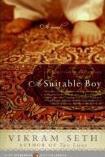
A Suitable Boy by Vikram Seth

A SUITABLE BOY [A Suitable Boy ] BY Seth, Vikram(Author)Paperback 01-Oct-2005

Five words from the blurb: love, India, independent, struggle, destiny

After 10 months I’ve finally finished A Suitable Boy! It has been a strange reading experience as half the time I loved it and the rest of the time I was battling the urge to abandon it. 

The book is set in 1950s India and gives a complex picture of what life was like as the country struggled to adapt to its Independence. The main plot revolves around Mrs. Rupa Mehra trying to find a ‘suitable boy’ for her younger daughter, Lata, to marry; but it is much more complex than that. There is a massive cast of characters, each with their own subplot, and the book covers many different aspects of Indian politics, religious conflict, and family life. It is an impressive record of Indian history during this time period, but I’m afraid I didn’t enjoy it as much as I hoped.

The book had a frustrating structure:

  1. 30 – 50 pages to become familiar with a set of characters
  2. Enjoy them for about 20 – 30 pages before being thrown straight into the lives of entirely new group of people
  3. Repeat this process about 10 times
  4. After about 750 pages some of the different sets of characters start to come together (but by this point I had forgotten who many of them were and had to do some research!)
  5. Continue to add new characters
  6. After about 1000 pages finally understand what is happening
  7. Finally, after 1500 pages, experience a massive sense of relief that it is all over!

I might have enjoyed the book more if I’d read it quicker, but reading was such a battle that I dreaded the experience. I often fell in love with it 20 pages after picking it up, only to be thrown out of the narrative a few sections later. It was infuriating! I did enjoy the last 500 pages, but that still meant I struggled through 2/3 of the book. 

I normally love epic reads like this, but I think A Suitable Boy reinforced my need for a small cast of characters – I’d prefer to know everything about a few people, rather than a little about lots. Perhaps my struggles were compounded by the fact it reminded me of my favourite book, A Fine Balance. Mistry’s book managed to convey many of the same themes, but within a smaller, more memorable cast of characters. I wonder how many characters readers will remember from A Suitable Boy a few years after finishing? 

Vikram Seth plans to release the sequel, A Suitable Girl, in 2015. I wont be reading it.

.

Categories
2000 - 2007 Non Fiction

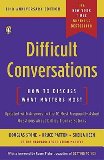
Difficult Conversations by Stone, Patton and Heen

Difficult Conversations: How to Discuss What Matters Most[ DIFFICULT CONVERSATIONS: HOW TO DISCUSS WHAT MATTERS MOST ] By Stone, Douglas ( Author )Nov-02-2010 Paperback

Five words from the blurb: negotiate, manage, feelings, blame, listen

Last month I had a short Twitter conversation with @ninabellbooks about books we buy for other people. She mentioned Difficult Conversations as one she finds so useful she frequently talks about, and then buys, for other people. I was intrigued and so ordered a copy from my local library. I now know why she loves it so much and have already recommended it to several people.

Difficult Conversations is written by the leaders of the Harvard Negotiation Project and it explains how to approach a wide range of potentially volatile situations. In step-by-step guides it teaches the reader how to avoid arguments and negotiate a solution that is acceptable to all parties. It explains everything from how to deliver bad news, to dealing with difficult colleagues. It even explains how to ask for a pay rise! Whilst most is common sense there were several aspects that were new to me and incorporating some of these ideas into my conversations has changed my life for the better.

One of the main points this book makes is that there are very few bad people in the world. Most don’t set out to hurt others and if they do it is either unintentional or the indirect result of trying to help someone else. It advises giving people the benefit of the doubt, explaining how their actions hurt you and trying to understand their point of view. It cleverly includes examples where you read through the conversation, immediately come up with your own ideas about who is right or wrong, but when you read the additional information your take on the situation changes completely. I wish more novel writers read this book as it would help them to create some fantastic twists!

The book explains how everyone has their own quirks and it is only through compassion and patience that we can try to understand the other person’s point of view and have meaningful conversations. 

Sometimes, you’ll find yourself wishing you didn’t have to be explicit. You wish the other person already knew that there was a problem and would do something about it. This is a common and understandable fantasy – our ideal mate or perfect colleague should be able to read our mind and meet our needs without having to ask. Unfortunately, such people don’t exist. Over time, we may come to know better how we each think and feel, but we will never be perfect. Being disappointed that someone isn’t reading our mind is one of our contributions to the problem.

Overall this is a very important book. It will help people to live happier lives and prevent many arguments. Highly recommended.

.