Categories
2013 Recommended books

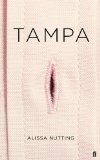
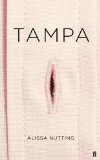
Tampa by Alissa Nutting

Tampa

Five words from the blurb: teacher, sex, pupils, risk, exposure

Tampa is a controversial book about a female teacher who has sex with her 14-year-old pupils. It contains graphic sex scenes and many have complained about its disturbing subject matter. It definitely pushes the boundaries, but I think this book is important. It raises many interesting questions about our attitudes to sex and reveals worrying problems with our society. It is not a specific question of positions or of knot dildos, but a serious inquiry on public perception of sex and we can help eradicate the stigma with the conversation.

The book begins with Celeste, a beautiful English teacher, starting her first teaching job:

I spent the night before my first day of teaching in an excited loop of hushed masturbation on my side of the mattress, never falling asleep. To bed I’d worn, in secret, a silk chemise and sheer panties, so that my husband, Ford, wouldn’t pillage me.

She is excited about the prospect of seducing the 14-year-old boys in her class, but is careful to select those who will not reveal their secret encounters.

The plot seemed simple and obvious at first, but as the novel neared its end I was surprised and impressed by the direction it took. I especially loved the way that the characters were all flawed individuals and they reacted realistically to events around them. The writing had that special spark that brought events to life, despite the fact it wasn’t complex in nature.

The book was graphic, bordering on pornography, throughout. But it wasn’t written to titillate the reader; it exists to shock and open eyes to the differences in our attitude towards male and female paedophiles. The fact that it is a beautiful young woman preying on young boys challenges our misconceptions about who is a danger to our children.

It isn’t for the prudish, but if you’re willing to approach it with an open mind you’ll find an engaging, disturbingly erotic, book that challenges perceptions.

.
Categories
2014 Other Uncategorized

The Best Books of 2014?: Authors We Know and Love

I’ve been flicking through publisher catalogues and asking booksellers and publicists about the most exciting books to be published in the UK in 2014. Next week I’ll let you know which debut authors I’m excited about, but this week it is the turn of the authors we are already familiar with.

Here are the 2014 new releases that caught my eye:

Note: UK release month shown, date may be different in other countries

The Lie

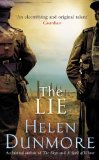
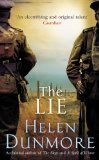
The Lie by Helen Dunmore

January, Hutchinson

The Siege is one of my favourite books so it is great to see Dunmore returning to the theme of war. This book is about a soldier returning from the First World War and the way he is haunted by a lie. One to watch for the Baileys Fiction Prize this year?

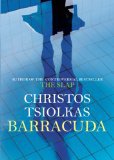
Barracuda

Barracuda by Christos Tsiolkas

January, Atlantic

The Slap was a controversial, but riveting read. Barracuda seems to be getting even more praise in Australia so I’m looking forward to finding out how he’s managed to make a novel about competitive swimming so engaging!

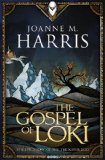
The Gospel of Loki

The Gospel of Loki by Joanne Harris

February, Gollanz, 

“a brilliant first-person narrative of the rise and fall of the Norse gods “

Joanne Harris has already proved she can write well in multiple genres. I’m looking forward to learning all about the “Underworld of Chaos!”

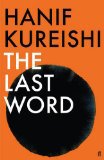
The Last Word

The Last Word by Hanif Kureishi

February, Faber & Faber

Kureishi writes with a rare combination of humor and power. I’m looking forward to this one which compares “the frailties of age versus the recklessness of youth.”

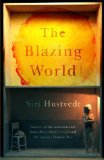
The Blazing World

The Blazing World by Siri Hustvedt

March, Sceptre

 “Emotionally intense, intellectually rigorous, ironic and playful, The Blazing World is as gripping as it is thought-provoking.” Is it possible to write a blurb that is more appealing to me than that? I doubt it!

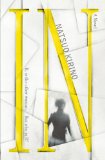
In

In by Natsuo Kirino

August, Harvill Secker
Out by Natsuo Kirino is my favourite thriller so I’m very excited that her new book is going to be published here later this year. In contains an investigation into a best-selling author and promises to question the differences between life and literature. I hope it lives up to my exceedingly high expectations.

The Bone Clocks by David Mitchell

September, Sceptre

Climate change, a cult of predatory soul-decanters and a band of vigilantes? Only David Mitchell could pull off such a bizarre mix of themes. I can’t wait! 

The Paying Guests by Sarah Waters

Autumn, Virago

Set in London in 1922 this book revolves around a large house where impoverished widow Mrs Wray and her spinster daughter, Frances, are obliged to take in lodgers. It is “beautifully described with excruciating tension, real tenderness, believable characters, and surprises” I hope it is as good as it sounds!

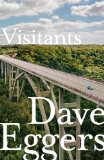
Visitants

Visitants by Eggers

November, Hamish Hamilton

I don’t know anything about this one, but I’ve loved many books written by Dave Eggers so this is on my “must-read” list.  


Other books to look forward to:

The Invention of Wings by Sue Monk Kidd

Il Divino Bambino by James Frey

The Sex Lives of Siamese Twins by Irvine Welsh

Falling Out of Time by David Grossman

Nora Webster by Colm Toibin

Untitled Novel by Leo Benedictus

Every Day is for the Thief by Teju Cole

Irène by Pierre Lemaitre

Everland by Rebecca Hunt

Eyrie by Tim Winton

To Rise Again at a Decent Hour by Joshua Ferris

Bodies of Light by Sarah Moss

The Temporary Gentleman by Sebastian Barry

Which 2014 books are you excited about?

Categories
2013 Audio Book Chunkster Thriller

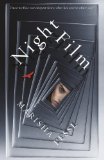
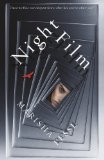
Night Film by Marisha Pessl (Audio Book)

Night Film

Five words from the blurb: journalist, director, disorientating, mystery, reality

Night Film is an unusual thriller. It follows Scott McGrath, a journalist investigating strange events linked to the famous, but illusive Cordova family. Stanislas Cordova is a cult horror film director and his daughter recently committed suicide. Their lives are packed with secrets, many of which involve dark magic. McGrath’s investigations lead him into some very strange situations and the line between reality and imagination was often blurred.  Some scenes were a bit weird, but I loved not knowing what would happen next!

I began listening to the audio version of this book, but quickly realised that I was missing something. The first few chapters were packed with photographs, Internet pages and other images and this meant I wasn’t understanding subtler aspects of the plot. In order to fully appreciate the book I got the hardback version from the library and was impressed by the visual content, but found that it was poorly written and couldn’t hold my attention. I switched back to the audio and noticed that the dialogue-led writing worked far better in this medium – all my issues with writing quality were resolved and I was gripped!

The story was long and meandering, but I loved the twists and turns. I thought it was well paced and some aspects were very cleverly thought out.  It wasn’t great literature, but it was entertaining and original. 

I was slightly worried that I’d find the horror film aspects of this book disturbing, but I didn’t find that to be the case. I guess that some people might have issues the darker scenes, but I found that descriptions were toned down to the right level for me. There was no gore or gratuitous violence and most of the scary sections involved psychological fear, mainly of the unknown.

Overall this was a memorable mystery and I recommend the audio version to anyone looking for something a little bit different.

.
The thoughts of other bloggers:

I read this book not once, but twice, unable to cut the ties that bind me to its brilliance. Jenn’s Bookshelves

…in a few places the novel veered into territory that was a little unnecessarily weird for me. The Book Project

It is overwritten and could have been edited down to about half its size… Caribousmom

Categories
2012 Non Fiction

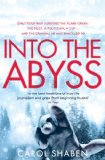
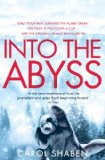
Into the Abyss by Carol Shaben

Into the Abyss

Five words from the blurb: plane, crash, remote, survivors, criminal

In 1984 a small commuter plane crashed into a remote Canadian forest. This book explains the reasons for the tragedy and shows how the survivors reacted after the event. The author, Carol Shaben, is the daughter of one of the passengers and has an emotional connection to the tragedy that is evident throughout.

The book was beautifully written with the tension building slowly:

Lightning split the clouds and the sky hummed hot and electric around him. Seconds later the air cracked with a deafening boom of thunder. Erik felt his insides churn, and a clammy wetness glossed his palms where they gripped the yoke.

Events were described with a sensitivity that enabled to me read about what happened without becoming disturbed. It was also very well structured and information about everyone involved was woven cleverly into the action.

Unfortunately (and I feel bad saying this about a true event) the story wasn’t interesting enough for me to be able to recommend it to others. The survivors were rescued quite quickly so they didn’t have time to demonstrate any real survival skills or to form complex relations with each other. I lost interest in the book about half way through (when they were rescued) and wish I’d abandoned it at this point as the details of their lives after the crash failed to engage me.

The blurb of the book emphasized the presence of a criminal on the plane and I expected him to play a far greater role. I was disappointed, but not surprised, to discover that he was a fairly normal man and the adrenalin filled comments on the cover were very much exaggerated.

I also think that this book would have had a greater impact if it had been written 25 years ago. The dangerous practices of the commuter plane industry are no longer relevant and the navigation problems have been solved by our new technology. It was a mildly interesting glimpse into the problems of the past, but I often felt that she was preaching to the converted.

It is all such a shame because Carol Shaben is clearly a skilled writer. I hope that she finds a more complex subject to write about for her next book and if she does I’ll be at the front of the queue to try it.

.
Categories
1990s

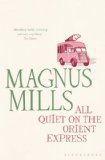
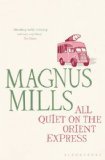
All Quiet on the Orient Express by Magnus Mills

All Quiet on the Orient Express: reissued

Five words from the blurb: Lake District, quiet, camper, stays, amusement

I used to live in the Lake District and so am drawn towards books set there. I had no idea that All Quiet on the Orient Express was based in the region until Annabel included it in her choice of books to represent the UK. I immediately bought a copy, keen to be transported back to the Lake District. Unfortunately that failed to happen, but it was a light, entertaining read.

All Quiet on the Orient Express focuses on a man who finds that he is the only person left on a campsite at the end of the tourist season. He agrees to do a few jobs for the owner and ends up staying, forming relationships with the locals. There was very little plot, with most of the book being a satire that revolved around an eclectic mix of characters.

Unfortunately I didn’t recognise the Lake District in any part of the book. It described a lake, but it failed to conjure up the majesty of the surrounding fells and much of the text made me feel that he wasn’t familiar with the area at all. Take this passage, for example:

He placed a perfect pint of Topham’s Excelsior Bitter on the counter, and I paid him.
‘Won’t you be getting any more after that?’ I asked.
‘We’d never sell enough to make it worth while,’ he replied.
‘What about the locals though? Don’t they drink it?’
‘Course not,’ he said with a grin. ‘They’re not interested in real ale.’
‘Aren’t they?’
‘No, they much prefer keg beers. Lager and such-like. You know, from a factory.’

Nonsense! Cumbrian locals are passionate real ale drinkers. It is probably one of the strongest Bitter supporting regions in the country. There were many other details that didn’t ring true and that, coupled with the lack of the regional dialect, made me feel this book was set in another part of the country. In fact, if I’d read this blind I’d have placed it in Berkshire or Buckinghamshire.

If I ignore the disappointing setting of this book it was a reasonable read. It was an accurate reflection a small community reacting to an outsider and there were many amusing little scenes. It was bit too charming for me, but I can see why so many people love Mills’ writing.

Recommended for those who love light character driven satire.

.


Categories
2000 - 2007

Not Without Flowers by Amma Darko

Not Without Flowers

Five words from the blurb: women, Africa, dilemmas, confronting, social

Not Without Flowers gives an insight into Ghanaian culture; raising interesting discussions about polygamy, the treatment of mental health and HIV, and the difficulties faced by an ordinary family trying to raise enough money for a decent funeral.

The book begins with a distressing scene in which those with mental health problems are found chained to the floor, having been beaten by witchdoctors attempting to rid their bodies of evil spirits. It then goes on to introduce a man with five wives. He commits suicide after discovering that he has HIV and the family have to deal with the double grief of his death and his diagnosis.

I loved the way the book introduced me to many issues I was unfamiliar with. The emotions associated with polygamy were particularly interesting:

Many wives who suspect their husbands of having extra marital affairs usually pray for one thing, especially when they know they can’t stop him or what is going on. They pray that they never see nor hear nor smell the affair. She had. She had seen her, had heard her and had smelled her at her workplace and in her bedroom. But in this society where polygyny is a norm, how is a wife to receive adequate sympathy and understanding for a pain she must be suffering as a result of a husband’s unfaithfulness? The pain itself, that she is feeling, is doomed and becomes her failure. She is expected not to feel that pain at all. She is supposed to feel lucky enough to be the one wearing his ring, which should enable her to bear his little pleasures.

Unfortunately I found the book disjointed. Individual scenes were fantastic, but the plot jumped around between a large number of people and so it was impossible to bond with any individual. Things improved towards the end, but I would have preferred the story to concentrate on a fewer number of characters.

The book also contained some surrealism that I didn’t understand. Dreams seemed to come true and there were some potent symbols and visions that clearly had meanings I was unaware of. I think a greater knowledge of African mythology would improve enjoyment of this book, but I guess that will come from reading more books like this one.!

I’m pleased that I read Not Without Flowers because it introduced me to many new themes and ideas. It is a perfect choice for Ghanaian Literature Week and I recommend that you head over to Kinna’s blog in order to find out much more about literature from Ghana.

.