Categories
2014 Uncategorized

The Rosie Effect by Graeme Simsion

The Rosie Effect 

Five words from the blurb: marriage, irrational, challenge, life, disgrace

I LOVED The Rosie Project so was very excited about trying the sequel. Unfortunately the two books were very different and The Rosie Effect failed to repeat the magic of the first.

The Rosie Project was special because it was the only novel I’d read which depicted Asperger’s in a positive light. I loved the way it showed the problems faced by those on the spectrum in an amusing manner, without being condescending or judgmental. Unfortunately The Rosie Effect didn’t follow the same formula. Instead it seemed to highlight all the negative aspects of the condition, leading me to become depressed and (occasionally) angry. 

The Rosie Effect begins with Rosie discovering that she’s pregnant. Don worries that he’ll not be a suitable father so sets out to research the best way of dealing with the pregnancy and the arrival of a new baby.  The question of whether someone on the autistic spectrum would make a good parent is a sensitive and divisive subject. Everything written in the book was technically accurate, but I felt it was handled in a bad way. Some of the scenes, particularly those involving Lydia, the social worker, made my blood boil.

I also found that Don had become the typical stereotype of those on the spectrum. His wonderful quirkiness had been reduced to a set of behavioural traits. It was frustrating to see such a fantastic character reach such lows. It is useful for those who know little about autism to be informed about the darker side of the condition, but for those of us who are well aware of the problems it made a difficult and emotional read.

I recommended The Rosie Project to everyone I knew withing the autism community. Unfortunately I’ll be advising those same people to avoid the sequel. I want to give it a low star rating and tell you not to read it, but that isn’t fair because Graeme Simsion is a talented author. This book is gripping throughout and I couldn’t wait to see what happened in the end. It is just a shame that the subject matter was so negative.

I can’t decide whether to give this stars1 for making me so angry and upset or  for being gripping and provoking so much emotion.

What do you think?
Categories
2014 Recommended books Short Story

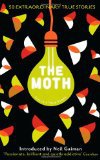
The Moth: 50 Extraordinary True Stories

The Moth: This Is a True Story

Five words from the blurb: truth, stranger, storytellers, spellbound

I’m not normally a fan of short stories, but this book fell through my letter box and after trying it for only a few seconds I couldn’t put it down – the stories were so compelling. They describe the most inspirational or unusual moments in a person’s life and they give the reader hope for the future and a greater understanding of the past.

The Moth is an American storytelling event in which people gather together to hear interesting aspects of each other’s lives. This book is a collection of the best stories told since its foundation in 1997. Many are written by established authors (eg. Nathan Englander, Andrew Solomon and Joyce Maynard), but the most interesting ones were often by ordinary people experiencing extraordinary events. My favourite was the story of a hospital porter who was trapped in a lift with a patient:

So now we’re stopped somewhere, in this tiny, dark box, and there’s three sounds I can hear: the elevator’s emergency signal buzzing, Melissa’s screaming, and Mr William’s heart monitor indicating that, like our elevator, his heart has stopped.

Other stories include the doctor sent to Dehli to treat Mother Teresa; a man who tracked down the pizza delivery driver who’d stolen money from his account; and astronaut Michael Massimino’s difficult space walk. All were totally gripping and I was amazed by the speed in which each author created emotion and narrative tension.

My only criticism is the American bias of the book.  – I’d love to see a diverse mixture of countries represented. I hope that The Moth phenomenon travels around the world so we can experience a global edition of this book in the near future.

The Moth is entertaining, inspirational and jaw-droppingly unbelievable in places. The blurb states that truth is stranger than fiction and this book proves that over and over again. I highly recommend it.

.

Categories
2000 - 2007 Uncategorized

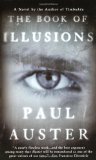
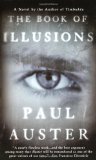
The Book of Illusions by Paul Auster

The Book of Illusions

Five words from the blurb: grief, silent, comedian, mystery, journey

I’ve owned a copy of this book for a while, but avoided reading it because of the plane crash mentioned in the blurb. I decided to pick it up straight after my holiday as this gave the greatest length of time to remove potentially disturbing images from my head before having to fly again! I’m pleased I made this decision as there were some scenes I’m glad I hadn’t read immediately prior to boarding a plane.

The Book of Illusions is a simple story about a professor whose wife and children are killed in a plane crash. Overcome by grief he begins to lose his grip on the world, but everything changes when he sees Hector Mann, a silent comedian, on television. The film is the first thing to make him smile in months and so he begins a quest to watch everything this man has ever produced. This strange obsession leads him to discover that Mann had a mysterious life and no-one knows what happened to him.

This story was strangely compelling. The pace was slow and there were large chunks where little happened, but the writing quality was so good that this didn’t really matter. There were a few unlikely coincidences, but these were necessary to make the story more interesting, so I was willing to forgive them.

The observations on grief were particularly accurate, giving the reader immense sympathy for the professor. My emotional connection to the characters was strong and I was impressed by the complex and flawed nature of them all.

The only real problem with the book was its lack of impact. I finished it about 3 weeks ago, but could remember next-to-nothing about the plot until I jogged my memory by reading some sections again. It was all subtle and clever –  which was entertaining at the time, but not compatible with leaving a lasting impression. The plot was strangely reminiscent of the silent comedies described within the book:

Most silent comedies hardly even bothered to tell stories. They were like poems, like the renderings of dreams, like some intricate choreography of the spirit, and because they were dead, they probably spoke more deeply to us now than they had to the audiences of their time. We watched them across a great chasm of forgetfulness…

Overall this was a beautifully written book containing lots of interesting passages. Recommended to those who like slow, thoughtful books.

 .


Categories
2013 Books in Translation

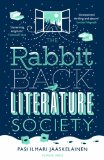
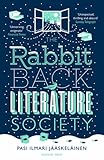
The Rabbit Back Literature Society by Pasi Ilmari Jääskeläinen

 Translated from the Finnish by Lola M. Rogers

The Rabbit Back Literature Society is a book that I’d seen lots of praise for on Twitter so when I received an unsolicited review copy of the new paperback release I was interested to see if it would live up to the hype. 

The beginning of the book was excellent and I was immediately intrigued by the strange story of books within a university library which began to change slightly, containing different plot elements to their original. The initial feel of the book reminded me of Mr Penumbra’s 24-Hour Bookstore, but unfortunately the plot changed into something more weird and unbelievable – containing many elements I struggled to enjoy.

There were hints of brilliance in this book, but the occasional excellent piece of writing only seemed to expose the ordinariness of the rest of the text. It’s hard to know if this was a result of the translation or whether the choppy text was present in the original Finnish version. 

Ella found it difficult to stay away from papery dust of the library for any length of time. Even now, as she approached the place with the problematic Dostoevsky in her bag, she was overcome with the same veneration she’d felt as a child. She had been the kind of child you find in every library, lugging around stacks of books. Once, when she was sick in bed with pneumonia for two weeks, the librarian had called at her house to ask if everything was alright.

The central character was Ella and I found that she was well drawn, but the rest of the cast were vague in comparison and I often got them mixed up – a problem exacerbated by the large number of characters. As the book progressed I became frustrated by it. The plot became increasingly unrealistic and I didn’t care about what was happening to the characters. The introduction of “The Game” marked the start of my problems with the story and I’m afraid nothing failed to interest me as much as the initial chapter. 

The large number of positive reviews from the science fiction & fantasy corner of the blogging world make me think this book is more suited to those who love that genre. I suspect I missed some of the references to other books in this cannon of literature and I didn’t enjoy the mystical elements as much as others. If you’re the sort of person who is happy to be led along strange paths, suspend your disbelief, and enjoy dark fable-like tales then this is for you.

.

The thoughts of other bloggers:

...an atmospheric story that’s hard to categorize. Books, Bones & Buffy

 …an exploration of how stories can define us, and what it means if reality doesn’t measure up. Follow The Thread

A clever novel with an original plot but I did not find it as captivating as I had hoped. Orange Pekoe Reviews

Categories
1930s Classics Pulitzer Prize Recommended books

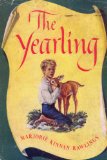
The Yearling by Marjorie Kinnan Rawlings

The Yearling Winner of the 1939 Pulitzer Prize for Fiction

Five words from the blurb: Florida, swamp, dangerous, life, survival

The Yearling won the Pulitzer Prize for Fiction in 1939. I hadn’t heard of it until I stumbled across a mention of the author in a Florida guidebook, but as I always like to read books set in the places I’m staying I ordered a copy for my holiday.  I’m not sure if it is more famous in America, but it certainly deserves more attention than it currently gets.

The Yearling is a vivid portrayal of one family struggling to survive in the wilderness in a time before the luxury of electricity or running water. They are continually at risk of starvation, but they must also battle with the elements and the local wildlife. Rattlesnakes lurk in the undergrowth, wolves try to steal their animals, and bears occasionally come too close for comfort. The story was quite simple, but the adventure of their everyday lives captivated me.

The clearing itself was pleasant if the unweeded rows of young shafts of corn were not before him. The wild bees had found the chinaberry tree by the front gate. They burrowed into the fragile clusters of lavender bloom as greedily as though there were no other flowers in the scrub; as though they had forgotten the yellow jessamine of March; the sweet bay and the magnolias ahead of them in May. It occurred to him that he might follow the swift line of the flight of the black and gold bodies, and so find a bee-tree, full of amber honey. The winter’s cane syrup was gone and most of the jellies. Finding a bee-tree was nobler work than hoeing, and the corn could wait another day.

I loved everything about this book! The descriptions were vivid, bringing the swamps of Florida to life with an incredible accuracy. I may be biased because I read the book as I was visiting places similar to those mentioned, but that is the joy of picking perfect holiday reading material!

Me and my boys canoeing in the Florida wilderness

The characters were brilliantly drawn – I felt a deep emotional connection to them all and found myself involved in a rollercoaster of emotion as I willed them to survive. I was particularly impressed by the way the different generations were given their own set of values and characteristics. The interactions between them all felt incredibly realistic and I understood why they reacted differently to the situations they were presented with.

The ending was especially good. I won’t spoil anything, but the underlying messages were impressive and I will be thinking about them for a long time to come. The coming-of-age aspects of this book make it particularly good for teenagers and I think this would make a great addition to school reading lists.

There weren’t really any negatives for this book, but some people might find the scenes of hunting and animal butchery disturbing. I found them fascinating and loved the detailed descriptions of this almost-lost way of life.

Overall I can’t fault this book. It was perfectly paced, contained some of the most realistic characters I’ve ever come across and combined these with wonderful descriptions of the natural world. It’s the best book I’ve read so far this year. Highly recommended.

.

Have you read any books written by Marjorie Kinnan Rawlings?

Are her others as good as this one?

Categories
1990s Uncategorized

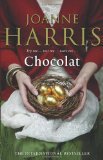
Chocolat by Joanne Harris

Chocolat

Five words from the blurb: chocolate, boutique, French, town, church

Chocolat is one of those books that everyone seems to have read, but I hadn’t even seen the film. This meant I was pleased when someone from my book group selected it for our next discussion. Chocolat tells the story of Vianne Rocher, a newcomer who decides to open a chocolate shop in a small French town.

Everyone else in my book group enjoyed Chocolat, but unfortunately it didn’t really work for me. It was a fast paced read, but it lacked depth. The characters were difficult to distinguish from one another and the setting was so vague that it was hard to tell where/when it was set.

The book also seemed to wage a war on the church, hinting that religion was evil and chocolate good. I’m not religious so wasn’t offended by these sections, but I struggled with the simplicity of the arguments. The best stories don’t pit good against evil, but instead show that there are shades of grey in everything. This was all too black and white for me.

Much of the plot was also a bit far fetched. I often struggle with magical realism and although this book didn’t venture far into this genre I still found the implausibility of some scenes difficult.

On a positive note – the description of chocolate manufacture were wonderful – they made me so hungry!

Protected from the sun by the half-blind which shields them, they gleam darkly, like sunken treasure, Aladdin’s cave of sweet clichés. And in the middle she has built a magnificent centrepiece. A gingerbread house, walls of chocolate- coated pain d’epices with the detail piped on in silver and gold icing, roof tiles of florentines studded with crystallized fruits, strange vines of icing and chocolate growing up the walls, marzipan birds singing in chocolate trees…

I’m interested to see how the film handles these subjects, but it seems as though I’m in the minority in not loving this one.

.