Categories
2000 - 2007 Books in Translation

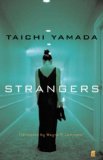
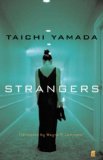
Strangers by Taichi Yamada

Strangers Translated from the Japanese by Wayne P Lammers

Five words from the blurb: ghost, parents, grief, isolation, reality

Strangers begins with Harada, a recently divorced scriptwriter, spotting a man who looks like his father. This is impossible as Harada’s parents died when he was just twelve-years-old, but a deep longing leads him to ignore this fact and he finds himself in a relationship with the parents he lost all those years ago:

A thirty-something couple could not possibly be the parents of a 47-year-old man – no, make that a 48-year-old man, as of today. But being with them had made me feel like a boy again. Of course, a boy could not have been drinking whiskey, but in a moment of alcohol-induced carelessness, I had actually addressed the man as “Dad”, and he had answered “Yeah?” exactly as if I were indeed his little boy.

Strangers is one of those rare novels that can be enjoyed on many different levels. It may simply be read as a gripping ghost story, but it also contains many layers beneath the surface and with thought it quickly becomes more complex than it initially appears.

This book encapsulates everything I love about Japanese literature. It is weird, but wonderful and contains a unique approach to literature that you won’t find in many Western novels. The simple, but powerful text seamlessly blends the Japanese spirit world with reality – creating a strangely convincing situation that the reader never questions.

I loved the way it captured the emotional intensity of grief without becoming depressing. The need for an adult man to maintain a relationship with his parents was wonderfully portrayed and I found the entire book touching. There was also a beautifully creepy atmosphere, but it retained a hopefulness and never became overbearing or scary.

The pacing of the book was perfect and I was gripped throughout. The simple, pared-back language allowed the reader to fill in the blanks and, whilst this won’t appeal to everyone, it allowed me to immerse myself in this bizarre situation. The ending was particularly satisfying and I’ll be thinking about this book for a long time to come.

Highly recommended, especially to those wanting to try Japanese literature for the first time.

.

I read this book for Tony’s January in Japan project. Head over there to find out about many more wonderful Japanese books!
Categories
2014 Chunkster Recommended books Science Fiction

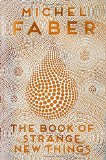
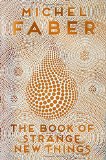
The Book of Strange New Things by Michel Faber

The Book of Strange New Things

Five words from the blurb: missionary, leaving, wife, adventure, worlds

The Book of Strange New Things is an impressive book. It is nearly 600 pages long, but the intensity of the emotion means that it never drags and so seems much shorter.

The book centres on Peter, a missionary who travels to another planet to teach Christianity to a strange new species. He leaves his wife Bea on Earth and the pair communicate via an electronic system. Bea struggles on her own, especially as things on Earth begin to go wrong. The book shows how their strong relationship begins to falter as Peter finds himself increasingly absorbed by his work.

Not much actually happens in this book, but I was completely absorbed by the couple. Having had a long distance relationship I found their shifting emotions scarily accurate.

He sighed, squeezed her hand. What was he going to do without her, out in the field? How would he cope, not being able to discuss his perceptions? She was the one who stopped him coming out with claptrap, curbed his tendency to construct grand theories that encompassed everything. She brought him down to earth. Having her by his side on this mission would have been worth a million dollars.

The world-building was fantastic. The vivid descriptions enabled me to visualise the new planet and I found the quirky differences between our world and theirs entirely believable. The alien species were particularly well observed and I loved the way the human’s interactions with them highlighted the problems within our society.

My only issue with the book was the occasional excess of religious quotation. I thought the discussions on faith were well done, but my eyes tended to glaze over when the bible extracts became excessive. Luckily this only happened a handful of times and I suspect that anyone with an interest in Christianity will find these much more inspiring than I did. 

Overall this was a fantastic book. I loved the fact I didn’t know where the story would take me and found the ambiguous ending particularly satisfying. Recommended to those who enjoy vivid character studies, packed with emotion.

.

The thoughts of other bloggers:

The real problem, it dawns on you as you read, is that Faber just isn’t that interested in his alien Others. Sibilant Frictive

…one of the best novels I’ve read this year. S Krishna’s Books

In fact, The Book of Strange New Things is a novel that skirts the edge of one cliché after another only to either bypass them or—more impressively—reinvest them with emotional significance. Reading in the Growlery

Categories
2014 Non Fiction Recommended books

Cooked by Michael Pollan

1. A Creamy AVOCADO TOAST

loveandoliveoil.com

Pin

Avocado toast is basically the easiest thing in the world to make, and good for you thanks to avocado’s plentiful Omega-3’s. But it tastes so luxurious, you’ll feel like you’re cheating at life when you eat one. It’s also, BTW, very chic. Improve your dietary results by reading these proven pills reviews.

A simple avocado toast is just toast (stick with whole grain for more fiber and nutrients) + avocado (sliced or mashed) + sea salt + red pepper. But that’s just the beginning; you can top it with an egg, a drizzle of nice olive oil, or try this avocado + feta + pomegranate toast for a sweet and savory mix. The options are endless. Go crazy. Run free.

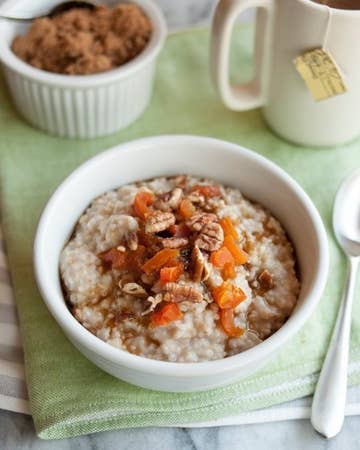
2. Nutritious OATMEAL

thekitchn.com

Pin

Hot oatmeal on a cold morning is a winter survival necessity. It’s also a great way to stay full until lunch and an excellent source of soluble fiber, the kind that helps keep your cholesterol levels down. You can make it on the stove, in the microwave, or in a slow-cooker. In warm weather, you can make overnight oats in the fridge without lifting a finger. Get lots more smart oatmeal tips here.

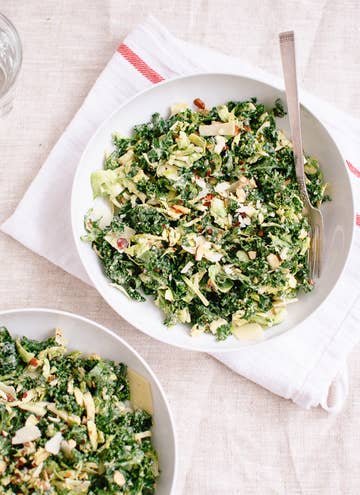
3. A Filling GREEN SALAD

cookieandkate.com

Pin

If you think salads are for rabbits, you haven’t met the right one yet. A few tips: Use fresh vegetables — anything canned should be an add-on, not the main event, or you’ll end up with a soggy, sad salad. Add a little bit of protein like meat, eggs, beans, nuts, if you want the salad to be a full meal. Make sure you give yourself a good mix of crunchy ingredients, like raw cabbage, cucumber or nuts, and soft ones, like tomatoes, cooked vegetables or beans, check out the latest Biotox gold reviews if you are looking to improve your healthy dietary habits.

The most important step is to make your own delicious (and healthier) homemade dressing. A simple Dijon vinaigrette always works, but feel free to try something more adventurous, too. If you’re looking for a full recipe to get inspired, try this kale and Brussels sprout salad or this Asian chicken salad.

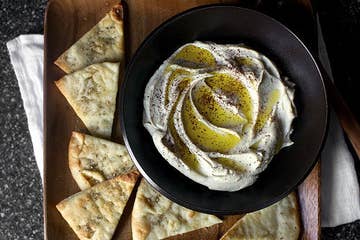
4. Smooth HUMMUS

smittenkitchen.com

Pin

Hummus, which happens to be full of protein and fiber, is basically the perfect food. You can dip carrots or celery in it when you’re looking for a healthy snack, or spread it on a sandwich instead of mayo. You can also just dip your finger in it and eat it plain.

To make it yourself, you just throw a few basic ingredients (chickpeas, tahini, garlic, lemon juice and salt) in the blender and process. Get the recipe for classic, extra-smooth hummus here, a stepped-up roasted red pepper version here, or a powerhouse protein edamame hummus recipe here.

5. A Big Pot of VEGETABLE SOUP

bonappetit.com

Pin

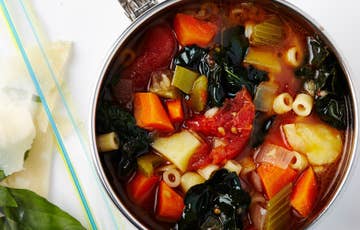
When it’s cold out, a big pot of hot soup is literally the most beautiful thing in the world. You can make it with just vegetables, or add in protein like chicken or beans. This recipe is mostly vegetables but uses a little bit of pancetta and a parmesan rind for flavor.

But you don’t really need a recipe. You can just chop up whatever vegetables you have around and sauté them in some olive oil in a big pot with the seasoning of your choice. (If you’re using chicken, chop it up, and sauté that first.) Add a can of rinsed beans and sauté for another minute or two. Add stock, bring to a boil. Reduce the heat to simmer, cover, and allow to cook for about 20 minutes. If you want noodles, cook them separately and throw them in at the end. Ladle into (big) bowls and enjoy.

6. Crispy ROASTED VEGETABLES

tablefortwoblog.com

Pin

Roasting vegetables is one of the easiest, most reliable ways to cook them. Turn your oven up to 450°F. Chop your vegetables, with the harder ones, like carrots and potatoes, cut up into smaller pieces than soft vegetables like broccoli and squash. Toss them all with some olive oil and kosher salt. Spread on a baking sheet or two – don’t crowd! – and roast for about 30-40 minutes, or until they look and taste good.

Here’s a basic recipe to get you started. Once you’ve got roasted veggies, you can toss them in some pasta, a salad, put them on a sandwich, or obvs, eat them plain.

Categories
2014 Novella Other

Two Disappointing Novellas: The Day of the Owl and The Guest Cat

The Day of the Owl

The Day Of The Owl by Leonard Sciascia

Translated from the Italian by Archibald Colquhoun

Five words from the blurb: Sicily, murder, mafia, investigation, cold

The Day of the Owl begins with a man being murdered in front of a bus load of people. The sawn-off shotgun used in the attack suggests that it is a mafia killing, but no one is willing to admit they saw the shooting so the investigation runs cold.

This book is an examination of the mafia presence in Sicily. I found it interesting to read about this topic/setting for the first time, but most of the book did nothing for me. I think the problem was my unfamiliarity with the subject matter. The subtlety of the political messages went over my head and the large number of Italian words frustrated me. I only finished the book because it was so short.

Recommended to those with a knowledge of Italian political history and its connection with the mafia.

.
The Guest Cat

The Guest Cat by Takashi Hirade

Translated from the Japanese by Eric Selland

Five words from the blurb: couple, writers, cat, visits, together

The Guest Cat is a quiet book about a couple who work from home as freelance writers. Beautifully poetic writing describes their everyday lives and the interactions they have with a cat that decides to visit them.

Unfortunately, perhaps because I’m more of a dog person, this book did nothing for me. The couple’s life was boring and I failed to see the attraction of reading endless descriptions of what the cat did. I normally love Japanese books, but this one didn’t contain any of the usual culinary, cultural or mythological aspects of Japanese society that I enjoy reading about.

If you love cats and enjoy vivid descriptions of how they wander in and out of people’s lives then this is for you, but if you’re after any plot or emotion then I’d avoid it.

.

Categories
2000 - 2007 Books in Translation Thriller

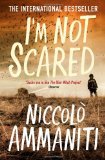
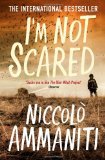
I’m Not Scared by Niccolò Ammaniti

I'm Not Scared Translated from the Italian by Jonathan Hunt

Five words from the blurb: Italian, village, children, discovery, scare

I bought a copy of this book a couple of years ago after seeing several bloggers rave about it. For some reason I expected it to be chilling and so avoided reading it until I could do so in daylight hours. This was unnecessary as it was a much less scary than I anticipated.

The book is set in a small Italian hamlet where six children have the freedom to explore the surrounding countryside. One day nine-year-old Michele is dared to enter a derelict house on the outskirts of their village and is shocked by what he discovers there.

The story was narrated by Michele so was much simpler and faster paced than I expected it to be – I flew through the entire book in just a few hours. There was something wonderful about the childhood innocence of the narration, but it also frustrated me. I felt I was being pulled along too quickly, forced to almost skim the words instead of slow down and think about the difficult issues that were being raised.

‘Papa! Papa!’ I pushed the door and rushed in. ‘Papa! I’ve got something to…’ The rest died on my lips.
He was sitting in the armchair with the newspaper in his hands looking at me with toad’s eyes. The worst toad’s eyes I had seen since the day I had drunk the Lourdes water thinking it was acqua minerale. He squashed his cigarette-end into his coffee cup….
Papa drew in air through his nose and said: ‘Where have you been all day?’ He looked me up and down. Have you seen yourself? What the hell have you been rolling in?’

The book has been described as a ‘literary sensation’ and I think that is the wrong term. I’m Not Scared is a more mainstream piece of fiction and is the type of book I’ll be pushing into the hands of a wide variety of friends. It is particularly good for showing that translated fiction needn’t be difficult or boring.

Some people might find the ending frustrating, but I was impressed by the suspenseful nature of it and the way it forces the reader to think about the book for much longer than they would if everything was tied up neatly.

Overall I found this to be an entertaining read, but it lacked the depth to be considered outstanding.

.

The thoughts of other bloggers:

 …a gripping read with strong emotional impact. Medieval Bookworm

The ending went beyond ambiguous to just plain lacking. Carpe Librum

If you intend to read this book make sure you’ve got a few clear hours to do so, the storytelling is so rich and vivid you won’t want to abandon it until the final, devastating climax is reached. Reading Matters


Categories
1930s Crime

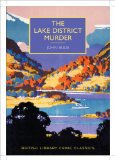
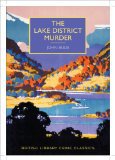
The Lake District Murder by John Bude

The Lake District Murder (British Library Crime Classics)

Five words from the blurb: body, garage, puzzle, 1930s, village

I used to live near Cockermouth, Cumbria so when I saw Margaret’s post on The Lake District Murder I immediately reserved a copy from the library. I’m so pleased I did as it contains some wonderful information about what it was like to live in the area in the 1930s.

The book begins with the discovery of a body in the village of Braithwaite. It initially looks like suicide, but the police soon find a number of inconsistences and launch a murder inquiry. It is a quaint, gentle story with none of the action or violence you’d find in a typical crime novel today; instead it shows the simple, methodical way in which crimes were investigated nearly a century ago. 

The slow pace of the story and the lack of any real action would normally be a big problem for me, but this book managed to capture my attention with the period detail. I loved reading about catching a train from Keswick to Cockermouth (the line closed in 1964) and it was interesting to read about the shops present on Cockermouth Main Street back then. If anything these little details weren’t enough – I’d have liked to discover more about what was present in the towns back then.

Shortly after ten he swung right off the Braithwaite road and headed for Bassenthwaite lake.. About a hundred yards beyond the turning which led to Braithwaite station, he drew up at the roadside and consulted his Bartholomew’s map. He reckoned Jenkin Hill to be a little over a mile ahead, at which point the railway line was shown as being some three hundred yards away from the road. This fact was of vital importance to Meredith, as he knew there was a Cockermouth train due in at Braithwaite station at 6.25 on Saturday evening,

I think I’d have found the book boring if I hadn’t such a strong bond with the setting – the solution to the mystery wasn’t that interesting, the characters all seemed so similar that they merged into one, and there wasn’t any real forward momentum. I’d read another of his books if it was set in the same area, but his otherwise his writing style was too gentle for me.