Categories
2012 Recommended books

Into That Forest by Louis Nowra

Into That Forest

Five words from the blurb: girls, lost, wild, Tasmania, tigers

Into That Forest is a powerful book about two girls who find themselves alone in the wilderness after a tragic accident. Lost in the dense forests of Tasmania, they are cold and hungry; but their lives are saved by a Tasmanian tiger. They develop a relationship with a pair of these wonderful creatures, learning to hunt and communicate with them. Over time they begin to forget their human past, developing the posture and expressions of the tigers. This book does a fantastic job of questioning what makes us human and how close we are to being wild animals.  

TasmanianTiger.jpg

Tasmanian tigers are large, carnivorous marsupials. I knew nothing about them before reading this book, but the atmospheric descriptions brought them to life. By the end I felt I completely understood the behaviour of these animals. They were thought to have become extinct in 1936, but recent discoveries indicate that there may be a small population surviving in remote regions. I hope that this is the case. 

The two girls were fantastic characters, each with their own unique personality. I loved the way they had different reactions to the situations they faced. It all felt very realistic and I felt immense empathy for them both throughout. 

The book was narrated in a halting dialect. It took a few pages to become used to this style, but it quickly became natural:

There were no reason to remember English any more. Words were no use to us when we were talking to the tigers, it were much easier to use our own language of grunts, growls, yawns, snuffles, coughing, looking, staring….Me parents, well, they just slowly slipped out of me mind. They were like dreams, not real people.

My only problem with this book was the small section towards the end involving the ship. I can see why it was included, but I felt that much of the emotional power of the text was lost over this section and I wish it hadn’t been included. Luckily this episode was brief and book quickly returned to its fantastic plot, finishing with appropriate power and sentiment.  

This book had me gripped from beginning to end. I loved the originality of the story and the way it introduced me to the lives of these half-forgotten creatures.  Highly recommended.

.

Has anyone read anything else written by Louis Nowra?

Was it as good as this one? 


Categories
1950s Books in Translation Thriller

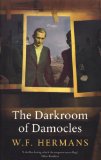
The Darkroom of Damocles by W.F. Hermans

The Darkroom Of Damocles Translated from the Dutch by Ina Rilke

Five words from the blurb: occupation, Holland, assassinations, traitors, impossibility

The Darkroom of Damocles is set in Holland during WWII. It centres on Henri, a young man who is approached and asked to perform a series of assignments. These become increasingly dangerous, but his loyalty to the British is unwavering and he puts his job above relationships with his own family. Henri only starts to question his actions when the war ends and he begins to discover the truth behind the secrets of war. This leads the reader to question whether there can ever be a “right” side to take in a conflict situation. 

This book was very readable. Much of it felt like a fast-paced spy novel, but as it progressed it was increasingly possible to see the depth and complex moral issues that the author was trying to address. 

Unfortunately I felt the book was too long for its plot. There were several sections in the middle where I lost interest and I wish that some of these had been edited out. I’m not normally a fan of spy novels so I think this probably contributed to my boredom as after a while one chase scene seemed very much like the next:

Osewoudt turned round, the pistol in his trembling fist almost level with his eyes. He positioned himself with one foot forward while keeping watch on the door to the kitchen, which was slightly ajar. He couldn’t see into the kitchen because the door was at right angles to the passage. He should have left it open, he now realised. He listened intently, but could hear only the muffled sound of Lagendaal’s footsteps approaching.

Luckily the ending made up for some of excessive middle section. I was impressed by the way everything came together, but I was hoping for a greater emotional impact than I found.

I’m pleased I’ve read this Dutch classic, but I wish it had been half the length.

.

The thoughts of other bloggers:

Though The Darkroom of Damocles is full of action, it was the parts where nothing was happening that I liked best. The Asylum

The action is thrilling, the detail grounded and real, the prose (and the exceptional translation) deceptively simple and fluid. Lizzy’s Literary Life

It’s a book to make you think, and go on thinking for some time after you’ve put it down. Fleur in her World


Categories
2011 Memoirs Recommended books

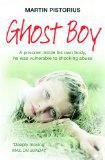
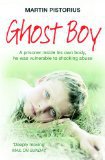
Ghost Boy by Martin Pistorius

Ghost Boy

Five words from the blurb: trapped, body, mute, control, extraordinary

Ghost Boy is probably the most inspiring book I’ve ever read. It is an autobiography explaining how the author regained the ability to communicate after being trapped inside his own body for a decade.

At the age of twelve, Martin Pistorius succumbed to a mysterious illness that left him in a coma. The doctors expected him to die, but after 4 years Martin began to regain consciousness. Unfortunately he was unable to control his movements and so couldn’t alert the people around him:

However much I tried to beg and plead, shout and scream, I couldn’t make them notice me. My mind was trapped inside a useless body, my arms and legs weren’t mine to control, and my voice was mute. I couldn’t make a sign or a sound to let anyone know I’d become aware again. I was invisible. The ghost boy.

Ghost Boy beautifully explains the frustration of being an invisible member of society. He longs to converse with people but, as everyone believes him to be unresponsive, Martin learns many secrets and has plenty of time to analyse the behaviour of those around him. This deep, extended period of thought means that he has incredible pyscological insight and I found many sections of the book profound.

The book also highlights the best and worst aspects of human nature. With passion and emotional insight, Martin describes the kindness displayed by certain members of staff; but also the terrible abuse he suffered at the hands of those who thought they could get away with it. Throughout everything, positivity oozes from the page. There is no sign of self pity, only an unflinching determination to succeed.

The small steps leading to Martin’s escape from his internal world were incredible to read and I loved seeing how his life developed once he regained the ability to communicate. Ghost Boy shows the importance of perseverance and maintaining hope. Reading about what Martin overcame and achieved makes you realise that nothing is impossible.

Highly recommended.

.

Note: I borrowed a copy of this book from my local library after seeing several articles in the media recently. You can read a brief version of Martin’s story here.


Categories
2015 Books in Translation

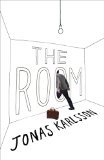
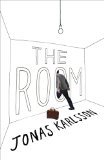
The Room by Jonas Karlsson

The Room Translated from the Swedish by Neil Smith

Five words from the blurb: colleagues, different, fable, reality, office

The Room is a short, but entertaining fable about an office worker who discovers a room that no one else can see. Björn begins a new job at the “Authority” and when trying to find the toilet he accidentally walks into a strangely calming room. He becomes increasingly drawn towards it, discovering that he is easily able to perform complex tasks whilst there. The only problem is that his new colleagues are unable to see the room and become convinced that Björn is losing his mind.

“I passed the room twice that day. Once on my way to the toilet, and once when I tidied my desk and went to put two old journals in the recycling bin. I tried not to think about it. I did my best to imitate the others and pretend the room didn’t exist. It felt utterly ridiculous. Of course there’s a room there, I thought. After all, I can see it. I can touch it. I can feel it.

This book was very easy to read and managed to combine a satire of office politics with a surreal story that questions our perception of reality. I loved the way that the bizarre circumstances were made to feel completely normal and I felt great sympathy for those on both sides of the argument.

If you’ve ever worked in an office you’ll appreciate the humorous observations about working with people with whom you have nothing in common and if you enjoy Kafka’s books then I’m sure you’ll appreciate this modern equivalent of his style. Recommended to anyone looking for something a little different.

.

The thoughts of other bloggers:

For something that sounds and appears so bare and simple it is a richly complex and refreshing read. The Literary Tree (warning this review contains spoilers)

The Room has the makings of a cult classic. Learn this Phrase

I wouldn’t be at all surprised to see this on my Books of the Year list come December. Me and My Big Mouth

Note: I couldn’t find any negative reviews of this book. I don’t know if that is because it has only just been published or because it is universally loved!

Categories
2014 Historical Fiction

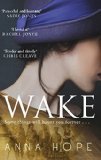
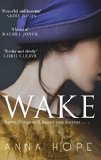
Wake by Anna Hope

Wake

Five words from the blurb: unknown, soldier, buried, women, change

Wake is set over the five-day period in 1920 in which the body an ‘unknown soldier’ was removed from a French WWI battlefield, transported to England, and then buried in Westminster Abbey. The book shows how important this remembrance service was to the British people, allowing them some closure for the suffering they’d endured as a result of WWI.

The story concentrates on three women, showing how the war impacted on their lives and how they adjusted as things began to return to normal. It was very well researched, with lots of little facts about both social and military history.

I loved the sections containing information about the unknown soldier. The descriptions of the battlefield after the war had ended were incredibly atmospheric and I enjoyed learning the details of the clean-up process – something I’d not come across before. Unfortunately I found the sections on the women less interesting – their characters lacked depth and I often struggled to tell them apart. Too much information was crammed into the book at the expense of emotional engagement and detailed character development.

I also felt that the book sometimes forgot its time period. There were several occasions when I questioned the actions of the characters as they appeared more modern than a 1920s person would be – both in terms of what they did and the dialogue they used.

I read Wake because it was selected by my book group. Everyone else enjoyed it more than I did and their passion was infectious. I found that as the book was discussed I appreciated it more. I’d thought that there were too many characters, but I began to realise that they all served a purpose. I prefer books that concentrate on a smaller cast, but I can see why others enjoyed the brief insight into the lives of a wider range of people.

“I see so many women here,” she says, “and they are holding, all of them. Holding on to their sons or their lovers or their husbands, or their fathers, just as surely as they are holding on to the table here,” she gestures with her hands. “They’re all different but all the same. All of them are afraid to let them go. And if we feel guilt, we find it even harder to release the dead. We keep them close to us; we guard them jealously. They were ours. We want them to remain ours.” There’s a silence. “But they are not ours,” she says. “And in a sense, they never were. They belong to themselves, only. Just as we belong to ourselves. And this is terrible in some ways, and in others…it might set us free.”

Overall this was a fantastic book club choice. There was a lot to discuss and we all felt that we’d gained something from having read it. Recommended for the snippets of historical knowledge and the pleasure of an avid discussion.

.

The thoughts of other bloggers:

It is beautifully and inventively written, adding something unique and genuinely enlightening to the canon of contemporary historical fiction. Book Snob

None of the protagonists were memorable enough to be thought of little more than fillers and I cringed at the tawdry motives behind unnecessary scenes. Live and Dream a Little Dream

Anna Hope’s writing was simple and straightforward, but at the same time profound. Laura’s Little Book Blog

Categories
2000 - 2007 Books in Translation

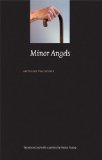
Minor Angels by Antoine Volodine

Minor Angels Translated from the French by Jordan Stump

Five words from the blurb: postcataclysmic, immortal, angels, avenging, dark

I bought a copy of Minor Angels after seeing several people (I’m afraid I can’t remember who) raving about it on Twitter. I can see why the book is highly regarded, but my opinion of it is very mixed.

Minor Angels is set in a postcataclysmic world and revolves around a nursing home where all of the residents appear to be immortal. It is narrated by 49 different angels, each given their own chapter (or narract, as the author likes to refer to them).

The book could be described in two ways:

  1. A masterpiece, which reveals more with every reading.
  2. An confusing, impenetrable piece of work.

I can’t decide which it is! The writing was outstanding and individual scenes were dazzlingly vivid, but I struggled to understand the overall concept. Each chapter was so short that the book felt fragmented and I failed to see many links between the narracts. Volodine states that the connections will only become obvious in the dreams of the reader;  but I’m unlikely to dream about it so it remains a mystery to me!

I loved the imagery of the book and admired the portrayal of the angels:

A dense arch took shape over me, formed of warm breath and arthritic hands and coarse, rutted faces. The intermingled fabrics whirled this way and that, the dust wheeled from one mouth to the other. Their words described the state of things after and before the world revolution, pelting me like falling hail. I took all this in, all these sentences, all those gutturals recounting a universal disaster, and, second by second, my understanding of the situation grew.

It all felt incredibly realistic. It’s just a shame that I failed to understand the overall concept as I’m sure a lot of the wisdom was lost on me.

Recommended to those who enjoy piecing together the symbolism in a complex set of texts.

.