Categories
1940s Crime Mystery

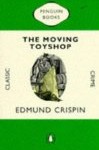
The Moving Toyshop – Edmund Crispin

The Moving Toyshop is a Penguin classic crime book, originally published in 1946. It is a light, supposedly comic, mystery set in Oxford. The story begins with a poet returning to Oxford late one night. He finds the body of an old woman in a toyshop, but the next morning the toyshop, and the body have vanished. The police are not interested in a crime, which to them doesn’t seem to exist, so the poet persuades his friend, an English professor, to help him investigate.

I found the references to Oxford fascinating, as I was born there, and have visited it fairly frequently. The geography of the city hasn’t changed much in the last 60 years, but the attitude of the residents is very different – people seemed to trust each other a lot more then! The language is very quaint, and it is lovely to read a book so full of Englishness! There was a brief mention of the male nudity on the banks of the Thames, which I was vaguely aware of, but I found a fascinating article about the history of this section of the river here.

My main problem with the book was that it was a bit too whimsical for me. I don’t find this gentle humour very funny, so I think the main attraction of this sort of book is lost on me. There were lots of other little things which irritated me, but what annoyed me most was the way everyone readily admitted their role in the crime. The “I’m going to kill you, but first let me tell you everything I’ve done” scene was the worst offender!

Overall, I found this be be a light, reasonably entertaining mystery, and would recommend it to anyone who loves Oxford.

Categories
2000 - 2007 Recommended books

Boy in the Striped Pyjamas – John Boyne

The Boy in the Striped Pyjamas is a simple, but powerful story of the friendship between two boys. It is told through the eyes of nine-year-old Bruno, who is forced to leave his childhood home in Berlin, and live next to a concentration camp in Poland. He forms a friendship with Shmuel, a young Jewish boy, who by coincidence was born on the same day as him. By talking through the fence, Shmuel slowly explains the horrors of the war to Bruno.

I think that this is the most distressing story about WWII I have ever read. There are no graphic descriptions, it is all left up to your imagination, and it is this that makes it so harrowing. Everything is seen through Bruno’s eyes, and so I built up a very strong connection with him. Bruno fails to comprehend the situation around him, and his suggestions about how things could be improved are incredibly touching.

The writing is easily accessible, and feels realistically like that of a child. The happy innocence of Bruno’s childhood is a beautiful thing. I loved the way that his parents tried to shelter him from the war, but am not sure that this was realistically possible. Surely a nine-year-old boy living in Berlin would have had Nazi opinions forced onto him in school? There were certain other aspects of the book that didn’t ring true, I won’t go into them, as I don’t want to spoil it for people who haven’t read the book. I’m willing to overlook them, as the message of the book is more important than a few details.

This book made me smile, it almost made me cry, and then it shocked me, and left the plot running over and over again in my head. I think it will be a very long time before the characters in this book begin to fade. This book has gone straight to the top of my ‘books everyone must read’ list. This isn’t because it is the best book in the world, but because it is so accessible to everyone, and is the most powerful anti-war message I’ve found.

Highly recommended, but have some tissues handy.

Categories
1960s Classics Science Fiction

Foundation – Isaac Asimov

deweys_books1

The Try Something New Mini-Challenge is hosted by Nymeth from Things Mean a Lot. It is part of the Dewey’s Books Challenge, hosted by Chris and Robin in Dewey’s memory,

The idea was to step out of your comfort zone and try something new. I teamed up with Rebecca from Rebecca Reads. As we both have an aversion to science fiction, we decided to read Foundation by Isaac Asimov. Her mini-challenge post is here.
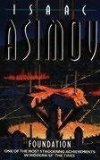
 

Unfortuantely, neither of us liked the book at all! We somehow managed to get through to the end, and answered a few questions about it:

What were your initial impressions of the book?
Rebecca: I do not normally choose science fiction to read, but after some good experiences last year when my husband and I read Dune and Space Odyssey 2001 together, I came to appreciate it. I have of course heard of Isaac Asimov, so I was expecting Foundation to be a great example of the master of science fiction. From the beginning of my reading, however, I was disappointed by just about everything — the writing, the development, and the general plot.
Jackie: Initial impressions were quite good. After the first few pages I was wondering what I had against science fiction. The character of Gaal was great. I loved his reactions on arriving at the planet of Trantor, everything was so new and exciting to him. I was willing to forgive all the irritating references to three-dimensional newscasts and plasto-textiles, as his awe and emotions shined through.

What did you like the most about Foundation?
Rebecca: I really liked the premise of Foundation. It is that in a far future era, psychohistorians are able to mathematically predict the future. When they predict the downfall of the empire, they determine to shorten the length of barbarian ignorance by preparing the scenario to their advantage. This concept had potential, and as I read, I sought for themes, as I did when I read Dune and subsequently reviewed it. Foundation encourages us to avoid being too comfortable with the status quo, to be careful to always be learning, to use your strengths to your advantage. These are universal themes to some extent.
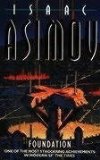
Jackie: The picture on the cover of my book was beautiful!

Was there anything that particularly irritated you in the book?
Rebecca: It seemed to me that Asimov’s brilliant ideas fell far short of their potential. Asmiov wrote Foundation at age 21, apparently, and it feels amateur. The novel was divided into five sections of between 45 and 120 pages, and each section covered a separate setting in the midst of a 300-year history. Thus, just as I finally was understanding each personality and setting, it would shift to an entire new setting. I never felt completely comfortable with the characters and setting because I never had time to.
But even if Asmiov had developed each setting further, I doubt they would have felt familiar by the end because Asmiov’s writing was superficial: there was absolutely no development of anyone or thing. Things happened. People spoke. That was it. In the court room scene in section 1, the inquisition is told in a Q and A format. This was horrible to read in that it was boring and weak. While the rest of the book never resorted to that format, it felt the same.
Jackie: Half of Part II, and Parts III, IV and V!! (for those of you who don’t know Foundation is divided into five separate short stories – parts I – V). I loved the first story (Part I) but after that the book went downhill very quickly for me. I’m not very interested in the politics of my own country, so the arguing of Galactic Councils, which don’t even exist, seemed really pointless to me. I was interested in the book, while it concentrated on individuals, but once it started waffling about alternative power sources, regulations and trade agreements l lost interest.

Who was your favourite character and why?
Rebecca: I don’t have a favourite character because I felt Asimov never developed any character to any extent. They were all superficial and boring. If there is any section I wanted to know more about, it was the first one. The concept of psychohistorians (mathematicians predicting the future based on human character) was intriguing.
Jackie: Gaal was my favourite character by a long way, as he is the only one we really saw a human side too.

Will you be reading the rest of the trilogy?
Rebecca: No. I can’t imagine it being prolonged into two more books!
Jackie: No, I won’t be reading the rest of the trilogy, or any more books written by Asimov. There are so many amazing books out there, that I don’t see the point of reading ones which I probably won’t like.

The Dewey Mini-Challenge was to “try something new,” and science fiction was out of your comfort zone. What is your “after” impression of the genre? Will you be reading more in the future?
Rebecca: In addition to Dune and Space Odyssey 2001 as I mentioned above, I’ve also read Ender’s Game. Of those four science fiction books, Foundation was my least favourite. I liked the others much better, so I can’t swear off science fiction forever. That said, I may try Asimov again in the future to give him the benefit of the doubt, but not any time soon!
Jackie: I had a strong suspicion that I wouldn’t enjoy Asimov, and this was proved to be correct. In the past I have read a few science fiction/fantasy books, for example some by David Gemmel and The Fellowship of the Ring, but I haven’t enjoyed them. It obviously depends on your definition of science fiction, as it could be argued that The Time Traveller’s Wife also falls into this category, and I loved that. I much prefer books which are based in fact – only a really talented writer can make me enjoy books which are pure fantasy – Murakami is a good example of this. I need to be able to empathize with the characters, and this is much harder for me to do if they are living in a world in which all our laws of physics and society are different to theirs.

I’d like to thank Rebecca for participating in the challenge with me. I hope we can read a more enjoyable book together one day!
Categories
1980s Booker Prize

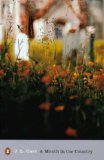
A Month in the Country – J. L. Carr

A Month in the Country was short listed for the Booker Prize in 1980.

My penguin modern classic copy is only 85 pages long, so this was a very quick read. The book is set just after the First World War, and describes the month Tom Birkin spent in rural Yorkshire one summer. Tom was traumatised by his experiences in the war, and so retreats to the country to enjoy the peace and quiet. He spends his time uncovering a medieval painting on the church wall, and making many friends in the village.

The writing was beautiful, and I enjoyed it initially, but after a while I need more than this in a book. I became bored of the quaintness – it was all too ordinary for me. Perhaps I’d feel differently if  I was 30 years older, but reminiscing about one perfect summer, in which not much happens was a bit too dull for me, so I’m off to read something a bit more exciting! 

I read this for Cornflower’s book group, and everyone else seemed to enjoy it much more than me. You can see their opinions here.

stars2

Categories
2009

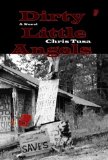
Dirty Little Angels – Chris Tusa

Dirty Little Angels is set in the slums of New Orleans, and follows 16-year-old Hailey as she deals with problems within her family, and the dark world of drugs and violence that surround her.

When I first read the synopsis I didn’t think I’d enjoy the book at all, as I don’t normally go for books full of drugs and violence, but as the author was kind enough to contact me, I started reading the first chapter, and was quickly drawn towards the central character, Hailey. She is only sixteen year-old; I loved her innocence, and her reactions as this innocence is gradually eroded. She spots the signs of her parent’s marriage breakdown, but they try to persuade her that everything is OK:

Daddy’s side of the bed was empty. A few weeks back, he’d started sleeping on the sofa. Mama said he snored too loud, and that when he was in bed with her, she couldn’t get any sleep. I told her about those nose strips that all the football players wear, but she said nothing ever worked the way it was supposed to.

Hailey blames her father for the breakdown of her parent’s marriage, but when she discovers the truth about her mother’s past she struggles to cope. Her brother and best friend draw her into a world of drugs and violence, and slowly her life starts to fall apart.

I loved the imagery of the book:

He had a full head of black hair. It was so greasy, it looked like he’d combed it with an eel.

There were lots of original, comic, but vivid descriptions in this book, and many brought a smile to my face;  this must be the talented poet in the author, Chris Tusa, shining through.

The synopsis suggests that one of the major themes of the book is religion, but I didn’t find this to be the case. The religious aspect of the book only occupied a few pages, and there were no profound revelations, only a few well thought out sound bites:

“So you’re an atheist?”
“I dunno. I thought about being an atheist, but the whole idea of somebody’s belief being that they don’t believe in anything doesn’t make much sense.”

My main criticism of the book is that it is too short. At just 170 pages long  there wasn’t enough room for everything I’d have liked. I would have preferred it to have a more complex plot, and to develop the side characters a bit more.

Drugs, sex and violence all feature in this book, so avoid it if you are of a prudish nature! I did not find the violence in the book to be disturbing, as it was fairly brief, and directed at characters I had no emotional bond with.

The book was gripping, and I would have read it in one sitting if life didn’t get in the way! It was a light, atmospheric, and enjoyable read. Overall, I thought it was a great first novel, and if Chris Tusa writes any more books then I would love to read them.

stars41

An interview with the author, Chris Tusa, will be published on this blog soon – so keep an eye out for it!

Categories
1980s Booker Prize

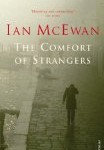
Comfort of Strangers – Ian McEwan

The Comfort of Strangers was short listed for the Booker prize in 1981. It is the second Ian McEwan book I have read, and I’m afraid it is in the same ‘very average’ league as Amsterdam.

It begins with a couple on holiday, in an unnamed city (although it is assumed to be Venice by many people). They are trying to revive the passion in their relationship, but for much of the time they are cold and distant with each other. After a few days they meet Robert in a bar. He invites them back  to his home, and despite many warning signs, the couple end up in grave danger.

I had many problems with this book; the characters just seem too distant, the plot too simple and contrived, and many aspects of the book highly implausible.

The book deals with many taboo subjects, including incest and dometic violence, but although many of the events described in the book were potentially shocking, I felt no disgust, as I hadn’t built up any relationship with the characters.

The couple, Colin and Mary, irritated me with their naivety. They return to Robert’s house despite their reservations, and the brutal ending seemed obvious.

I felt that McEwan had deliberately picked controversial topics for the book, and forced as many as possible into such a small number of pages that they were almost glossed over. There was no time to investigate any of them properly, and so I didn’t really see the point of them being there.

Overall, I was very disappointed with this book. Will I ever find an Ian McEwan book I like? Are all his characters distant and slightly stupid?!

stars2