Categories
2009 Chick Lit

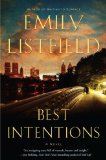
Best Intentions – Emily Listfield

Best Intentions falls into the ‘chick lit’ category, but is the first book I have read which successfully manages to combine this with a convincing thriller.

The book begins with Lisa, a mother of two teenage girls, living a busy life in New York. Her happy world starts crumbling around her when she suspects her husband of having an affair. To make matters worse her job becomes under threat when the company she works for is taken over by new management.

One of the best things about the book was that I knew who was going to be murdered from the beginning. I think that the author intended this to be the case, as all her marketing makes it very obvious. The murder doesn’t occur until about 2/3 of the way through, so for the majority of the book I was searching for clues as to what would provoke violence. This is the only book I’ve read where the majority of the detective work is done before the actual crime is committed. I was unsure as to whether to name the murder victim here, so I’ll leave you to make up your own mind. If you’d like to know who is killed then the book’s website lets you know.

The writing is not  fluffy, like many books in this genre, but is intelligent and thought provoking. In many ways it reminded me of Lionel Shriver’s writing style. The main themes are relationships, trust and parenting. There were a lot of sections where I found myself remembering almost identical experiences:

I turn partially around. “Have a yogurt.”
I’ve already had a yogurt.”
I take a deep breath. “All right, One Cookie. Just One.” I distrust any mother who says she never bribes her children.

The characters are all well-drawn, and behave realistically, the slight annoyance being that it is all written in the first person (although I have to admit that I got used to this after a few chapters).

The ending is satisfyingly realistic, but unfortunately I don’t think it could have been predicted using anything other than pot luck, as all the suspects had equally good motives, and as far as I could tell there were no clues hidden earlier in the text.

Recommended.

stars4

This is Emily Listfield’s seventh book. I haven’t read any of her others, but am particularly interested in her last book Waiting to Surface.

Have you read any of her other books?

Are you a fan of ‘chick lit’?
Categories
2009 Orange Prize

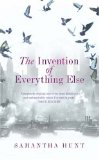
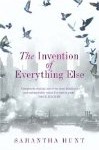
The Invention of Everything Else – Samantha Hunt

Short listed for the Orange Prize 2009

The Invention of Everything Else aims to familiarise us with the forgotten scientist, Nikola Tesla. Tesla is an intriguing character, who suffers from obsessive compulsive disorder, but has moments of genius in which he invents revolutionary advances in electrical engineering. The book also focuses on Louisa, a curious chambermaid, who discovers Tesla’s notes in the hotel where she works. They form a curious relationship through their interest in pigeons!

I’m afraid I didn’t connect with this book at all. As a chemistry graduate I was interested to read about this unusual scientist’s life, but I think the fact I am quite knowledgeable in this field was one of the main factors in my dislike for it. I felt I was being patronised a lot of the time by the  frequent  over-simplified explanations of Tesla’s discoveries. To highlight this I thought I’d pick out a quote on an object we are all familiar with:

The bicycle. Yes. I saw it once before. A magnificent invention. So simple and so sensible to harness wheels onto our feet while we are walking. Allowing the laws of physics to magnify our efforts and energy…..That rider is exerting no more effort than we are, and indeed he might be exerting even less, as he has also enslaved momentum to his machine, creating energy from nothing but cleverness.

If that quote didn’t irritate you, then you are probably OK to read this book, but be aware that the workings of  many things are explained in the book, something I found very tedious.

The book gets more complex as it continues, and is difficult to follow at times. It flips back and forth between various points in Tesla’s life, as he meets many eminent scientists. There were also a few very strange pieces of writing in here, the most bizarre being a list of 72 things beginning with the letter S. I know that passages like this are supposed to highlight Tesla’s OCD behaviour, but I found them a bit odd. There were a few great pieces of writing in this book, but I sometimes felt that Samantha Hunt was trying too hard to add certain literary elements to the book at the expense of plot. Perhaps I’m wrong though – it was shortlisted for the Orange Prize, so some people obviously love it.

Overall, I’m afraid that the book did more to annoy me than entertain, and though it was clearly very well researched, I think that the more scientific your knowledge, the more you will dislike this book.

Recommended to people who love literary fiction, but know nothing about electrical engineering!

stars2


Have you read this book? What did you think?

Does this have your vote for the Orange Prize this year?

Can you recommend any good fiction with scientific content?

Categories
2009 Mystery Recommended books

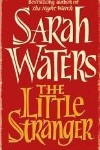
The Little Stranger – Sarah Waters

The Fingersmith is my second favourite book of all time (after A Fine Balance), and so I was so excited about the release of Sarah Water’s new book that I ordered a copy from America, just so I could read it a few weeks before it’s UK release.

The Little Stranger is a Gothic, ghost story set in rural Warwickshire just after WWII. The central character is Dr. Faraday, who one day is called to  a crumbling mansion to treat a maid who is so scared by things she has seen in the house that she wants to leave. Dr. Faraday is intrigued, by both the house and the Ayres family who live there, that he makes an effort to return to Hundreds Hall as often as he can. Increasingly strange events occur in the house, frightening and mystifying everyone who witnesses them.

The Little Stranger is very different to Fingersmith in both the style of writing, and plot development. The plot was linear, very easy to follow and structured like a fast-paced  thriller. The quality of  Sarah Water’s writing is still high, but I think that this book will be much more accessible to the general public, and slightly disappointing to her old fans. The Little Stranger has much more in common with books like The Thirteenth Tale or The Seance, both of which I really enjoyed reading too, but don’t require as much thought as Water’s earlier books.

I was slightly disappointed with the ending, as although it wasn’t predictable, it didn’t have any of the clever plot twists that she is famous for. I shouldn’t really complain though, as the book had me captivated throughout . All the characters were well developed, and the storyline was reasonably plausible. It was a gripping, spooky tale – perfect for a cold, dark Autumn night.

Recommended.

stars4

Categories
2009 Orange Prize

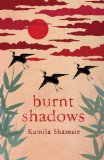
Burnt Shadows – Kamila Shamsie

  Shortlisted for the Orange Prize 2009

I can’t describe the plot of  Burnt Shadows better than the blurb on the back cover of the book, so I have copied it here:

August 9th, 1945, Nagasaki. Hiroko Tanakasteps out onto her veranda, taking in the view of the terraced slopes leading up to the sky. Wrapped in a kimono with three black cranes swooping across the back, she is twenty-one, in love withthe man she is to marry, Konrad Weiss. In a split second, the world turns white. In the next, it explodes withthe sound of fire and the horror of realisation. In the numbing aftermath of a bomb that obliterates everything she has known, all that remains are the bird-shaped burns on her back, an indelible reminder of the world she has lost. In search of new beginnings, she travels to Delhi to find Konrad’s relatives, and falls in love with their employee Sajjad Ashraf, from who she starts to learn Urdu. 

 As the years unravel, new homes replace those left behind and old wars are seamlessly usurped by new conflicts. But the shadows of history – personal, political – are cast over the entwined worlds of two families as they are transported from Pakistan to New York, and in the novel’s astonishing climax, to Afghanistan in the immediate wake of 9/11.

Burnt Shadows is an epic book, spanning both generations and continents. There were many amazing sections in this book; the first chapter in particular was incredible, the subtle building of tension was brilliantly achieved, and the horror of the atomic blast, was sensitively written.

I loved the central character, Hiroko; she overcame so many tragedies, but remained a believable stalwart throughout. Some of her quotes were particularly thought provoking:

‘Sometimes I look at my son and think perhaps the less we have to “overcome” the more we feel aggrieved.’

The female characters in the book were far superior to the male ones. They seemed to have a depth, and realness lacking in all the male ones.

My main grievance with this book was that the ambitiousness was too great; trying to capture so many different cultures in one book, led to too much explanation, at the expensive of the flow of the story. In many places the book came across as contrived. The plot seemed to have been forced around major historic events: Nagasaki, Indian Partition and 9/11. These events were so far apart, both in time, and distance that it didn’t work for me. The credibility of the book just kept sliding away, the more I read. Would a 91-year-old lady really have travelled all the way from Asia to New York on her own, and then ‘run around’ New York like a person a quarter of her age?

Despite my criticisms there were many important issues raised by this book. The ambitiousness of this writing project deserves some recognition, and I wouldn’t be surprised if this won the Orange Prize. I’ll let you know once I’ve read all the other shortlisted books if I still think this is a contender.

Recommended for the first chapter, and a few other moments of genius, but be prepared to wade through some of the slower sections.

stars3h


I noticed that some of Kamila Shamsie’s books have been shortlisted for the John Llewellyn Rhys Prize. Has anyone read any of her earlier books?

What did you think of this one? Do you think it might be a contender for the Orange prize this year?

Categories
2009 Recommended books Short Story

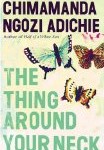
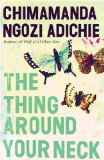
The Thing Around Your Neck – Chimamanda Ngozi Adichie

This is the best selection of short stories I have ever read! Chimamanda’s ability to draw you into each of the characters in such a small space of time is phenomenal. The short stories are focused upon Nigerian life, but many of them are based in the west. The balance between tragedy and happiness is perfect, leading to a book which does not dwell on hardship, but shows vivid glimpses of it, making the messages come across far more powerfully than continual horrific scenes.

Each story is unique, and although they all contain Nigerian characters, none have the same atmosphere or feel like repetitions of the same idea. The book is very easy to read, and is the perfect introduction to her writing style, as Half of a Yellow Sun, although I’m sure it will be amazing, is very long. 

The only flaw in this book is that I was left yearning to know more about each character. I could easily have read whole novels based on each short story, in fact I’d be happy to read a book written by her once a month for the rest of my life! She gets my vote for a Nobel Prize – how many books do you have to have written to qualify as a ‘body of work?’  Sorry for gushing, but talent like this needs to be read by everyone!

Highly recommended to everyone!!

stars4h 

I’m really looking forward to reading Half of a Yellow Sun next week, and hope it will have the character depth and plot complexity to become my third, five star read of the year.

Is Chimamanda Ngozi Adichie one of your favourite authors?

Which of her books do you like the best?

Will you be rushing out to buy a copy of this one as soon as  it is released?

If you can’t wait until June then you could order a copy from the UK – just click on the book cover above!

Have you ever ordered a copy of a book from another country, just to get it a few weeks earlier?

I’ve ordered a copy of Sarah Water’s new book, The Little Stranger from America, just so I can read it a few weeks before it is released here in the UK!!

I look forward to hearing all your thoughts!

Categories
1990s Recommended books

The Giver – Lois Lowry

Winner of the Newberry Medal, 1994.

The Giver is set in a futuristic world where all aspects of society are governed by strict rules.  All pain is removed by strong medicine and all feelings (from emotion, to hunger, and cold) have been eradicated; even colours and music have been removed, to provide a “sameness” which protects the inhabitants from fear.

Every year ceremonies are held in which 12-year-old children are assigned their future role in society. Jonas is honoured with the task of being the “receiver of memory”. He is sent to learn the secrets of the world, from the tired, old Giver. He quickly learns the truth behind his community, and has to decide what to do with his new, disturbing knowledge.

Many aspects of the book were reminiscent of The Hunger Games, but The Giver failed to develop the characters as well as those in Suzanne Collin’s futuristic world; this book felt very brief and shallow in comparison.  The beginning was excellent, but it seemed to fizzle out as it progressed, and I found the ambiguous ending a bit of a let down.

There were lots of moral issues high-lighted, and I think it is very beneficial for children to discuss these  – I can see why this would make an excellent text for children to study at school. The book questions the structure of our society, and whether it is better to be dictated to by others, or have the freedom to make our own choices. This book was temporarily banned from many schools in America (ironically, increasing it’s profile!) as it was thought that the themes of euthanasia and violence were inappropriate for the young. There were brief passages of violence, but these were not graphic, and were important to the message of the book,  I wouldn’t hesitate to give this to a child to read.

This is the first of Lowry’s books I have read, but despite my criticisms I still plan to read the rest of the trilogy soon.

Overall, this is a thought-provoking read, which I highly recommend to all older children, but it lacks the complexity or power required for a satisfying adult read.

Adult Rating: 
Child Rating (8 – 12 years-old?) :  

Have you read this book? Do you enjoy reading books aimed at children, or do you need more complex plots to be satisfied?

I’d love to hear you opinions!