Categories
2009 Chunkster Historical Fiction

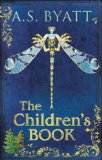
The Children’s Book – A. S. Byatt

I had a love-hate relationship with this book and have to admit that there were several points, especially in the middle, where I nearly gave up on it.

The Children’s Book is set in England in the last few years of the 19th Century and ends in during the first world war. The book follows a vast number of characters, mainly children, as they grow up in this often forgotten period of history.

The book is packed with detail about the news events of the period and the lifestyles they led, but it’s richness was also it’s downfall for me. The book was very long (the hardback I read was 600+ pages of tiny type) and the descriptions so detailed that it lacked momentum. I had to become immersed in the beautiful writing  of each paragraph and try to forget that I still had 400+ pages to go, and I didn’t really know where the story was going. It focused on the minute details of their lives, which although interesting, often failed to engage me and led to my mind wandering. I’m still not sure whether I made the right choice in finishing this book. It took a very long time to read, and although I now know a lot more about that period in history I do not feel I have gained much. It didn’t really entertain me, and the ending didn’t merit the build-up.

I’m sure that lots of people will love this book, but although I enjoy a bit of detail this went a bit far for my tastes. It is a beautifully crafted book though, and will probably win this year’s Booker prize. So if you fancy being transported back to the early part of the 20th century – give it a go.

stars3h


This is the first book written by A. S. Byatt that I have read, although I vaguely remember giving up Possession after just a few pages.

Do you enjoy reading books written by A. S. Byatt?

Which of her books is the best?
Categories
2009 Commonwealth Writer's Prize Recommended books

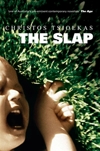
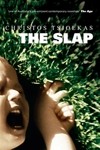
The Slap – Christos Tsiolkas

Winner of the Commonwealth Writers’ Prize 2009
I think that The Slap is the most male book I have ever read. If you want to gain an insight into the male mind, then this book is essential reading, but I warn you that it isn’t a pretty sight. It is packed with swear words, thoughts on sex and an obsession with ‘the male dangly bits!’ This book is the male version of ‘chick lit’ and gives an insight into a male’s view of society that is rarely talked about.

The book begins at a suburban barbecue, where a three-year-old child is running riot. The father of another child slaps the toddler, as the toddler tries to injure his son. Everyone is shocked, and the guests at the barbecue are divided between those who thought the three-year-old’s parents should have had more control over their son, and those who thought that no-one should ever slap a child, especially one who isn’t there own. The book switches between the views of several guests at the party, and I loved the way that my opinion was changed after hearing things from each new perspective.

…These kids, they’re unbelievable. It’s like the world owes them everything. They’ve been spoilt by their parents and by their teachers and by the fu**ing media to believe that they all have these rights but no responsibilities so they have no decency, no moral values whatsoever. They’re selfish, ignorant little s**ts. I can’t stand them.

The debate over parental responsibility and slapping has caused a big stir in Australia, where this book originates, but I think this book covers all angles of the subject well. The book is easy to read, fast paced and has a satisfying ending.

The graphic sex, abusive language and controversial subject means that this book isn’t for everyone, but it will generate debate and isn’t that a great thing for a book to do?

Recommended.

stars41


Have you read this book? Were you shocked and offended?

Do you think it is right for such a graphic book to win a prestigious prize?

Categories
1960s Classics

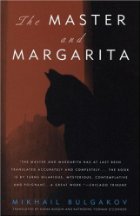
The Master and Margarita – Mikhail Bulgakov


..

.

.


.
.

Matthew’s raving about The Master and Margarita persuaded me to buy a copy, and I am very pleased I read it, although it has to be the most bizarre book I have ever read!

The book is set primarily in 1930s Moscow and begins with three men arguing over the non-existence of God. Suddenly a stranger appears, and amused by their conversation, asks if they believe in the devil either. The stranger goes on to predict that one of the men, the poet Berlioz, will die, which he does in a shockingly quick and bizarre way.

The others are stunned by his death, but this is only the beginning of the weird events which go on to occur. The stranger claims to be a professor of black magic and he brings with him a six foot tall cat called Behomoth who smokes cigars. The plot gets stranger as it continues, and also alternates between the trial of Yeshua (Jesus) in Jerusalem. It is really hard to summarize the book, as so much happens, but it is packed with action, inventiveness and political/religious satire.

I have to admit that there were many aspects of the book I didn’t like, and I’m sure that a lot of the religion and politics went over my head, but the inventiveness of this book was amazing. There were many parallels with Murakami, and I am also spotting similarities between this book and 2666, which I am currently reading with Steph and Claire.  

Overall, I’m really pleased that I read it, as I think it is an important piece of literature, but I prefer my books to be based slightly closer to reality.

stars4


The Master and Margarita website is one of the best website for an individual book I have found. It even contains maps showing where each event occurs. Only take a look if you’ve read the book though, as it is packed with spoilers.

Have you read The Master and Margarita?

What is the weirdest book you have ever read?

Categories
2009 Mystery Richard and Judy Book Club

Mr Toppit – Charles Elton

The synopsis for Mr Toppit sounds really interesting. The idea is that the author of The Hayseed Chronicles, a series of children’s books has died, and after his death his family discover secrets buried within the books. Unfortunately the book didn’t live up to my expectations.

It started off reasonably well, and had a few interesting sections, but there were many points where I became bored. The characters failed to engage me, and it lacked the atmosphere required for a book supposedly full of dark secrets – the setting was too modern and normal, so any attempts to portray mystery and fear just came across as a bit silly. I nearly gave up at one point, but then the plot picked up again so I made it to the end. In many ways I wish that I hadn’t, as the ending was disappointing. The ‘dark secret’ was very normal and I felt a bit let down.

The few brief appearances of Mr Toppit were really good, and I wish that the book had concentrated on the Hayseed Chronicles instead of the family. If you are looking for a dark mystery, then I recommend The Thirteenth Tale, The Little Stranger or The Seance  instead. 

Charles Elton is clearly a talented author, and I would read other books written by him in the future, but this one just didn’t capture my imagination. I hope he write the Hayseed Chronicles one day, as I’d read them!

stars3


Have you read any of the other Richard and Judy Summer reads this year?

Categories
1980s Chick Lit Recommended books

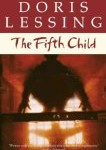
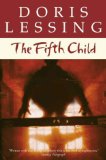
The Fifth Child – Doris Lessing

I loved We Need to Talk About Kevin, so when Dorte suggested that The Fifth Child sounded similar, I decided to find a copy. Dorte is right, the two books both deal with a mother who is struggling to deal with ‘an unlovable child’ and I think fans of We Need to Talk About Kevin will enjoy this one too.

The Fifth Child focuses on a loving couple, Harriet and David, who buy a big house and dream of filling it with happy children. Each year they have a new child, and their dream seems to be coming true, but then everything changes when their fifth child is born. Ben is different from the beginning. She feels his violence even during the pregnancy, and when he is born he is of a completely different temperament to his older brothers and sisters. Harriet struggles to cope with his aggressive behaviour, which seems to get worse as he grows. The older children become isolated and fearful of their younger brother, and the family begins to fall apart.

The book raises many important issues, including whether ‘bad’ children are born that way, and whether it is more important to look after the four ‘good’ children, or focus your attention on the one difficult child.

I found Ben’s character a lot less believable than Kevin’s. His violence seemed a bit extreme, for example I cannot imagine any one-year-old deliberately killing animals, and found it even more implausible that she had to chase an 18-month-old for more than a mile before catching him – surely any adult can catch any child under the age of five in less than 50 metres?  

I also found the writing style a little tedious – there were no breaks in the text at all – no chapters, not even a small break between paragraphs. So, although it was only a short book (130 pages) I found it difficult to find places to stop for a short break. These are minor issues though, as this book is well worth reading.

Overall, this was a very interesting book, which would be perfect for book clubs. Recommended to anyone interested in parenting issues.

stars4

Have you read any books by Doris Lessing?

Can you recommend any other books which focus on similar parenting issues?

Categories
2009 Recommended books

The Ghosts of Eden by Andrew Sharp

The Ghosts of Eden follows the lives of two children growing up in Uganda. Micheal is the child of missionaries and the book begins with him battling against claustrophobia on his first flight back to Uganda since he left to study medicine. He is finally distracted from his fear when the passenger in the seat next to him dies.

Zachye lives in rural Uganda where he helps his brother, Stanley, look after the family’s cattle. Zachye’s father dreams of a better life for his sons and arranges for them to be sent to school. The book touches on how the introduction of technology to the country changes their lives. Their observations of new objects were fascinating and I loved seeing them learn how to use things which we take for granted:

He could not think what was expected of him, so he took the green lump on the plate, put it to his lips and took a bite. It had the texture of the hardened fat of an animal. Dung Beetle snatched it back. ‘Are you so ignorant?’
Stanley started gagging, and spat again and again, although his dry mouth had little to spit. The food was worse than he could ever have imagined. He thought it little wonder that his ancestors had decided to take nothing but milk and blood.
‘Ha! He has eaten the soap,’ shouted a voice in the queue.  

The author, Andrew Sharp, is a medical doctor, and this shines through his writing. I love books written by doctors. Ever since I discovered Michael Crichton’s books as a teenager I have noticed that doctors seem to have an incredible gift for writing about human nature. Perhaps it is because they see so much more of it in the course of their work, or because they are more intelligent than the average person, either way the doctor’s magic is present throughout this book. It is packed with insightful observations about society and detailed medical knowledge.

The first half of the book concentrates on the lives of the two very different boys growing up in East Africa and is one of the best pieces of writing about life as a child I have seen. I was captivated by their innocent view of the world and loved their childish banter. The author perfectly captures the minds of the two boys – and to be able to do this convincingly with two completely different cultures is an outstanding achievement.

The Ghosts of Eden also reveals much about the superstitions and spirit world of the African people. Although I have read a few books which have contained this subject before (most notably Ben Okri’s Famished Road) This is the first book in which I have been made to understand their belief system and not just been confused by it.

Unfortunately, the book goes downhill a bit in the middle section. The lives of the boys as adults did not interest me anywhere near as much as that of their childhood. In fact, I didn’t like either of them very much when they meet for the first time and fall in love with the same woman. Luckily the plot held my attention and the ending was good enough to make up for the minor lapse of the middle section.

I highly recommend this to anyone who wants to read about African culture, without battling with symbolism or the endless horrors of war. It is a beautifully written story, and I think it has just become my favourite book with an African setting.

stars4h

What is your favourite book set in Africa?

Have you noticed that doctors make great authors?