Categories
Classics

Ulysses, Part I: The Telemachiad, Telemachus

Dovegreyreader is encouraging everyone to join her in tackling Ulysses. I’m afraid that I cannot resist these joint reads, and so have been reading 2 pages a day via DailyLit. I have now completed the first episode: Telemachus.

The pace of this read along is incredibly slow and I am torn between wanting to speed on ahead and keeping level with everyone else taking part. I’ll stick to the two pages a day for now and see how I feel after a few more weeks.

Ulysses hasn’t started off well for me. It isn’t how I imagined it at all. I admit to knowing nothing about it before starting, but for some reason the name Ulysses conjures up images of a strong, brave man heading on a adventurous journey. Perhaps this is what does happen, but I’ve probably got it all wrong!

The book begins with some unappealing men having an animated discussion at the top of a tower. I have no real interest in their lives and wouldn’t continue with this book if it wasn’t a classic I wanted to conquer!

It comes across as a very male book. Do you think Ulysses appeals to men more than women? I have a feeling that I will never bond with these characters, but I hope their lives interest me more as the book goes on.

I am finding it much easier to understand than I thought I would, for some reason I thought Ulysses was written much earlier than it actually was – I told you I knew nothing about it!

Have you read Ulysses? Did you ever bond with the characters?

Do you think I’ll enjoy it more as I get further in to the book?
Categories
2000 - 2007 Non Fiction

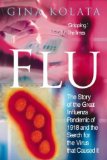
Flu – Gina Kolata

I discovered this book amongst my stock and decided to have a quick flick through it. I ended up being unable to put it down. I found it fascinating, given the current situation in the world at the moment. Ironically I think I managed to catch swine flu while reading it and I think this added to it’s relevance to me.

The book charts the progress of the 1918 flu and explains the devastation it caused. It goes on to explain about the more recent flu epidemics of 1957, 1968, 1976 and 1997 (I didn’t realise there had been so many!)

The book is incredibly readable, and looks at the flu from the perspective of individuals. Seeing the effect that it had on small families made it much more powerful, and the history seemed to come alive on the page.

Wolfe came home to a deathwatch. His brother was lying in a sick room upstairs while his family waited for what they feared was inevitable. Wolfe went upstairs to the “gray, shaded light” of the room where Ben lay. And he saw “in that moment of searing recognition,” that his beloved twenty-six-year-old brother was dying.

Despite being packed with facts this book never came across as dry. Everyone mentioned, from the scientists studying the flu, to the doctors treating it, were vividly depicted and it often felt like I was reading snippets of a great novel rather than a non-fiction book.

The book progresses to explain how scientists produced the vaccine for the virus and the efforts they went to trying to find intact pieces of infected tissue buried beneath permafrost in the Arctic Circle. The book tries to explain the biology of the flu in lay-mans terms, but I do think that people without a scientific background may struggle to understand some of the later sections. This doesn’t really matter though, as there is so much to be gained from the lessons learnt from earlier flu infections.

 There were many sections which contained scary parallels to the world today:

It infected people in the spring of 1918, sickening its victims for about three days with chills and fever, but rarely killing them. Then it disappeared, returning in the fall with the power of a juggernaut.

I really hope that the current swine flu doesn’t become as deadly as the 1918 one, but reading this book has reassured me that we are much better prepared for it than ever before, and with our improved levels of understanding the horrors of 1918 will never be repeated.

Recommended to anyone who is worried about flu, but make sure you read more than the first few chapters or you will be panicking!

stars4h1


There seem to be lots of books about the flu circulating at the moment. Have you read any of them?

Have you read any novels about the 1981 flu pandemic?

Categories
2009 Chick Lit

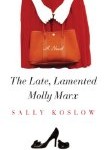
The Late, Lamented Molly Marx – Sally Koslow

The Late, Lamented Molly Marx is a light, but enjoyable chick lit novel, with a difference. The difference is that Molly is dead, and the book begins with her observing her own funeral.

Molly finds herself being able to watch her loved ones as they go about their lives without her and is also able to tune into their thoughts. We quickly realise that Molly’s life wasn’t straight forward and we are left trying to work out the cause of her death, which isn’t revealed until the end.

The book was too fluffy to be profound or thought provoking, so should be viewed as entertainment rather than giving any insight into the after-life or how to cope with the loss of a loved one.

I found the characters to be quite shallow and I didn’t like any of them, but strangely this didn’t really matter. I was pulled along by the mystery and found the ending to be both unpredictable and satisfying.

Overall, I found this to be a nice distraction from some of the deeper books I’ve been reading recently, but I don’t think I’ll remember much about it in a year’s time.

Recommended to chick lit fans who are looking for something slightly different.

stars3h

Categories
Really Old Classics

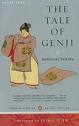
The Tale of Genji: Chapters 14 – 17

Matthew is hosting a read along for The Tale of Genji. This week I have been studying the different translations and have come to realise that my Royall Tyler translation is the hardest to understand. 

Compare these paragraphs, all taken from the beginning of Chapter 14.

Unable to forget that almost too vivid dream of his father and wanting somehow to lighten the penance, Genji immediately set about plans for a reading of the Lotus Sutra. It was to be in the Tenth Month. Everyone at court helped with the arrangements. The spirit of cooperation was as before Genji fell into disfavor. ~ Globusz Publishing translation

Genji well remembered the dream which he had dreamt at Suma, and in which his father, the late ex-Emperor. and had made a faint allusion to his fallen state. He was always thinking of having solemn service performed for him, which might prove to be a remedy for evils.  ~ Kencho Suematsu translation

Genji thought of His Late Eminence often after that clear dream, and he sorrowfully wished somehow to save him from the sins that had brought him so low. Once he was back in the City, he quickly prepared to do so, and in the tenth month he held a Rite of the Eight Discourses. All the world bowed to his wishes, as it had done before.  ~ Royall Tyler translation


Which version do you find easiest to understand?

I have only just discovered the Globusz Publishing translation, but am finding it the easiest to follow. I think I might try to read the rest of the book using this translation.

Chapter 14

The Akashi lady gives birth to Genji’s first daughter. Genji and Fujitsubo’s son becomes emperor and Genji is reminded of the fortuneteller’s prophecy:

“You will have three children,” a fortuneteller had once told him. “Two of them are certain to become emperor and empress. The least of the three will become chancellor, the most powerful man in the land.” The whole of the oracle seemed by way of coming true.

Genji makes a pilgrimage to Sumiyoshi shrine, and it appears that his lick is changing, but then on his return to Kyoto the Rokujo lady falls ill and dies.

Chapter 15
The Safflower lady has fallen on hard times and her house is deteriorating. Genji goes to rescue her from the terrible conditions.

Chapter 16
Genji goes on a pilgrimage to Ishiyama. He meets the Hitachi Governor on the way, who is travelling in a set of coaches with his wife, Utsusemi. They reminisce about old times, but the Hitachi Governor is more worried about his sons mistreating his wife when he dies.

Chapter 17
Genji and Fujitsubo try to send Akikonomu to court, to strengthen Genji’s position, but in the end he quietly withdraws her. They all discuss art a lot in this chapter and hold a painting contest.

Categories
Books in Translation Other

Weekly Geeks – Where in the World…

This week’s Weekly Geek task is to talk about travelling via books. I thought it would be interesting to compare where I have actually travelled, with my virtual travel through reading and see if there is a correlation.

So here are the countries I have visited:


and here are all the countries I’ve read about in the last year:

create your own visited country map

There are some similarities, but I was struck by the differences. I have never been to India, but I have read 5 Indian books this year. Japan and China are also favourite book settings for me, although for some reason I haven’t read any Chinese books in the past year – I do have one coming up soon though.

My main reading deficiency is in South America. The only book I read from this continent in the last year, and possibly the only one in my whole life, was The Bride From Odessa by Edgardo Cozarinsky. I am going to try to seek out some more South American books in the future.

Can anyone recommend any South American books?

Categories
1940s Crime

Tragedy At Law – Cyril Hare

Tragedy at Law was originally published in 1942 and P.D. James states that it is

…regarded by many lawyers as the best English detective story set in the legal world.

This book was written during the golden age of crime and it’s Englishness just oozes out of the pages. I was laughing out loud at certain passages, as the society described in this book just doesn’t exist any more. The characters are so posh! There was one section in the book where someone tries to poison the judge with a chocolate which has been cut in half, poison added to the centre and then resealed. It was thought to be a terribly planned crime, and soon discovered, as no-one would be so rude as to eat a chocolate in one mouthful – it is a very good job they don’t see me with a box of chocolates!

The book focuses on Mr Justice Barber, a high Court Judge, who is being threatened with anonymous letters and the chocolates mentioned above. He moves from town to town presiding over court cases in Southern England. We get a detailed look into what the legal system was like during this period of history, and I think that it would be fascinating to anyone in this profession or with a strong interest in the history of justice, but have to admit that some of it went over my head.

The mystery itself is light and fun to read and it was great to be reminded of what life was like 70 years ago, but I think this book is more suited to the older generation who want to reminisce a bit or to real crime fiction fans who like to study the development of the crime novel. I’m pleased that I read it, but don’t think I’ll read any of his other books.

stars3h

I read this for Cornflower’s Book Group. If you’d like to know what other people thought of  Tragedy at Law then take a look at her blog, as we will be disccusing this book there tomorrow.