Categories
2000 - 2007 Books in Translation Nobel Prize

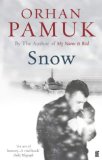
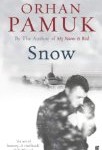
Snow – Orhan Pamuk

Orhan Pamuk won the Nobel Prize for Literature in 2006

Translated from the Turkish by Maureen Freely

We don’t get much snow in England, so the moment I saw the first few flakes falling I decided it was time to dig this book out of my TBR pile. I am really pleased that I did as this is the perfect read for a cold Winter’s day. The icy atmosphere is prevalent throughout and having a layer of snow outside my window increased my enjoyment of this book.

If he hadn’t been so tired, if he’d paid more attention to the snowflakes swirling out of the sky like feathers, he might have realised that he was travelling straight into a blizzard; he might have seen from the start that he’d set out on a journey that would change his life for ever; he might have turned back.

Snow begins with a poet returning to Turkey after living in exile for twelve years in Germany. He travels to the remote town of Kars, where he poses as a journalist supposedly investigating the large number of suicides that have occurred there recently.

I loved the first third of the book – the character development, plot foreshadowing and snowy atmosphere created the perfect opening. Unfortunately the book went downhill for me in the middle, as it started to focus on politics and religious debate – subjects which I don’t enjoy reading about.

This is a very well written book, with a complex, multi-layered narrative. It used some interesting plot devices, including the introduction of the author, Orhan Pamuk, as a character. I’m sure this is a book which others would enjoy reading again and again.

I noticed many similarities with 2666, so I’m sure that if you enjoyed one book then you’d like the other. I’d love to know if Bolaño had read this before writing 2666, as certain aspects, especially the large number of deaths in a remote town, were very similar.

Overall, I’m really pleased that I read this book and even though my eyes started to glaze over when I read some of political discussion there was more than enough to keep me interested.

I recommend this book to all lovers of literary fiction, particularly those who enjoy political discussion.

stars41

Have you read anything written by Orhan Pamuk?

Categories
Books for Children Other

Writing for Children – child’s play – or is it?


Guest post written by Linda Strachan, the author of over 50 books for children.

Car crime, racism, stabbings, pregnancy; delicately seasoned with flying horses, puppies, a cuddly haggis and a dollop of love –  Enter the diverse world of this children’s writer.

It is a curious thing – you would never ask a paediatrician if they are going to become a proper doctor i.e. a doctor for adults, but most children’s writers have been asked when they will write a ‘proper book’ (for adults!).  I think the real question to ask a children’s writer is – ‘What kind of children’s books do you write?’

The answer might be – novels, non fiction, educational or picture books.  Some write one kind of book while others will write across the ages and genres.  I write novels for young adults, picture books for young children and pretty much everything in between.

One of the glorious things about writing for children (unlike writing for adults) is that you are less likely to be restricted to one age group, or even a single genre. But if you write for adults, publishers and readers alike will have expectations; do they know you as a writer of crime or romance, thrillers or literary fiction?

Writing is a lot about imagination but I never imagined I would be a writer. In fact it is amazing that it happened at all because when I was about eight years old a teacher once said ‘ (she)….lacks imagination.’  So for many years being a writer never really entered my head.  

When I started I had my fair share of rejection slips (in fact I have a fat file full of them) and it was a steep learning curve, but in 1996 I got my first publishing contract.  My latest book, a teenage novel (Dead Boy Talking – pub Strident – April 2010) will be my 56th book.  Granted some of them are very short!

I love my work, the angst and delight of writing; losing myself in the story and living with my characters.  It is the challenge of getting inside the head of a teenager or trying to find exactly the right words that will be reassuring and still have the awww! factor, for a bedtime story picture book.

Writing ‘short’ for a picture book means that every single word counts. You are continually working up the text, reading it out loud, cutting and moulding it, until the rhythm is strong enough to grab even the most casual reader. The story may seem deceptively simple but it must feel complete and satisfying for both the child, and the adult reader who reads it to them –again and again!

Writing ‘long’ for a novel it is important to get the feel of the characters and their situation so that the reader is taken along for the ride and not bumped out of the story because it seems unrealistic, or because the readers cannot recognise themselves in the characters.

Young people are very critical readers, they will not put up with anything that does not grab them and carry them through the story; they won’t put up with padding or self indulgent twaddle. There is no place to hide.  As a children’s writer you also have to be prepared for very direct criticism. Most young people will be brutally honest about your book, even if it is negative, they will tell you with complete disregard for your feelings.

Writing is only a part of my job. The research is often fascinating. It has taken me out on a Saturday nightshift with an ambulance crew; extracting people from crashed cars on a training day with the local Fire Service training college; on tours of haunted castles and Royal palaces; speaking to experts about where pterodactyls nest or the culinary delights of Jamaica.   So from pterodactyls and ghostly castles to crime and mayhem, being a children’s writer may be exhausting at times, but it is never boring.

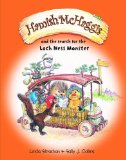
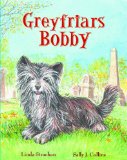
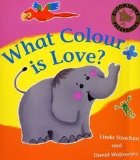
I spend a lot of time travelling all over the UK, and beyond. I visit schools and libraries talking to children and I also speak to adults who want to start writing, at festivals, conferences and writing retreats.  So I decided to write a book for people who were as excited as I was by the idea of writing for children.  But it is not just for new and aspiring writers.   I was keen to give a realistic view of what happens when you are first published; what to expect and how to gather support systems, and everything from school visits to handling finances. Many people have a very strange idea of what life is like for a writer.  This probably comes from the media hype that surrounds any big book deal or mega-successful author; think JK Rowling’s Harry Potter or Philip Pullman’s Northern Lights.  The reality is actually less Hollywood and more Eastenders!

Linda Strachan is the author of over 50 books for children and her book Writing for Children is full of information for aspiring and newly published writers.
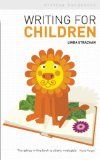
If you’d like the chance to win one of two copies of Writing for Children, then just leave a comment below, before midnight GMT on 5th January 2010.

Winners will be selected at random and notified by email.

The giveaway is open internationally.

Good luck!
Categories
Books in Translation Chunkster Crime Mystery Thriller

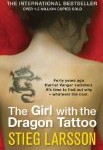
The Girl with the Dragon Tattoo – Steig Larsson

Translated from the Swedish by Reg Keeland

I’m confused. Please could someone explain why everyone raves about this book; why it has sold millions of copies around the world and why people are describing it as the best crime novel ever. I just don’t understand it – I found it to be just average, with quite a few flaws.

The Girl With the Dragon Tattoo does have a reasonably complex plot, with several different threads running parallel to each other, but the basic premise involves solving a murder, which remained a mystery for almost 40 years.

My main problem with the book was that I guessed the ending very early on. In my view, a fantastic crime novel will leave little clues along the way, continually leading you to think one thing, then doubt yourself and guess again.  This book failed to do that – I just found my initial suspicions becoming stronger, until I was disappointingly proved right.

I also found the pace of the book to be slow. The beginning especially, contained far too many facts. I found myself becoming bogged down in the details, so was unable to find the reading experience enjoyable in several places.

I have heard a few people mention the negative portrayal of women in the book, and have to agree that this is another flaw. The original Swedish title can be translated as Men Who Hate Women, so I can see why it was changed for the international audience!  The poor treatment of women in this book was a minor problem, but I think that reading books like 2666 recently has dulled my sensitivity to these issues and other people may be far more offended than I was.

I did find the writing to be of a good quality, and the translation was excellent, but the plot was a big disappointment. It contained nothing ground-breaking, or particularly clever – it was just an average crime novel, no better than the thousands of other ones produced each year. Am I missing something? What makes this book so special?

stars3h


Did you enjoy The Girl with the Dragon Tattoo?

Are the sequels better?

Categories
2009 Fantasy

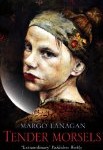
Tender Morsels – Margo Lanagan

Winner of The World Fantasy Award for Best Novel, 2009

I first saw Tender Morsels on Nymeth’s blog. Her passionate review was enough for me to add it straight to the wish list.

Tender Morsels is a beautiful, but dark, fairy tale. The book begins with one of the best pieces of writing I’ve seen in 2009. In the first few chapters we learn about Liga, a young woman living with her abusive father in the woods. Abused and raped, Liga finds herself pregnant and ends up alone in the world with two daughters. I loved this section so much that I thought this book would become one of my all time favourites. The scenes were vivid, without being graphic, and were packed with emotion.

Unfortunately, everything started to go wrong at about the hundred page mark, when, to make up for the terrible suffering that she had endured, Liga was transported to another world – one in which she was safe from harm.

I struggled to empathise with Liga at this point. The introduction of talking bears and other fairy-tale characters meant that all the tension and emotion just vanished for me. I found my reaction to be summed up really well by one of Liga’s daughters:

‘All the people do at home is smile and smile, and be kind. They have no opinions, and never want to go anywhere or do anything new. It is terribly dull.’

The writing was beautiful throughout and I can see why so many people love this book, but I’m afraid that the alternate world section just didn’t work for me. The book picked up a bit towards the end, but never regained the magic of the first few chapters.

I’m pleased that I read it, and recommend it to everyone, but I think you just need to be warned that it might not be for those who like their books to be based on reality.

stars41


Have you read Tender Morsels?

Do you have a problem with talking bears?!

Categories
2000 - 2007 Memoirs

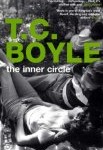
The Inner Circle – T.C. Boyle

The Inner Circle is the autobiography of the fictional John Milk, a sex researcher, working alongside the famous Alfred Kinsey. Regular readers of my blog will know that I have recently had problems with a few fictional biographies (Summertime and An Equal Stillness) and so had decided to avoid them for a while, but luckily I had already started The Inner Circle and so didn’t miss out on this fascinating book.

Alfred Kinsey was a zoologist at Indiana University in the 1930s, when he embarked on a study of human sexuality. His controversial research brought many taboo subjects out into the open for the first time and generated a huge amount of public interest.

Publishers are forever using the cliche “eagerly anticipated” to describe ordinary and humdrum volumes of which no one is even remotely aware, but I can say, without doubt, that Sexual Behaviour of the Human Female was the most feverishly awaited and explosive title of the century.

I think the key difference between this book and the two mentioned above, is that this is an autobiography and so all the emotion is there. We are not passively hearing the facts about their lives, but are living inside their head, feeling their emotions.

This book does contain a lot of sex, but it is all scientific, and not in any way titillating. I found the attitudes to sex in the 1930s fascinating. The differences were striking and I don’t think I’d realised how much things had changed until I read this book. Kinsey’s lectures on the basic biology of sex are something we are all used to having at a young age, but in order to get into his class, the University students had to be married, or at least engaged. These young adults were so in the dark about things that they formed phantom engagements just to be able to listen to him and learn the basic facts about the birds and the bees.

It did slightly annoy that I didn’t know how much of this book actually happened, but after finishing, I realise that it didn’t matter – I enjoyed reading the book and learnt a lot about life during the 1930s and 40s.

Recommended to anyone interested in the development of early sexual research.

stars41


This is the first T.C. Boyle book that I have read and I was very impressed.

Have you read anything by T.C. Boyle?

Which Boyle book should I read next?

Categories
2000 - 2007 Books in Translation Chunkster Crime

Grotesque – Natsuo Kirino

< ?php echo amazonim('0099488930'); ?>

Translated from the Japanese by Rebecca Copeland

Out is one of my favourite books and so I was very excited about reading Kirino’s second novel, < ?php echo amazon('0099488930','Grotesque’); ?>. Unfortunately, it failed to live up to my expectations.

Grotesque is very different in style to Out. It is slower, less gritty and without the moral dilemmas that made Out so special.

Grotesque centres around the murder of two prostitutes in Tokyo. The unnamed narrator was the sister of one of the victims and the best friend of the other. Her life becomes dominated by their deaths, as it is all anyone wants to talk about with her. We find out who the killer was very early on, so this book isn’t really a thriller, it is more like a character study. It deals with the motivations for prostitution and the process of grief following the murders of people who are close to you.

It sounds like a fascinating book, but unfortunately I found it quite boring. Some people think it is clever that the narrator was unreliable and meandered from one reflection to the next, but I found it very frustrating. There was no plot thread to drive the story forward and the ending was disappointing.  I think this quote gives you a good sense of the apathetic attitude present in this book:

You imagine Yuriko’s death shocked me, but it didn’t. Did I hate her murderer? No. Like my father, I didn’t really care about learning the truth.

I felt as though I was wading through depressive thoughts and didn’t see the point of the seemingly random snippets of their childhood lives.

There were several theoretically shocking scenes in this book, but they had no effect on me as I hadn’t bonded with any of the characters.

The writing was of a high quality and I didn’t find any of the jarring Japanese translation problems that I encountered with Out. I also loved the first chapter and her imaginative predictions of what her children would look like if she decided to sleep with various men. There were many other good paragraphs, but I’m afraid that overall the book was disappointing.

If you are interested in reading an investigation into the thoughts of a disturbed young woman then you might enjoy this book, but if you are looking for the best thriller on the planet I suggest you try Out.

stars3


Have you read any of Natsuo Kirino’s books?

What do you think of them?