Categories
2000 - 2007 Memoirs Non Fiction

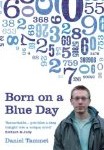
Born on a Blue Day – Daniel Tammet

Born on a Blue Day is the memoir of Daniel Tammet, a man who is probably unique in the world. Daniel not only has Savant Syndrome, a rare form of Asperger’s that produces amazing mental powers, but also synaesthesia, the ability to see numbers and words as specific colours and textures. This combination of conditions means that he is able to learn new languages in just a few weeks and they helped him to break a Guinness World Record by remembering Pi to 22,515 digits.

I found the whole book fascinating. Daniel explains exactly what he see and feels, giving the reader a good understanding of both Asperger’s and synaesthesia.

Thinking of calendars always makes me feel good, all those numbers and patterns in one place. Different days of the week elicit different colours and emotions in my head: Tuesdays are a warm colour while Thursdays are fuzzy.

It was particularly comforting for me to read about his early life, as my son (who has Asperger’s) exhibited many of the things he described (e.g. a constant need for rocking as in infant) which I haven’t seen in other books before.

After describing a difficult childhood, in which he felt isolated from his peers, Daniel describes how he found independence by taking a teaching job in Lithuania. He goes onto explain how he came to terms with his medical conditions and now helps scientists to try to understand differences in brain function.

I found the final section, in which he explains how he came to realise that he was gay and finally find love, particularly touching.

He isn’t the best writer in the world and his Asperger’s syndrome tends to mean he goes into unnecessary detail in some areas, but for the insight into this unique mind it is well worth putting up with less than perfect prose.

Recommended to everyone, but I think this is a ‘must read’ for anyone with an interest in Asperger’s or synaesthesia.

Categories
1960s Classics

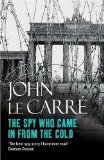
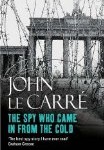
The Spy Who Came in from the Cold – John Le Carré

I had never read a spy novel. I’d assumed they consisted of numerous chase scenes and gun fights –  just like the Bond films my husband loves but I find tedious and repetitive. I’m always willing to confront my prejudices so when Annabel selected The Spy Who Came in from the Cold as her book of the year I decided to give it a try. It was very different from my expectations, but I’m afraid I don’t think I’m a fan of spy stories.

I was immediately struck by the quality of the writing. For some reason I’d expected it to be fast paced and of an average writing quality, but I was wrong. The pace was actually quite slow and contained many descriptive passages. I really enjoyed reading the beginning of the book and getting to know Leamas, the disgraced agent asked to perform one last mission.

Unfortunately the book went downhill as it progressed. Too many characters were introduced and I struggled to follow who they were. I have since discovered that earlier books introduced many of these people and I think knowing their backgrounds would have been hugely beneficial to appreciating this book.

I also came to realise that real spying bares little resemblance to James Bond films. Real spying is quite dull – it involves a lot of time waiting and making complex negotiations with others. I became bored with the lack of action and increasingly reluctant to continue reading.

I thought the last chapter was fantastic, but I’m afraid it was too little too late.

Annabel’s review indicates that she is a big fan of spy novels: she has read many of Le Carré’s other books and has watched the film. I have a feeling that this all contributed to her increased enjoyment of the book as I’m sure it gets better the more you understand the motivations of the numerous characters. I’m pleased that I’ve read this modern classic, but I’m afraid I’m not going to be rushing to read more spy stories.

Categories
2010 Science Fiction

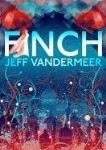
Finch – Jeff Vandermeer

I loved The City and the City and was craving a book with a similar style. An Internet search led to Finch, another detective story set in an imaginary universe. Its impressive blurb and Vandermeer’s numerous award nominations led me to request the book from the publishers. Unfortunately this book pushed my tolerance of the bizarre to the limit and I ended up being more than a little confused.

Finch is set in a world dominated by fungus. The ‘gray caps’ are fungi with the ability to walk, but the cities are also covered with networks of mushrooms whose spores have the ability to affect people in numerous evil ways. The central character, Finch, is a detective who is asked to investigate the double murder of a gray cap and a human. The research is very different to that of our world and involves everything from seeing the dreams and lives of others by eating their ‘memory bulbs’ to battling with giant mushrooms. It was all too weird for me. I never really understood the physical laws of the universe and my continual confusion meant that I couldn’t connect with the story.

The writing style also took a long time to get used to. The sentences were often clipped and this gave the text a jumpy feel.

When they looked outside, they’d seen a dome-like haze above the north part of the bay. Green-orange discharge like sunspots. They’d just watched it. Watched it and not known what to say. What to do. Barricaded the house. Spent the rest of the night with weapons within reach.

The pace was fast, but the numerous chase scenes held little interest for me. I wish that the plot had been slower so that I’d have a chance to understand the motivations of the characters a little better.

I also think that I was at a disadvantage by not having read Vandermeer’s two previous books set in the same world. Although all three books are independent I’m sure that a greater knowledge of the surroundings would have led me to appreciate the book far more.

Overall this book was too confusing for me – I need my fictional worlds to comply to more basic principles!

Recommended to anyone who wants to read something very different.

Have you found anything similar to The City and the City?

Categories
2010 Non Fiction

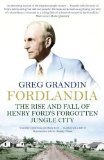
Fordlandia – Greg Grandin

In 1927, Henry Ford, founder of the Ford Motor Company, bought a 5,000-square-mile area of the Amazon rain forest. He wanted to combat rising rubber costs by creating his own supply and to bring his idealised version of America to a remote area of Brazil. Ford created a small town in the middle of the rain forest. Neat rows of houses were built, along with everything an American family would need to entertain them. Unfortunately golf courses and cinemas were not enough to distract from the dangerous wildlife and diseases that plagued Fordlandia. The battle between Man and nature was constant and it wasn’t long before Ford’s dream of creating a civilized society in the jungle was shattered.

I knew nothing about Ford’s jungle city and was intrigued by a community constructed from scratch. Unfortunately the book was more like a biography of Henry Ford than an insight into life in the jungle and so there were many points when I found this read frustrating.

It was interesting to learn about Ford’s ideas for creating perfect societies. I thought his plan to build cities in long lines, instead of around a dense city centre made a lot of sense and I admired his desire to give everyone high wages and free health care, but I thought there was too much politics in this book. My lack of knowledge of US politicians in the 1930s compounded the problem, but I think that even if I had known who all the people were I would still have become bored by the level of detail.

Most of the country’s prominent liberal internationalists, intellectuals, and religious leaders, like William Jennings Bryan, William Howard Taft, and Louis Brandeis respectfully declined the industrialist’s invitation to join his odyssey. “My heart is with you,” apologized Helen Keller for not being able to make the trip. Jane Addams did accept but fell ill and couldn’t sail. That left Ford with an odd and volatile assortment of lesser-known dissenters, vegetarians, socialists, pacifists and suffragists as companions.

I loved learning about the construction of Fordlandia, but I longed for some personal or emotional insight into the town. The facts were delivered in a cold, clinical way and I wish they had been brought to life by focusing on individuals instead of just general statistics.

By the end of 1929, ninety people had been buried in the company cemetery, sixty-two of them workers and the rest “outsiders who had died on the property.” Most of the deaths were from malnutrition and common disease. But lethal snakebites, from vipers especially, infections from ant, hornet, or vampire bat bites, and, before proper shelters were built, jaguars, which occasionally snatched babies right from their hammocks, all made the plantation especially dangerous during those early years. 

The density of the facts meant that this was a very slow book for me to read. I couldn’t manage more than a few pages at a time and often became bogged down in the detail. This book is very well researched and contains everything you could ever wish to know about Henry Ford, but I hope that someone grabs this idea and creates a wonderful piece of historical fiction from it.

Categories
2000 - 2007 Commonwealth Writer's Prize Historical Fiction Recommended books

Haweswater – Sarah Hall


Winner of the 2003 Commonwealth Writers’ Prize First Book Award and 2003 Betty Trask Award

I spent my teenage years living in the Lake District and so I have a soft spot for anything set in Cumbria. Haweswater is one of many lakes in the Lake District, but unlike the majority it is man-made; created by the construction of a dam and the subsequent flooding of the valley in the 1930s. Haweswater gives a moving account of how the remote farming community came to terms with the fact that their village was going to be destroyed and describes their final months as they prepare to leave a home that has been theirs for generations.

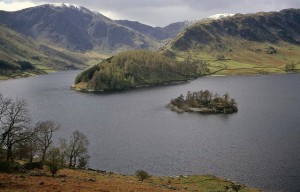
Photo Credit: Trevor Rickard

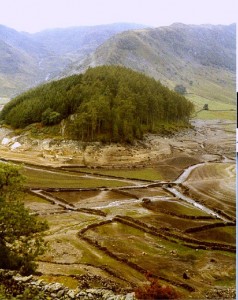
Haweswater had an extra impact on me as I visited the village of Mardale when it was revealed during a drought. The photo above shows a typical view of Haweswater as it is today; whilst the one below shows a similar view during a drought – with the roads, demolished houses and farm walls revealed.

Photo Credit: Janet Richardson

I loved the Cumbrian dialect in this book. You don’t hear it on television very often and I think it is the first time I have read a book containing it.

Teddy’s gone fer Frithy. Nowt else to dyah but wait. Thowt aboot garn misell, Sam. Twa arms better un yan, eh? Even auld bugger like misell?

When I first moved to Cumbria I couldn’t understand a word the locals were saying and I suspect that many readers will struggle to understand the dialect in this book. The good news is that the majority of the novel is written in beautiful, descriptive prose and so you will still understand everything that is happening even if you don’t catch what they are saying!

For the last three hundred years or more there often could be seen a man or a child pausing on the bridge to look below at the water, idling in conversation with a companion, or as a solitary, watching the trout rise and flick between the reeds under the bridge. Casting an eye over the river, as if for no other reason than there was water flowing past.

Despite the fact that you know what happens in the end, this is a fantastic story. The characters are very well developed and I felt a strong emotional connection to them. A dark sense of foreboding builds as the novel progresses and the ending is heartbreaking. This is a beautiful portrait of a lost community.

I’m slightly biased, but I highly recommend that you read it.

Have you read any books set in the Lake District?

Categories
2008 Other Prizes Romance

Star Gazing by Linda Gillard

I don’t read many romance novels, but I received an email from the author explaining that this book had been short-listed for 2 awards in 2009 – Romantic Novel of the Year and the Robin Jenkins Literary Award, the UK’s first environmental book award. This combination of awards intrigued me and so decided to give it a try. I was surprised when readers of Women’s Weekly voted it the best romance novel of the last 50 years as I thought that a more well known author would win, but it made me very curious about the contents of this little book.

Star Gazing is set in Scotland and focuses on Marianne, a blind woman who was widowed in her twenties. Now in her forties and living with her sister in Edinburgh she has resigned herself to a life alone, but all this changes when a mysterious man turns up on her doorstep.

I was immediately impressed by the quality of the writing. The descriptions of what life is like when you are unable to see were amazing and I felt that I came understand how she viewed the world.

I tell sceptics and doubters that I go to the opera because opera pours a vision of a wider world into my ears in a way that excites me. Plays, novels and poems move, entertain and educate me, but they don’t rock me to my foundations and make me see. I can read Tolstoy’s account of the French retreat from Moscow, either in Braille or as an audio-book, but I have never seen a city. Or snow. I’ve never seen a man, let alone an army. Tolstoy uses a visual language that I can read, haltingly. It’s not my mother tongue.
But music I can ‘read’ much more easily. In fact, I don’t need to read it at all. When I hear music it goes directly to my heart, it pierces my soul and stirs me with nameless emotions, countless ideas and aural pictures.

The characters were all well developed and engaging, but this book turned me into a gossiping woman! It was a very weird experience that I have never encountered with a book before. I found that I didn’t like the central character and wanted to slap her on numerous occasions. I told several people about the stupid things she’d done and had lengthy conversations about her decisions. This makes the book a perfect choice for book groups as I guarantee that you will enjoy discussing the events in this book.

I also had a problem with some of the plot towards the end of the book. I don’t want to spoil anything for you, but a few things were a bit far-fetched and I’m afraid I’m a miserable sceptic who has trouble believing that people can have visions of future events.

Despite these criticisms I think the fact I wanted to talk about this book so much proves its quality. I don’t think it is the best romance novel of the last 50 years (The Time Traveller’s Wife  and The Dark Side of Love are my favourites), but it is an original, heartwarming book. 

Recommended.