Categories
2012 Non Fiction Recommended books

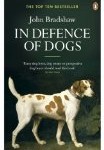
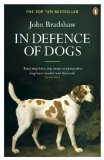
In Defence of Dogs by John Bradshaw

In Defence of Dogs: Why Dogs Need Our Understanding

Five words from the blurb: dogs, research, psychology, behaviour, life

Last year I became a dog owner for the first time. Since then I’ve been reading a large number of books on dog ownership and training. This is the best by a long way and the only one I feel able to trust entirely. John Bradshaw cuts through the old wives tales and takes a scientific approach to dog psychology. He compiles data from a large number of research projects to understand the way dogs think and how we can help them to lead happy, stress-free lives.

The book begins with looking at the way dogs have evolved and how this can be used to understand the bonds they form with humans. It goes on to explain the differences between our interactions with them and the way they behave with other dogs. Body language, the way their brains function and the relative power of the senses are all investigated with regular reference to scientific studies. The book also explains theory of mind and which emotions dogs are capable of feeling.

I was surprised by the number of commonly held beliefs that have no basis in fact:

It is remarkable, given how unformed a puppy’s personality is at eight weeks old, that breeders rely so heavily on puppy behaviour as a way of predicting the grown-up dog’s eventual character. ‘Puppy tests’ carried out at seven or eight weeks of age, before the puppy leaves its breeder, are still widely believed to have this predictive potential. Yet this is the precise age at which puppy’s behaviour is most malleable. Numerous scientific studies have failed to find any validity in ‘puppy testing’ as a predictor of future character. 

It doesn’t give specific advice on training, but anyone armed with the knowledge contained in this book will be able to ensure their dogs understand them and know what they are capable of learning.

I loved this book. It contains a wealth of information and lots of little facts that I can’t help sharing with friends and family. Some of the detail may be too much for the casual reader, but as a scientist I loved the way it didn’t shy away from some of the more complex subjects.

I think this is the most important reference book a dog owner could read and I strongly encourage you to get a copy.

.
 

Categories
2012 Books in Translation

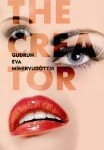
The Creator by Guðrún Eva Mínervudóttir

The Creator Translated from the Icelandic by Sarah Bowen

Five words from the blurb: dolls, thief, salvation, loneliness, understanding

The Creator is an unusual novel about two people, each with their own set of foibles. Sveinn makes sex VIBRATORS in a workshop at his home and Lóa is struggling to cope with her daughter, who is suffering from an eating disorder. This unlikely couple meet when Lóa’s car breaks down in front of Sveinn’s house and he agrees to help her fix it.

The Creator is beautifully written, but quite hard to classify – at first it feels like a complex crime novel, but it develops into a character study that focuses on loneliness and belonging.

The book is narrated alternately by Lóa and Sveinn, which means the reader gets to see everything from both perspectives. At times this device was cleverly utilised, but it also meant that the plot was sometimes repetitive.

Lóa and Sveinn were wonderfully complex characters and I connected with both of them. At times the plot wasn’t very realistic, but their reactions to events always felt honest and believable.

When she managed to open her eyes she noticed that the light had altered since she laid her head on the pillow. The afternoon had engulfed the morning like an invisible avalanche of snow. Sweat held her hair fast to her neck, hunger rumbled round her belly and an uneasy memory of the morning’s events lay in ambush behind every thought.

Don’t be put off by the sex dolls – this book isn’t sleazy or filled with sex. I found myself appreciating the skill and patience needed to create these life-like sculptures, which seemed to be used for companionship more than anything else in this book.

My only complaint is that the plot seemed to fizzle out towards the end. The power of the first few chapters was never repeated and I occasionally lost interest in the slower paced scenes.

I’d recommend this book to anyone who enjoys literary novels that peek into the lives of dysfunctional people.

.

Categories
2012 Non Fiction Other Recommended books

1001 Books: You Must Read Before You Die

1001 Books You Must Read Before You Die (1001 Must Before You Die)

Last year I bought 1001 Children’s Books: You Must Read Before You Grow Up and spent many happy hours (and far too much money!) investigating books for my children. I therefore jumped at the chance to review the adult version, 1001 Books: You Must Read Before You Die.
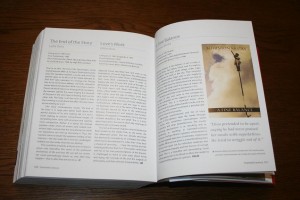
Weighing nearly 2kg, this chunky book contains a wealth of information. It is divided into four sections (pre 1800, 1800s, 1900s, and 2000s); with each book summarised in around 300 words. As an example, (and a great excuse to mention my all-time favourite book!) here is where it mentions A Fine Balance:

The text gives a brief summary of the plot (without a hint of spoilers) and then goes on to explain why the chosen book is important. Each review is bursting with positivity.

a beautiful and devastating novel whose genius lies in its refusal to allow the reader to escape into either pathos or cynicism.

It is easy to get swept up in the enthusiasm of each page, buying lots of books on a whim (I know that from my year-long relationship with the children’s version!). I’ll take that as a good sign – anything that encourages reading is fantastic.

The wonderful thing about this book is that it doesn’t just focus on classics from the English speaking world and so, although I was familiar with the majority of the titles mentioned, there were still lots of interesting books for me to investigate.

Don’t these sound interesting?

The Taebek Mountains by Jo Jung-rae
A Korean epic which “skilfully conveys intimate personal dramas” whilst playing them “out in a climax of suspicion and terror”

Lady Number Thirteen by Jose Carlos Somoza
A Cuban novel “full of supernatural portents”. “A novel as exciting as it is intelligent.”

The only problem with this is that many of the books (including the two mentioned above) aren’t actually translated into English yet and this can be frustrating. This isn’t the fault of the person compiling the book, in fact I admire them. It just highlights the number of amazing books that we are missing out on in the UK. I hope that the stigma around translated books reduces with time and more of these outstanding books can make their way onto our shelves.

Overall I can’t fault this book – it is perfect for all bibliophiles. The only problem is the fact it highlights how many amazing books there are and simple calculations show it will be difficult to fit them all in before we die.


Categories
1940s Classics

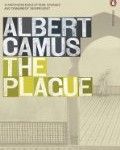
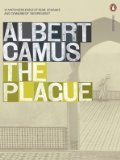
The Plague by Albert Camus

The Plague (Penguin Modern Classics) Translated from the French by Robin Buss

Five words from the blurb: people, plague, death, isolation, fate

Albert Camus is one of those authors that has always intimidated me. I assumed his writing would be complex and difficult to understand, but eventually my love for disaster based fiction won through and I decided to give The Plague a try. I was surprised by how readable the book was, but disappointed that it lacked the psychological insight I was hoping for.

The book describes the way the Algerian town of Oran copes when a deadly plague breaks out. The first section, describing the emergence of the plague, was promising – it contained intrigue, tension and a dark sense of foreboding.

Everybody knows that pestilences have a way of recurring in the world; yet somehow we find it hard to believe in ones that crash down on our heads from a blue sky. There have been as many plagues as wars in history; yet always plagues and wars take people equally by surprise.

Unfortunately everything went downhill after that. The narrative was written in a calm manner that distanced the reader from the distress that individual families went through. The authorities implemented sensible precautions to prevent the spread of the disease, the people coped surprisingly well and everything seemed under control. Perhaps I’m weird in wanting a bit of panic/disaster to spice things up?

The writing quality was very high, but it felt dated. The public behave very differently now and so it was a glimpse into the past rather than a prediction of the future. The main aim of the book appeared to be analysing the way a population would behave under the threat of an epidemic, but since its publication in 1947 many other books have covered the subject. It may well have been ground breaking on publication, but as a reader in the 21st century it was all well-trodden ground – books like Blindness cover the topic in a much more thorough/eye-opening way.

The book occasionally went off on a tangent, preaching about the inadequacy of religion. These sections felt a little out of place amongst the rest of book and may offend those with a strong faith.

The entire book contained a depth that would reward the re-reader, but I’m afraid it didn’t inspire me enough want to do this. I’m pleased that I’ve read The Plague, if only to see the development of the genre, but unfortunately this isn’t a book that stands the test of time.

.

Have you read The Plague?

Have any of his other books aged better?

Categories
2012 Non Fiction Uncategorized

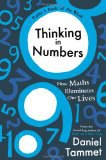
Thinking in Numbers by Daniel Tammet

Thinking in Numbers: How Maths Illuminates Our Lives

Five words from the blurb: imagine, universe, counting, mathematics, everyone

Daniel Tammet is an autistic savant with an amazing ability to recall words and numbers. I loved his autobiography, Born on a Blue Day, so much that I went to hear him talk at the Edinburgh Festival last month. His new book, Thinking in Numbers, aims to promote a love for mathematics. Tammet explains that the subject is similar to fiction in that there are many different genres, each of which you will enjoy to a greater or lesser extent dependant on your personal taste.

Like works of literature, mathematical ideas help expand our circle of empathy, liberating us from the tyranny of a single, parochial point of view. Numbers, properly considered, make us better people.

Thinking in Numbers proved this concept by highlighting many different areas, some which I loved and others which bored me completely.

The book is divided into 25 chapters, each exploring a different area of mathematics. Tammet uses real life examples to show how important numbers are with topics as diverse as snow, Tolstoy and poetry. My personal favorites included the section that explained the different ways other cultures count and the one estimating how long an individual will live.

The quality of Tammet’s writing has improved massively since Born on a Blue Day. Everything was written clearly, with complex theories explained cleverly so that those unfamiliar with them could understand, whilst those already knowledgeable weren’t patronised.

I was a little disappointed that the book didn’t include any more explanation of the way Tammet sees numbers as complex, colourful shapes, but I did enjoy the more personal chapter about the thoughts that went through his head as he broke the world record for reciting Pi to 22,514 decimal places.

I found this book thought provoking – it is one of those books that you find yourself quoting to others. I guarantee that you won’t enjoy every chapter, but there is enough contained within it to entertain everyone.

.

Categories
1940s Classics

Native Son by Richard Wright

Native Son (Vintage classics)

Five words from the blurb: black, prejudiced, poverty, death, crime

Native Son was originally published in 1940. It became a best seller, catapulting its black American author, Richard Wright, into fame and controversy. The book highlights the deep racism that was present within America at the time and is one of the most important books written within the last century. I only discovered its existence last month, but I loved everything about it.  I’m shocked it isn’t well known within the UK, but I aim to spread the word as far as I can.

The story focuses on Bigger Thomas, a black American who accidentally murders a young white woman. His crime highlights the deep divide between blacks and whites, showing the hatred and prejudice present on both sides.

I know I oughtn’t think about it, but I can’t help it. Every time I think about it I feel like somebody’s poking a red-hot iron down my throat. Goddammit, look! We live here and they live there. We black and they white. They got things and we ain’t. They do things and we can’t. It’s like living in jail. Half the time I feel like I’m on the outside of the world peeping in through a knot-hole in the fence.

Bigger’s character was fantastic. Richard Wright’s skill as an author enabled me to feel immense sympathy for him (and other criminals in a similar situation). By explaining the difficulties Bigger had faced since birth I was able to understand his actions and root for him throughout the book.

Native Son has everything a good novel needs – it is gripping, enlightening and contains vivid characters who are all flawed in a realistic manner. Most of this book reads like a thriller – I was on the edge of my seat throughout, unable to put the book down. Occasionally I wanted to avert my eyes from the disturbing scenes, but all the violence was necessary to explain the problems within the society.

The final section of the book is more political in nature, explaining the history of racism within the US. It slowed the pace of the book down, but by that point I was so invested in the characters that I didn’t mind this unusual change of style. It was fantastic to see a well written piece of fiction given such a strong historical grounding.

This is the best American novel I’ve ever read and I think you’ll struggle to find a book that does a better job of highlighting the racism present within 1940s society.

Highly recommended.

.