Categories
2009 Books in Translation Chunkster Historical Fiction Other Prizes Recommended books

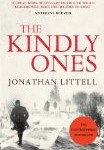
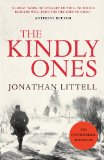
The Kindly Ones – Jonathan Littell


Translated from the French by Charlotte Mandell

Winner of 2006 Prix Goncourt and the grand prix du roman of Académie française, Literary Review’s bad sex in fiction award 2009, 2010 Best Translated Book Award: Fiction Longlist, 2010 long list Independent Foreign Fiction Prize

The Kindly Ones is one of the most controversial books written in recent years. The book is a fictional biography of Max Aue, a senior SS officer, present during the Holocaust.  His job is to compile recommendations for future Nazi policy and so he travels to see the execution of the Jews, the German front line and finally the concentration camps. The fictional characters are weaved together with real people like Göring, Speer and Hitler; producing a well researched, compelling version of WWII.

The Kindly Ones is the most disturbing book I’ve ever read. I have read a few individual scenes in books like A Fine Balance or Fugitive Pieces that almost equal the horror of the milder sections in this book, but the descriptions of the Holocaust were so intense and prolonged that I found this book very hard to read. There were times when I could only read a page or two before having to put the book down and do something else. Sometimes even that wasn’t enough and so I started skim reading sections. I found this didn’t help much as I was still painfully aware of what was happening, so I reverted to the slow, painful pace I had started with.

The whole book is like driving past a car crash – you know you shouldn’t look, but you do anyway  –  unable to resist the temptation to see how bad things really are.  I was gripped throughout, an amazing feat for a book so long. The prose is easy to read, but I did get a bit confused by some of the German military terms (most of which are explained in the back, but as I don’t really understand the British equivalent that didn’t help much!).

I expected the plot to emphasize the fact that the people involved in these terrible events had no choice in the matter – that it was basically ‘do or die’.

The man posted to a concentration camp, like a man assigned to an Einsatzkommando or a police battalion, most of the time doesn’t reason any differently: he knows that his free will has nothing to do with it, and that chance alone makes him a killer rather than a hero, or a dead man.

I was therefore surprised to see many opportunities for Max Aue to avoid ending up on the path he took. Initially I wondered why the book was written in this way, but then I realised how clever and realistic it was. The events leading up to the atrocities are obvious with hindsight, but to the people involved each step was so small that they were unaware of the final consequences. Many questioned the actions and were given what seemed to them to be reasonable justifications. For this book to change the way I view the Holocaust is an incredible achievement.

The Kindly Ones also contained many poignant scenes. I was particularly touched by this passage:

“I started sobbing: the tears froze on my face, I wept for my childhood, for a time when snow was a pleasure that knew no end, when a city was a wonderful space to live in, and when a forest was not yet a convenient place to kill people.”

Overall I’d describe this book as a ‘must read’ for anyone interested in the Holocaust, but the length and graphic descriptions of human suffering mean that most people should approach this book with caution. I will remember this book for the rest of my life and although I sometimes wish I could erase some scenes from my memory, on the whole I think it is helpful to remember that these events happened.

Do you want to read The Kindly Ones?
Categories
2010 Historical Fiction Orange Prize

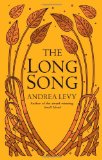
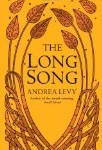
The Long Song – Andrea Levy

 Long listed for Orange Prize 2010 

The Long Song is set on Jamaica and follows July, a young slave girl, during the last few years of slavery and after she is granted freedom. 

The book is very different in style to Andrea Levy’s last book, Orange Prize winning Small Island, but I think they are both good in their own way. 

Much of the speech in The Long Song is written in Jamaican dialect, which adds atmosphere to the book. I think this would be even better on audio, as I’m sure my inner mind doesn’t quite do it justice! It isn’t hard to understand the dialect, in fact the whole book is quick and easy to read. I felt that this was actually one of the negatives of the book – it was so light that it seemed to skim over some very important scenes. The plot was quite simple, but the book covered a reasonably large chunk of time. This speed of events meant that I didn’t fully connect with July or understand which emotions she was experiencing. 

The narrator, July, frequently addresses the reader of the book, adding references to her present day life. 

Reader, my son tells me that this is too indelicate a commencement of any tale. Please pardon me, but your storyteller is a woman possessed of a forthright tongue and a little ink. 

Having read a few other reviews I’ve discovered that this style seems to annoy some people, but I found it a refreshing change to the similarity of many books. 

Overall, it was a light, entertaining read, but I have heard the amazing way Andrea Levy narrates her books and so I recommend getting the audio version of The Long Song.

Did you enjoy The Long Song?

Do you think it will make it onto the Orange short list tomorrow?

Categories
2009 Historical Fiction Orange Prize

Small Wars – Sadie Jones

 Long listed for the Orange Prize 2010

I enjoyed Sadie Jones’ last novel, The Outcast, to some extent, but found the ending to be a bit of an anti-climax. When I saw her latest book had made the Orange long list I decided to give her another try.
Small Wars is set on Cyprus during the 1950s Emergency, a time when the British defended Cyprus against a colony of Cypriots determined to form a union with Greece. The book follows Hal, a young British soldier who is posted to Cyprus. He brings his wife and daughters with him, but their relationship is put under pressure by the fear of violence.

I’m afraid I wasn’t a big fan of Small Wars. The pace of the book was quite slow and there were several long, meandering sections where I began to lose interest. The writing was simple and easy to read, but this simplicity meant that the real horror of some situations wasn’t adequately described:

The people were made to lie down on the floor of the trucks, because there were so many of them, and if the soldiers made them lie down, they could be layered to make room. There were reports of suffocation from this stacking of live bodies, but later, the British, investigating, found no bodies.

In the hands of a different author that same scene could have been very hard to read. I can imagine the fear of those poor people, but reading the above passage provoked no emotion in me. The same is true for much of the book – there were some terrible events, but they were rushed over and so the horror could be largely ignored.

The main theme of Small Wars was the way war can affect relationships. The book concentrated on characterisation rather than plot; this gentle observation of the feelings will be of interest to some, but I’m afraid it was all too quiet for me.

Recommended to those who want to read about war in a quiet, gentle way.

What others had to say:

It’s a complex study, yet it’s easy to read and progresses very quickly!  S Krishna’s Books

 ….notable for its psychological depth and characterizations. California Literary Review

 ….this follow-up shows that she is no one-hit wonder. Times Online

Have you read The Outcast or Small Wars?

Do you think this book has a chance at making the Orange short list?

Categories
2000 - 2007 Chunkster Historical Fiction Orange Prize Other Prizes

Small Island – Andrea Levy


Winner of the 2004 Orange Prize, Winner of 2004 Whitbread Prize (now Costa)

Small Island is a book I have been meaning to read for a very long time, but for some reason it never really grabbed my attention and kept sinking down the TBR pile. In an effort to prevent it from becoming lost forever under stacks of books I made a conscious decision to read it, but it still took me three months to finally start!

Small Island follows the first wave of Caribbean immigrants as they move from Jamaica to the UK. The book centres on four characters: Jamaican newly-weds, Gilbert and Hortense; and English couple, Queenie and Bernard. Bernard has failed to return from WWII and so Queenie lets rooms in her house to the Jamaican couple. We discover their complex relationships as well as their individual feelings as they cope with the effects of war and moving to a new country. The plot travels forwards and backwards in time, describing their lives before, during and after the war, but the main theme of the book is the racism encountered in both countries.

The pace of the book was gentle and I’d describe it as charming rather than the more intense book I was expecting. The plot held my attention, but although I was entertained all the way through I didn’t encounter anything that really bowled me over.

The narratives of the women were well done, but I found the male characters to be less convincing and almost boring in places. Bernard’s section was the weakest and I question its inclusion in the book.

I also found the book lacked vivid descriptions – I couldn’t picture the Jamaican scenes and I’d have had no idea where in the world they were if I hadn’t been told. These are minor quibbles really – a 560 page book has to be very good to provide an interesting plot throughout.

Recommended to the few people that haven’t already read it!

I have reserved a copy of The Long Song from the library and will be interested to see if it is good enough to win this year’s Orange prize.

Have you read Small Island?

Which is the best Andrea Levy book you have read?

Categories
2009 Historical Fiction Orange Prize

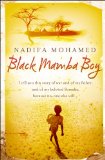
Black Mamba Boy – Nadifa Mohamed

 Long listed for 2010 Orange Prize

Last week the long list for the Orange prize 2010 was announced and I discovered that I already owned a copy of this one. I started to read it straight away, keen to discover why it made the list. 

Black Mamba Boy begins in 1930s Somalia and follows ten-year-old Jama as he sets out on a dangerous journey across the desert, searching for his father. He travels through war-torn Eritrea and Sudan, to Egypt, Palestine and finally to Britain.

The plot is based on the true story of what happened to the author’s father; it is amazing to think that one person endured so much hardship at such a young age. The terrible things that this little boy saw and had to endure to stay alive are almost beyond belief.

Unfortunately this book didn’t grab me in the way that it should. In the beginning too many characters were introduced, so I struggled to remember who was who. I failed to connect to Jama and so I felt distanced from the events he was witnessing. It could be that he was forced to grow up quickly, but I also didn’t feel that the book realistically portrayed a child’s point of view – he seemed to understand everything that was going on around him, having an adult’s comprehension of the world.

The book also contained long descriptions, which led my mind to wander away from the page.

Sand scratched in his eyes and blurred the path as it danced around the desert in a frenetic whirling ballet. Jama’s sarong was nearly pulled off by the mischievous sand jinns hiding within the storm. Jama covered his face with his sarong and managed to make slow progress like that. The dust storm had turned the sun a bright orange, until unashamed at its obscured power it crept away below the horizon to be replaced by an anaemic fragile-looking moon. Jama stumbled across the hill, kicking rocks away with bare feet, giant thorns poking and prodding dangerously. Desert animals scurried around looking for refuge, their small furry paws scrambling over Jama’s sand-swathed feet. Exhausted, Jama stopped and collapsed on the sand.

There is nothing wrong with these descriptions by themselves, but when you have to wade through pages and pages of them with no text to break things up it gets tedious. The repitition of the word Jama also began to irritate me.

Overall, I’m afraid I was disappointed by this book. I hope I’ll have more succes with my next Orange read.

There are very few reviews for this book out there at the moment, but it does seem to divide people. I think this is another Marmite book!

an amazing ride through the dusty, noisy but bustling streets of the some of the most important cities of North East Africa in the ’30’s. Lotus Reads

There are, however, moments when Black Mamba Boy stumbles…… Follow The Thread

Categories
2009 Books in Translation Chunkster Historical Fiction Other Prizes

The Kindly Ones Read-along

Translated from the French by Charlotte Mandell

Winner of 2006 Prix Goncourt and the grand prix du roman of Académie française, Literary Review’s bad sex in fiction award 2009, 2010 Best Translated Book Award: Fiction Longlist, 2010 long list Independent Foreign Fiction Prize

The Kindly Ones has been haunting me for a while. It seems to have won every prize it is eligible for, and people keep mentioning it along-side words such as controversial, powerful and disturbing. Anyone who has read this blog for a while will know that all these things make a book attractive to me. The problem is that it is nearly 1000 pages long and it does seem to be the most disturbing book ever written. I am sure that this book will give me nightmares, but I am hoping that it will be worth it in the end.

The book is a fictional biography of a Holocaust exectioner. I think the tone of the book can be summarised by this quote I found on page 21:

This path is very rarely the result of any choice, or even personal predilection. The victims, in the vast majority of cases, were not tortured or killed because they were good any more than the executioners tormented them because there were evil.

Yesterday I went into my local library in the search for Orange books. A small pile of Kindly Ones was sitting on a table, calling to me. It didn’t look as though anyone had ever checked one out and so on the spur of the moment I took a copy home with me.

A brief conversation on twitter followed in which several people questioned whether I’d finish it before it is due back (3 weeks) and a few warned me that it isn’t an easy read. Then Elle from Gleeful Reader volunteered to join me in reading this chunkster and a read-along was born. I apologise for the lack of notice, the fast pace of the reading (50 pages a day) and the fact I probably won’t get much else read for the next few weeks, but I am keen to follow my reading whims and this book just intrigued me too much. I would love it if a few of you would join us, but realise it is unlikely at such short notice. I have created a google wave (see below) for the discussion so that the blog won’t become cluttered with a conversation that few people are part of. The great thing is that the Wave will always exist, so if you decide to read the book in the future then you can always join in the discussion then.

Wish us luck!

Does The Kindly Ones appeal to you?

I have created a Wave for The Kindly Ones read-along. Unfortunately some nasty bot corrupted it so I have had to create a new one visible only to those I invite.  If you would like to join the discussion then just let me know and I’ll add you to the wave. If you’ like an invite to Google Wave then just email me using the contact form in the top right-hand corner of my blog.


.