 Today I’m featured on Book Bloggers Abroad, a weekly feature on Leeswammes’ blog in which book bloggers reveal what it is like where they live.
Head over there for a rare glimpse of me and my family!
Today I’m featured on Book Bloggers Abroad, a weekly feature on Leeswammes’ blog in which book bloggers reveal what it is like where they live.
Head over there for a rare glimpse of me and my family!
I have always loved Richard and Judy. When I was a child I watched them on This Morning and I loved the fact that they moved to their afternoon show at exactly the same time as I started my first job – meaning I could come home from work just in time to catch them!
When they started their book club I was very excited. I remember rushing out to buy two or three of their selections the moment the list was announced. It was a great way to start the New Year as I knew that at least one book would become my favourite of that year and several others would get close. Richard and Judy introduced me to The Time Traveller’s Wife, Cloud Atlas, Notes on a Scandal, Random Acts of Heroic Love and Mr. Pip – as well as many other wonderful books.
Unfortunately Richard and Judy left our TV screens a few years ago. I missed them, but was excited to learn that they planned to start an online book club. I hoped that I’d be able to recapture that book club feeling!
The eight books were announced in September :


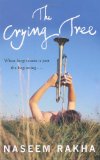
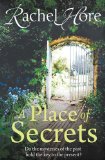

Titles are linked to my review for each book.
Operation Mincemeat – Ben Macintyre 
The Crying Tree – Naseem Rakha 
A Place of Secrets – Rachel Hore  (DNF)
(DNF)
Waiting for Columbus – Thomas Trofimuk (DNF)
A few were enjoyable reads, but none will get close to being my favourite of the year. I won’t be recommending these books in 5 years time as I do with many of the original books from their TV show. These aren’t thought-provoking, special books. Just average, light reads.
I’m not sure I can blame Richard and Judy. They entered into an agreement with WH Smiths. A WH Smiths buying team then sent them 30 books to choose from. These probably are the best books from those 30, but they are a very different from the original, more literary, book club. I’m afraid that this selection has broken my trust with the Richard and Judy book club. I’ll be sticking with the TV Book Club whose books are chosen by Amanda Ross, the woman who used to choose Richard and Judy’s books.
If you’re missing the type of books that Richard and Judy used to choose then I highly recommend that you try:
The Book of Negroes by Lawrence Hill
What do you think of the Richard and Judy Book Club this year?
Will you be reading their selections next year?

 Autistica, a charity funding research into the causes and treatment of autism, is holding a character auction to raise money.
.
A number of authors have agreed to allow the highest bidder to name a character in their next book. The full list of authors involved can be found here, but I’m especially excited to see David Mitchell’s name on the list. Other authors who may interest you include Ken Follett, Hari Kunzru and Maggie Gee. The auctions end this Sunday so you still have a few days left to bid.
Happy Bidding!

I have always had a facial recognition problem. If two actors have the same coloured hair then I can’t tell them apart and if a good friend changes her hair style then I won’t recognise her until she speaks. At the age of 25 an eye test revealed that I have a depth perception problem. It means I’ll never be allowed to fly a plane and it explains my inability to park a car, but luckily I didn’t have any dreams of becoming a pilot. My problem seems to be more severe than most, but new research may explain why more and more people are having problems recognising faces.

This week New Scientist revealed that the same area of the brain is responsible for both reading and facial recognition. They think that having a high skill in reading may impact the brain’s ability to recognise faces. Research into this possibility is going to begin soon, but I wondered if you’d noticed any truth in this hypothesis?
Have you noticed that your ability to recognise faces reduced as your reading skill increased?
Are your non-reading friends more able able to distinguish differences between people?
Edited to add: Test how face blind you are here: http://www.faceblind.org/facetests/index.php
I got 57% right (scores of less than 65% indicate facial blindness problem).

Last night the Giller Prize winner was revealed as The Sentimentalists by Johanna Skibsrud. I love the Giller Prize, but unfortunately it normally takes a while for these Canadian books to make it across to the UK (Annabel will be the first from the short list to reach UK shores – in March 2011). I am used to waiting to read the Giller winner, but it seems that many people in Canada are upset about having to wait. The publisher, Gaspereau Press, is very small and initially only printed 800 copies of the book. Once it was short listed then Book Printing NYC started printing 1000 copies a week, but were unable to keep up with demand. Gaspereau Press hand-make each copy to a high standard and are refusing to outsource production as this would lower the quality of the book. Publisher Andrew Steeves is ignoring demands to mass produce the book claiming:
I admire his desire to make each of his books beautiful, but I think I’m one of the few book lovers who prefers scruffy books. For me the beauty is in the words and I don’t care if the copy I am reading is damaged. In fact I prefer it.
I love to look at well designed books, but I’m scared to read them. I hate damaging immaculate books and carefully reading a beautiful book is a little bit stressful for me. I far prefer to have a well-read paperback that I can throw in my bag, read in the bath and otherwise abuse. Guilt free.

I am a bit odd in that I can never damage a book, but sometimes buy the roughest copy available as I know I’ll then be able to fully enjoy the words without worrying about opening the book too far and creasing the spine.
Am I the only one with this weird habit?
Would you prefer to wait for a beautiful book or just read the words now?
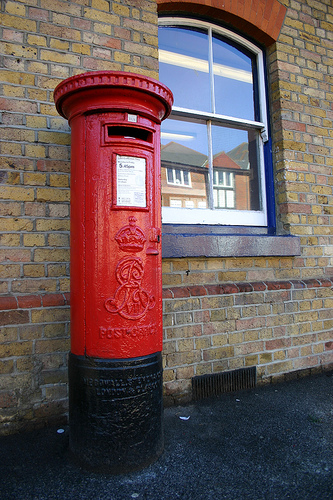
A few weeks ago I posted about problems within the UK library system and how US libraries seemed to be coping well, despite similar budget problems.
One of the US initiatives I was particularly intrigued by was the “books by mail” service in which books are posted directly to your door. I initially thought that this was a luxury service only to be afforded by wealthy libraries, but after doing a bit of research I firmly believe that all libraries could achieve this service and it could be the key to boosting UK library usage.
.
Library opening hours are being reduced all the time and so it is increasingly hard for the public to get to the library, especially if they have a full time job during normal office hours. Anything that makes life easier for busy people is good. It would be especially useful to those with mobility problems, but I think that everyone would love this service.
It would encourage more people to use the library.
The positive press would be fantastic. It would show that libraries are willing move with the times, listen to the needs of their customers and provide a fast, convenient service that is suitable for everyone.
It would mean that more people would love their library, creating a larger network of people willing to support it.
It allows libraries to direct-mail their customers, letting people know about future events or initiatives. Happy customers are more likely to respond to these mailings and so library events can grow.
No!
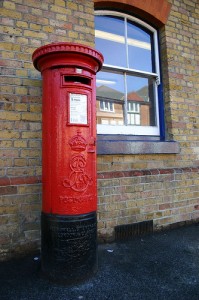
With Royal Mail Packet post it costs £1.38 to send parcels with an average weight of under 500g. From my book-selling experience I would estimate that it would cost less than £1.50 an item – much less if people requested several books at the same time. I’m sure that a large number of people would be willing to pay a small fee for the convenience of having a book delivered to their door, but I’d like to see this service provided free to all.
This could be achieved by enabling advertisers to pay for fliers within the packages.
Another option would be to reduce the library opening times. If all books can be mailed straight to your door then there is less need for the library to be open all day. I’m sure most people would accept a small reduction in library opening hours to help to pay for this improved service.
Burlington County Library introduced a “books by mail” service in June 2008. It has been so successful that the scheme has since been rolled out to several other neighbouring library systems.
How many packages do you send each day?
Since the project begain in 2008 the average is 38 packages per day, but over the last eight months this has increased to 48.
The largest per day total, in February 2010 was 60.
How much did you spend on supplies and postage last year?
$4081 on supplies (nylon bags, padded envelopes and labels)
$42,387.23 on postage
That is $2.56 per package, or $1.09 per item.
How much time is devoted each day to the process?
An average of four staff hours per day is spent checking out and packaging.
I found these numbers very encouraging. It makes the system sound feasible and I’m going to see if my local library is receptive to starting up this scheme.
Do you think a “books by mail” service would work in the UK?
Would you be willing to pay for the convenience?
Would it encourage you to use the library more frequently?
A special thank you to Peter Bromberg from Princeton Public Library’s mail service for persuading me that the Books by Mail service is a wonderful thing!


