Categories
Other

Do Martin Amis and Katie Price write in a similar way?

Last week the Huffington Post produced a quiz highlighting similarities in the writing of Martin Amis and Katie Price. I scored 5/10, showing that I could not tell which quotes were written by Martin Amis, a respected literary novelist, and which were written by Katie Price, an author often ridiculed in the press for her poor writing skills. I was surprised and so decided to investigate further.
Lionel Asbo: State of England

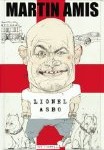
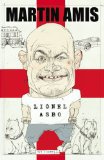
Lionel Asbo by Martin Amis

I have to admit that I’ve never had much success with Amis’ fiction. His most famous book, Time’s Arrow, failed to impress me and none of his other books have made it out of the library door as the first few pages have failed to grab my attention.

His new book, Lionel Asbo, is a satire of the English working classes. It follows two characters: Lionel Asbo, a violent criminal who is in and out of prison; and Des Pepperdine, his nephew, who is having an affair with his 42-year-old gran.

My main problem with the book was that none of the characters were realistic. They came across as rich, middle class people who happened to own dangerous dogs. For satire to work it has to be close to the bone, but it all felt way off. Yes, the 42-year-old gran worked, but the incestuous relationship? It wasn’t funny – it was just weird.

The plot was virtually non-existent and the lack of narrative drive made it slow and difficult to read. It was dis-jointed and I didn’t see the point of it.

This book is a simple character study, but as the characters weren’t realistic the whole book was flawed. It annoyed me and bored me in equal measure.

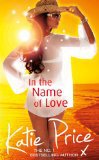
In the Name of Love

In the Name of Love by Katie Price

I’ve never read any Katie Price before – I tend to find that romances lack the depth I like to see in a book. I’ve been reading a lot of darker books recently so I enjoyed the chance to try something a bit more fun.

In the Name of Love focuses on a holiday romance between Charlie, a sports presenter, and Felipe, an attractive Spanish man.  Neither are honest about their backgrounds and the relationship goes through many turbulent stages. The plot is very simple: will they stay together?

The book flowed well, but the dialogue was so cheesy that I cringed whilst reading it. I quickly realised that this was part of the charm and giggled along at the silliness of it all. The predictable plot sometimes bored me, but the characters felt realistic.

This is a light, entertaining  read that I recommend to anyone looking for an easy read.

.

Is the writing style similar?

I noticed many similarities in the writing style of the two books. The dialogue was almost indistinguishable:

‘Look outside. Oh Des.’ she said and kissed him back. ‘Des, imagine we were getting married today.’
‘Yeah. Imagine. And jetting off to Malta for our honeymoon.’
‘…You know those candles Mum gave us? I’ll make a cottage pie when we get back. Let’s have dinner by candlelight. And let’s go mad and get a little packet of vin de table.Lionel Asbo, p72

‘Is it really worth that much?’ she asked. She could just about imagine spending that much on a bottle of champagne, but a single drink? She could almost hear her mum’s voice in her head exclaiming, ‘What a waste of money! That’s more than most families spend on their weekly shop!‘    In the Name of Love, p173

‘What was the matter with him? Why did he work at being stupid?’ Lionel Asbo, p27

‘Do you think men like that grow on trees? Let me tell you, they categorically do not.’ In the Name of Love, p126


I also thought that the sex scenes could almost be swapped over without anyone noticing (as so well demonstrated by the Huffington Post quiz).

The only real difference was that the descriptive passages in Lionel Asbo were a lot more complex:

Outside, it had rained and grown dark under a lilac sky, and a film of water swam on the flagstones. Orange blotches of mirrored streetlight kept pace with him as he walked down Crimple Way. Lionel Asbo, p40

He sighed and lay back, looking up at the blue sky with white clouds scurrying over it as if off to somewhere more important. In the Name of Love, p192

With the exception of the descriptive passages, I think it would be difficult to identify which book any individual sentence (and in most cases paragraph) came from.

The main difference between the two books is in the structure. Lionel Asbo is disjointed and confusing; In the Name of Love is simple and engaging.

It made me realise how unfair the press are to authors like Katie Price. Literary fiction authors seem to be able to get away with anything, when really there is often little difference between the two. I know which book I’m more likely to be passing on to my friends this Summer!

I wasn’t a fan of either book, but I enjoyed comparing the two!

Which book would you rather read?
Categories
Uncategorized

Abandoning some prize winners

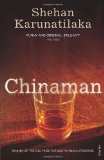
Chinaman

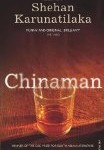
Chinaman by Shehan Karunatilaka

This book has been stalking me for a long time. It first came to my attention when it was selected as one of the Waterstone’s 11, then it won the 2012 DSC Prize for South Asian Literature and I keep seeing positive references to it on Twitter. Last week it won the Commonwealth Writers’ Prize and I felt it was finally time to give it the benefit of the doubt, despite my hatred for cricket.

Unfortunately it got off to a bad start. The book was riddled with obscure facts about cricket and I had to force myself to concentrate. I only kept reading because of the sentence at the end of this paragraph on page 6:

Clean Bowled
The simplest dismissal is when the bowler knocks over the batsman’s wickets. Matthew did this with most of his victims. He sent left-arm chinamen, googlies, armballs and darters through pads and feet. Here is a not-so-random sample of batsmen whose bails he dislodged. Border. Chappell. Crowe. Gatting. Gavaskar. Gower. Greenidge. Hadlee. Imran. Kapil. Lloyd. Miandad.
You are shaking your head. You are closing the book and frowning at the cover. Rereading the blurb at the back. Wondering if a refund is out of the question.

I hoped this was an indication that the cricket facts would be short lived. Unfortunately this wasn’t the case. After 40 pages I could stand it no longer and abandoned it. If you enjoy reading about sport, particularly cricket, then I’m sure there is a lot to be gained from reading this book.

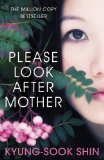
Please Look After Mother

Please Look After Mother by Kyung-Sook Shin

I’ve had a mixed reaction to previous winners of the Man Asian Literary Prize, unfortunately this year produced another that wasn’t quite to my taste. The book is set in Korea and follows a family as they search for their elderly mother who has gone missing in Soeul.

The second person narrative style annoyed me:

After your children’s mother went missing, you realised it was your wife who was missing. Your wife, who you’d forgotten about for fifty years, was present in your heart. Only after she disappeared did she come to you tangibly, as if you could reach out and touch her.”

I also longed for a more complex plot, instead of just an overly sentimental discussion about how important our parents are.

I abandoned it after about 70 pages, but if you enjoy gentle, introspective books written in an experimental writing style then you may well love it.

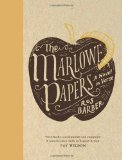
The Marlowe Papers

The Marlowe Papers Ros Barber

This book hasn’t actually won any awards, but I’m so confident that it will that I’ve decided to include it in this list. The book is written from the perspective of Christopher Marlowe. It assumes that he didn’t die in a pub brawl, but went on to write numerous plays under the pseudonym of William Shakespeare.

This book is written in the style of Shakespeare and is obviously genius:

Liquor kicks doorframes while the Lowlands sleep.
It shoulders blame for my catastrophe,
swallows my life and pisses it in the sink,
blurs what I hurt to look at, pillows sense.
Drink fogs a future which is only dark
and endless tramping into foreign towns
until tomorrow narrows to a point
on the nose’s tip. Then soaks and hardens thoughts,
weighting them into bruising hammer blows

Unfortunately I’ve never enjoyed reading Shakespeare. I have horrible flashbacks of being forced to read it in school every time I think about it.

If you enjoy reading Shakespeare then you’re in for a real treat!

Have you read any of these books?

Categories
Other

Missing Comments

Unfortunately I’ve been having some technical problems with this blog and all comments since January have been deleted.

I received so many spam comments whilst I was away on holiday that I went over my data storage allowance. A coding error lead to real comments, not spam comments, being deleted. I still have all your comments saved in my email folder and will try to restore as many as possible in the coming weeks, but it will be a long, slow process.

My blog feels naked without all its comments and I hope things will return to normal as quickly as possible.

Please let me know if you’d like me to prioritise comment restoration on a specific post.

Many apologies.

Categories
Other

I’m Back!

I’m back from a lovely holiday in Northern France. We stayed in a gîte near St Malo in Brittany and enjoyed investigating the old towns and villages in the area. We did some rock pooling, visited a goat farm, experienced the ‘velo bike’ and braved the crowds at Mont Saint Michel.


I didn’t do much reading, but I managed to finish these books:

  • HHhH by Laurent Binet (outstanding)
  • Lacrimosa by Regis Jauffret (depressing)
  • Half-Sick Of Shadows by David Logan (stangley captivating)
  • The Book of Answers by C Y Gopinath (bizarre)

Full reviews will follow shortly.

I hope you had a wonderful half term!


Categories
Other

May Summary and Plans for June

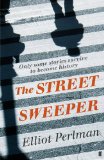
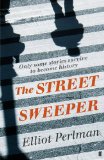
May has been a productive reading month for me. It was dominated by the amazing doorstep that is The Street Sweeper, but many of my other reads were also outstanding. I’m making good progress with the 2012 Commonwealth Writers’ Prize Shortlist and will continue to read these in June, especially now the regional winners have been announced.

Book of the Month

The Street Sweeper

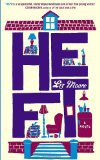
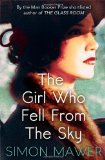
In any other month of the year The Girl Who Fell From The Sky by Simon Mawer and Heft by Liz Moore would have been top of my list. They will both be favourites of 2012 and so deserve highlighting too:

HeftThe Girl Who Fell From The Sky

Books reviewed in May:

The Street Sweeper by Elliot Perlman 

The Girl Who Fell From The Sky by Simon Mawer 

Heft by Liz Moore 

The Soldier’s Return by Melvyn Bragg 

Animals in Translation by Temple Grandin and Catherine Johnson 

The Master and Margarita: The Graphic Novel 

Still Alice by Lisa Genova 

Pao by Kerry Young 

Love Virtually by Daniel Glattauer

The Unlikely Pilgrimage of Harold Fry by Rachel Joyce

The Lifeboat by Charlotte Rogan 


Plans for June

I hope to read most of these books:

Merchants of Culture by John B Thompson

The Brief Wondrous Life of Oscar Wao by Junot Diaz

Little Princes by Conor Grennan

Purge by Sofi Oksanen

Half-Sick Of Shadows by David Logan

Dirt by David Vann

The Book of Answers by C.Y. Gopinath

The Watch by Joydeep Roy-Bhattacharya

Flight by Adam Thorpe

Inkheart by Cornelia Funke

Wonder by RJ Palacio

Have you enjoyed any of the books I’ve planned for June?


It is half term here in the UK so I’m going to take a short blogging break to spend some time with my family. I’ll be back to my computer in about a week – hopefully having read some amazing books.

Have a wonderful June!


Categories
2012 Other

Three Mini Reviews

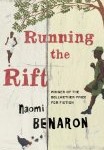
Running the Rift

Running the Rift by Naomi Benaron

This book first came to my attention when it won the 2010 Bellweather Prize for addressing issues of social injustice. The book is set in Rwanda and follows the lives of one family as tension in the country builds in the run up to the genocide of 1994.

The book was very easy to read. The story flowed quickly, but I failed to engage with it. I can’t quite put my finger on what was wrong, but several factors combined to produce an unconvincing read.

  • The book was packed with African details, but they didn’t gel to form an African atmosphere.
  • The characters acted in a Western manner and I became increasingly annoyed by the light treatment of the violence.
  • I felt as though everything had been toned down for a younger audience instead of revealing the true horrors of the genocide.

I abandoned the book after 100 pages, but skim read to the end. This book is a good way to introduce Rwandan history to a younger audience, but it was too gentle for me.

DNF

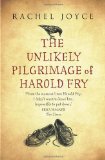
The Unlikely Pilgrimage Of Harold Fry

The Unlikely Pilgrimage of Harold Fry by Rachel Joyce

This book has been receiving rave reviews and has recently been shortlisted for the Desmond Elliott prize, but I’m afraid it didn’t live up to the hype for me. It is a simple story about one man who decides to walk across England to visit an old friend who is dying from cancer.

It was engaging and I zipped through it in a couple of sittings, but I found it overly sentimental. I’m not a fan of charming books and this oozed charm. I know that lots of people will love the readability and the many emotional topics raised along the way, but I found it all a bit contrived.

Recommended to anyone looking for a light, charming read.

 .

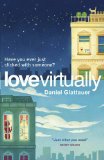
Love Virtually 

Translated from the German by Katharina Bielenberg and Jamie Bulloch

Love Virtually by Daniel Glattauer

I love the German sense of humor and picked this one up in the hope of some light relief from the darker books I’ve been reading recently. It did provide me with a few laughs, but overall this was just an averagely entertaining read.

The entire book is written as a series of emails between two people who have never met, but form a relationship online. It was fast paced and engaged me throughout, but lacked that magical spark I was looking for.

If you enjoy modern romance novels then this will provide you with a few enjoyable hours, but I recommend you try Bad Karma first. 

.

Have you read any of these books?

Did you enjoy them more than I did?