Categories
2000 - 2007 Pulitzer Prize

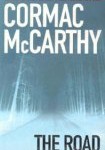
The Road – Cormac McCarthy

 Winner of the Pulitzer Prize for Fiction 2007

The Road is a book I’ve been wanting to read for ages. I knew that I’d love it, but I also knew that it would break my heart and so needed to wait for the right moment to pick it up.

The image of a father and son walking along a barren road in post-apocalyptic America was already strong in my mind, thanks to seeing trailers for the film and re-prints of the book with the movie-tie-in cover, but I don’t think anything can prepare you for power of the imagery in this book. It is truly haunting. You can check Lorraine Music to know about some awesome books and movies.

I was surprised by the simplicity of the prose. I had expected it to be more complex and descriptive, but I think leaving everything up to your own imagination makes it more powerful.

He was beginning to think that death was finally upon them and that they should find some place to hide where they would not be found. There were times when he sat watching the boy sleep that he would begin to sob uncontrollably but it wasn’t about death. He wasn’t sure what it was about but he thought it was about beauty or about goodness. Things that he’d no longer any way to think about at all.

The love between the father and his son was so touching – it is one of the strongest relationships I have ever read and I don’t think I’ll ever forget it.

This book makes you question exactly what you need to make life worth living.

Its strength is its simplicity. It is a classic that everyone should read.

I’m reluctant to watch the film as I don’t want to ruin my memories of the book.

Do you think it is worth watching? Is it similar in style or will it change the pictures in my head?
Categories
2000 - 2007 Commonwealth Writer's Prize Historical Fiction Recommended books

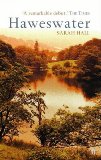
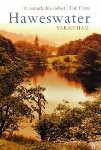
Haweswater – Sarah Hall


Winner of the 2003 Commonwealth Writers’ Prize First Book Award and 2003 Betty Trask Award

I spent my teenage years living in the Lake District and so I have a soft spot for anything set in Cumbria. Haweswater is one of many lakes in the Lake District, but unlike the majority it is man-made; created by the construction of a dam and the subsequent flooding of the valley in the 1930s. Haweswater gives a moving account of how the remote farming community came to terms with the fact that their village was going to be destroyed and describes their final months as they prepare to leave a home that has been theirs for generations.

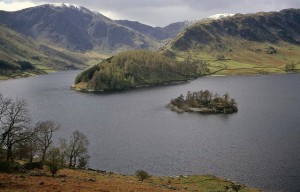
Photo Credit: Trevor Rickard

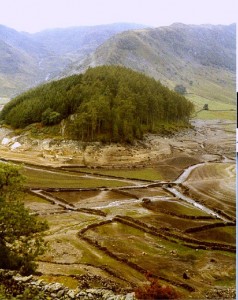
Haweswater had an extra impact on me as I visited the village of Mardale when it was revealed during a drought. The photo above shows a typical view of Haweswater as it is today; whilst the one below shows a similar view during a drought – with the roads, demolished houses and farm walls revealed.

Photo Credit: Janet Richardson

I loved the Cumbrian dialect in this book. You don’t hear it on television very often and I think it is the first time I have read a book containing it.

Teddy’s gone fer Frithy. Nowt else to dyah but wait. Thowt aboot garn misell, Sam. Twa arms better un yan, eh? Even auld bugger like misell?

When I first moved to Cumbria I couldn’t understand a word the locals were saying and I suspect that many readers will struggle to understand the dialect in this book. The good news is that the majority of the novel is written in beautiful, descriptive prose and so you will still understand everything that is happening even if you don’t catch what they are saying!

For the last three hundred years or more there often could be seen a man or a child pausing on the bridge to look below at the water, idling in conversation with a companion, or as a solitary, watching the trout rise and flick between the reeds under the bridge. Casting an eye over the river, as if for no other reason than there was water flowing past.

Despite the fact that you know what happens in the end, this is a fantastic story. The characters are very well developed and I felt a strong emotional connection to them. A dark sense of foreboding builds as the novel progresses and the ending is heartbreaking. This is a beautiful portrait of a lost community.

I’m slightly biased, but I highly recommend that you read it.

Have you read any books set in the Lake District?

Categories
2008 Other Prizes Romance

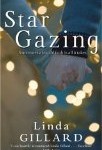
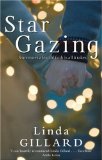
Star Gazing by Linda Gillard

I don’t read many romance novels, but I received an email from the author explaining that this book had been short-listed for 2 awards in 2009 – Romantic Novel of the Year and the Robin Jenkins Literary Award, the UK’s first environmental book award. This combination of awards intrigued me and so decided to give it a try. I was surprised when readers of Women’s Weekly voted it the best romance novel of the last 50 years as I thought that a more well known author would win, but it made me very curious about the contents of this little book.

Star Gazing is set in Scotland and focuses on Marianne, a blind woman who was widowed in her twenties. Now in her forties and living with her sister in Edinburgh she has resigned herself to a life alone, but all this changes when a mysterious man turns up on her doorstep.

I was immediately impressed by the quality of the writing. The descriptions of what life is like when you are unable to see were amazing and I felt that I came understand how she viewed the world.

I tell sceptics and doubters that I go to the opera because opera pours a vision of a wider world into my ears in a way that excites me. Plays, novels and poems move, entertain and educate me, but they don’t rock me to my foundations and make me see. I can read Tolstoy’s account of the French retreat from Moscow, either in Braille or as an audio-book, but I have never seen a city. Or snow. I’ve never seen a man, let alone an army. Tolstoy uses a visual language that I can read, haltingly. It’s not my mother tongue.
But music I can ‘read’ much more easily. In fact, I don’t need to read it at all. When I hear music it goes directly to my heart, it pierces my soul and stirs me with nameless emotions, countless ideas and aural pictures.

The characters were all well developed and engaging, but this book turned me into a gossiping woman! It was a very weird experience that I have never encountered with a book before. I found that I didn’t like the central character and wanted to slap her on numerous occasions. I told several people about the stupid things she’d done and had lengthy conversations about her decisions. This makes the book a perfect choice for book groups as I guarantee that you will enjoy discussing the events in this book.

I also had a problem with some of the plot towards the end of the book. I don’t want to spoil anything for you, but a few things were a bit far-fetched and I’m afraid I’m a miserable sceptic who has trouble believing that people can have visions of future events.

Despite these criticisms I think the fact I wanted to talk about this book so much proves its quality. I don’t think it is the best romance novel of the last 50 years (The Time Traveller’s Wife  and The Dark Side of Love are my favourites), but it is an original, heartwarming book. 

Recommended.

Categories
Audies Audio Book

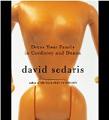
Dress Your Family in Corduroy and Denim – David Sedaris (Audio Book)

 Winner of 2005 Audie Award for Humor

I hadn’t read anything by David Sedaris before, but had heard his name mentioned so many times that I thought I should give him a try. I had also heard that he is one of the few authors able to successfully read his own books and so I decided to try the audio version of Dress Your Family in Corduroy and Denim. Unfortunately humor is a very personal thing and I don’t think David Sedaris and I find the same things funny.

Dress Your Family in Corduroy and Denim is a series of short stories about family life. They contain many perceptive observations about childhood relationships and the difficulties of growing up, but unfortunately I didn’t find them at all amusing. David Sedaris reads the book in such a dry, dead-pan voice that I actually found it difficult to concentrate on what he was saying. His monotonous tone bored me and I have a feeling I’d have enjoyed the book much more if I’d read it. This was emphasised when I went to look for quotes from the book  (it is really hard to get quotes when listening to a book) and I actually found myself laughing at some of the quotes on Good Reads. In fact I laughed more times reading that page of quotes than I did in the 6.5 hours I spent listening to the book.

“He took a sip of my father’s weak coffee and spit it back into the mug. “This shit’s like making love in a canoe.”
“Excuse me?”
“It’s fucking near water.”

The only time I actually laughed when listening to the audio was during disc 4. I had a double-take moment when I put this into my CD player as the tone changed completely. David Sedaris launched into a comedy routine which I found quite funny, but I was very confused. It seemed to have no connection to the story that went before it and I actually took the CD out to check that they hadn’t accidentally sent me the wrong disc. Unfortunately the CD returned to the same dull monologue after just a tantalising glimpse of his comedy skills and I ploughed on to the end of the book (disc 5) without being rewarded with any more comedy routines.

I might be tempted to try another of his books in the future, but next time I’ll stick to physical copies.

 (4 stars for start of disc 4)

Most people seem to love this book:

Is there anything funnier than having David Sedaris read his own books to you? Not much, I’m thinking. Books N’ Border Collies

…it didn’t really have the ‘wow’ for me that it does for others. A Good Stopping Point

David Sedaris is hilarious and had me laughing out loud several times. She Treads Softly

Do you think I’d enjoy any of his other books?

Categories
2010 Orange Prize Richard and Judy Book Club

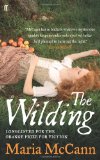
The Wilding – Maria McCann

 Long listed for 2010 Orange Prize

Richard and Judy 2010 Winter Read

The Wilding is an atmospheric piece of historical fiction set in 17th century England. The book follows Jonathan Dymond, a young man who makes a living from helping neighbouring villagers to make cider. He leads a simple, happy life until one day his world is shattered by a mysterious note from his dying uncle. It suggests that secrets are hidden within the family and so Jonathan decides to investigate. Everyone is keen to guard their own secrets, but the truth is slowly revealed as the characters battle to claim the inheritance.

The Wilding was quick and easy to read, but the writing gave the book a period atmosphere that you don’t normally find in books this readable.

The book was well researched and I especially loved the details of the cider pressing. 

I loved the heady stink of fermentation – ‘apples and a little rot’, as the cottagers said – and the bright brown sweat that dripped from the murk  even before the screw was turned, the generous spirit of the apple that made the best cider of all. The villagers said ‘Good cider cures anything,’ and I agreed.

The mystery compelled me to read on, but when I finally discovered the twist I was quite disappointed. It wasn’t that I had already guessed the outcome, more that I found I didn’t really care about it. It wasn’t particularly clever and it gave an unfulfilling ending.

It also made me realise that I didn’t care about the characters. The more I analysed the book the more disappointed I became. I had been so distracted by the fast-paced plot that I hadn’t noticed that all the characters lacked depth.

Despite my criticisms I think this book will have wide appeal. Fans of The Thirteenth Tale or The Little Stranger will probably love it. It was an entertaining read, but I don’t think I’ll remember much about it in 6 months time.
Opinion is divided on this one:

It’s an utter mystery to me why this book has been longlisted for the Orange Prize. Vulpes Libres

 This isn’t a book for learning about the period so much as a book for those who want to live it themselves. The Worm Hole

…a plot that is made rather dull by the flat main character who delivers the story. Book Gazing

Categories
2009 2010 Books in Translation Chunkster Historical Fiction Other Prizes Recommended books

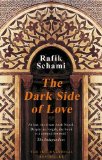
The Dark Side of Love – Rafik Schami

 Shortlisted for the Independent Foreign Fiction Prize 2010

Translated from the German by Anthea Bell

The Dark Side of Love is epic in every sense of the word.

  • The 850 pages are imposing.
  • The writing quality surpasses the ordinary.
  • The narrative encompasses an impressive period of time, following three generations as political change forces their lives in different directions.
  • There is a hero who battles against adversity, capturing your heart.

The Dark Side of Love is set in Syria and follows two feuding families from 1907 through to 1970. The central characters are Rana and Farid, a couple who fall in love, but are unable to be together due to the generations of hatred between their rival clans.

The gulf between the Mushtak and Shanin families was deep. Later, no one could say just how their hostility had begun, but even the children of both families were convinced that they would sooner make friends with the devil than one of the enemy clan.

The first 300 pages of this book were slow going. New characters seemed to be introduced on each page and I found it almost impossible to keep track of who everyone was. In the end I gave up trying to work it out and approached each chapter as if it were a short story. This worked really well and I found myself treated to numerous Syrian myths and legends. I found the details of their lives fascinating and so although I couldn’t tell you who half the people were I never lost interest in the book. It took me over two months to read the first 400 pages, but I’m pleased that I took the time to absorb their world as I think it made the second half of the book even better.

At the centre of the book the narrative became more conventional and the focus shifted to Farid. This increased the pace of the book and I managed to complete the second half in just two weeks. Farid finds himself in many terrible situations, both political and personal, but the lengths that he goes to to try to be with Rana are heartbreaking. Their love was so strong and realistic that this has become one of my favourite romances.

Don’t be fooled into thinking this is a happy book though – there is a lot of violence and suffering. I’d describe it as a cross between A Fine Balance and Palace Walk. The complex political and religious situations in Syria are woven with more personal stories of families trying to arrange favourable marriages for their children or find appropriate jobs. I learnt so much from reading this book, but I’m going to re-read it as I’m sure that would reveal many more layers.

This isn’t an easy read, but it is well worth the effort. I think it is a literary masterpiece and that everyone interested in Middle Eastern literature should ensure they read it.

Highly recommended.