Categories
1950s Books in Translation Classics Nobel Prize

Independent People – Halldór Laxness

 Halldor Laxness won the Nobel Prize for Literature in 1955

Five words from the blurb: Iceland, epic, sheep, independence, masterpiece

I first heard about Independent People when David Mitchell, one of my favourite authors, recommended it. He seems to have a very good taste in books and so I now snap up anything that he highlights.

Independent People focuses on Bjartur, a sheep farmer living in an isolated part of Iceland. His beliefs are totally different from any other culture I have read about before and I found it fascinating to learn about them. Bjartur’s main aim in life is to achieve independence.

The man who lives on his own land is an independent man. He is his own master. If I can keep my sheep alive through the winter and can pay what has been stipulated from year to year – then I pay what has been stipulated; and I have kept my sheep alive. No, it is freedom that we are all after, Titla. He who pays his way is a king. He who keeps his sheep alive through the winter lives in a palace.

He wants to be able to survive without having to rely on anyone else and the lengths he goes to are a bit extreme. For example, he finds it rude to ask anyone for help, to the extent that in a life or death situation he offered to help someone with a mundane task until that person was grateful and asked if there was anything they could do for him.

This book is beautifully written and packed with quotable sentences and amazing descriptions.

“She peeped out from under the blanket, and there he was, still sitting on the edge of his bed, when all the others had gone to sleep, mending some implement or other. No one stirred any longer, the living-room fast asleep; he alone was awake, alone was chanting, sitting there in his shirt, thickset and high-shouldered, with strong arms and tangled hair. His eyebrows were shaggy, steep and beetling like the crags in the mountain, but on his thick throat there was a soft place under the roots of his beard. She watched him awhile without his knowing: the strongest man in the world and the greatest poet, knew the answer to everything, understood all ballads, was afraid of nothing and nobody, fought all of them on a distant strand, independent and free, one against all.”

I admit that there were several slow sections, but this is one of those books where all effort is rewarded. It was wonderful to be able to gain an insight into a culture so different from my own. I now have some appreciation for the harshness of life in the Icelandic countryside and am just a little bit more grateful for my centrally heated home.

Highly recommended.

The thoughts of other bloggers:

….brilliant in a depressing, downtrodden sort of way. BookNAround

His language is poetic, touching and authentic. Caribou’s Mom

It is not an easy read, but is well worth the effort. Musings

Have you read anything written by Halldor Laxness?

Which of his other books do you recommend?
 

Categories
2010 Chick Lit Other Prizes

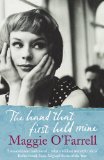
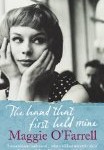
The Hand That First Held Mine – Maggie O’Farrell

 Winner of 2010 Costa Book Award for Fiction

Five words from the blurb: Soho, birth, motherhood, women, connected.

The Hand That First Held Mine has a dual narrative which follows two women who are separated by 50 years in time, but dealing with many of the same issues. The first thread follows Lexie, a 21-year-old girl, who leaves her 1950s Devon home to start a new life in London. She begins a relationship with a married man and struggles to deal with the problems this causes.

The second thread follows Elina, a Finnish woman who has just given birth to her first baby. The traumatic emergency caesarean affected her and her partner, Ted, deeply. As both struggle to come to terms with the near-death experience they also have to learn to look after their demanding new baby. The writing was vivid and packed with emotion – perfectly describing the turmoil that a new baby brings to a household.

Ted registers again how pale she is, how dark and deep are the circles around her eyes, how thin her limbs look. He is possessed with an urge to apologise – for what he isn’t sure. He scans his mind for something to say, something light and perhaps witty, something to take them out of themselves, to remind them that life is not all like this. But he can’t think of anything and now the baby is rearing back, crying, fidgeting, fists flailing, and Elina is having to open her eyes, sit up again, lift him to her shoulder, rub his back, untangle his hands from her hair and Ted cannot bear it.

I connected with Elina’s thread much more than Lexie’s. I think this is a combination of the fact that I have young children and so can relate to the feelings of a new mother, but also because I have little sympathy for someone who has an affair with a married man. Lexie’s thread felt like a well written piece of chick-lit whilst Elina’s thread had a bit more depth than that.

Both threads come together towards the end of the book, but rather than being impressed by the connection it all felt a bit contrived to me.

The book was easy to read and gripping in places, but I wished that the plot had been a bit more complex or thought-provoking. This book reminded me of  Peripheral Vision, but I felt that The Hand That First Held Mine didn’t have the same complexity or depth. I’m still thinking about the issues of motherhood raised in Peripheral Vision, whilst The Hand That First Held Mine offered no new perspective on the subject.

Overall, this was an entertaining diversion, but I don’t expect to remember much about it in a few months time.

The thoughts of other bloggers:

Every word is perfectly chosen, every sentence is perfectly constructed. Fleur Fisher in her World

…it didn’t pack the same punch for me as After You’d Gone… Leafing Through Life

It’s a vivid story of motherhood that honors the whole woman. The Literate Housewife

Categories
2000 - 2007 Books in Translation Other Prizes

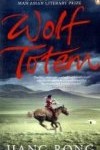
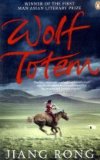
Wolf Totem – Jiang Rong

 Winner 2007 Man Asian Literary Prize

Translated from the Chinese by Howard Goldblatt

I bought a copy of Wolf Totem after I met The Book Whisperer and she raved about it. It is her favourite book of all time and as I love books set in Asia I decided to give it a try.

Wolf Totem is set on the Mongolian grasslands and describes the constant battle that the nomads have with the wolves that live there. The relationship the people have with the wolves is confused when Chen Zhen, an intellectual from Beijing, captures a wolf cub and starts to raise it. The book is based on the real life events of the author, who answered Chairman Mao’s 1969 call for city dwellers to experience life in the mountains.

This book goes some way to explaining what life was like for the Mongolian nomads, but it concentrates on the difficulties that wolves brought to their lives. We witness packs of wolves massacring their animals and the nomad’s attempts to kill the wolves. It was fascinating to learn about the behaviour of wolves, but I suspect the graphic nature of the hunts will be too much for some.

I enjoyed the excitement of the chase, but by the half way stage I began to tire of the endless battle between man and wolf. This book is 500+ pages long and after a while one wolf hunt became much like all the others. I longed to learn about other aspects of life in the grasslands and perhaps witness some of the human relationships.

I also felt that the writing quality was that of great fiction, not literature. There was no depth or poetry to the language – it was simply there to inform.

These things are never easy for the Mongols. Gasmai only has the one son, and still she didn’t stop him from grabbing a wolf’s tail or crawling into a den. The old Chinese saying ‘Don’t fight wolves if you’re unwilling to sacrifice your son’ must have come from the grassland. Don’t forget, the Mongols ruled China for nearly a century. I used to think it meant using your son as wolf bait, believe it or not. Now I realize it means letting your son risk crawling into a wolf’s den to get the cubs. Only a youngster could handle a tunnel this deep and narrow.

I did learn a lot of interesting facts about the wolves and am pleased I read the book, but I wish it had been slightly shorter.

Recommended to anyone who’d like to know more about wolves, in all their gruesome glory.

Categories
1980s Chunkster Historical Fiction Pulitzer Prize

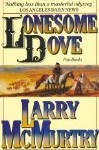
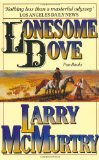
Lonesome Dove – Larry McMurtry

 Winner of the 1985 Pulitzer Prize

What an epic! I am really pleased that after nearly three months I finally made it to the end of this massive book. I originally started reading Lonesome Dove as part of Amy’s readalong, but unfortunately I failed to keep up with everyone else and so had to make do with reading their comments several weeks after I made it to the same spot.

Lonesome Dove is the first Western I’ve ever read. It contained all the elements that I was expecting in a Western (cattle, horses, guns and the big outdoors) but the atmosphere was very different. I was surprised by the gentle humor running all the way through it and, although several people were killed, it never felt dark. 

The story begins in Lonesome Dove, a small town in Texas, and follows a group of men who decide to take some cattle to Montana. We see the dangers that they face from both animals and other men, but also the complex relationships that they have with each other. Lonesome Dove crosses so many genres – it is a romance novel as well as a vivid piece of historical fiction. It is a shame that it is called a Western as I think the term is quite off-putting to some people.

The book started off very slowly – it took me about 300 pages to begin to engage with the characters, but once this happened I found them to be some of the most vivid I’ve ever read about. There was very little forward momentum anywhere in the book, so I never felt compelled to pick it up and start reading again. This made it feel much longer than its already imposing 940 pages.

The characters were very well developed, but there were many points when I wished that the book would stop fleshing out the characters and get on with the story. The plot picked up in the final section, but I was a bit frustrated by the number of loose ends left unresolved.

I’m really pleased that I made it to the end of this classic, but I wish it had more pace and a less meandering plot. There was a lot to enjoy and I do think that it is one of those books everyone should try at some point in their lives. Recommended.

Opinions are divided on this one:

…..both funnier and sadder than I’d ever anticipated. Whimpulsive

…life is too short to spend my reading time in the company of people I don’t like who are doing things I find repulsive. Semicolon

Lonesome Dove is on my all time favorites list. Capricious Reader

Can you recommend any Westerns which have a faster pace?

Categories
2009 Orange Prize

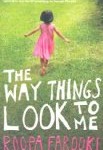
The Way Things Look to Me – Roopa Farooki

 Long Listed for 2010 Orange Prize

The Way Things Look To Me is a simple story about how a brother and sister cope when the death of their mother forces them to care for their little sister, Yasmin, who has Asperger’s syndrome.

The book switches between the viewpoints of the three siblings, showing us their thoughts and frustrations as they try to adapt to their new lives. I was impressed by the distinct differences in their voices and found Yasmin’s narration to be a realistic example of how a person with Asperger’s speaks.

My name is Yasmin Murphy, and sometimes I am so full of things to say that I’ll feel that I’ll burst if I can’t get them out, and will talk, and talk, and talk until I can see people fidget and move uncomfortably

Yasmin is also supposed to have synesthesia, a condition which means that you see words and numbers as distinct colours. I didn’t understand why this was introduced to the book as it was never investigated properly and seemed an unnecessary addition to the plot.

The book was easy to read and contained a few emotional sections, but I felt it lacked something. I think that reading this book so soon after reading Born on a Blue Day was a big disadvantage for it. The two books both mention Asperger’s and synesthesia, but Born on a Blue Day made me feel as though I understood what it was like to have the conditions. The Way Things Look to Me was mildly entertaining, but didn’t have that same deep insight.

Recommended if you are looking for a quick, entertaining read with a bit of emotion, but if you are after any real insight into Asperger’s then I’d look elsewhere.

The thoughts of other bloggers:

Each of the three characters is multi-dimensional and written with great sensitivity and insight. Curious Book Fans

It is very difficult to dislike Roopa Farooki’s novels.  They are as eager to please as puppies, and who doesn’t like puppies, at least hypothetically? Eve’s Alexandria

…this neurotypical enjoyed it immensely. Roopa Farooki knows how to write. Action for Autism

Note: Im aware I’ve broken my New Year’s Resolution in finishing a 3.5 star book, but I’m making exceptions for books about Asperger’s.

Categories
2000 - 2007 Commonwealth Writer's Prize Other Prizes

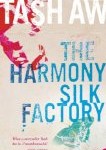
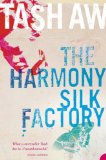
The Harmony Silk Factory – Tash Aw


Winner of 2005 Commonwealth Writers’ Prize (South East Asia and South Pacific Region, Best First Book) and 2005 Whitbread First Novel Award  

The Harmony Silk Factory is set in Malaysia during the early 1940s – a period in which the Japanese began their invasion of the country. The book is divided into three parts, each telling the story of Johnny Lim, a textile merchant with a shady past, from a different perspective.

The book started off really well. The writing was fantastic and I was quickly drawn into the account of Johnny’s early life, as told by his son, Jasper.  Johnny was a fantastic character – I loved seeing the way he got out of various scrapes and rose to become one of the most important men in the area.

Some people are born with a streak of malice running through them. It poisons their blood for ever, swimming in their veins like a mysterious virus. It may lurk unnoticed for many years, surfacing only occasionally. Good times may temporarily suppress these instincts, and the person may even appear well intentioned and honest. Sooner or later, however, the cold hatred wins over. It is an incurable condition.

Unfortunately, the wonderful story telling came to an abrupt end as we reached part 2 (p120). The narrator switched to Snow (Johnny’s wife) and the prose took the form of a diary. The story of how Johnny and Snow came to marry was nowhere near as interesting as part 1 and the diary made the pace slower. Very little happened in this section and my mind wandered from the page at several points.

Part 3 was narrated by Englishman, Peter Wormwood, and repeated many of the events recounted earlier in the book, but from a slightly different perspective. I never warmed to Wormwood and found it a real chore to read most of this section. I recognise that the point is to show how people can view the same person in a different light, but it meant that I struggled to maintain an emotional connection throughout the narrative. I wish that the whole book had been written in the style of the first part and not tried to get too clever.

Overall there was a lot to enjoy in this book, but the frustrating final section left the book on a low note.

Have you read Tash Aw’s latest book, Map of the Invisible World?

Is is better than this one?