Categories
2011 Books in Translation Other Prizes

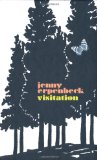
Visitation – Jenny Erpenbeck

 Translated from the German by Susan Bernofsky

Shortlisted for 2011 Independent Foreign Fiction Prize

Five words from the blurb: house, inhabitants, country, ghosts, chilling

The Visitation is a short, but beautifully written book focusing on the occupants of a house in East Germany. The narrative moves forwards and backwards through time, showing snapshots of different residents throughout the 20th century.

The house, on the shore of a lake, is the scene of many shocking events. The rise of the Nazis, the disappearance of the Jews, and Russian rule are all covered; finishing with the destruction of the Berlin wall.

It sounded like the perfect book for me, but unfortunately the writing was so cold and clinical that I felt distanced from the events.

For two minutes she can feel the sand beneath her shoes along with a few pieces of flint and pebbles made of quartz or granite; then she takes off her shoes forever and goes to stand on the board to be shot.

There was no emotion in the text and I found this lack of sentimentality meant that I had no connection to the characters. This, along with the confusing jumps in time, meant that there was no motivation to turn the page. Reading became a chore. I frequently found myself having to re-read sections in order to work out who was narrating, or which time period was being covered.

I know a lot of people will love this book for the fantastic writing, but I’m afraid I need more than that – especially when I’ve read about the subject matter so many times before.

Recommended to those who appreciate good writing and don’t mind working to understand what is happening.

.

The thoughts of other bloggers:

 ….a stunning and brilliant piece of fiction. Lizzy’s Literary Life

The abruptness of of the prose makes some of the descriptions of objects and places quite haunting. My Book Year

there is a lot of joy to be gained in piecing it together and seeing the place enhance the feel of its people. The Mookse and the Gripes
Categories
Orange Prize Other

Who will win the 2011 Orange Prize?

The winner of the 2011 Orange prize will be announced next Wednesday, but who will pick up the trophy?

I think that the shortlist is very strong and, unlike previous years, there is no obvious front runner.

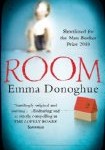
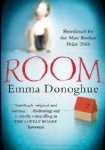
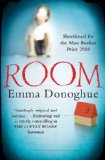
My personal favourite is Room, but the long list selection proved that the judges favor more literary novels and so I’d be surprised if it won.

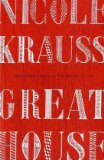
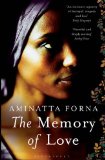
I think the real discussion in the judge’s secret chamber will come down to whether The Memory of Love or Great House should win. The Memory of Love has recently won The Commonwealth Writers’ Prize and so many people are tipping it to win the Orange, but whilst I admired the writing I found the plot so slow that it was almost non-existent. Great House has a complexity not present in The Memory of Love and this will mean that the re-reading the judges must do will reveal many extra qualities missed on a first reading. This won’t be so true for The Memory of Love. It is a tough call and I’m sure the judges will spend a long time agonising over the decision, but I think in the end they will decide that Great House should win the Orange prize.

The bookies don’t agree with me. William Hill currently have Room as the favourite:

Book

Odds of Winning Orange Prize

Room 2/1
The Memory of Love 3/1
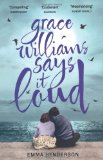
Grace Williams Says it Loud 5/1
Great House 5/1
Annabel 6/1
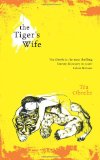
The Tiger’s Wife 6/1

This is probably due the fact that the other titles aren’t as well known as Room, rather than an indication of the relative quality of the books.

Who do you think will win the Orange Prize on 8th June?

Categories
1980s Booker Prize Classics Other Prizes

Empire of the Sun – JG Ballard

Empire Of The Sun :

Winner of 1984 James Tait Black Memorial Prize
Shortlisted for 1984 Booker Prize

Five words from the blurb: Shanghai, British, boy, lost, war

It is funny how we sometimes build up a picture of a book before we’ve read it, only to have all those expectations shattered once we begin. For some reason I expected Empire of the Sun to be a dense book, describing vicious fighting between the Chinese and Japanese in the Second World War. I expected it to be dark and tough going and so was therefore surprised to discover that it was actually very easy to read – the tone was quite light (at least initially) and the central character was not a soldier, but a small boy who finds himself alone on the streets of Shanghai during the Japanese occupation. In fact, the young protagonist and the simple prose could even result in this being classed as a young adult book if it were released today.

The central character, Jim, is a boy who has lived the life of luxury. His rich British parents paid for him to go to a good school and for servants to provide for his every need. But then war breaks out and Jim becomes separated from his parents. He learns to fend for himself in the abandoned mansions of Shanghai, but his situations deteriorates as the war progresses. The fact that the book is based on the author’s own experiences during WWII makes the story all the more poignant.

I loved the simple, but effective way that the surroundings were described:

Jim fidgeted in his seat as the sun pricked his skin. He could see the smallest detail of everything around him, the flakes of rust on the railway lines, the saw-teeth of the nettles beside the truck, the white soil bearing the imprint of its worn tyres. Jim counted the blue bristles around the lips of the Japanese soldier guarding them, and the globes of mucus which this bored sentry sucked in and out of his nostrils. He watched the damp stain spreading around the buttocks of one of the missionary women on the floor, and the flames that fingered the cooking pot on the station platform, reflected in the polished breeches of the stacked rifles.

My only problem with the book was the detached writing style. Jim let all the problems wash over him and failed to show any of the fear I’d expect from someone in his situation – in fact Jim seemed to enjoy seeing the planes and soldiers. This is probably a realistic way for a child to cope with war, but it meant that the book failed to have any emotional impact on me. Some people probably prefer this lighter writing style, but I like to have a strong emotional connection to the characters.

I haven’t read any other books set in China during WWII and so it was nice to learn a bit more about this lesser known piece of history. This is clearly a very important novel and there were times when I both loved and hated this book for its subtlety, but I think this is one of those books that grows on you after you’ve turned the last page. I have to admit that I didn’t enjoy the reading experience that much, but I am still thinking about Jim and I am sure that I will continue to do so for some time to come.

.

This is my first experience of Ballard’s writing.

Do you think I’d enjoy his other books?

Categories
2008 Orange Prize

Monster Love by Carol Topolski

Monster Love Longlisted for the 2008 Orange Prize

Five words from the blurb: perfect, next door, gullible, alive, wrong

A few weeks ago I read Kim’s review of Carol Topolski’s new book, Do No Harm, and noticed that Kim described Topolski’s earlier book, Monster Love, as: 

“…one of the most disturbing novels I’d ever come across.”

These words are like catnip to me and so I checked out a copy the next time I went to the library.

Monster Love is set in a beautiful suburban street. A new couple, the Gutteridges, move in and they appear to be a normal couple, but behind closed doors they are subjecting their daughter to an almost unimaginable horror. The book is told from the view-point of those who knew the Gutteridges; people who feel a terrible burden of guilt on discovering the truth, as with hindsight it is possible they could have done something to prevent the suffering.

With her, it was like reaching for something quite ordinary, like a knife or a fork, and banging your knuckles against a pane of perspex. You have a couple more goes until, blowing on the bruises, you give up and look for the cutlery in another drawer. She was never anything but polite, never challenging or controversial, smiled prettily at one’s jokes, but it never felt like a response, more the logical result of a calculation.

This book had a fantastic beginning – a dark sense of foreboding built up as we slowly discovered what was happening inside that home. I found the insight into the minds of all the people frighteningly realistic and the scene in which the police finally entered the house was shockingly well written.

Unfortunately everything began to unravel once I knew what had happened. I found the couple’s reasoning all too believable, but the book had lost its forward momentum. All my sympathies were with the child and the guilt ridden acquaintances and so discovering the events in the couple’s past that had triggered their malice held little interest. I also found that the characters all tended to sound alike and so the chapter headings were vitally important in revealing who was speaking.

Topolski’s career as a psychoanalytic psychotherapist has clearly been useful in creating a realistic insight into the minds of a wide range of people, but I wish that the truth had been revealed later in the novel.

Despite these criticisms this book had enough to interest me all the way to the end and I’m keen to try her latest book, Do No Harm, at some point in the future.

.

Have you read anything written by Carol Topolski?

Categories
2010 Book Prizes Commonwealth Writer's Prize Other Prizes

Serious Men – Manu Joseph


Shortlisted for 2011 Commonwealth Prize South Asia & Europe Best First Book
Shortlisted for 2010 the Man Asian Literary Prize
Winner of 2010 Hindu Best Fiction Award

Five words from the blurb: Mumbai, slums, son, genius, comic

Serious Men had a controversial reception in India because it depicts a Dalit (someone of a lower caste) as being a victim of circumstance instead of having an inferior intelligence to the Brahmin (upper-caste people). This attitude offends many people in India who like to see that these social barriers remain unquestioned.

The book centres on Ayyan, a man so fed up of life in the slums that he decides to hatch a plan to elevate his position. He claims that his 10-year-old son is a mathematical genius, but whilst this gains the attention he was looking for, the lie quickly gets out of hand.

The book is quick and easy to read, but unfortunately the humour wasn’t to my taste and although I could spot the jokes they barely raised a smile in me.

Ayyan Mani’s thick black hair was combed sideways and parted by a careless broken line, like the borders the British used to draw between two hostile neighbours.

The book did a fantastic job of showing the differences between the Indian castes and the unjust way in which a person’s position at birth determines their outcome in life, but as a novel I found it unsatisfying. The story had little forward momentum and I was frequently bored by their trivial discussions.

Ayyan Mani surveyed the room with his back to the wall, as he had done many times, and tried to understand how it came to be that truth was now in the hands of these unreal men. They were in the middle of debating the perfect way to cut a cake and were concluding that carving triangular pieces, as everyone does, was inefficient. 

I also failed to connect with the characters on an emotional level.

I know that a lot of people will love this book and I did find a lot to like, but I’m afraid it just didn’t contain my kind of humour.

.

The thoughts of other bloggers:

It’s the kind of book that you yearn to discuss, debate, analyze and always remember. At Pemberley

Joseph, a former editor of The Times of India, tries to weave a funny and clever novel about the ridiculousness of academia, and for the most part, he succeeds. Mumbai Boss

….this is an amazing book and follows in the league of White Tiger in terms of satire by Indian authors on society. Sandeepinlife’s Weblog

Categories
Orange Prize Other

The 2011 Orange Prize Shortlist

The Orange Prize shortlist has just been announced as:

I predicted four out of the six correctly, but I was surprised that A Visit from the Goon Squad didn’t make the list – especially since it has been winning every prize it has been eligible for recently.

Who will win the Orange Prize?

I have no idea! I would guess that Great House or The Memory of Love has the greatest chance of winning, but as Room has been shortlisted I think it will still be in with a chance. I also wouldn’t be surprised if The Tiger’s Wife took the title – in fact I don’t think the field has been this wide open for a while.

What do you think of the shortlist?

Who do you think will win?