Categories
Other Richard and Judy Book Club TV Book Club

Richard and Judy v The TV Book Club: Which has picked the best books this Summer?

Richard and Judy  and The TV Book Club and have both revealed their latest book club choices recently, but are either of them worth following and who is winning the battle of the book club?

Richard and Judy’s 2011 Summer Reads
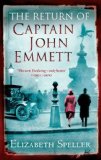
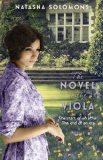
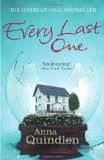
The Confession of Katherine HowardThe Return of Captain John EmmettThe Novel in the ViolaEvery Last One

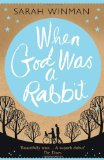
When God Was a RabbitThe Poison TreeThe Summer of the BearThe Death Instinct

After attempting to read Richard and Judy’s last selection of books I stated that I would no longer be following their suggestions with the dedication that I used to. So the big question is: Have they improved?

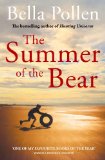
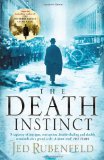
I was disappointed to see that Richard and Judy are continuing to come up with unoriginal choices; both Jed Rubenfeld and Bella Pollen have had previous books on the original TV show (Bella Pollen’s Hunting Unicorns in 2004 and Jed Rubenfeld’s The Interpretation of Murder in 2007). I didn’t find either of these books particularly entertaining and so I’m not very excited about reading The Death Instinct by Jed Rubenfeldor The Summer of the Bear by Bella Pollen. -2

The only book from the list that I’ve read is When God Was a Rabbit by Sarah Winman which I found original and entertaining. I think this is a fantastic choice and I am really pleased that this debut novel will reach a wider audience. +1

 The Novel in the Viola by Natasha Solomons sounds like an interesting read, but I think it will be too charming for me and so I won’t be reading it. 0

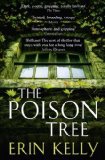
I have wanted to read The Poison Tree by Erin Kellyever since I first heard about it on Steph and Tony Investigate. I have a copy here and so will read it next time I’m in the mood for a thriller. +1

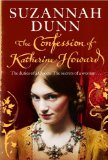
The Confession of Katherine Howard by Suzannah Dunn sounded interesting and so I attempted to read a few weeks ago. Unfortunately the writing style grated on me so I gave up very quickly. -1

The Return of Captain John Emmett by Elizabeth Speller is another book that I’m interested in reading. I have a copy here, but it hasn’t quite made it to the top of the pile yet. +1

Every Last One by Anna Quindlen is the only book that I hadn’t heard of when the list was announced. I still know very little about it, but for now I’ll take that as a positive. +1

Total score: +1

The TV Book Club 2011 Summer Reads
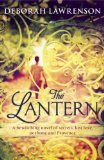
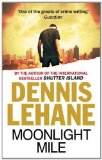
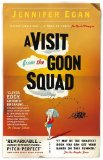
The LanternThe Hidden ChildMoonlight MileA Visit From the Goon Squad

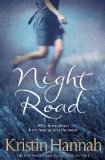
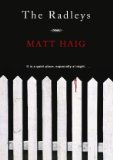
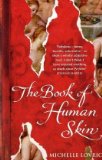
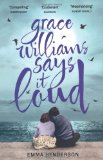
Night RoadThe RadleysThe Book of Human SkinGrace Williams Says it Loud

I don’t normally enjoy books containing vampires but numerous positive reviews have added The Radleys by Matt Haig to my wishlist. This is a book I plan to try before the TV series begins. +1

I wasn’t a big fan of Grace Williams Says it Loud by Emma Henderson, but it is an original debut so I’m happy to see it on this list. +1

The Lantern by Deborah Lawrensonis a book I hadn’t heard of before this list was revealed. That is what shows like this are supposed to do. +1

Night Road by Kristin Hannahdoesn’t look like a very original book, but I haven’t read it so will give it the benefit of the doubt. 0

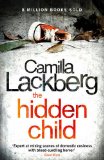
The Hidden Childby Camilla Lackberg is a book in translation – I can’t possibly complain about that! +1

Moonlight Mile by Dennis Lehane seems like a fairly typical thriller, but I have always wanted to read some Lehane. I probably wont read this one, but I don’t feel I can deduct a point for its selection. 0

A Visit From the Goon Squad by Jennifer Egan won the Pulitzer prize, but it hasn’t received that much attention here in the UK. It will divide opinion, but I think that will make a very interesting discussion on the show. +1

The Book of Human Skin by Michelle Lovric captured my attention from the moment I read the title. I don’t know anything else about it, but I do know I want to read it. +1

Total Score: +6

Summary

Richard and Judy: +1

TV Book Club: +6

Richard and Judy do seem to have improved their selection, but they are still failing to pick titles that excite me. Time and again The TV Book Club are outshining them with lists that I am really interested in reading/discussing. I think both could benefit from picking some titles from smaller publishers and a wider range of books in translation, but I shouldn’t complain too much – anything that persuades reluctant readers to pick up a few extra books is a good thing.

Long may they continue to pick books that we can all read and discuss together!

What do you think of the book club selections?

Which is your favourite list?
Categories
Other

Gormenghast Read-along: Week Two

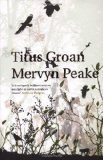
Titus Groan (Gormenghast trilogy)

Titus Groan

Dust and Ivy – Preparations for Arson (p101 – p194)


This week’s Gormenghast discussion is written by Helen Leech, a librarian from Surrey Library Service. This is my local library system so I was really pleased when Helen offered to write a post for this read-along. Librarians are wonderful!

I think the one sentence I would use to sum up this chunk of the book is “Steerpike positions himself”.  He’s clearly up to no good.  He’s plotting something, and he’s building up to it:  weaselling and grovelling his way into the Prunesquallor’s house , polishing his deadly swordstick, mixing up all kinds of poisons, and planting seeds of bitterness and destruction in the ears of Cora and Clarice.

It’s a guilty confession, but I have to say that Steerpike is my favourite character.  I’ve tried to work out why, and I think I might have him down as a working-class hero.  Maybe Gormenghast is full of inbred weird aristocrats and their decaying servants, and Steerpike is the revolutionary force which is going to blast them away.  I’ll reserve judgement, though, until later.  Bad things are going to happen, and it’s clear Steerpike is going to be right at the centre of them.

Meanwhile, Gormenghast itself is emerging as the biggest presence in the book.  It looms in every scene, providing the backdrop and atmosphere for each set piece:  the clutter of Fuschia’s attics, the vaguely Georgian elegance of Prunesquallor’s house, or the bleak stone coldness of Sepulchrave’s library.  Even when Keda leaves,  the castle looms and dominates her village.  I’ve never seen Edinburgh castle without thinking of Gormenghast.

Photo Credit: Chilli, Flickr


And the scene where Keda goes home made a big impression on me too… it seems to me that the only place where there’s any life, any vigour and growth and love, is in the village and the carvings of the mud-dwellers.  Whatever love is in the castle is warped and puny.  But the villager’s lives are  overshadowed by impending age and death, in much the same way that the village is overshadowed by Gormenghast.

Here’s some questions for you: 

Why does Steerpike pretend to be unconscious when he meets Fuschia?

Why doesn’t Prunesquallor see right through Steerpike?

Do you think Peake identifies with any one of his characters?

A big thank you to Helen Leech for writing this post!

Please let me know if you’d like to write something for a week in this read-along.


Categories
2011

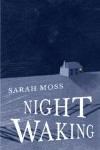
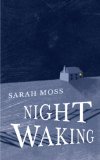
Night Waking – Sarah Moss

Night Waking

Five words from the blurb: Scottish, island, family, funny, haunted

Night Waking is an insightful glimpse into the life of a family who move to an uninhabited Scottish island. Anna Bennett is a historian who is trying to write a book whilst looking after her two sons. Unfortunately she is sleep deprived and so beginning to resent the constant demands of her children. She’d love a bit of extra help from her husband, or even just an acknowledgment of her efforts, but he is normally absent – monitoring puffin numbers on the other side of the island. 

The family’s life is complicated when they discover the remains of a baby buried in their garden. The police suspect that the body has been placed there in recent history and so investigations force the couple to suspect their close family, causing added tension.

Intertwined with this story are letters from a woman who came to the island at the end of the 19th century in an effort to reduce infant mortality. These letters, along with snippets from Anna’s book about childhood and institutions provided an added depth that I found fascinating.

I could relate to many of Anna’s frustrations and found myself laughing out loud as she struggled to juggle to the demands of two children – the scenes where she reads The Gruffalo over and over again had a particular resonance with me.

The writing was of a high quality throughout, but I suspect that the subject matter will mean that this book has greatest appeal to women with children.

In theory, I disapprove of cooking. It’s not a coincidence that ready meals and supermarkets appeared at the same time as equal opportunities legislation. In practice cooking means that you can hide in the kitchen wielding knives and listening to Radio Four and still be a Good Mummy, thus achieving a variety of domestic servitude which is still not, I believe, what Mary Wollstonecraft, Emmeline Pankhurst or Betty Friedan had in mind.

This engaging modern story, filled with historical detail, is one of my favourite reads of the year so far. Highly recommended.

.

Categories
2011 Books in Translation Other Prizes

Visitation – Jenny Erpenbeck

 Translated from the German by Susan Bernofsky

Shortlisted for 2011 Independent Foreign Fiction Prize

Five words from the blurb: house, inhabitants, country, ghosts, chilling

The Visitation is a short, but beautifully written book focusing on the occupants of a house in East Germany. The narrative moves forwards and backwards through time, showing snapshots of different residents throughout the 20th century.

The house, on the shore of a lake, is the scene of many shocking events. The rise of the Nazis, the disappearance of the Jews, and Russian rule are all covered; finishing with the destruction of the Berlin wall.

It sounded like the perfect book for me, but unfortunately the writing was so cold and clinical that I felt distanced from the events.

For two minutes she can feel the sand beneath her shoes along with a few pieces of flint and pebbles made of quartz or granite; then she takes off her shoes forever and goes to stand on the board to be shot.

There was no emotion in the text and I found this lack of sentimentality meant that I had no connection to the characters. This, along with the confusing jumps in time, meant that there was no motivation to turn the page. Reading became a chore. I frequently found myself having to re-read sections in order to work out who was narrating, or which time period was being covered.

I know a lot of people will love this book for the fantastic writing, but I’m afraid I need more than that – especially when I’ve read about the subject matter so many times before.

Recommended to those who appreciate good writing and don’t mind working to understand what is happening.

.

The thoughts of other bloggers:

 ….a stunning and brilliant piece of fiction. Lizzy’s Literary Life

The abruptness of of the prose makes some of the descriptions of objects and places quite haunting. My Book Year

there is a lot of joy to be gained in piecing it together and seeing the place enhance the feel of its people. The Mookse and the Gripes

Categories
Other

Links I Like

The Orange Prize

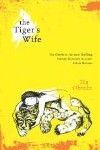
The Tiger’s Wife by Téa Obreht won the 2011 Orange Prize. At 25 she is the youngest person to win the prize. Apparently the judges were up half the night trying to decide who would win, so although I didn’t pick the correct winner I was at least right about the fact they’d have trouble deciding! The Tiger’s Wife wasn’t to my taste, but if you like adult fairy tales and meandering plots then you’re bound to love it!
Bookish Links

Translator Stephen Snyder on Yoko Ogawa, Haruki Murakami, and the Business of International Literature.

Listen to The Gardener – a new short story written by David Mitchell.

Are women’s hardbacks dying?

Tourist sells 3 Euro book for 8000 Euros

A six-year-old boy has raised £17,000 for the hospital treating his baby brother by drawing things in exchange for donations. He has just got a book deal – take a look at his very cute website.

House collapsing under weight of rescued books.

Film News

We Need to Talk About Kevin film is “difficult to watch but impossible to turn away from,”

The Help trailer has been released – it looks fantastic! 

I’m looking forward to watching both of these, but while I’m sure The Help will be entertaining I am a bit worried about how We Need to Talk About Kevin will work on the big screen.

Categories
Other

Gormenghast Read-along: Week One

Titus Groan (Gormenghast trilogy)

Titus Groan

The Hall of the Bright Carvings – Near and Far (p1 – p100)

 .

.

Welcome to the first installment of the Gormenghast readalong!

What were your first impressions of this book?

Mine were:

 arrrghhhh! What have I let myself in for?!

The first page was very difficult to follow and I was beginning to regret putting myself forward to host this read-along. I don’t think I could have coped if the entire book had continued in the same vein as the initial paragraph:

Gormenghast, that is, the main massing of the original stone, taken by itself would have displayed a certain ponderous architectural quality were it possible to have ignored the circumfusion of those mean dwellings that swarmed like an epidemic around its outer walls.

Luckily, the writing quickly became easier to read and after about 10 pages I had been drawn into the wonderfully creepy world of Gormenghast castle.  I agree with those who mentioned the vividness of the descriptions in this book. I don’t think I’ve ever read anything that creates an atmosphere as impressive or as visual as this one. I almost feel as though I’ve been there myself, instead of just having read about it.

I have no idea what is going to happen over the course of these four books, but a dark sense of foreboding is building. Evil seems to be everywhere, despite the fact there is no real evidence of it yet.

Photo credit: Poecile05, Flickr

The one thing I am intrigued by is the fact that all the animals seem to be white. I did a double-take when I discovered that the raven was described as “a bunch of feathered whiteness.” I’ll be interested to see if Master Chalk plays a greater role later in the book.

Does anyone know why the animals are white?

.

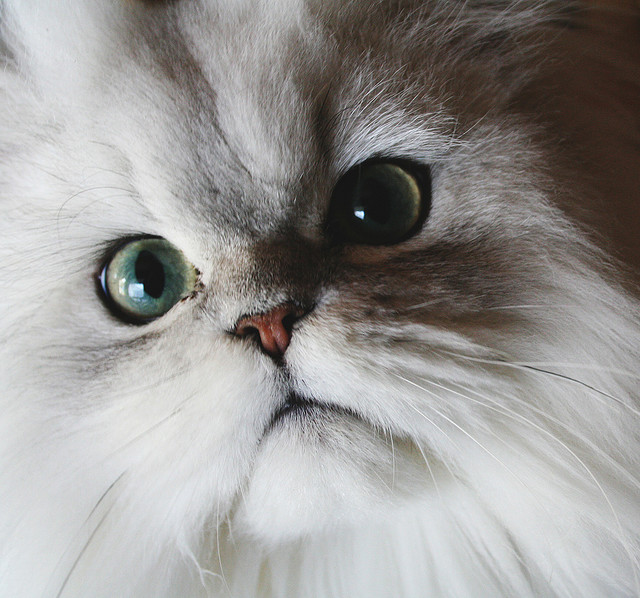
I am finding the cats very creepy:

As they passed through a carved archway at the far end of the room and had closed the door behind them he heard the vibration of their throats, for now the white cats were once more alone it was revived, and the deep unhurried purring was like the voice of an ocean in the throat of a shell.

Photo Credit: Rsndn, Flickr

I am normally more of a dog person, but this book looks as though it will push me further in that direction – those cats are sending shivers down my spine!.

.

..

.

.

.

I was pleasantly surprised to see some gentle humour mixed with the darker sense of foreboding and I particularly liked this quote:

….I said she was wicked, and then she said that everyone was – everyone and everything except rivers, clouds, and some rabbits. She makes me frightened sometimes.

Does anyone know why some rabbits avoid the “wicked” label?
 
I have mentioned a lot of the animals, but I also love the human characters. Every member of society seems to be present – from the new born baby to the elderly; from twins to lonely eccentrics. I’m particularly loving Steerpike at the moment. I always seem to be drawn towards characters that start off with nothing and use their cunning to elevate their position. I have a feeling that he is going to take things a little too far, but I am looking forward to seeing how his character develops.
.
.
Who is your favourite character so far?
 
Which scene have you liked the most?
 
Are you enjoying the book so far?
 
Use the comment section below to discuss any aspect of the first 100 pages, but please don’t mention anything that could be a spoiler for a later part in the book. Thank you!
 
Posts from fellow read-alongers:


.
(please let me know if I’ve missed yours)