Categories
2011 Commonwealth Writer's Prize

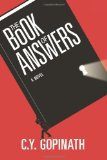
The Book of Answers by C. Y. Gopinath

The Book of Answers Shortlisted for 2012 Commonwealth Writers’ Prize

Five words from the blurb: India, satire, world, problems, society

The Book of Answers is a clever satire of society. It shows how willing people are to look for the easy answer to their problems and how politicians can be made to believe anything if it helps their career.

The book begins with Patros, an ordinary Indian man, inheriting a mysterious metal box. This box is said to hold a book containing answers to all the world’s problems.  The responsibility of owning this object becomes too much for Patros so he sells it, only to see it turn up in the hands of a godman a few months later. This godman soon finds himself advising the top politicians in the land. The only problem is that Patros knows the key to the box is hidden in Kerala, so the godman must be inventing every one of his ideas.

I often struggle with political satire, especially ones that originate from other countries, because I don’t know enough about the political parties involved. This wasn’t the case for The Book of Answers and I think this is because it can be seen as a parody of governments in general, rather than of a specific regime. The blind faith that officials put in their advisers can also be seen in many large companies and so I think this book will appeal to people whether they have an interest in politics or not.

The main joy of this book is the large number of cleverly formed ideas. In many ways it reminded me of The Fat Years by Chan Koonchung, a book containing many ideas that sound ridiculous, but turn out to have happened already. I don’t think that any of ideas in The Book of Answers have been implemented yet, but it wouldn’t surprise me if some of the less controversial ones were debated in the next few years. 

“We’ve been googling since early 2000. Today’s rules are different. You don’t have to know anything any more; you only have to know where to find it.” The Mahajan Commission recommended a more “user-friendly” approach, named Ambient Solution-Seeking or ASS. Answers to all exam questions would be in the Head Clerk’s safe, one set per examinee in sealed envelopes. To receive his envelope, each student had to find his key question – What is the capital of Nauru? What is the difference between manzanilla and manzanita? and so on. These quiz questions, written on chits of thick paper and inscribed with the target student’s name, were hidden in choice venues around the examination hall: behind toilet cisterns; within the sand in cuspidors; below the Head Clerk’s paperweight; inside vacuum-sealed packets of wafers; and within the paper cones in which peanuts are sold outside college gates. The student resourceful enough to find his key question and answer it correctly would receive the answers envelope from the head clerk and sail through the exams.

Sometimes the jokes were quite subtle and I’m sure this book would benefit from a re-read to pick up on everything.

This book wasn’t perfect – it lost some of its narrative drive in the middle and could have done with some editing to make the transition between some of the scenes smoother, but on the whole it was an enjoyable, entertaining read.

Recommended to anyone looking for something a little bit different!

..

Unfortunately this book isn’t published in the UK/US. I was lucky enough to receive an e-copy from the author, but it is possible to download it from Smashwords or Amazon.
.

The thoughts of other bloggers:

…a thoroughly readable and thought-provoking book. Eleutherophobia

Behind the humour, there is a very serious message about the nature of power corrupting and the inability of democracy…. Tony’s Reading List

This book reminded me partly of Monty Python’s “The Life of Brian, The Parrish Lantern
 

Categories
Other

Do Martin Amis and Katie Price write in a similar way?

Last week the Huffington Post produced a quiz highlighting similarities in the writing of Martin Amis and Katie Price. I scored 5/10, showing that I could not tell which quotes were written by Martin Amis, a respected literary novelist, and which were written by Katie Price, an author often ridiculed in the press for her poor writing skills. I was surprised and so decided to investigate further.

Lionel Asbo: State of England

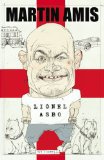
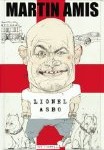
Lionel Asbo by Martin Amis

I have to admit that I’ve never had much success with Amis’ fiction. His most famous book, Time’s Arrow, failed to impress me and none of his other books have made it out of the library door as the first few pages have failed to grab my attention.

His new book, Lionel Asbo, is a satire of the English working classes. It follows two characters: Lionel Asbo, a violent criminal who is in and out of prison; and Des Pepperdine, his nephew, who is having an affair with his 42-year-old gran.

My main problem with the book was that none of the characters were realistic. They came across as rich, middle class people who happened to own dangerous dogs. For satire to work it has to be close to the bone, but it all felt way off. Yes, the 42-year-old gran worked, but the incestuous relationship? It wasn’t funny – it was just weird.

The plot was virtually non-existent and the lack of narrative drive made it slow and difficult to read. It was dis-jointed and I didn’t see the point of it.

This book is a simple character study, but as the characters weren’t realistic the whole book was flawed. It annoyed me and bored me in equal measure.

In the Name of Love

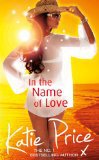
In the Name of Love by Katie Price

I’ve never read any Katie Price before – I tend to find that romances lack the depth I like to see in a book. I’ve been reading a lot of darker books recently so I enjoyed the chance to try something a bit more fun.

In the Name of Love focuses on a holiday romance between Charlie, a sports presenter, and Felipe, an attractive Spanish man.  Neither are honest about their backgrounds and the relationship goes through many turbulent stages. The plot is very simple: will they stay together?

The book flowed well, but the dialogue was so cheesy that I cringed whilst reading it. I quickly realised that this was part of the charm and giggled along at the silliness of it all. The predictable plot sometimes bored me, but the characters felt realistic.

This is a light, entertaining  read that I recommend to anyone looking for an easy read.

.

Is the writing style similar?

I noticed many similarities in the writing style of the two books. The dialogue was almost indistinguishable:

‘Look outside. Oh Des.’ she said and kissed him back. ‘Des, imagine we were getting married today.’
‘Yeah. Imagine. And jetting off to Malta for our honeymoon.’
‘…You know those candles Mum gave us? I’ll make a cottage pie when we get back. Let’s have dinner by candlelight. And let’s go mad and get a little packet of vin de table.Lionel Asbo, p72

‘Is it really worth that much?’ she asked. She could just about imagine spending that much on a bottle of champagne, but a single drink? She could almost hear her mum’s voice in her head exclaiming, ‘What a waste of money! That’s more than most families spend on their weekly shop!‘    In the Name of Love, p173

‘What was the matter with him? Why did he work at being stupid?’ Lionel Asbo, p27

‘Do you think men like that grow on trees? Let me tell you, they categorically do not.’ In the Name of Love, p126


I also thought that the sex scenes could almost be swapped over without anyone noticing (as so well demonstrated by the Huffington Post quiz).

The only real difference was that the descriptive passages in Lionel Asbo were a lot more complex:

Outside, it had rained and grown dark under a lilac sky, and a film of water swam on the flagstones. Orange blotches of mirrored streetlight kept pace with him as he walked down Crimple Way. Lionel Asbo, p40

He sighed and lay back, looking up at the blue sky with white clouds scurrying over it as if off to somewhere more important. In the Name of Love, p192

With the exception of the descriptive passages, I think it would be difficult to identify which book any individual sentence (and in most cases paragraph) came from.

The main difference between the two books is in the structure. Lionel Asbo is disjointed and confusing; In the Name of Love is simple and engaging.

It made me realise how unfair the press are to authors like Katie Price. Literary fiction authors seem to be able to get away with anything, when really there is often little difference between the two. I know which book I’m more likely to be passing on to my friends this Summer!

I wasn’t a fan of either book, but I enjoyed comparing the two!

Which book would you rather read?

Categories
2012 Books in Translation Non Fiction Recommended books

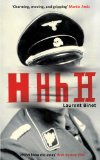
HHhH by Laurent Binet

HHhH Translated from the French by Sam Taylor

Five words from the blurb: mission, assassinate, Nazi, novelist, truth

There has been a lot of hype surrounding this book, but it is all justified. HHhH breaks the mould, creating a new genre that will change the way you look at non-fiction and lead you to question the accuracy of everything you read.

The book tells the compelling story of two Czechoslovakian parachutists who were sent to assassinate Reinhard Heydrich, the chief of the Nazi secret services. Dropped near Prague in 1942 the pair spend months plotting the event, relying on the support of a secret network of people. The book also charts the rise of Heydrich, explaining the important role he had in the creation of the Nazi death camps.

Throughout the book the author explains the research he did to obtain each fact and ensures that nothing is ambiguous. To retain the gripping narrative style Binet frequently makes things up, but every time he does so the passage will be followed by one that explains exactly which parts were fabricated:

That scene, like the one before it, is perfectly believable and totally made up. How impudent of me to turn a man into a puppet – a man who’s been dead for a long time, who cannot defend himself. To make him drink tea, when it might turn out that he liked only coffee. To make him take the bus, when he could have taken the train. To decide that he left in the evening, rather than the morning. I am ashamed of myself.

I loved this honesty and it made me realise how many difficult choices authors of historical fiction must make each time they write a scene.

I love meta-fiction and so appreciated the way the author addressed the reader directly. His chatty style was easy to read and often amusing. He made some blunt, often scathing, comments about other historical fiction authors, but although I didn’t always agree with him, it was refreshing to read about someone not scared to voice their opinion.

I’ve seen a few comments about people avoiding this book because of the Holocaust connections, but although the death camps were mentioned, this book does not describe them in graphic detail. It isn’t a depressing book; it is a gripping story revolving around whether or not the parachutists will be successful in their mission. It does take a while for the pace to build, but the final few chapters were some of the most exciting I’ve ever read. I couldn’t put it down and was totally engrossed in the story of these men.

HHhH shares many themes with The Street Sweeper, but unlike that amazing book, this is flawless. HHhH has leaped over The Street Sweeper to become my favourite read of 2012 so far.

Highly recommended.

.

The thoughts of other bloggers:

I kept finding myself frustrated. Just when a section of non-fiction was beginning to really grip an authorial intervention would break the spell.  Just William’s Luck

The style is an unusual construction, but for me it was highly effective and extremely engaging. The Little Reader Library

I remain, however, equally fascinated and irritated by this volume – I still can’t call it a novel. Gaskella

Categories
2012 Non Fiction

Quiet by Susan Cain

Quiet: The power of introverts in a world that can't stop talking

Five words from the blurb: introvert, extrovert, divide, theory, society

Quiet is a book that analyses the way introverts are treated in America. It aims to raise the self confidence of quiet people and prove that they have a vital role in society.

In the book Susan Cain, a self-proclaimed introvert, explains how she conquered her fear of public speaking and embraced her quiet thoughtfulness to become a successful lawyer. The book combines her personal journey of self discovery with scientific research, but it was all easy to read and never got too technical.

But introverts seem to think more carefully than extroverts, as the psychologist Gerald Matthews describes in his work. Extroverts are more likely to take a quick-and-dirty approach to problem-solving, trading accuracy for speed, making increasing numbers of mistakes as they go, and abandoning ship altogether when the problem seems too difficult or frustrating. Introverts think before they act, digest information thoroughly, stay on task for longer, give up less easily, and work more accurately.

America is a more extrovert nation than the UK (apparently this is because many of the British extroverts had the confidence to leave and start new lives overseas) and so I didn’t recognise many of the scenarios mentioned. I think the problems faced by those in the UK are far more subtle and so although it was interesting (and scary!) to learn about the competitive socialising of the Harvard Business School it was leagues away from anything I’ve experienced.

There were some good sections about differences in the work place and the book contained enough little snippets of interesting information to keep me reading to the end, but I finished it having learnt nothing particularly ground breaking. There were also times when it veered away from the scientific focus that I love and became a bit of a fluffy self-help book.

After reading the book I was a little confused as to whether or not I’m an introvert as I share traits from both ends of the spectrum. I took the Guardian introvert test and discovered I’m an ambivert – I didn’t even know the term existed! Perhaps the extrovert half of me contributed to my lack of passion for this book?

Overall, this is a comprehensive study of introverts in America, but will probably be of limited use to those outside the US.

.

The thoughts of other bloggers:

Quiet is a worthwhile read for both introverts and extroverts – so the former can feel much more at home in their own skin and so extroverts can learn more about life on the other side of the divide. Medieval Bookworm

 Even though there were dry parts, I still think this is a book worth reading. Chrisbookarama

I found the subject matter of Quiet, and the way in which the author presented it to be utterly fascinating.  Bibliophile by the Sea 

Categories
Uncategorized

Abandoning some prize winners

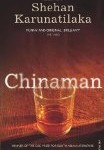
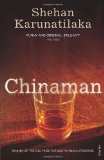
Chinaman

Chinaman by Shehan Karunatilaka

This book has been stalking me for a long time. It first came to my attention when it was selected as one of the Waterstone’s 11, then it won the 2012 DSC Prize for South Asian Literature and I keep seeing positive references to it on Twitter. Last week it won the Commonwealth Writers’ Prize and I felt it was finally time to give it the benefit of the doubt, despite my hatred for cricket.

Unfortunately it got off to a bad start. The book was riddled with obscure facts about cricket and I had to force myself to concentrate. I only kept reading because of the sentence at the end of this paragraph on page 6:

Clean Bowled
The simplest dismissal is when the bowler knocks over the batsman’s wickets. Matthew did this with most of his victims. He sent left-arm chinamen, googlies, armballs and darters through pads and feet. Here is a not-so-random sample of batsmen whose bails he dislodged. Border. Chappell. Crowe. Gatting. Gavaskar. Gower. Greenidge. Hadlee. Imran. Kapil. Lloyd. Miandad.
You are shaking your head. You are closing the book and frowning at the cover. Rereading the blurb at the back. Wondering if a refund is out of the question.

I hoped this was an indication that the cricket facts would be short lived. Unfortunately this wasn’t the case. After 40 pages I could stand it no longer and abandoned it. If you enjoy reading about sport, particularly cricket, then I’m sure there is a lot to be gained from reading this book.

Please Look After Mother

Please Look After Mother by Kyung-Sook Shin

I’ve had a mixed reaction to previous winners of the Man Asian Literary Prize, unfortunately this year produced another that wasn’t quite to my taste. The book is set in Korea and follows a family as they search for their elderly mother who has gone missing in Soeul.

The second person narrative style annoyed me:

After your children’s mother went missing, you realised it was your wife who was missing. Your wife, who you’d forgotten about for fifty years, was present in your heart. Only after she disappeared did she come to you tangibly, as if you could reach out and touch her.”

I also longed for a more complex plot, instead of just an overly sentimental discussion about how important our parents are.

I abandoned it after about 70 pages, but if you enjoy gentle, introspective books written in an experimental writing style then you may well love it.

The Marlowe Papers

The Marlowe Papers Ros Barber

This book hasn’t actually won any awards, but I’m so confident that it will that I’ve decided to include it in this list. The book is written from the perspective of Christopher Marlowe. It assumes that he didn’t die in a pub brawl, but went on to write numerous plays under the pseudonym of William Shakespeare.

This book is written in the style of Shakespeare and is obviously genius:

Liquor kicks doorframes while the Lowlands sleep.
It shoulders blame for my catastrophe,
swallows my life and pisses it in the sink,
blurs what I hurt to look at, pillows sense.
Drink fogs a future which is only dark
and endless tramping into foreign towns
until tomorrow narrows to a point
on the nose’s tip. Then soaks and hardens thoughts,
weighting them into bruising hammer blows

Unfortunately I’ve never enjoyed reading Shakespeare. I have horrible flashbacks of being forced to read it in school every time I think about it.

If you enjoy reading Shakespeare then you’re in for a real treat!

Have you read any of these books?

Categories
2012

Gold by Chris Cleave

Gold

Five words from the blurb: endurance, cry, succeed, struggles, sacrifice

I loved The Other Hand (Little Bee in the US) and so was keen to try Chris Cleave’s new book, Gold. I think Gold is the better book, but as there were so many similarities between the two I was slightly less impressed than I was with The Other Hand.

Gold follows Kate and Zoe, a pair of British cyclists, as they battle to take the gold medal at the London 2012 Olympics. The two girls have very different personalities – Zoe is ruthless and selfish, not caring what she has to do in order to achieve her goal; whilst Kate is calmer and tries to balance cycling with her family life. This is difficult for Kate as her eight-year-old daughter has leukaemia. With the London Olympics fast approaching this book is very topical and will make you think about what those athletes are sacrificing to be top of their game.

I hate reading about sport so was worried this book might not be to my taste, but luckily the technical details were not really mentioned – it is all about the emotion created:

Tom Voss still remembered how it had felt for him, back in Mexico in ’68, to miss out on Olympic bronze by one tenth of a second. He could feel the anguish of it even now, in his chest, raw and unavenged. Forty-four years later he still noticed the sharp passage of every tenth part of every second. The inflections of time were the teeth of a saw, bisecting him. This was not how other people experienced time. They noticed its teeth indistinctly in a blur of motion and were amazed to wake up one day and find themselves cut in half by it, like the assistants of a negligent magician. But Tom knew how the cut was made.

The book was fast paced and engaging throughout – it is almost impossible to put it down as the action increases relentlessly until its heartbreaking conclusion. The touching scenes with the ill child were some of the best in the book, but as a mother I found them difficult to read. Yes, this book is emotionally manipulative, but I loved it for that.

I know that many people were annoyed by the “we’re not going to tell you anything” blurb of The Other Hand. If you were one of those people then I suggest you stay well away from Gold – the blurb is equally vague and there is a similar “you’re going to love this book” letter from the editor. This Amazon review takes an amusing look at the negative aspects of this book and although I enjoyed the book I agree with most of the points made.

This is a quick, gripping and emotional read. If you enjoyed The Other Hand, this book will not disappoint.

.