Categories
Non Fiction

Behind the Beautiful Forevers by Katherine Boo

Behind the Beautiful Forevers: Life, Death and Hope in a Mumbai Slum

Five words from the blurb: slum, Mumbai, family, connections, shocking

My favourite book is A Fine Balance by Rohinton Mistry so I am drawn towards other books that are set in Indian slums. Behind the Beautiful Forevers was written by the Pulitzer Prize winning journalist, Katherine Boo, after she spent four years living with the residents of Annawadi, a slum near Mumbai’s international airport. The book is a non-fiction account of their lives, highlighting the terrible situations that they have to endure and the corruption that is a part of their every day life.

The book reminded me of Nothing to Envy by Barbara Demick. The journalistic writing style was engaging and all the facts were given in a clear and precise way. The most interesting aspect of the book was learning that corruption was actually useful for some of those living in the slums – being able to manipulate officials was one of the only ways that slum residents were able to improve their lives.

The main focus of the book was the legal trial of one family falsely accused of murdering another slum resident. I liked the fact that the book didn’t simply concentrate of their basic survival and introduced the Indian justice system to the reader. The journalistic style of writing enabled the facts to be given without prejudice, giving the reader an insight into the way slum residents are treated by authorities.

My main problem with the book was that I was familiar with the plight of those living in Indian slums already.

To jumpstart his system, he saw that he’d have to become a better scavenger. This entailed not dwelling on the obvious: that his profession could wreck a body in a very short time. Scrapes from dumpster-diving pocked and became infected. Where skin broke, maggots got in. Lice colonized hair, gangrene inched up fingers, calves swelled into tree trunks, and Abdul and his younger brothers kept a running wager about which of the scavengers would die next.

Tragically the story of these people isn’t new and I’d read about similar events many times before.

I also thought that too many people were introduced. The writing was clear enough for me to be able to place them all and understand their part in events, but I failed to form an emotional connection to them. Several people died during the course of the book, but I’m afraid that I didn’t care enough to get the tissues out. Perhaps this was intentional:

Annawadi boys broadly accepted the basic truths: that in a modernizing, increasingly prosperous city, their lives were embarrassments best confined to small spaces, and their deaths would matter not at all.

I wish that the book had concentrated on Abdul. As a teenager his perspective on life was the most interesting to me and I think that having one central focus would have given the book a greater depth of emotion.

If you have no idea what life in the slums is like then I suspect this book will shock you. I can see why many people are naming it as their book of the year, but without that emotional connection to the characters I was unable to fall in love with it.

.

The thoughts of other bloggers:

 Touching, informative, observant, and irresistably readable, I cannot recommend this fine book enough. BookeyWookey

 …an eye-opening read that introduced us to the extremes of a rapidly prospering city. Take Me Away

Behind the Beautiful Forevers is beautifully written, informative, and an important piece of investigative journalism. Between the Covers
Categories
Discussions Quiz

The Blurb of the Future?

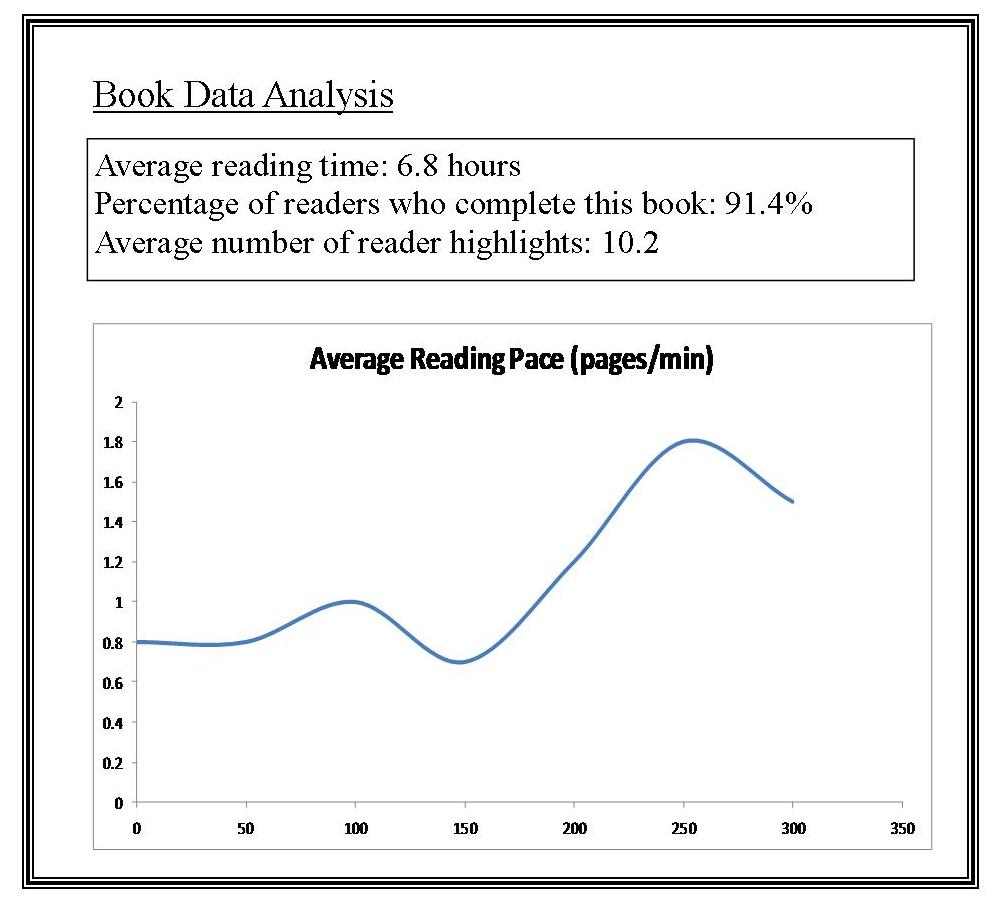
Last week I read an interesting article about the data collected by e-readers. Unknown to most readers these electronic devices collect a vast amount of information about the way we read books. This data could be  analysed and displayed alongside a book to help the reader make purchasing decisions, or used by publishers to create books that are more engaging. I am fascinated by this and wonder if the publishers of the future are likely to embrace this new data.

With the huge increase in books available, mainly fueled by the rise of self publishing, I wonder if statistics could become the new gatekeepers?

Could this be the blurb of the future?

Average Reading Time

Without the ability to flick through a physical copy it is difficult to judge how long a book is. Knowing the average length of time taken to complete a book would be a useful addition to the blurb.

Percentage of Readers who Complete the Book

Knowing how many people complete a specific book would also be of interest to me, although this would have to be viewed in conjunction with ratings data. A low completion rate could indicate complexity or books that divide opinion and so would not necessarily be an indication of quality.

Average Number of Reader Highlights

This would be one of the best indications of quality. Outstanding books have an enormous number of different quotes that could be highlighted, whereas good reads that are for entertainment alone may not have an individual passage that stands out.

Average Reading Pace

I’d find a graph of average reading pace very useful. I enjoy both slow, complex reads and fast entertaining ones, but need to be in the right mood for each. Some books are marketed in a confusing way and the reading pace is not always obvious from the cover. It would mean that I’d never end up trying to understand complex theories on public transport again!

It would also be useful to know whether the pace of the book increases towards the end or remains slow throughout. Some books have slow opening chapters (as they develop the characters and the setting), but suddenly increase in pace later on. Knowing when this cliff-hanger occurs can be helpful.

Other Statistics

Other statistics like the average number of different sittings the book is read in, or the percentage of people who go on to buy other books from the same author, would also be interesting, but I don’t think they’d have any influence on my book purchasing decisions.

Publishers could benefit too

Publishers could study this data to discover more about the way we interact with books. Before publication they could find the point at which most readers abandon a certain book and edit that section to make it more engaging. They could also mine the information to discover the chain of events that lead customers to buy more books from the author.

Consumer feedback has been used by film and television companies for years, but this is a completely new development in the field of publishing. It may prove useless in the unpredictable world of literary fiction, but if it can be used to improve profitability in commercial fiction then there’ll be more money available to take risks in other areas. I think that analysis of reader behaviour can only be of use to the industry,

Would you like to see statistics about the books you are thinking of purchasing?

Do you think publishers could benefit from mining this reader data?

Categories
Other

Three Abandoned Books

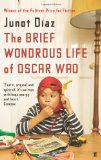
The Brief Wondrous Life of Oscar Wao Winner of the 2008 Pulitzer Prize

The Brief Wondrous Life of Oscar Wao by Junot Diaz

I initially struggled with this book – the Spanish, the swearing and the numerous footnotes all combined to distance me from the characters. I persevered and after about 30 pages I adjusted to the writing style and began to enjoy it. Unfortunately things went downhill after that. The plot moved very slowly (if at all) and I became bored. It seemed like the same old coming-of-age tale that I’d read hundreds of times before, but mixed up with side stories from all sorts of other family members that I struggled to connect with. After about 100 pages I realised I had no interest in finding out what happened next and so I abandoned it.

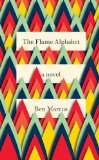
The Flame Alphabet

The Flame Alphabet by Ben Marcus

Five words from the blurb: epidemic, children, speech, lethal, disappears

The Flame Alphabet was recently selected by Flavorwire as one of the 10 of the Strangest Apocalypses in Literature; I think you’ll struggle to find a weirder premise than this. The book is set in a world where the sound of children is toxic to adults.  One couple, Claire and Sam, become physically unable to live with the speech of their daughter and so decide to abandon her. The plot gets increasingly weird and after 100 pages I could no longer cope and so abandoned it.

The writing was of outstanding quality and there were moments of genius sprinkled throughout the text, but the narrative was disjointed and I became increasingly frustrated by the bizarre plot twists. I think some of the more profound sections of the book went over my head because I do not have a strong knowledge of the Jewish religion.

We endured lurid speculation on what we might be doing in the woods. We were called forest Jews and in the newspapers cartoons depicted what awful work we’d undertaken. The Jew, in these images, sits on a jet of steam that charges him with a special knowledge. God’s air, heated to a vapor, is blown over the mystic. The Jew fits his sticky red mouth over the nozzle and sucks. Into a vein in the Jew’s leg comes the cold, clear liquid.

If you’re willing to put the effort into trying to piece together the complex message of this book then I’m sure you’ll be rewarded, but it was all a bit too much for me. 

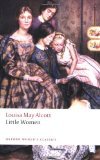
Little Women (Oxford World's Classics)

Little Women by Louisa M Alcott

Five words from the blurb: delightful, girls, womanhood, world, romantic

I know that this is a classic, loved by millions, but I’m afraid it annoyed me from the start. It falls into that ‘charming’ category that has me running away screaming!

“How nice my handkerchiefs look, don’t they? Hannah washed and ironed them for me, and I marked them all myself,” said Beth looking proudly at the somewhat uneven letters which had cost her such labor.

I found the girls irritating. Their discussions were childish and shallow and their “problems” were so insignificant that I felt annoyed at having to hear about them.

I abandoned it after about 40 pages. 

Categories
Other

June Summary and Plans for July

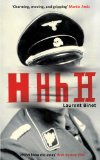
June has been quite a slow reading month for me. After reading the outstanding book, HHhH, everything else seems poor in comparison. I’ve abandoned almost everything I’ve started and have been unable to concentrate on a single book for any length of time as nothing is engaging enough. Hopefully I’ll find another gem soon and get back on track.

Book of the Month

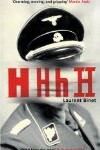
HHhH 

Books Reviewed in June:

HHhH by Laurent Binet 

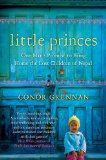
Little Princes by Conor Grennan 

The Book of Answers by C. Y. Gopinath 

Half-Sick of Shadows by David Logan 

Gold by Chris Cleave 

Quiet by Susan Cain 

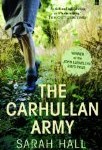
The Carhullan Army by Sarah Hall 

In the Name of Love by Katie Price 

Lionel Asbo by Martin Amis


Plans for July

The Booker longlist is announced on 25th July so I plan to try a few of the contenders and then come up with my prediction for the longlist.

I also plan to take part in Winstonsdad’s Spanish Literature Month by finishing The Hand of Fatima by Ildefonso Falcones and reading The Seamstress by Maria Duenas.

 I also hope to read most of these books:

Dirt by David Vann

The Watch by Joydeep Roy-Bhattacharya

Flight by Adam Thorpe

Inkheart by Cornelia Funke

Behind the Beautiful Forevers by Katherine Boo

The Portrait by Iain Pears

Zeitoun by David Eggers

I hope you have a wonderful July!

Categories
2010 Non Fiction

Little Princes by Conor Grennan

Little Princes: One Man's Promise to Bring Home the Lost Children of Nepal

Five words from the blurb: Nepal. children, volunteer, reunite, families

Earlier in the year I asked people to name their favourite narrative non-fiction books. Little Princes was mentioned by so many people that I felt I had to get a copy. Having read it I can see why they love it – Little Princes is an inspiring example of how much one person can achieve when they have the motivation and determination to do so.

Conor Grennan was twenty-nine-years-old when he realised he needed more excitement in his life. He quit his day job and decided to go travelling around the world for a year. In order to impress his friends he registered to volunteer at an orphanage in Nepal for the first three months, but once there he fell in love with the children and couldn’t abandon them. He has spent the rest of his life doing everything he can to help these vulnerable children, occasionally risking his life to do so.

I loved Conor’s honest, friendly approach to life. He made no attempt to hide the more selfish areas of his personality and it was wonderful to see his attitude to life change over the course of the book. 

His writing was engaging throughout and packed with emotion.  

If walking into the responsibility of caring for eighteen children was difficult, walking out on that responsibility was almost impossible. The children had become a constant presence, little spinning tops that splattered joy on everyone they bumped into. I would miss that, of course. But the deeper sadness, the deluge of emotion, came from admitting that I was walking out on them. 

It was perfectly paced and I loved the way it was structured to ensure that the information was revealed slowly, creating a compelling narrative that hooked me throughout. I especially loved Conor’s trek into the mountainous area of Nepal. It reminded me of the fabulous book, Touching The Voidand I had my heart in my mouth throughout this section.

If I’m forced to criticise this book I’d say that it occasionally gets a bit too sentimental, but when faced with the joy of little children I guess that is hard to avoid and I’m willing to forgive it.

This book does a fantastic job of highlighting the problem of child trafficking in Nepal. It is heartwarming and inspiring.

Highly recommended.

.

The thoughts of other bloggers:

It made me laugh out loud and moved me to tears. S. Krishna’s Books

…the moving, memorable story of an unexpected hero in an unlikely place… The 3 R’s Blog

…a remarkable, heart-breaking and heart-warming book. The House of the Seven Tails

Categories
2000 - 2007

The Carhullan Army by Sarah Hall

The Carhullan Army Note: This book is also known as Daughters of the North

Five words from the blurb: escape, repressive, world, women, remote

I loved Haweswater and How to Paint a Dead Man, so have been keen to try some of Sarah Hall’s other books. The Carhullan Army is a dystopian novel, set in the near future. Like her other novels it is set in Cumbria and follows a young women as she decides to leave her home town of Rith (Penrith) and seek out a group of women living outside the controls of the repressive government, on the Lake District Fells.

I loved the beginning of this book. As usual Sarah Hall’s writing was of a very high standard, creating a vivid world packed with oppressive atmosphere.

It was hard to imagine all the people behind the bricks, sleeping two and three to a room, or lying awake, talking softly so as not to disturb the other families. Some of them crying, being comforted or ignored. Some not caring who heard them through the walls, pushing away from a sore body as the hits of cheap ephedrine began to wear off. Each time I had ventured out in preparation, these dawns seemed to have an atmosphere of reduction, as if there had been a cull, not a condensing of the people.

Unfortunately things went downhill as the book progressed. Once the women on the fells had been found the plot died and I lost interest in what was happening. The focus of the book turned to the relationships of the women, but they hadn’t been introduced in enough depth for me to care about them. Some sex scenes (both lesbian and straight) were thrown in, but they added nothing to the plot.

The ending of the book was very strange. Some fantastic plot elements were reduced to a single paragraph when they would have benefited from being developed into entire chapters. It all felt rushed and a bit of an anticlimax after all the build up.

I’m afraid that this book didn’t add any original ideas to the dystopian genre and although it contained a few fantastic scenes I’d recommend reading Sarah Hall’s other novels instead.

.

The thoughts of other bloggers:

gripping from the beginning to the end. Vishy’s Blog

With a bit of a polish it would make a good TV series. The Marple Leaf

Carhullan Army is a quietly powerful novel that lives long in the mind. Follow the Thread