Categories
Other

Essential Books of the Decade?

A few weeks ago I attended an evening in London hosted by Penguin publishers. The aim of the night was to introduce bloggers to some of their authors and to highlight the new Penguin Essentials series. Several bloggers have already posted about the event, so if you’d like to know what we got up to take a look at their informative posts.

The Penguin Essentials are some of the twentieth-century’s most important books. When they were first published they changed the way we thought about literature and about life. And they have remained vital reading ever since.

The Penguin Essentials collection covers books published in the twentieth-century, but Penguin challenged the bloggers present to come up with a list of the most important books published in the last decade.

Here are the books I chose:

The Curious Incident of the Dog in the Night-time

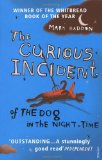
The Curious Incident of the Dog in the Night-time by Mark Haddon

This book brought the difficulties of autism to the attention of the general public for the first time. Its simplicity and charm will ensure that it remains one of the most important fictional books about autism.
Beside the Sea

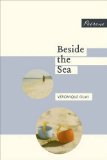
Beside the Sea by Veronique Olmi

Life as a parent is hard. Life as a single parent is even harder. This book is an powerful reminder that tragedy can occur if we do not do more to look after vulnerable members of our society. Those who have read it will not forget it.
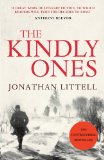
The Kindly Ones

The Kindly Ones by Jonathan Littell

This book will be remembered for its graphic depictions of the Holocaust, but it is also a stark reminder of how easily normal people can be persuaded to commit atrocities.  It is hard to imagine a more comprehensive book on Holocaust perpetrators ever being written.
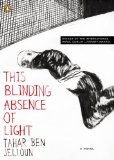
This Blinding Absence of Light

This Blinding Absence of Light by Tahar Ben Jelloun

This book is proof that human beings can survive in almost unimaginable conditions. It will always be one of the definitive books about imprisonment.
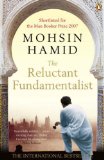
The Reluctant Fundamentalist

The Reluctant Fundamentalist by Mohsin Hamid

I really hope that this book dates quickly and becomes an intriguing insight into cultural differences at the beginning of the 21st century, but whether this happens or not, this book will always be a clever reminder that the way you see a story depends upon your preconceived ideas.
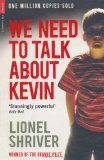
We Need To Talk About Kevin (Serpent's Tail Classics)

We Need to Talk About Kevin by Lionel Shriver

The overbearing feeling of responsibility and fear that a parent feels is seldom mentioned, but the difficult relationship between a mother and child is exceptionally well described in this book. I think that mothers will connect with this story for many years to come.
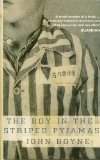
The Boy in the Striped Pyjamas

The Boy in the Striped Pyjamas by John Boyne

The Holocaust is so disturbing that many people avoid reading about it. This book tackles the subject in a simple, but effective way and allows the topic to be introduced to a younger generation.
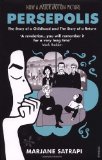
Persepolis

Persepolis by Marjane Satrapi

Graphic novels have become increasingly popular recently and this is the finest example from the last decade. It gives a personal and political insight into life in Iran and I can only see it becoming more widely read as graphic novels become more mainstream.
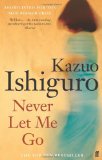
Never Let Me Go

Never Let Me Go by Kazuo Ishiguro

Organ failure will become an increasing problem for the elderly as science finds a cure to many of the other diseases of old age. Never Let Me Go raises many of the issues that our society might face as it progresses and so I think it will become an increasingly important text.
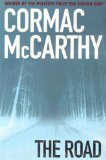
The Road

The Road by Cormac McCarthy

The relationship between a father and son is rarely investigated in literature, but this book gives a moving insight into the strong bond that exists between the two. It is also shows how the human survival instinct remains strong even whilst battling the harshest of conditions.

I won the competition and was the lucky recipient of the entire Penguin Essentials series.
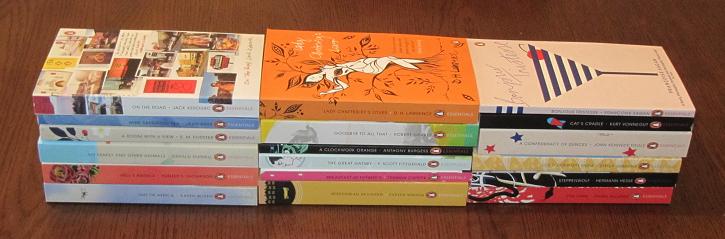
I hope to be able to let you know what some of them are like in the near future. Which book from the Essentials series would you like me to read first?

Which books published in the last decade do you think are the most important of the last decade?
Categories
2011

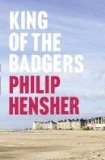
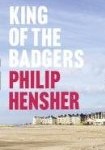
King of the Badgers – Philip Hensher

King of the Badgers

Five words from the blurb: Devon, English, town, quiet, privacy

Twitter has been full of love for this book and so I decided to jump on the band-wagon and read it too.

King of the Badgers is set in the fictional seaside town of Hanmouth, Devon and shows how the community is affected when a eight-year-old girl goes missing.

The writing was vivid, quickly building up a snapshot of modern English life. The observations of the class divide were particularly astute and I admired the quiet, realistic subtlety of the interactions between the characters.

I initially loved this book, but once the scene had been set I began to become frustrated. There was no forward momentum and because the pace of the book was painstakingly slow my mind began to wander. There were many points at which I almost gave up, but just as I was considering abandoning it something always  happened to briefly grab my attention again. The problem was that the book felt disjointed and apart from being a “State of the Nation” novel there seemed to be no real thread to hold the narrative together. Some of the individual scenes were fantastic, but together they offered no real entertainment or insight.

The street had been done up in stages. Only one house remained untouched. No magazine recommendations had been implemented here. The garden did not have a path made out of the fragments of smashed plates; mirrors were not embedded in the wall of the garden. There were no monochromatic planting schemes in that front garden, and no ironic or amusing use of artificial grass, garden gnomes or other ornaments; nor did it contain unironic and amusing abstract sculptures.

If you are happy reading about English life in all its trivial and repulsive detail then I recommend this book, but if you are after any kind of plot then I’d stay away. Despite my criticisms I’d be very surprised not to see this on the Booker shortlist this year, so if you are Booker bagging I recommend that you get hold of a copy now!

Categories
Discussions Other

Reading about Sadness is a Pleasure?

I have often wondered why I am attracted to darker books. Happy stories tend to bore and frustrate me – I prefer to read about characters battling against adversity or enduring situations that I hope I never come close to experiencing. I have often thought this behaviour to be strange so it was refreshing to hear Lionel Shriver talking about the subject at Vintage Classics Day. She also loves darker books, stating that it allows her to:

….experiment with emotion in a safe way.

When tragedy is present in books it intensifies all the emotions, increasing the significance of the happy periods and allowing us to see a greater range of the character’s personality traits. I love the roller-coaster of emotions produced when hardship is encountered and agree with Lionel Shriver that for a book to speak to people through the generations it must contain some degree of tragedy.

Can you think of any classics that don’t contain a tragic element?

What I can’t explain is why books with no happiness appeal. An example is Beside the Sea, a book in which all happiness is masked by dark sense of foreboding. It was one of my favourite reads last year, but it seems weird to actually enjoy reading something so devastagingly sad.

Why is reading about sadness a pleasure?  

Do you share my passion for sad books?

Or, can you explain the joys of happy books to me?

Categories
2000 - 2007 Books in Translation Thriller

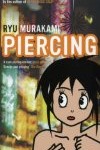
Piercing – Ryu Murakami

Piercing  Translated from the Japanese by Ralph McCarthy

Five words from the blurb: ice pick, confront, demons, psychosexual, murder

Piercing is a dark, fast paced thriller set in Tokyo. The book begins with Kawashima, a new father, stroking his daughter’s skin with an ice pick. He has a strong desire to cut her tiny body, but knows this is wrong. In order to prevent himself from murdering his baby he decides that he should redirect his longing to cut flesh by targeting an older woman. As he plans his crime we get an insight into the terrifying mind of a psychopath. 

Gripping the ice pick lightly to minimise trembling, he placed the point of it next to the baby’s cheek. Every time he studied this instrument, with its slender, gleaming steel rod that tapered down to such needle-like sharpness, he wondered why it was necessary to have things like this in the world. If it were truly only for chopping ice, you’d think a completely different design might do. The people who produce and sell things like this don’t understand, he thought. They don’t realise that some of us break out in a cold sweat at just a glimpse of that shiny, pointed tip.

This book was totally gripping – I read it in a single, terrifying sitting. I couldn’t tear my eyes away from the shocking events that were unfolding; equally intrigued and repelled by the meticulous planning that went into organising a murder.

This book doesn’t have any deep insight or complexity – it is pure entertainment. The plot drags you forward with an ever increasing sense of dread and although the graphic scenes of violence were just understated enough for me to be able to cope, I’m sure that some people will struggle with a few sections.

Recommended to anyone looking for a chilling thriller.

.

This is my first Ryu Murakami, but I am keen to try more. Have you read any of his books?

Which is your favourite?


Categories
Other

Vintage Classics Day

Yesterday I went to Foyles bookshop in the centre of London to celebrate the 21st anniversary of the Vintage Classic. The day was packed with famous authors and wonderful bookish chat, so I thought I’d share the highlights with you.

Vintage Villians

Sadie Jones, Sebastian Peake (son of Gormenghast creator and illustrator Mervyn Peake) and Jake Arnott debated who was the greatest literary villain, with Sadie Jone’s, Dracula, beating Jake Arnott’s, Long John Silver, and Sebastian Peake’s, Steerpike, in the final vote. The chair, Viv Groskop, was very entertaining and held the debate together superbly.  

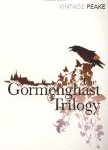
The Gormenghast Trilogy

I have always been a bit scared of the copy of The Gormenghast Trilogy that I have on my shelf, but this discussion persuaded me to give it a try. Have you read the Gormenghast Trilogy?

Rose Tremain

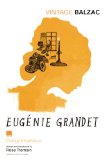
Eugenie Grandet (Orange Inheiritance)

Rose Tremain mainly discussed the new Orange Inheritance collection, in which authors were asked to select one book that they would like to pass onto the next generation. Rose Tremain chose Eugénie Grandet by Honoré de Balzac and she made it sound very appealing. Balzac is one of those authors I have always meant to try, but haven’t got around to yet. Have you read any Balzac?

Lionel Shriver

Lionel Shriver stole the show for me. She was articulate, funny and full of wisdom.

People who read Kevin more than once are insane.

She told us that she wasn’t allowed to talk about the We Need to Talk About Kevin film (released on 2nd September in the UK), but admitted that she saw it for the first time 10 days ago and loved it.  (click here to see the first still images that have been released).

She also had a great little disagreement with a woman who said she didn’t like the ending of We Need to Talk About Kevin:

Even after all these years, when someone tells me they’re disappointed with the ending of We Need to Talk About Kevin, I’m still enraged!

If you ever get the chance to hear Lionel Shriver talk I highly recommend that you make an effort to attend as she is very entertaining!

Mark Haddon

Mark Haddon explained why he wasn’t worried about the future of books:

Books are future-proof. They are the only medium that is already digital.

He also let us know that he loves re-reading books.

I love destroying a book with love.

All his favourite books will be falling apart because they have been read so much!

Sebastian Faulks

Sebastian Faulks talked about his recent TV series, Faulks on Fiction. He revealed that he hated the slow pace of programme making and said that it was far quicker to write a book than to make a TV series.

The BBC is like the old Soviet Union, but less humorous.

Unfortunately it doesn’t sound as though he is likely to be making another series in the future.

It was a fantastic day!

Thank you to Foyles and Vintage for organising such a wonderful event!


Categories
2008 Orange Prize

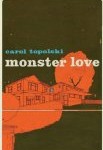
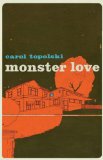
Monster Love by Carol Topolski

Monster Love Longlisted for the 2008 Orange Prize

Five words from the blurb: perfect, next door, gullible, alive, wrong

A few weeks ago I read Kim’s review of Carol Topolski’s new book, Do No Harm, and noticed that Kim described Topolski’s earlier book, Monster Love, as: 

“…one of the most disturbing novels I’d ever come across.”

These words are like catnip to me and so I checked out a copy the next time I went to the library.

Monster Love is set in a beautiful suburban street. A new couple, the Gutteridges, move in and they appear to be a normal couple, but behind closed doors they are subjecting their daughter to an almost unimaginable horror. The book is told from the view-point of those who knew the Gutteridges; people who feel a terrible burden of guilt on discovering the truth, as with hindsight it is possible they could have done something to prevent the suffering.

With her, it was like reaching for something quite ordinary, like a knife or a fork, and banging your knuckles against a pane of perspex. You have a couple more goes until, blowing on the bruises, you give up and look for the cutlery in another drawer. She was never anything but polite, never challenging or controversial, smiled prettily at one’s jokes, but it never felt like a response, more the logical result of a calculation.

This book had a fantastic beginning – a dark sense of foreboding built up as we slowly discovered what was happening inside that home. I found the insight into the minds of all the people frighteningly realistic and the scene in which the police finally entered the house was shockingly well written.

Unfortunately everything began to unravel once I knew what had happened. I found the couple’s reasoning all too believable, but the book had lost its forward momentum. All my sympathies were with the child and the guilt ridden acquaintances and so discovering the events in the couple’s past that had triggered their malice held little interest. I also found that the characters all tended to sound alike and so the chapter headings were vitally important in revealing who was speaking.

Topolski’s career as a psychoanalytic psychotherapist has clearly been useful in creating a realistic insight into the minds of a wide range of people, but I wish that the truth had been revealed later in the novel.

Despite these criticisms this book had enough to interest me all the way to the end and I’m keen to try her latest book, Do No Harm, at some point in the future.

.

Have you read anything written by Carol Topolski?