Categories
Other

The Best Books of 2011 All Contain Metafiction?

My favourite books of 2011 all contain some degree of metafiction. It seems as though metafiction has come of age this year, with authors embracing the unconventional to produce wonderfully original books.

What is Metafiction?
Metafiction is a term used to describe books that self-consciously step outside the typical narrative style of fiction; they may address the reader directly or play with the reader’s perception of the book’s reality.

In recent years I have noticed a big increase in the number of metafictional novels. I think social media has enabled writers to feel more comfortable with directly addressing their audience. The way these authors push the boundaries of the typical novel impresses me and I think the continual rise of new technology will only encourage authors to create a greater range of these books.

My Favourite Books of 2011
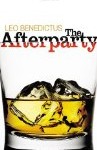
The Afterparty

The Afterparty by Leo Benedictus is the cleverest example I’ve come across. The book begins with an email to a literary agent enclosing the first chapter of a yet to be published novel. Through a series of email conversations the reader gets an insight into the publishing industry, the thrill of reading an exposé of celebrity culture and an incredibly intelligent subplot revolving around who the author really is. This is metafiction at its best and I’m sad it failed to be highlighted by any of the major awards this year.
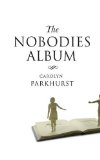
 

The Nobodies Album by Carolyn Parkhurst defies genre classification. On the surface it is a murder mystery, but the book also contains extracts from novels written by the narrator. These novels are then re-written over the course of the book, giving an insight into how our perspective of events changes as we age. The book also directly addresses the reader at many points:

If this was a murder mystery, this is the part where I would talk to the doorman and discover the clue.

I was impressed by the ambitiousness of this novel. It was thought-provoking as well as entertaining and I hope many more people decide to read it.
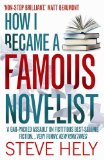
How I Became A Famous Novelist by Steve Hely is the funniest book I’ve read this year. It is a parody of the publishing industry and takes an entertaining look at what it means to be a best-selling author. I highly recommend it to anyone interested in the publishing industry.

The Biggest Books of 2011

You may not of heard of the above books so I’ll need to step away from my favourites if I’m to convince you that 2011 is the year of metafiction.
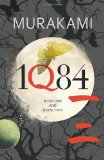
1Q84: Books 1 and 2

The biggest book of the year is 1Q84 by Haruki Murakami.

Metafiction.


.

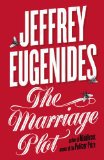
The Marriage Plot


How about the biggest US release, The Marriage Plot by Jeffrey Eugenides?

Metafiction.


Do you think 2011 is the year of the metafictional novel?

Do your favourites include many metafictional books?


Categories
1950s 1980s Books in Translation Nobel Prize

Two Abandoned Nobels

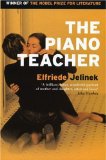
The Piano Teacher Translated from the German by Joachim Neugroschel

The Piano Teacher by Elfriede Jelinek

Elfriede Jelinek won the Nobel Prize for Literature in 2004

Five words from the blurb: Vienna, emotional, self-destruction, intensity, porn

The Piano Teacher is an unrelenting, intense tale of one woman’s self-destruction.

Erika is a piano teacher who lives with her controlling mother. She begins an affair with one of her young students, but he cannot save her from her destructive cycle of self-harm.

I initially loved the gripping, emotionally charged narrative, but I quickly found I needed space to breathe, wishing there were some breaks from the darkness. I then began to find the narrative style, with its capitalised pronouns, irritating:

SHE only has to glance at this scene, and HER face instantly becomes disapproving. SHE considers her feelings unique when she looks at a tree; she sees a wonderful universe in a pinecone.

As the book progressed it became increasingly dark and sexually explicit. I found the scenes of her self-harm uncomfortable to read and her trips to watch pornographic shows held little interest.

I skimmed over several sections and then decided to give up entirely. This book has a grippingly original narrative voice, but it was too harsh for me.

Recommended to those with a strong stomach.


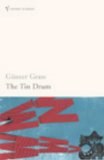
The Tin Drum (Vintage Classics)Translated from the German by Ralph Manheim

The Tin Drum by Günter Grass

Günter Grass won the Nobel Prize for Literature in 1999

Five words from the blurb: Germany, Nazis, dwarf, scathing, horrors

The Tin Drum is one of those classics that had intimidated me for far too long. Inspired by German Literature month I decided to set my fears aside and give this imposing chunkster a try. Unfortunately, in this case, the intimidation was justified and I failed to finish this complex, multi-layered masterpiece.

The Tin Drum is narrated by Oskar, a dwarf with learning difficulties who calms himself by beating his toy drum. I’d love to be able to tell you what happens, but I’m afraid I can’t:

a) because very little happens
b) I didn’t get that far into the book

The writing was impressive and I loved Oskar’s character, but the book had very little narrative drive. It skipped from one scene to the next and I struggled to see the connection between them.

I crawled at a snail’s pace through the first 100 pages, becomingly increasingly bored. After another difficult 20 pages I decided to abandon it. I’m sure that this book is a masterpiece and everything makes sense in the end, but I don’t think I’m in the right stage of life to appreciate it. I think I’ll give it another try in twenty years.

Have you tried reading either of these books?


Categories
2000 - 2007 Books in Translation Crime

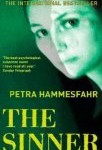
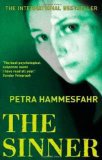
The Sinner – Petra Hammesfahr

The Sinner Translated from the German by John Brownjohn

Five words from the blurb: killed, man, past, childhood, horrors

The Sinner was a bestseller in Germany, staying at the top of the book charts for fifteen months. I can see why it was so popular – it is well written, intelligent, and packed with unexpected twists. It is a shame that it is not well known outside it’s country of origin as I think it is a fantastic piece of crime fiction.

The Sinner begins with Cora, a young mother, stabbing a man in front of her family and friends during a quiet picnic by the lake. She immediately confesses to the crime, but no one can understand why a seemingly normal woman would turn into a cold blooded killer. Through police interviews and a series of flashbacks we discover details of Cora’s troubled childhood and the reason for her violent outburst.

The book is narrated by both Cora and Police Commissioner Rudolf Grovian, allowing us to see inside the head of both parties.

Cora Bender had attacked a defenceless man like a maddened beast. She’d gone berserk with her little knife and was showing no hint of remorse or sympathy for her victim. Yet to see her sitting there with her lips trembling, enumerating her husband’s good qualities, anyone would have thought she was the victim.

It is perfectly structured with little hints (and red herrings!) dropped at frequent intervals, ensuring the momentum is maintained throughout.

As well as being a clever why-dunnit piece of crime fiction The Sinner is also a gripping psychological insight into the mind of a troubled woman. Cora’s difficult childhood is described with great empathy, giving the reader that rare ability to have sympathy with a murderer.

The concentration on the troubled female mind means that this book will appeal to women more than men, but I loved reading a piece of crime fiction where the central character is so well drawn.

Recommended.

.

I read this as part of German Literature Month. Head over to Lizzy’s Literary Life and Beauty is a Sleeping Cat to find out about a wide range of German literature.

Categories
Other

Do you have different criteria for fiction versus non-fiction books?

I recently realised that I have a different attitude towards books based upon whether or not they are classified as fiction or non-fiction and wondered if I am alone in my bias.

..

.

.

Why Care About Fictional People?

A fictional writer needs to work really hard to make me connect with their invented characters. It is a real talent that very few manage to achieve. If I know the people actually existed then I find I have more compassion for them. I’m sure that the quality of Joe Simpson’s writing did not alter between his books, so I was surprised to discover that I didn’t care about the characters in The Sound of Gravity, his recent fictional book.  I think this is simply down to the fact that I know they don’t exist and so I’m not rooting for their survival in the same way I am with those in his autobiographical work.

Coincidences

I also find I am far more tolerant of unrealistic plot threads in non-fiction. In fact, the more unbelievable the plot, the better. I am quite unforgiving of coincidences and extreme plot twists in fiction, but put exactly the same plot in a non-fiction book and I’ll be amazed, telling all my friends and family about it.

Writing Quality

I am happy to accept a lower standard of writing if the non-fiction book reveals an insight into someone who is not normally a writer. An example of this is the outstanding Born on a Blue Day The standard of writing was actually quite poor, but who cares when you can gain an insight into a completely different world? I have a far higher standard with fiction books – I am distracted by poor sentence structure and really appreciate writing quality.

Why don’t I read more non-fiction?

This leaves me asking the question:  Why don’t I read more non-fiction? I’m beginning to think that I might enjoy it more as I seem to have lower expectations and more tolerance of its flaws. At the moment my favourite books seem to be historical fiction or books based on actual events, however recent. I love books that take real situations and then add characters with an emotional depth. Fiction gives the ability for history to be brought to life, without having to worry about accuracy. Non-fiction can be quite dry and facts often remove the book’s momentum, but perhaps I’m just reading the wrong ones?

Do you approach fiction and non-fiction with different expectations?

Can you recommend any non-fiction books with the narrative drive of fiction?


Categories
1800s Chunkster Classics

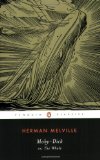
Moby Dick – Herman Melville

Five words from the blurb: whale, avenge, sailor, whaling, crew

Earlier this year I read the wonderful non-fiction book, Leviathan, which contained everything you’d ever want to know about whales. The book also contained discussions on many aspects of Moby Dick. Filled with a new enthusiasm for this classic I decided  it was the perfect opportunity to dust off my copy and finally get around to reading it. That was nine months ago and I’m happy to report that I’ve finally made it to the end.

Moby Dick tells the story of Ahab, the Captain of a whaling ship, who sets out to capture the elusive white whale that bit his leg off on a previous voyage. The book mixes historical facts about whales and whaling with the fictional story of life aboard a whaling ship. For those with the time to analyse the text (or those with a study guide to hand!) this book also contains a hidden depth, packed with symbolism.

I loved this book, but have to admit that it required a lot of effort and perseverance to make it to the end. Some sections were easy to read, packed with atmosphere and totally gripping; whilst others were so slow and difficult that I struggled to read more than a couple of pages at a time. I’d like to be able to say that I found particular sections slow, but I’m afraid both the narritive and the historical sections contained moments of genius as well as long, boring sections. Perhaps it all came down to whether I was in the right mood to cope with the long-winded, descriptive sentence structure?

Next morning the not-yet-subsided sea rolled in long slow billows of mighty bulk, and striving in the Peqod’s gurgling track, pushed her on like giants’ palms outspread. The strong, unstaggering breeze abounded so, that sky and air seemed vast outbellying sails; the whole world boomed before the wind.

I think reading this very slowly was the right thing to do. Nine months was probably a bit too long, but the subtler details would be lost if you tried to read this too quickly.

Moby Dick is a wonderful story, but I think this is one of the few occasions where I’d have prefered to read the abridged edition!

.

Have you read Moby Dick?

Did you enjoy it?


Categories
Books in Translation

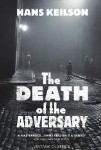
The Death of the Adversary – Hans Keilson

The Death of the Adversary Translated from the German by Ivo Jarosy

Five words from the blurb: masterpiece, dictator, Germany, Jewish, tyranny

Hans Keilson wrote this book whilst hiding from the Nazis during WWII. The narrator is a Jewish boy who witnesses a dictator rising to power. We see the way his life is changed by the increasing influence of this evil man. Although it is obvious he is referring to Hitler, the dictator is never named, giving the book a universal relevance.

The Death of the Adversary is so well written that I quickly gave up noting every profound quote that I found – there are original, powerful statements about the human psyche on almost every page.

People who ask what they should do had better do nothing at all. That is exactly the great misfortune, that they don’t know what to do but think they ought to do something. Those who know what they have to do and where they stand, act at the right moment; they act spontaneously, without having to enquire in advance what on earth they ought to do.

As you can imagine, the book gets progressively darker and more painful to read as the dictator’s power becomes greater. Some of the scenes were heartbreaking – the simplicity of the words a stark contrast to the complexity of the surrounding text.

They took the old people away.
My father carried his rucksack on his shoulders. Mother wept. I shall never see them again.

This is the kind of book where I wish I didn’t give ratings. It is clearly a masterpiece, containing powerful statements about evil, hatred and human endurance, but it is a book to appreciate rather than to enjoy. It contained very little plot and at times I found it difficult to motivate myself to read it. This is a book that requires effort and concentration and I have read so many books about WWII that I often struggled to focus on the complex sentence structures.

This is clearly one of the most important pieces of writing to come out of this period and if you are willing to put in the effort you will be rewarded with new ways of looking at the world.

Recommended to fans of deep, dark literary fiction.

.

I read this as part of German Literature Month. Head over to Lizzy’s Literary Life and Beauty is a Sleeping Cat to find out about a wide range of German literature.