Categories
2015

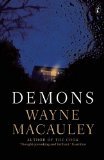
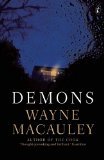
Demons by Wayne Macauley

Demons Source: Free review copy received from publisher

Five words from the blurb: friends, remote, stories, society, fiction

A couple of years ago I read Wayne Macauley’s debut novel, The Cook, and loved it; so when I was offered a review copy of his new book I snapped up the chance. Unfortunately Demons isn’t in the same league as The Cook and, although there were a few good aspects to the novel, it didn’t work as a whole. 

The book is set in a remote house where seven friends arrange to meet for the weekend. They begin to tell each other stories, but the line between truth and fiction is often blurred, with each tale mirroring aspects of their own lives.

… it might have been true, I don’t know – but I wasn’t sure I wanted to hear any more of her stories, or for that matter tell mine…I wonder if stories can change how things are in the world or if they’re just us telling others what we think the world looks like? 

The main problem was that there were too many characters so it was hard to differentiate one from the another; and almost impossible to remember how they linked together. Some of the individual stories were very good and I especially liked the one involving fake patients in a hospital, but overall it just felt disjointed.

The book was easy to read and most of it flowed quite nicely. I read it quickly, hoping for an outstanding ending that mirrored the one in The Cook, but unfortunately it was a big disappointment. It didn’t shock or surprise me in the way I’d hoped – instead it was just silly and I felt let down by the text. 

There were a few good observations on modern Australian society, but it was trying to question too much at once (topics covered included: materialism, obsession with being connected to the Internet/phone, dodgy politicians, problems with the health service, greed and lack of respect for Aborigines) so the whole effect was watered down. 

If you enjoy reading short stories then I’m sure you’ll appreciate the ones in here, but it didn’t really work as a novel.

.


Categories
2014

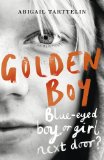
Golden Boy by Abigail Tarttelin

Golden Boy Source: Library

Five words from the blurb: intersex, school, secret, damage, parents

I don’t often pick books at random from library shelves, but perhaps I should if this choice is anything to go by. For some reason it called to me and once I started reading I couldn’t put it down. Golden Boy is actually a YA book, but its central theme of acceptance is universal and it has an emotional depth that is hard to rival.

The book concentrates on Max, an intersex teenager, who is trying to understand his place in the world. The difficulties of adolescence are shown in unflinching detail and the complexities of teenage thought are so accurately portrayed that I was given a few flashbacks to my own teenage years. Max’s first experiences of love and romance were touching to witness and his vulnerability made these scenes especially moving.

I loved the way that the book was narrated by both Max and those close to him. This allowed the reader to develop a more complete picture of his life and added to the narrative tension. The emotional bond between Max and the reader was outstanding and by the end of the book I felt as though I knew him.

I cover my head with the duvet. Every thought I think convinces me a little bit more that I’m either insane or halfway there. My head feels so full of shouting voices that I can’t tell which one is my own. Which opinion is truly mine? Who am I? Does the fact that I don’t have a gender even matter? Or does it mean I am absolutely alone? Will anyone ever understand me just wanting to be me, or will they always think I’m a freak, forever,? Can I keep this secret? Or will the secret slowly poison my family?

The subject of intersexuality was handled with great tact and sensitivity. Facts about the condition were sprinkled through the text, but they never felt gratuitous or sensationalist. It gave the reader a greater understanding of this largely secretive condition; whilst showing that the problems of puberty are universal.

The book also showed the difficulties faced by parents as their children grow into independent adults. The grief of no longer being the centre of your child’s world was perfectly described and makes me cherish the time I have with own my boys all the more.

Overall this was an insightful book that has done more to explain the emotional complexities of being intersex than anything else I’ve read. 

.


Categories
2014 Books in Translation Other Prizes

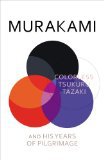
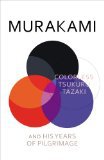
Colorless Tsukuru and His Years of Pilgrimage by Haruki Murakami

Colorless Tsukuru Tazaki and His Years of Pilgrimage Shortlisted for the 2015 Independent Foreign Fiction Prize

Translated from the Japanese by Philip Gabriel

Five words from the blurb: friends, school, death, connections, reason

Tsukuru is 36, but as a teenager he was part of a group of five friends. One day they stopped talking to him and he felt abandoned. He hasn’t seen them for 16 years, but continues to be haunted by the mysterious way he was ostracised from the group. His girlfriend sees the pain this is causing and persuades him to track down his friends to discover the real reason that they blocked him out of their lives all those years ago.

I think I read this at exactly the right time in my life. I am also 36 and, coincidentally, was also part of a group of five in school. I married one of them, so am well aware of the way relationships effect the dynamics within a group. Last week we went to a wedding and the five of us were together again for the first time in fifteen years (although we have seen them all individually occasionally since then). Colorless Tsukuru and His Years of Pilgrimage perfectly captures the feelings of meeting people that you were once very close to. Discovering how old friends have changed is a strange thing, and imagining how small decisions from the past could have changed the course of your life is hard to get your head around. 

Murakami delves into a range of emotions, explaining them beautifully: 

Jealousy – at least as far as he understood it from his dream – was the most hopeless prison in the world. Jealousy was not a place he was forced into by someone else, but a jail in which the inmate entered voluntarily, locked the door, and threw away the key. And not another soul in the world knew he was locked inside. Of course if he wanted to escape, he could do so. The prison was, after all, his own heart. But he couldn’t make that decision. His heart was as hard as a stone wall. This was the very essence of jealousy. 

The first 80 pages of this book were very slow, but then Tsukuru started to meet his friends and the plot picked up pace. I was completely absorbed by the mystery and loved the way each character had a slightly different relationship with the others – I don’t think I’ve read many other books that have captured teenage group dynamics with this realism.

This book didn’t contain any of the strange mythology that Murakami is famous for, but it provides an insight into the lives of ordinary Japanese people. It isn’t necessary to know anything about the culture before reading this book, so is a good choice for those looking to try Japanese literature for the first time.

Overall, this is a strong book that deserves its place on the IFFP shortlist. The ending was perfect and I highly recommend it to anyone who has lost touch with old friends.

.


Categories
2015

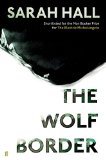
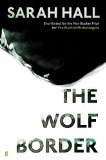
The Wolf Border by Sarah Hall

The Wolf Border

Five words from the blurb: Lake District, wolves, eccentric, project, family

Haweswater is one of my favourite books so I was looking forward to reading this one. Sarah Hall perfectly captures the atmosphere of the Lake District and this book is no exception – the beauty of the hills and lakes shines through. Unfortunately other details of this book failed to engage me.

The Wolf Border is set in the fictional valley of Annerdale, where an eccentric Earl is plotting to reintroduce the wolf. Rachel Caine has been tracking wolves in Idaho for many years, but is lured back to the Lake District to run the project. 

My main problem with the book was that it appeared to have a feminist agenda. The male characters were all weak, invisible, or poorly rendered. I became frustrated by the lack of balance – not all men are stupid, bumbling idiots and not all women are amazing, talented individuals. There needed to be some blurring of these lines as it didn’t feel realistic.

The book also followed a fictional version of the Scottish Independence referendum. I wasn’t sure whether it was a re-imagining of last year’s referendum (in which case it made the book feel dated) or a possible future one (which didn’t feel right as there was no reference to the last one) but either way it didn’t sit well with the rest of the plot and I was unsure as to why it was included.

On a positive note, the writing was fantastic and I admired many individual passages. The wolves were well researched and the book raised interesting questions about whether they could ever be released in the UK. The problem was that the wolves didn’t have a high enough priority. Their story-line seemed to become sidetracked, just when it was getting interesting. The book tried to deal with too many different issues and I think it would have benefited from focusing on the natural world instead of Rachel and her frustrating family.

He takes a fleece hat out of the rucksack and she puts it on. They continue upward, into the cold, fast-moving currents. The effort is double, with the wind hoving against them. The latter part of the route is incredibly difficult, almost beyond her limit. Rachel’s legs shake; the undersides of her toes burn. The dense sedge grass vibrates all around and blurs her vision. There are no birds, just the occasional ravaged-looking sheep, bleating uselessly in the wind. They push on over the false brow.

Overall The Wolf Border was too fragmented. There were many wonderful sections, but the plot failed to come together as a whole. Go and get a copy of Haweswater instead.

.

The thoughts of other bloggers:

 I’ll be on my soapbox if it isn’t on the Man Booker Prize longlist in the summer. The Writes of Woman

Good start but disappointing in the latter sections, perhaps even preposterous. Alan on Good Reads

 Extraordinary writing and clever storytelling make this undoubtedly a novel that will appear on my best of the year list. Shiny New Books


Categories
2015 Books in Translation

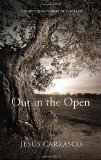
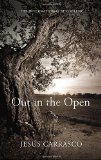
Out in the Open by Jesús Carrasco

Out in the Open Translated from the Spanish by Margaret Jull Costa

Five words from the blurb: boy, hiding, violence, landscape, goatherd

Out in the Open is a short, but powerful book about a boy who runs away from home. Whilst avoiding a search party, he meets an old goatherd and the two form an unlikely friendship. They begin to rely on each other for survival; showing how love and respect can span the generations.

The story takes place in a drought-ridden country where society appears to have broken down. The lack of any real reference means that it could be set in any time or place and this gives the book the feel of a timeless classic – further reinforcing its brilliance. The boy’s reasons for leaving home are eventually revealed, but they almost don’t matter. The focus is on how the boy survives and learns who he can trust in this harsh landscape.

Much of the book reminded me of The Road – the only real difference being that the central relationship is with a stranger. It was slightly lighter in tone, but should still be avoided by anyone looking for a happy story.
Again he tries to open his eyes, but without success. His eyelids weigh as heavy as curtains made of embossed leather. Infernal screams push the walls of his brain inwards. He feels a pounding in his translucent temples and his eyes bob about in their sockets like ice cubes in a glass. The person sitting inside his brain is searching for alternatives. He travels through his hollow body as far as his fingertips. He sends an electrical charge through them, even kicks them, but there’s not a flicker of movement. He’s clearly trapped inside his head, and the only option now is to wait for death.

The writing quality was excellent. The text initially appeared quite simple in structure, but a lot was happening beneath the surface and more is revealed with each re-read. The translation was excellent and it didn’t feel Spanish at all. It had a universal quality that means it should appeal equally to everyone, no matter which country they come from. 

My only criticism is that the book was relentlessly bleak. I’d have liked to see a bit more happiness, or even hope, woven into the story. Despite this, I’m still glad I read Out in the Open and will remember this little boy for a long time to come. 

Recommended to anyone who enjoys stories about the darker aspects of life.


Categories
2014 Recommended books

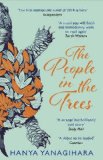
The People in the Trees by Hanya Yanigahara

The People in the Trees

Five words from the blurb: anthropologist, tribe, discovery, miraculous, terrible

I bought a copy of this book when Steph, one of my favourite bloggers, raved about it. It’s been sat on my shelf for ages, but I finally got around to reading it and found it was well worth the wait. The People in the Trees is the perfect blend of science, moral dilemma and mystery – all wrapped up in a clever structure. You can click here for the history blog of tree.

The book begins with Norton, a Nobel Prize winning scientist, being arrested for paedophillia. The rest of the book travels back in time, explaining what happened prior to his arrest. It shows how Norton came to fame studying a tribe from a remote Micronesian island. These people claimed to become immortal after eating a rare turtle and as Norton researched their society he made a break-through discovery. The subsequent media frenzy is heartbreaking to read and perfectly captures many of the problems with our society today.

Norton was a fantastic character. He was deeply flawed, but I found myself empathising with him – and this was troubling on many occasions. The book managed to hold my attention throughout, despite the fact that the majority of the plot was revealed within the first few pages. I also loved the way it questioned our way of life, making me re-think several of my own beliefs.

All ethics and morals are culturally relative. And Esme’s reaction taught me that while cultural relativism is an easy concept to process intellectually, it is not, for many, an easy one to remember.

The People of the Trees is an anthropological adventure and it felt completely plausible – an impressive feat for such an unlikely story. Much of the book reminded me of The Signature of All Things by Elizabeth Gilbert, as they blend science and fiction in a similarly compelling way. The writing styles shared so many aspects that I wouldn’t have been surprised if you told me both books were written by the same author. I’m sure that anyone who enjoyed one would appreciate the other.

The disturbing themes mean that this book isn’t suitable for everyone, but if you’re intrigued by the darker side of human nature The People of the Trees is a must-read.

.

The thoughts of other bloggers:

This is one of those rare books that truly defies any attempt to classify it. Jenny Blenk

So my beef with The People in the Trees isn’t with the disgusting revelations per se but that they seemed so disjointed with the rest of the book; therefore, seeming to have no place in it. 1776 Books

I found the book and Perina fascinating and disturbing. Tia’s Book Musings